

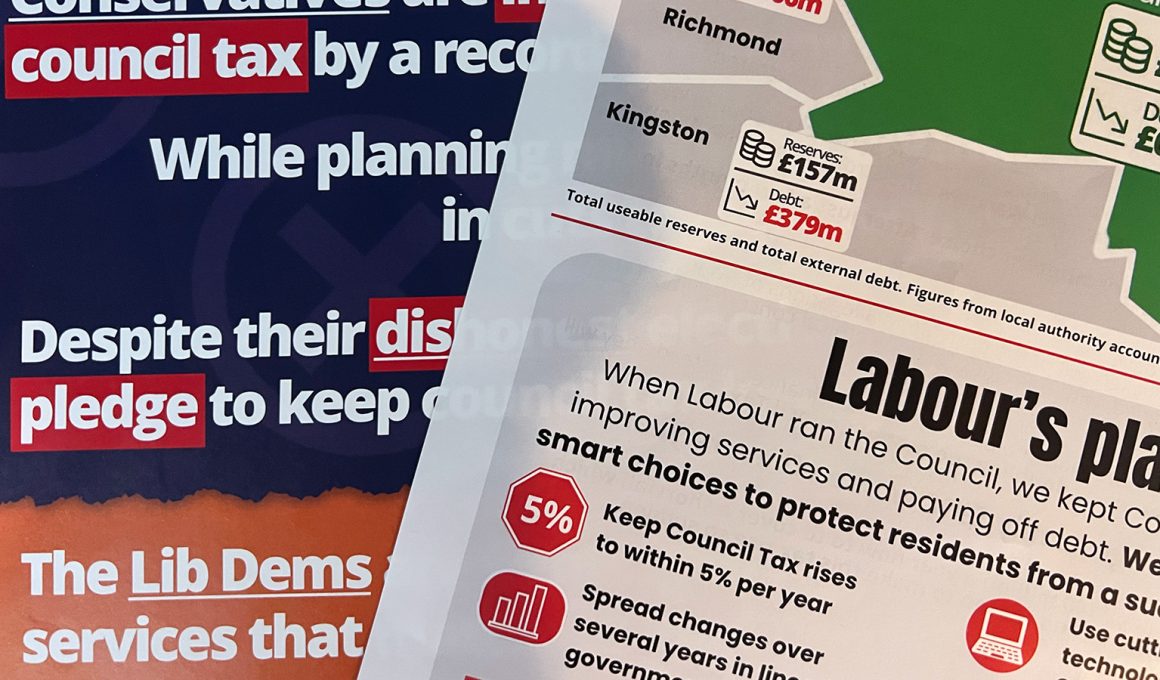
Labour and the Liberal Democrats have both delivered leaflets to homes in Putney this week, each blaming the Conservatives for the council tax rise due next April.
Tested against the council’s own papers, on the A to E scale used to check the Conservative, Labour and Green manifestos before May’s election, Labour’s leaflet scores a C and the Lib Dems’ a B.
The Lib Dems get every figure right but call the Conservatives dishonest over a manifesto that warned council tax would more than double. Labour’s figures do not hold up, and it has not published the £45m plan its leaflet rests on.
The council plans to raise its share of a Band D bill by 188%, from £510 to £1,468. With the Mayor of London’s share added, the whole bill goes up by 94%, or £958 a year, about £18 a week. Full Council takes the final decision in March.
So which leaflet tells you the truth about why?
Unverified claims. One claim remains unverified: the neighbouring boroughs’ figures, where Richmond’s figures match its 31 March 2026 accounts but Lambeth’s match no single year, and Kingston and Kensington and Chelsea have not been checked. One further claim, about a named councillor’s past, is not graded here; it needs its own verification and right of reply. Cllr Hogg responded on 9 November; his response is reported in the story. He did not supply the costing.
Labour: C
The leaflet’s alternative rests on “a costed plan of £45m of budget reductions without service cuts”. Asked for the costing in September and again this week, Labour has not provided it.
We put six questions to Cllr Simon Hogg, Wandsworth Labour’s leader, who signed the leaflet. On the plan, he said Labour “examined budgets carefully with officers and found an initial £45m in savings last year before Fair Funding was confirmed, with more to come”. He added: “Directors agreed that demand growth must be contained at the 2025/26 baseline.”
Labour’s own budget from February, written while it ran the council, called £45m the programme’s “initial ambition”. It had found £14m of savings; the other £31m were “to be developed further”. The council’s then chief executive, Andrew Travers, described the figure that month as “a broad, reasonable aspiration to get us going”.
The leaflet also says “there is no reason to make this tax rise so sudden”. Cllr Hogg said Labour “would not come back to local people for more taxes until we had exhausted every avenue internally”. Its February budget had the amount the council needed from council tax rising from £76.6m this year to £143.2m in 2027/28, nearly doubling in a single year. The council’s September report found that 5% rises, the path Labour now proposes, would not close the gap and “would exhaust the Council’s reserves fully within two years”.
One sentence on the leaflet does not match the council’s figures: residents, it says, are being asked to pay “£140 million a year now to cover a shortfall which will rise to £84m by 2030/31”. In his reply Cllr Hogg put it as “an extra £130m upfront and every year to cover a shortfall of £84m in year three. Something doesn’t add up.” The council’s figures are an extra £132m in 2027/28, rising to £143m by 2030/31, against a government cut that reaches £84m a year by 2028/29.
Where Labour is right
On his wider point, the council’s own figures back him up. The government’s cut does not explain the whole rise. It accounts for £84m of the extra £143m a year, and without it the council’s share of the bill would still rise by about three-quarters.
Cllr Hogg did not answer our other questions: how rises of 5% a year square with Labour’s own February budget, how much of the £673m of reserves on the leaflet’s map could pay for day-to-day services, and whether its claim of zero debt counts the money the council has borrowed from its own reserves.
His main argument is that the rise is a choice. “The Wandsworth Tories don’t need to double your Council Tax, it is a political choice,” he said. Labour opposed the government’s funding changes, he said, and “will keep pressing for more government funding for Wandsworth”. He said more than 12,000 people had signed Labour’s petition, and that for many families “this sudden blow will mean no summer holiday, their car not being fixed – or them having to leave the area”. Residents’ message, he said, is that “the increase is far too large, it should be split over multiple years, and the most vulnerable must be protected”.
He also made three new claims about the Conservative plan. He said it would “raise taxes now, cut them before the next election”. The published plan does not include a cut: it raises the council’s share once, in 2027/28, then holds it for three years. But council tax is set each year, so the plan cannot rule a cut out.
He said it “includes just 2% in council-wide efficiency savings for 2029/30”. It has £25.4m of new savings due that year, more than in any other year, and nothing in the council’s report puts them at 2%. He is right that it adds “more than £100m a year to budgets by that stage”, though most of that is inflation (£65m) and rising demand (£22m).
Unverified claims. Every claim on the leaflet could be tested against a document. The Liberal Democrats were asked on 9 November for a response and had not replied at the time of writing.
Liberal Democrats: B
The Lib Dem leaflet gets every figure right. The 94% rise and the £958 a year for a Band D home are the council’s own numbers. The government did first announce the funding changes almost two years ago, on 28 November 2024.
Its charge is that the Conservatives “knowingly misled voters” by “promising to keep council tax low”. The Conservative manifesto told voters something else. It said Labour’s budget black hole “will make your Council Tax more than double”, and promised to keep tax “as low as possible”. The party’s manifesto page still says the council’s figures “project a council tax rise of 178% in the coming years”.
The leaflet says the Lib Dems are “holding the Conservative Council to account”. The party has no councillors on Wandsworth Council. Nor does the leaflet say what it would do instead: it asks readers to fill in a survey about which services to protect.
We put our questions to the Liberal Democrats on Monday. They had not responded by the time of publication.
Council tax, April 2027
All figures are yearly amounts by 2030/31, the fourth year of the council’s plan.
1. What the council says it has to cover
- £84mGovernment funding cut £563 of a Band D bill
- £65mInflation £435
- £41mSpending plans inherited from Labour £275
- £24mRising demand for care and housing £161
- £8mNew Conservative spending £53
Paid for by £79m of cuts to services and £143m more council tax, which is the £958 on a Band D bill.
2. Which of those costs does each party’s plan pay for?
Sources: Wandsworth Council budget report, 15 Sep 2026 (the council’s chart of costs to 2030/31); Statement of Accounts 2025/26; Wandsworth Conservatives manifesto 2026; Labour and Liberal Democrat leaflets and Cllr Hogg’s statement, 9 Nov 2026; putney.news, 14 Oct 2026. Band D figures: each £1m is about £6.70 on a Band D bill. Labour’s £96m: 5% rises £17m, savings £45m, demand held at 2025/26 level £24m, inflation at 2.5% £10m.
What the rise is paying for
Neither leaflet tells readers what the money is for. The council’s own breakdown puts the extra costs at £222m a year by 2030/31: the £84m government cut, £65m of inflation, £41m of spending plans inherited from the previous Labour administration, £24m of rising demand and £8m of new spending, mostly on extra police and street cleaning. It plans to cover them with £79m of savings and £143m more council tax.
Grant Labour every assumption in its leaflet and in Cllr Hogg’s email, and its plan covers at most about £96m of that £222m: roughly the government cut and little more. Some of that may be counted twice, because £14m of the £45m had already been taken out of the budgets the council’s figures start from.
What happens next
Full Council decides the 2027/28 council tax in March. Your ward councillors will vote on it, and you can find them and their contact details on the council’s website.
The council’s full plan, with the breakdown above on page 34, is in its Spending Review report. You can check which band your home is in on the council tax pages.
Every grade on both leaflets is explained in the scorecards above, with its source. How we score sets out the scale.


Surely reserves are for emergencies not running costs?