


Two years after a petition asked Wandsworth’s council pension fund to keep its money out of companies linked to Israel’s occupation of Palestinian land, it still has no answer.
Every date the committee running the fund set itself has passed without a decision. The next date is set in law: the fund must publish a new investment policy by 31 March. But in its latest paper, council staff say the regulations ask only for the fund’s “priorities and preferences”, and nothing in their wording requires the Gaza question to be settled by then.
The council’s Local Pension Board meets today to hear where things stand. In a paper for the meeting, the council’s finance director says the deadline can be met if everyone accepts that “further changes can be made” afterwards.
The money belongs to about 44,000 current and former council and school workers. Their pensions are guaranteed whatever the fund invests in. If the investments do badly, the shortfall falls on the council and the other employers, and through them on council taxpayers.
Two years of waiting
The decisions sit with the Joint Pensions Committee: nine councillors, six from Wandsworth and three from Richmond, who act much like the fund’s trustees. Council officers advise them. The Local Pension Board sits alongside the committee as its watchdog. Its members represent the employers who pay into the fund and the current and former workers whose money it is. The board reads the committee’s papers, checks that the fund is run within the rules and passes its comments back to the committee, but it does not make the decisions. Every argument over Gaza has been had in front of the committee.
The petition, signed by more than 1,000 people, reached the committee in October 2024. At the same meeting Paul Guilliotti, the council’s director of financial services, told councillors the fund could not simply drop a company: it owned no shares directly, only a slice of funds pooled with other councils’ money. It was pointed out that the fund had recently divested itself of funds related to Russia. Russia had been different, Guilliotti said: when it invaded Ukraine in 2022, government sanctions gave pension funds clear direction. On Israel there had been none. Councillors asked him for a report setting out the options.
That report never came. Fourteen months later, in December 2025, union representatives went to the committee to call for divestment. By then councillors were being told the ground had shifted: the government had announced an overhaul of council pensions that would “change and limit” what each fund could do. Councillors voted anyway, unanimously, for a report “containing specific recommendations” at their next meeting, “and in any case within six months”. That meant recommendations by March.
In March the committee got a timetable instead. The council had taken advice from a barrister, Paul Newman KC, which it has not published. Officers said the advice meant the fund could act on ethical grounds only if two conditions were met: no “significant risk of financial detriment” to the fund, and good reason to think members supported the change. So officers would first check whether any change would cost the fund money, then ask members over the summer, and the committee would decide in September 2026.
“We first agreed this, didn’t we, October 2024,” said the committee’s then chair, Councillor Marshall. “The timeline now is 2026. It is really frustrating.”
Unison called the timetable “clearly a review and not a plan”. Officers had also argued that once London CIV, the investment company London’s councils share, took control of the money in April, the fund would be limited to what London CIV could offer. The GMB’s Kathy Kettell disagreed: “the London CIV works for the councils, not the other way around.” Guilliotti said “any perceived delay” came from national pension rules, not the council’s own processes, and that this was the shortest timetable that kept the fund on a legally safe path. The committee approved it.
The first condition was met in June. By then May’s elections had handed control of the committee to the Conservatives, and Councillor Melanie Hampton, Conservative councillor for West Putney, was its new chair. At her first meeting, the fund’s investment adviser, Mercer, reported there was “unlikely to be a significant financial detriment” from any of the options. “It does look as though it isn’t a financial worry for us, which is very, very good news,” said Labour councillor Judi Gasser.
The other condition was whether members backed the change. To find out, officers proposed a survey of the fund’s members. But a draft of its questions also proved controversial after they plainly suggested that workers’ pensions would be adversely affected if the fund changed how it invested, when the truth is that members’ pensions are guaranteed. Quizzed about that wording, at the June meeting, Guilliotti admitted the questions gave that impression, and that it was not true.
But then he went further, telling councillors that the committee had never committed to divesting at all. “At no point has this Committee firmly committed to a disinvestment policy,” he said. “That simply has never happened.”
Labour councillor Aydin Dikerdem, who has declared membership of the Palestine Solidarity Campaign, answered by reading out the resolution the same committee had passed unanimously six months earlier.
The committee sent the survey away to be rewritten by three councillors and Guilliotti. A fresh challenge followed it: days before the June meeting, UK Lawyers for Israel had written to the council questioning both the survey and Mercer’s analysis. Mercer looked again, and in July said nothing in the letter changed its conclusions. The rewritten survey came back to the committee in September, the month the decision had been due. It went out to members on 21 September and closed on 28 October.
We read two years of the committee’s papers and minutes, and the government’s new rules for council pensions.
Members can read what the 31 March deadline really forces, and why changing the policy afterwards may be harder than it sounds. They also get what counts as enough in the members’ survey, which the council has never set out, and the three options still on the table.
Already a member? Log in
What members get from this story
- Why the March policy becomes the council’s main say over where the money goes
- Why changing the policy later may be harder than it sounds
- What counts as enough in the survey, and the three options still on the table
Already a member? Log in
What happens next
The Local Pension Board meets online, on Microsoft Teams, at 11.30am today. The finance director’s update on the survey and the investment policy is item 7 on its agenda, and the papers are on the council’s website. The board’s contact is the council’s democratic services manager, Marianna Ritchie, at marianna.ritchie@richmondandwandsworth.gov.uk.
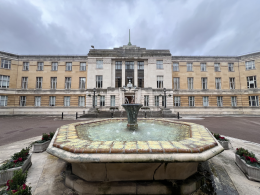
The Joint Pensions Committee meets at 7.15pm on Wednesday 2 December at the Town Hall, Wandsworth High Street, SW18 2PU, when the survey results are due. The meeting is open to the public, and the papers are published on the council’s website beforehand. Residents and union members have addressed the committee at past meetings; requests go to the committee secretary, Daniel Kuszel, at daniel.kuszel@richmondandwandsworth.gov.uk.
The committee is due to agree the fund’s investment policy on Thursday 25 March 2027. It must be published by Wednesday 31 March.



A very detailed and accurate analysis of where we stand today on this issue. Everyone can see that the Council is avoiding its responsibilities with regard to earlier commitments and is happy to push the can down the road regarding divestment. National surveys indicate that 70% of the British public support Palestinians in their struggle against Israel’s brutal occupation and condemn Israel’s ethnic cleansing in Gaza and the West Bank. Most are appalled. If our councillors are elected to represent our interests and priorities, then they need to act accordingly.