Wandsworth Council is officially moving forward with plans to pay for 25 additional police officers for the borough, although questions remain over how they will be paid for and who will be in charge of what they do.
On Monday 12 October the council’s Cabinet will be asked to approve a deal with the Mayor’s Office for Policing and Crime. The team would be 22 constables and three sergeants, one sergeant more than the 24 officers first promised in July. The officers alone would cost about £3.1m a year, rising each year. The first are expected on the streets between January and March.
The council says the plan will be paid for with “developer levy funding”, money charged to property developers. But the council has committed that money only to the first few months. After that, the whole package, the officers plus a new council enforcement team, would cost up to £4.9m a year from the council’s main budget, the same budget behind next year’s near-doubling of council tax.
The council is also unclear about who directs the officers. In one part of the paper (26-243)that covers the new officers, they will work “under Council tactical direction”. In another part they will “remain under Metropolitan Police command”.
The agreement with the Met that would settle it has not been published but the reality is that it is in both groups’ interests to make the situation work: the local force will gain much-needed officer numbers, and if the council maintains a degree of control it will presumably insist that officers stay within Wandsworth boundaries rather than be pulled into central London operations – a persistent complaint of both residents and officers themselves.
If the plan works well, it should also result in local concerns – each ward’s local priorities chosen by residents at quarterly meetings – having dedicated officers put on them.
A new committee set up to oversee the deal will look at the plan first, on Monday 5 October. It can comment but not decide. And under the council’s own rules, once it has discussed the plan, councillors lose the right to challenge the Cabinet’s decision afterwards.
Who pays
What is not clear is how the officers will be paid. The council’s assistant chief executive, Jon Evans, says the plan delivers the Conservative administration’s manifesto promise of more visible policing “through developer levy funding”.
That means the Neighbourhood Community Infrastructure Levy, or NCIL: the share of a charge on new building that is meant to be spent in the neighbourhoods where the building happened.
Because the first officers are not due until January, this year’s bill is set at £300,000. From April the full cost begins: up to £4.9m a year. For that, the council says only that developer money will be used “where possible”.
It is not clear the levy can legally be used this way at all. The main levy can pay only for infrastructure, such as roads, schools, medical facilities and parks, and police officers are not on that list. The neighbourhood share of the same fund has looser rules. It can pay running costs, and even things that are not infrastructure, as long as they deal with the extra demands new development puts on an area. The council has not said how a police team working across the whole borough meets that test.
The levy is also raised in particular neighbourhoods, and government guidance says councils should agree with those communities how it is spent. Yet the officers would be “deployed flexibly across the borough”, according to the council’s own papers, so it’s not clear how that fits the necessary funding rules either.
The council’s budget plan puts extra police and street cleaning among the costs that cuts elsewhere and next year’s council tax rise must cover. To make room, the council has dropped other plans for the money, including youth funding, grants to community groups and a plan to buy an empty pub for community use.
The paper on the new police officers has given a single paragraph of legal comment, which does not mention the levy.
Who is in charge
Section 92 of the Police Act 1996 lets councils pay the Met for extra officers, who remain police officers with full powers even though the council is paying.
In the council’s version, it runs the team day to day. The officers would be based at the town hall, near its CCTV control room, and daily council briefings would tell them where to go, when, and what to enforce. A new council head of service would manage the contract.
Elsewhere, the council puts the Met first. Its equalities assessment says the officers “would remain under Metropolitan Police command”, with their work “informed by locally agreed priorities”. Its budget plan says they will “sit under the Met’s command”.
The deputy leader has leaned the council’s way. In July, Cllr Peter Graham, who is also cabinet member for finance, told councillors the team would be “at the disposal of the council”.
The agreement that would settle this has not been published: so far only a “statement of intent” has been signed, and performance targets have not been agreed. Nor has the council said whether the Met can move the officers to other duties, which has been Putney’s problem before. In 2025 the only officer covering Thamesfield told residents she had been sent elsewhere for 20 days in a single month.
Once signed, the deal would run for at least 12 months, with an option to extend for another two years.
Why the council says it is needed
The council points to the Met’s “Tough Choices” cuts, which it says have reduced the force by around 3,300 officers and staff in two years.
It also sets out falling confidence in local policing. Trust in the Met in Wandsworth fell from 80% to 75% in a year, and the share of residents who think the police do a good job locally fell from 49% to 45%, fewer than half. Among under-35s, only 12% know how to contact their ward police officer.
Two of the council’s three examples of what joined-up enforcement can do are in Putney. At St Mary’s Slipway, CCTV identified 16 vehicles linked to antisocial behaviour, including nitrous oxide use and illegal parking. On Putney High Street, an operation seized five mopeds and eight e-bikes.
Yet the council also describes Wandsworth as “the safest inner London borough”.
Alongside the officers, the council plans a £1.64m-a-year integrated enforcement team of 22 council enforcement officers, and a review of all its enforcement services, including the Parks and Events Police.
What the new committee can do
The committee looking at the plan, the Enforcement Overview and Scrutiny Sub-Committee, was created in July’s rewrite of the council’s rules as an offshoot of the finance scrutiny committee, and the first job in its remit is the council’s work with the Met, “including negotiating and overseeing arrangements for additional dedicated officers”. Monday 5 October is its first meeting. Chaired by Conservative Cllr Claire Davies, it has three Conservative members and two Labour.
The rewrite followed the confidence and supply agreement that independent councillor Malcolm Grimston signed with the Conservatives in May, which keeps them in office. Under it, the Conservatives promised that major decisions would go to a scrutiny committee before Cabinet takes them, and restored councillors’ right to “call in” a Cabinet decision after it is made.
This decision does go to scrutiny first. But under the rules the council adopted in July, a decision “may not be called in” if a scrutiny committee has already considered it. That makes Monday’s meeting the only chance. The committee can send its views to Cabinet, which does not have to follow them.
The agreement also promised Labour’s opposition spokespeople a part in every Cabinet item, and a way for their objection to send a decision to full council.
What happens next
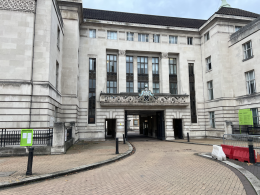
The Enforcement Overview and Scrutiny Sub-Committee meets at 7.30pm on Monday 5 October in Room 123 at the Town Hall, Wandsworth High Street, SW18 2PU. The meeting is open to the public and will be webcast. Paper 26-243 is available here [PDF].
Its members are Cllr Claire Davies (chair), Cllr Graeme Henderson, Cllr Kirsten Botting, Cllr Tom Mytton and Cllr Sara Apps. You can email them before the meeting, or ask the council’s democratic services team how to have your say.
The Cabinet makes the decision at 7.30pm on Monday 12 October.