UPDATED When the Greater London Authority approved AELTC’s tennis development at Wimbledon Park in September 2024, it cited “enhanced biodiversity” as a benefit. The independent expert who had formally challenged that claim, using the government’s own measurement system, had calculated a 36% net loss.
The GLA had his analysis before it decided. It approved the scheme anyway.
This matters because the approval is still contested. A legal appeal remains live, and the biodiversity evidence sits at the heart of whether the scheme should ever have been approved at all. We have covered this dispute across court challenges, a parliamentary amendment, and a design critique.
But the biodiversity numbers are back in public view this week as The Friends of Wimbledon Park have published a key report as part of a consultation on Horse Close Wood, the ancient woodland on the park’s northern edge.
Who calculated the 36%
Dr David Dawson is a professional applied environmental scientist. From 1983 to 2006 he served as joint Head of the Mayor of London’s Environment Group, where he developed London’s Sites of Importance for Nature Conservation and the city’s biodiversity strategy. He has studied Wimbledon Park for over 40 years.
In June 2024, he submitted a detailed rebuttal of AELTC’s biodiversity claims to the GLA, three months before Deputy Mayor Jules Pipe made his decision. The rebuttal used the statutory Biodiversity Net Gain metric: the government’s mandatory system, introduced in February 2024, for measuring whether development leaves nature better or worse off. AELTC’s own assessment, submitted in May 2024, had used an older, superseded version of the same metric.
The numbers
The gap between the two sets of figures is not a rounding difference. It comes from a fundamental disagreement about what currently exists on the site.
AELTC’s May 2024 assessment put the baseline habitat value of the golf course at 167 area units. Dawson’s assessment, using the same statutory methodology, produced a baseline of 807 units, nearly five times higher. The baseline is everything. If you undervalue what is already there, any proposed replacement looks like an improvement.
Starting from 167 units, AELTC projected 205 units after development: a claimed 23% gain. Starting from Dawson’s 807, the same development produces only 518 units: a 36% loss.
AELTC’s own figures had already shifted three times before Dawson submitted his rebuttal. The July 2021 application claimed 10% gain. A May 2022 revision claimed 13%. The May 2024 version claimed 23%. Dawson calculated all three were wrong in the same direction.
AELTC described its own approach in confident terms in that final assessment: “AELTC has consistently strived for the attainment of excellence by ensuring that the project will deliver BNG that far exceeds the 10% currently specified as a mandatory requirement.”
When Dawson applied an independent checklist developed by Oxford University and the Agile Initiative, AELTC’s calculation failed six of nine compliance tests. The checklist’s authors have found that 21% of planning applications nationally contain biodiversity net gain errors, with half accepted by planning authorities without challenge.
AELTC was asked repeatedly from 2021 onwards to share its ecological survey data with Dawson so the two assessments could be compared directly. The request was refused.
What the site actually is
The disagreement about numbers flows from a deeper dispute: what the golf course is.
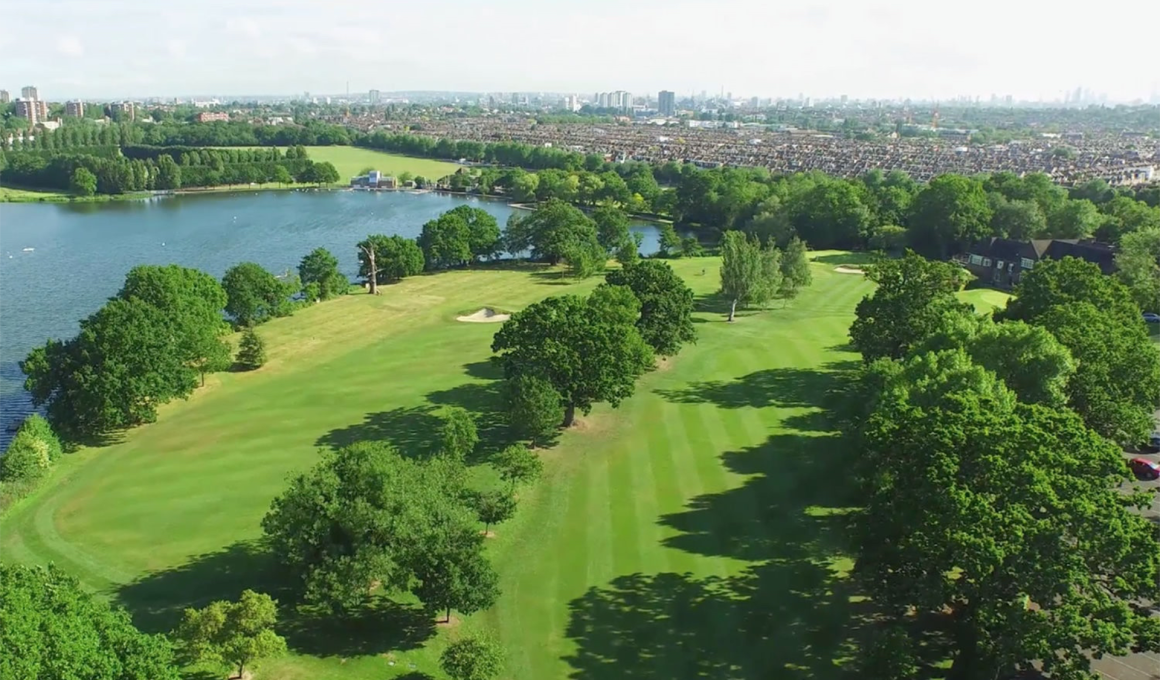
Dawson identifies it as Ancient Wood-pasture and Parkland, about 28 hectares where scattered veteran trees have stood in open pasture since at least the 1600s. Capability Brown incorporated the site into a designed landscape for the Earl of Spencer in 1766. Golf management began in 1898. The character has been continuous since.
Under national planning policy, Irreplaceable Habitats (a category that includes Ancient Parkland) cannot be traded for lesser habitats. Development causing their loss should normally be refused unless wholly exceptional circumstances apply. AELTC’s biodiversity assessment did not identify the site as Ancient Parkland.
The habitat losses Dawson calculates fall heaviest in two categories.
Ancient Parkland: 662 habitat units now, 394 predicted after development, a 40% loss. The veteran oaks include a Tudor Oak dated to around 1520. AELTC has “management plans for each veteran oak” according to its own documentation, but has refused to make them public despite freedom of information requests and direct correspondence.
Wet Woodland around the lake: a Priority Habitat, with units falling from 15.5 to 1.9, an 88% loss. Only 0.4 hectares of replacement wet woodland is proposed against the 0.75 hectares that would be removed.
The lake’s condition has been a concern before. The de-silting method AELTC proposes would, Dawson argues, severely pollute the water, threatening the European Eel and other protected species.
AELTC’s own ecological surveys identified 23 grassland species. Dawson’s independent survey found 99. The club’s assessment missed 75%. An earlier proposal for acid grassland creation was abandoned by AELTC after it was challenged. The Urban Greening Factor, which measures how green a development’s footprint is, would fall from 0.99 to between 0.82 and 0.70.
The approval
Dawson stated his conclusion plainly: “Independent, expert calculations show that the developer’s claimed 23% Biodiversity Net Gain is, in fact, a 36% Biodiversity Net Loss. This substantial net loss is a significant material consideration which we are hereby bringing to the attention of the Greater London Authority.”
These two categories account for the bulk of the calculated 36% net loss across the whole site. Together they show why the baseline matters: AELTC assessed the site at 167 habitat units; Dawson counted 807.
His view on what planning policy required was equally clear: “Since significant harm (a 36% loss) to biodiversity has now been established, and since Wimbledon Park golf course is an Irreplaceable Habitat, planning policy requires the planning decision-maker to refuse permission.”
Three months after receiving that submission, Deputy Mayor Jules Pipe approved the scheme. His press release cited “increased access to open green space and sport, new parkland and a host of new jobs,” and stated that the proposals would deliver “measurable biodiversity net gain of at least 10 per cent.” How the GLA weighed Dawson’s analysis in reaching that conclusion is not explained in the press release.
The consultation now open
This week’s publication of Dawson’s rebuttal comes through a consultation FOWP has launched on Horse Close Wood, on the northern edge of the same heritage landscape. Horse Close Wood is a Grade I Site of Importance for Nature Conservation, covering 1.7 hectares of Ash-Oak-Elm woodland dating to at least 1700. FOWP has published eight supporting documents on how the woodland should be managed, with Dawson’s biodiversity rebuttal among them.
The consultation Google Form closes when full. You can respond here: FOWP Horse Close Wood consultation. The full set of documents is at friendsofwimbledonpark.org.
What happens next
Amendment 248 to the English Devolution and Community Empowerment Act is now law, having passed the Lords in April 2026. Its effect on the planning permission is contested. The legal appeal continues. You can follow developments at savewimbledonpark.org.
The biodiversity dispute has always been central to those challenges. What this story establishes is the evidence: a credentialled expert using the statutory metric submitted a detailed calculation of 36% net loss before the decision was made. The GLA had it. It approved the scheme anyway.
After publication, we received a response from AELTC concerning this story and its biodiversity reports:
AELTC says its 2024 Biodiversity Net Gain Assessment was completed in accordance with Natural England guidance, and was based on more than 1,000 hours of ecologist time on site and over 30,000 hours of post-survey assessment and data analysis.
The assessment was carried out with input from LUC, which worked with the London Wildlife Trust (LWT) throughout the process. AELTC says the intensive management regime of the golf course has restricted on-site biodiversity, and that the proposed development would deliver significant habitat enhancements.
These include extended broadleaved woodland, new species-rich woodland edge planting, newly created reedbeds around the lake, de-silting of Wimbledon Park Lake, the opening up of two brooks feeding the lake, new acid and neutral grassland, wildlife ponds, swales, and new habitat features for bats, Sand Martins, Kingfishers and eels.
AELTC says the assessment was scrutinised by the GLA, the London Boroughs of Merton and Wandsworth, and Natural England before the application was determined.
On the question of whether the site constitutes Ancient Parkland – a classification that would make it an Irreplaceable Habitat under national planning policy – AELTC cites the GLA Hearing Report, which states that the London Wildlife Trust independently evaluated the baseline and did not suggest that it warrants such a classification.
GLA Officers said they were not convinced by representations that it should be so classified. The GLA Hearing Report also states that LWT evaluated the net gain assessment and concurred with its conclusions in full, noting that the assessment had been amended over time to incorporate LWT’s input, making it more precautionary than was originally the case.
GLA Officers concluded that a gain was achievable, particularly in the longer term, given a fully committed and implemented set of management and monitoring plans over a 30-year period.
In its formal response to the planning application in June 2024, LWT said it fully supported the project and would continue to explore how it could work with AELTC to demonstrate how such schemes can deliver for nature.