

Nine months ago, Save Wimbledon Park lost in the High Court. The judge found that the Greater London Authority had acted lawfully when it approved the All England Club’s plans to expand the world’s most famous tennis tournament onto protected parkland opposite its gates.
They appealed.
Three months ago, they lost again in a second High Court case, this time over whether the land was protected by a statutory public recreation trust. They had raised £120,000 from the community to fight it. Their barrister argued hard. The judge did not agree.
They applied to the Court of Appeal.
And then this week, they lost a third battle in Parliament, when the government’s Devolution Bill passed through the House of Commons. Tucked inside it was an amendment – backed by four members of the House of Lords, one of whom is a director of the company behind the Wimbledon expansion – that removed a further layer of legal protection from the land. It passed without a vote. Without debate. In seconds.
You could forgive the group of local residents who have spent five years fighting this for wanting, at that point, to give up.
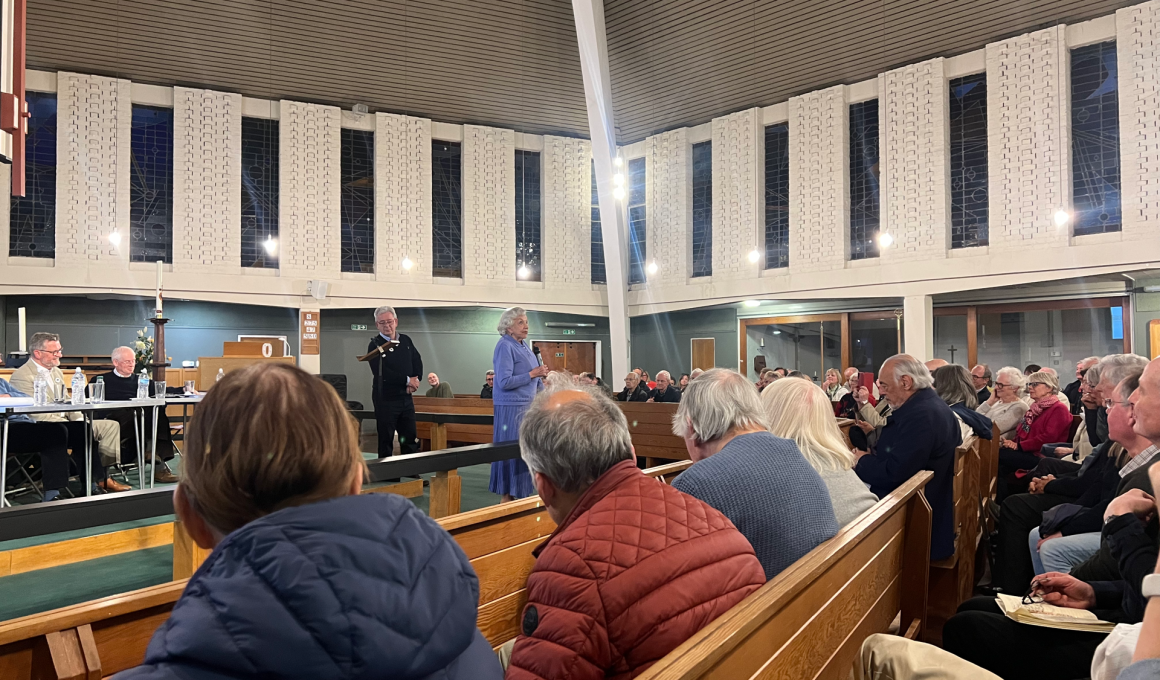
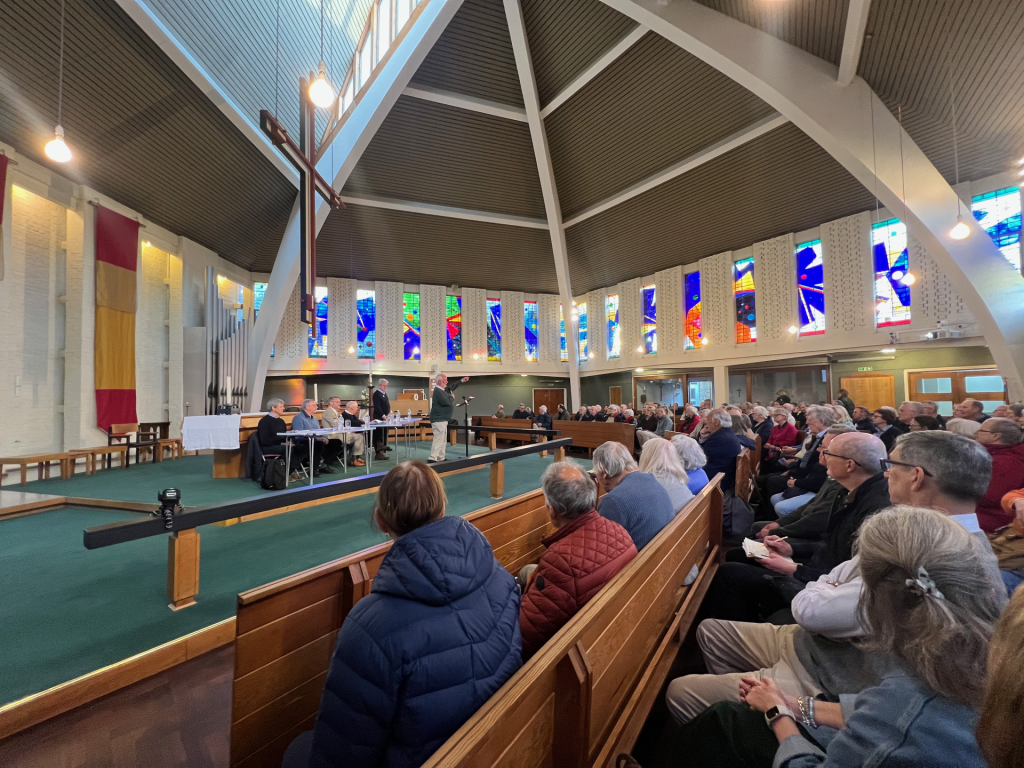
Instead, on Wednesday evening, around 150 of them filled St Mark’s Church in Wimbledon. They had not come to mourn. They had come to see a plan.
What they are fighting for
To understand why this community keeps fighting, you need to understand what it is fighting for, and how long it has been worth fighting for.
Wimbledon Park is a Grade II* listed landscape, one of the highest heritage designations in England. Its lake was created in the 1760s by Lancelot Brown (Capability Brown), commissioned by Earl Spencer to transform formal Renaissance gardens into a natural landscape. Brown dammed the valley formed by two brooks to create what became a 12-hectare lake, planted clumps of trees that still stand, and shaped the views that have defined this corner of south-west London for nearly three centuries.
The park opened to the public in 1914, when the Wimbledon Corporation purchased it to preserve it from a Victorian developer who had already sold off much of the surrounding estate for housing. The lake, the trees, the open land: saved, deliberately, for the people who lived nearby.
Many of them moved here precisely because of it.
This part of London has been fought over before. In the 1860s, the same Lord Spencer whose family had commissioned Capability Brown attempted to enclose Wimbledon Common. He was met by an alliance of local tradesmen who took him to court, and he backed down. By 1872, Parliament had passed legislation protecting public access to open spaces. The common has been preserved ever since.
It is a reminder, as SWP’s lawyer Christopher Coombe told Wednesday’s meeting, that this community has form. “We are in Merton where William Morris set up his wonderful establishments to print papers and weave wonderful patterns,” he said. “William Morris bemoaned the industrial revolutionary process which wrecked large pieces of our landscape. There is a bit of history behind it.”
It is an extraordinary battle against the odds we have followed closely: from how the dispute began, to every court hearing and every parliamentary battle since.

The land that was promised
The golf course land that the All England Club now wants to build on was sold by Merton Council in 1993 for £5.2m. At the time there was, in the words of retired property lawyer Jeremy Hudson, “a great fury locally.” People could see what might happen. So the council and the club both made public promises that it would not.
Council leader Tony Coleman told residents the land “will be retained as open space. We have declared it a conservation area and placed strong covenants on the sale.” The then AELTC chairman said the club had “purchased the land on that basis.”
Those covenants are precise: the land may not be used other than for leisure or recreational purposes; no building may be erected other than one ancillary to open space use. The All England Club accepts and acknowledges that its approved scheme (an 8,000-seat stadium, 38 new courts, ten other buildings, and nine kilometres of roads and paths) would breach them.
Hudson told Wednesday’s meeting that this has been raised with the club since the very first meeting of the campaign, five years ago. It has never been resolved. He paused before delivering the verdict. “It is extraordinary,” he said, “that the elephant in the room is still in the room.”
There is also the small matter of what building all this would mean for the park itself. Actress Thelma Ruby, 101, who overlooks the land from her flat, told the meeting that AELTC’s own plans would mean 800 trees lost. “Even they admit it’s going to be over 400,” she said. A representative of the club had visited her flat to explain the proposals. “She said: between here and the lake we’re going to cut down all the trees and there’ll be eight tennis courts. I said to her: how can you sleep at night?”

The covenants, and who holds them
To proceed, the All England must either obtain Merton Council’s consent to release the covenants, which would require full public consultation, or apply to the Lands Tribunal under Section 84 of the Law of Property Act 1925, a procedure designed to remove covenants that have become obsolete. Hudson, a former expert in the procedure, was unsparing. “There is nothing obsolete about these covenants. They are less than forty years old. They were agreed and imposed to prevent the very thing which the All England are now proposing to do.”
This is why Merton Council matters, and why the elections on 7 May are more than routine.
The council has been under Labour control since 2014. The borough runs from Wimbledon in the north, one of the most affluent areas in outer London, to Mitcham and the estates of Pollards Hill and St Helier in the south and east. The world of cream teas and garden parties at one end of Merton is a different country from the one at the other. Labour has governed them both.
That Labour administration has “repeatedly declined to confirm that they will enforce the covenants,” Hudson told the meeting. The Liberal Democrats, Conservatives and Greens have all confirmed they would enforce. Labour and Reform have not. In the 2022 local elections, the Liberal Democrats replaced the Conservatives as the main opposition across the Wimbledon wards. The direction of travel was already shifting before this dispute became a ballot issue.
Merton goes to the polls on 7 May. If Labour loses control of the council, history will likely record its decade-long failure to enforce the covenants its own residents placed on that land as a significant factor.
Who is fighting this, and against what
Save Wimbledon Park is often described as a residents group. That is true but underdescriptive. It is a group of people: lawyers, architects, historians, community organisers, who have taken the All England Club, one of the wealthiest sporting institutions in the world, to the High Court twice. They have argued their case in the House of Lords and the House of Commons. They have raised over £120,000 from local donations. They have done all of it without pay, in their own time, in parallel with their jobs and lives.
The All England Club has vast resources. It has sympathisers at the highest levels of the legislature. It has a planning permission, bitterly contested and fought through multiple authorities, but granted. It has the commercial logic of a £200 million expansion behind it.
SWP has the law. And as of this week, it has something else.
Tomorrow: the alternative
For a year, quietly, two architects have been working on a plan. Not a protest. Not a legal argument. A master plan, detailed, costed in outline, designed to meet the All England Club’s stated operational needs while preserving the land its own covenants require it to protect.
And the man they recruited to lead that work is the man who designed Wimbledon in the first place.
Richard Rees drew the original All England master plan in the 1990s. He designed Olympic tennis venues at Sydney, Athens, Beijing and Rio. He planned the regeneration of Liverpool city centre and worked on the Hong Kong waterfront. His team gave Wimbledon the phrase that has defined its identity ever since:
Tennis in an English garden.
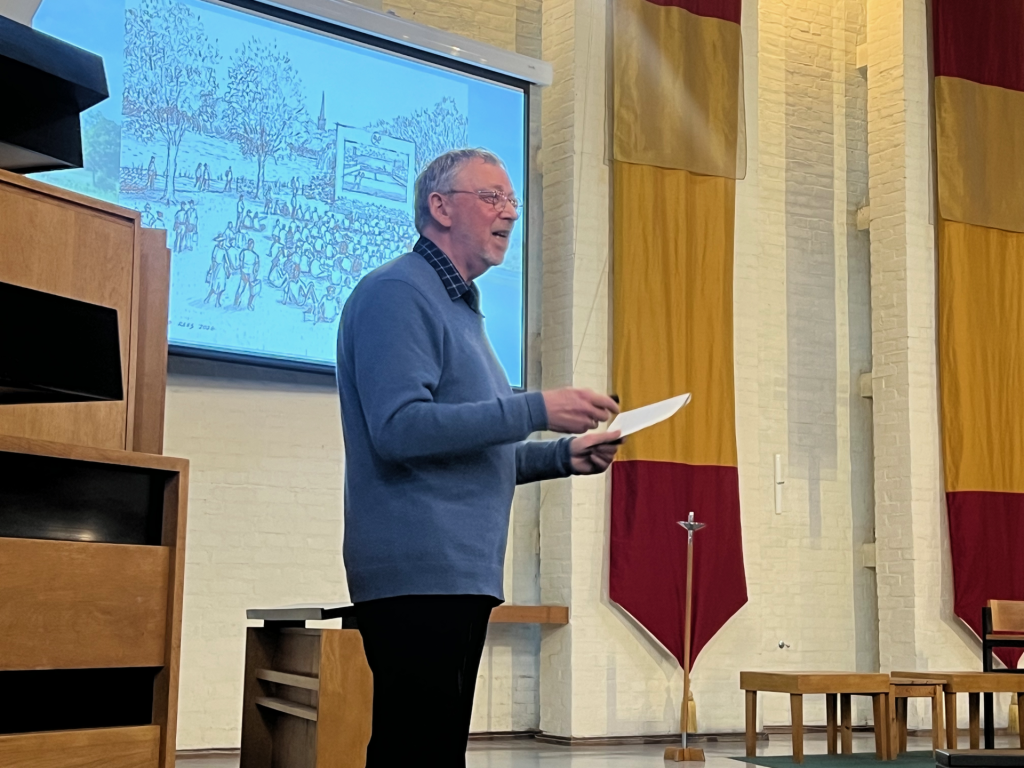
He came to St Mark’s Church on Wednesday evening not as a campaigner, but as a professional who had looked at the All England’s approved plans and found them, in his word, inadequate. He has designed an alternative. Tomorrow, we will explain what it proposes, and why he believes it would make Wimbledon not just more legal, but genuinely better.

Putney.news has covered the Wimbledon Park story in some depth. Our full coverage includes the origins of the dispute, the first High Court loss in July 2025, the Court of Appeal opening the planning challenge, January’s public trust hearing, our legal explainer, and Tuesday’s passing of the Banner amendment.
Correction, 8.30am: We originally put the purchase price of the land by AELTC in 1993 as £3.2m. This was a typo, the real sum was £5.2m.




Kieran McCarthy’s work deserves a Civic Award! Superb, thank you.