

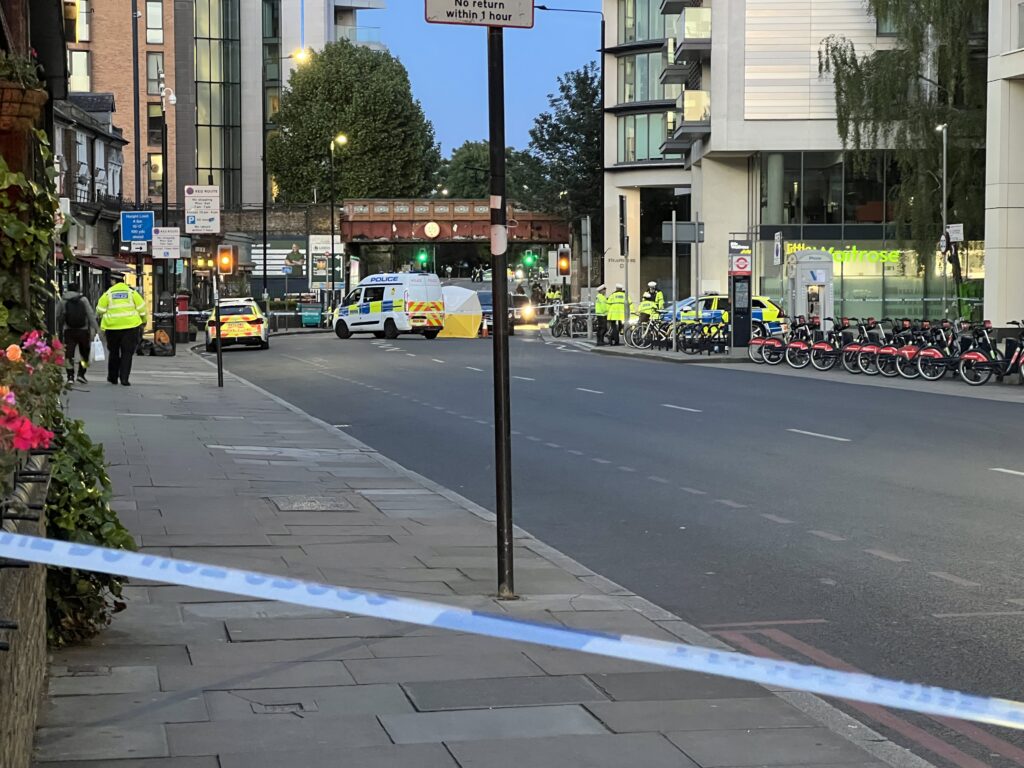
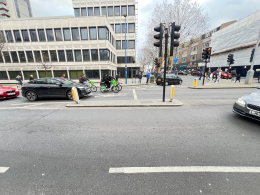
A woman in her 70s was struck and killed by a lorry at around 5.30pm on Monday while using the pedestrian crossing on Upper Richmond Road, near the junction with Carlton Drive. The impact happened just yards from East Putney Underground station, during the busy evening rush hour.
Now, scrutiny is intensifying over plans developed by Transport for London (TfL) to improve this very stretch of road—a consultation that closed on 3 March. The proposals, part of a wider effort to make Upper Richmond Road safer for pedestrians and cyclists, included changes that directly affect the exact spot where the woman lost her life.
Changes that might have made a difference
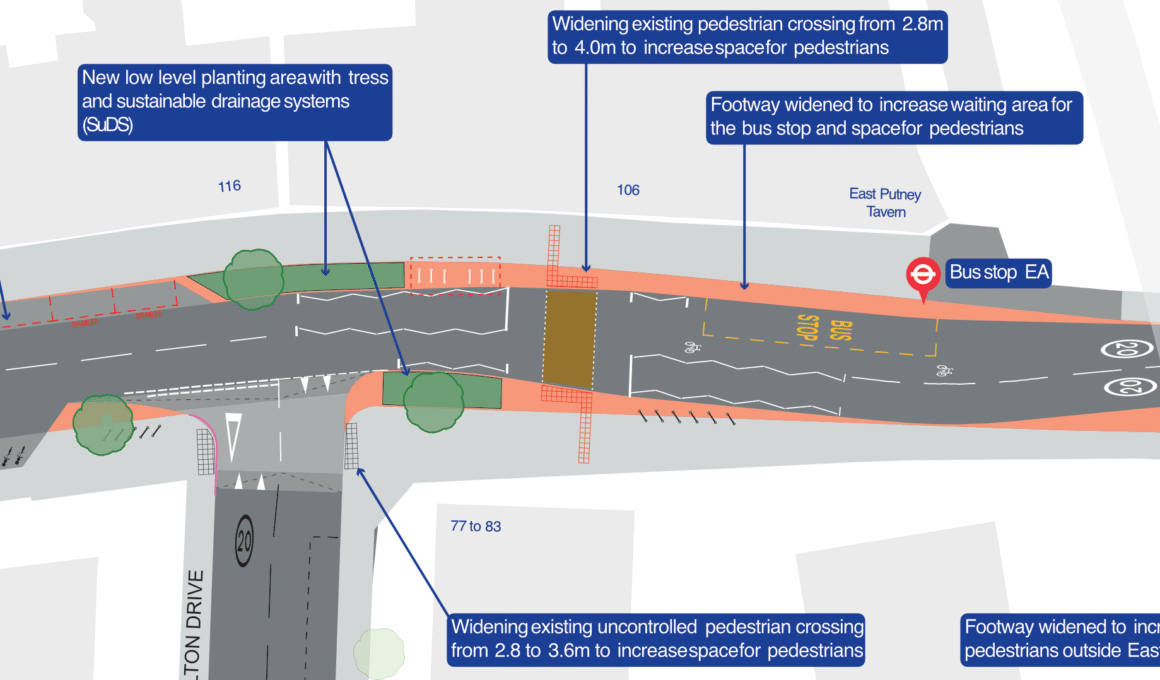
The TfL proposals include widening the existing pedestrian crossing east of Carlton Drive from 2.8 metres to 4 metres—allowing more space for pedestrians and reducing the time spent crossing the road. Footpaths outside East Putney Station would also be widened to ease congestion, alongside new tactile paving for blind and partially sighted pedestrians.
Other planned improvements [pdf] focused on creating a safer and more accessible environment throughout the East Putney area:
- Building a raised table at the same Carlton Drive junction to slow vehicles as they approach the crossing.
- Improving footways and crossing widths not only at Carlton Drive, but also near Oxford Road and Keswick Road, including widening uncontrolled crossings from 2.4 to 3.6 metres at multiple points.
- Relocating the signalised pedestrian crossing from outside Wandsworth County Court to directly outside East Putney Station—better aligning with where most people naturally cross.
- Installing a new toucan crossing (usable by pedestrians and cyclists) across Upper Richmond Road, west of Oakhill Road.
- Removing and relocating parking bays—including the removal of a long loading bay under the railway bridge opposite East Putney station—to create more space for pedestrians.
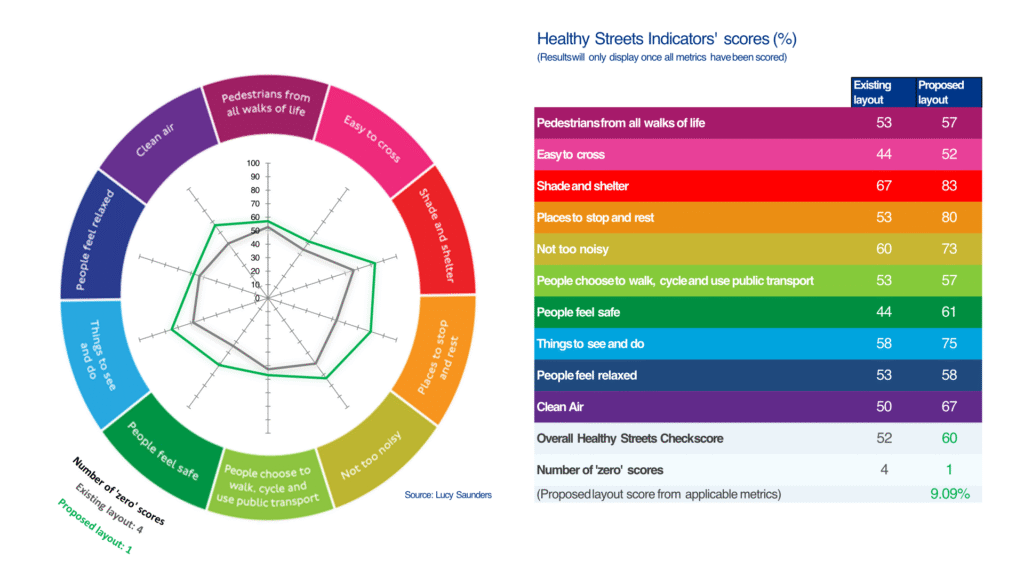
In their own consultation materials [pdf], TfL described the proposed changes as essential to meet the Mayor of London’s targets to reduce pollution, encourage walking and cycling, and improve safety.
What’s missing: timing of the lights
Residents have repeatedly raised complaints about the timing of the pedestrian lights at Carlton Drive, saying they are dangerously short and may have been a cause of the East Putney accident. Although the proposals cover wider crossings and raised junctions, the duration of green signals for pedestrians was not mentioned in the plans.
On community forums, local people have spoken out with growing frustration:
“As an older pedestrian with walking impairment I must agree… I simply cannot cross without running out of time and relying on the goodwill of motorists stopped at the lights.” — Leslie McDonnell
“The pedestrian crossing at the lights in front of Waitrose is not nearly long enough. I’m an able-bodied 30-something and can barely cross the street before cars start rolling forward.” — Lisa
“Yes, completely agree with this—it’s a big problem for me walking with a small child who sometimes refuses to move in the middle of the crossing. It’s a hazard for sure.” — Keri Williams
The death of an older woman has added weight to these concerns. While it remains unclear whether the lights changed while she was still crossing, the scenario echoes the exact warnings raised by residents—particularly those with reduced mobility—who say they feel unsafe and rushed when crossing the road.
Consultation closed, but no response yet
The public consultation ran from 20 January to 3 March 2025. On 4 March, TfL published a brief statement confirming the consultation had closed and that responses were being analysed. “We will report back shortly,” they said at the time, promising that a report would be published and sent to all participants.
As of 20 May—more than two months later—no feedback report has been released and no date has been given for implementation of the plans. TfL also noted that full delivery of the improvements would be dependent on third-party funding contributions, raising further uncertainty about whether they will ever materialise.
A Pattern of Tragedy
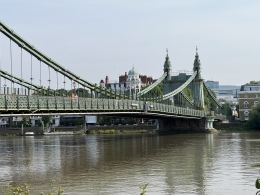
This is not the first fatal incident in Putney this year. In April, a person was killed by a train at Putney Station, prompting the closure of the station and significant disruption. In March, Putney Bridge was closed for two separate police incidents on successive Mondays. These events may have involved the same individual, highlighting ongoing concerns about vulnerability and mental health support in the community.
But the East Putney accident is different. It occurred in broad daylight, in a busy pedestrian zone, at a designated crossing.
The area was already marked for improvement. The plans were already drawn. But the report is still unpublished, the funding still uncertain, and one woman is now dead.
With public pressure mounting and traffic safety once again in the spotlight, many are asking whether the tragic events of Monday night will finally force action—not just on infrastructure, but on the simple question of whether people are being given enough time to cross the road safely.


The proposed changes put forward for this area by TFL have had a strong response from the local residents. The changes are ill thought out, display a clear ignorance of local traffic flows and would not have prevented this awful tragedy. Having lived here for decades, I understand the movement of traffic and pedestrians and longer timing to cross at this crossing would improve the ability to cross safely . Wider pavements and more pedestrian crossings as well as a narrowing of the highway are not the answer.