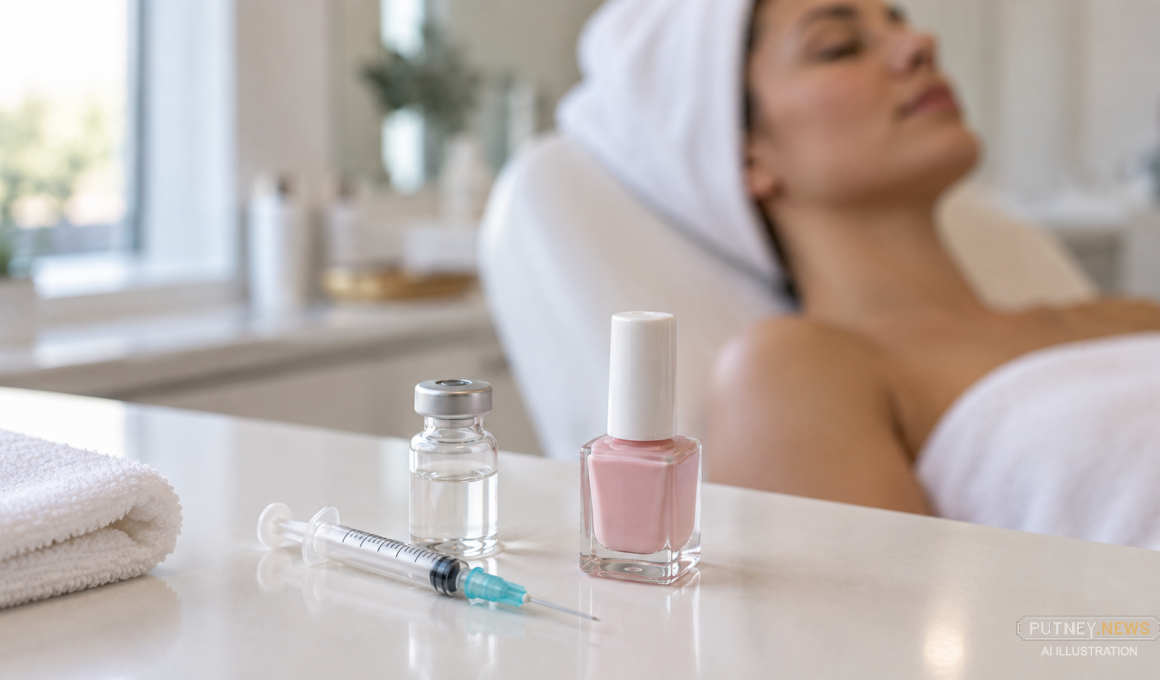
If you walk into a Putney salon for microblading, laser hair removal or electrolysis, that business must hold a licence from Wandsworth Council, and a council officer will have inspected it. If you walk into the shop next door for anti-wrinkle injections or lip filler, none of that applies.
The council decided in June 2004 that Botox and fillers were not “special treatments” under the law and it has not revisited the question since despite growing government pressure in the past few years because of an increase in complaints that have left real marks.
There is a reason salons are licensed. The licence a nail bar holds obliges it to keep a file on every practitioner, with a photograph and copies of their qualifications; to carry £2 million of insurance naming every treatment it offers; to get signed consent from every client; to ask anyone who looks under 25 for ID; and to let a council officer in whenever they choose. Those rules exist because things go wrong in beauty premises, and when they do the council can check who was responsible and whether they were trained.
None of that reaches the person injecting your face. And things have gone wrong.
Why it goes wrong
Last summer, hospitals in the North East of England began seeing patients with botulism after cosmetic injections: drooping eyelids, double vision, trouble swallowing and, for some, trouble breathing.
The UK Health Security Agency counted 25 cases in the region and 38 across England by mid-July, and local hospitals ran out of antitoxin. Its investigation found the patients had mostly attended one of two practitioners, and had been injected with a product not licensed for use in Britain. When a seized vial was tested it contained 370 units of toxin against a label that said 200.
The most famous brand of botulinum toxin is, of course, Botox. But there are another five that are licensed for cosmetic use in the UK, and this was not one of them. A separate cluster in Peterborough that summer was traced to practitioners working from their own homes, again with unlicensed products.
Filler goes wrong differently. It is a gel injected close to the arteries of the face; if it enters one, it blocks the blood supply to the skin, and around the nose and eyes it can travel to the eye itself. The result is dead tissue and, in rare cases, blindness.
The remedy is an enzyme injected within minutes to dissolve the gel. Whether the person injecting you knows that, keeps the enzyme, or has ever handled a blocked vessel is not something any law in England requires.
The licence gap
No qualification is needed to inject filler, and one-day courses in Botox and fillers are openly advertised.
In September 2024, Alice Webb, 33, a mother of five from Gloucestershire, died in hospital hours after a “liquid BBL,” a filler procedure on the buttocks, at a salon in Gloucester.
The Government’s own plan singles out that procedure as one of the highest-risk it wants restricted to registered clinics; it was carried out by a man who was not a surgeon. He was arrested on suspicion of manslaughter, never charged, and died himself this February. Her inquest is expected before a jury this autumn.
Without the scrutiny that licensing introduces, shortcuts are often taken that put patients at risk. The products companies buy can be counterfeit or stronger than they say. The person injecting need not be trained. The premises need not be a clinic. And the rules that would let a council check any of that were written 20 years ago for a beauty industry for which injectables were a tiny part; now it makes up an estimated 65% of the UK aesthetics market’s total revenue.
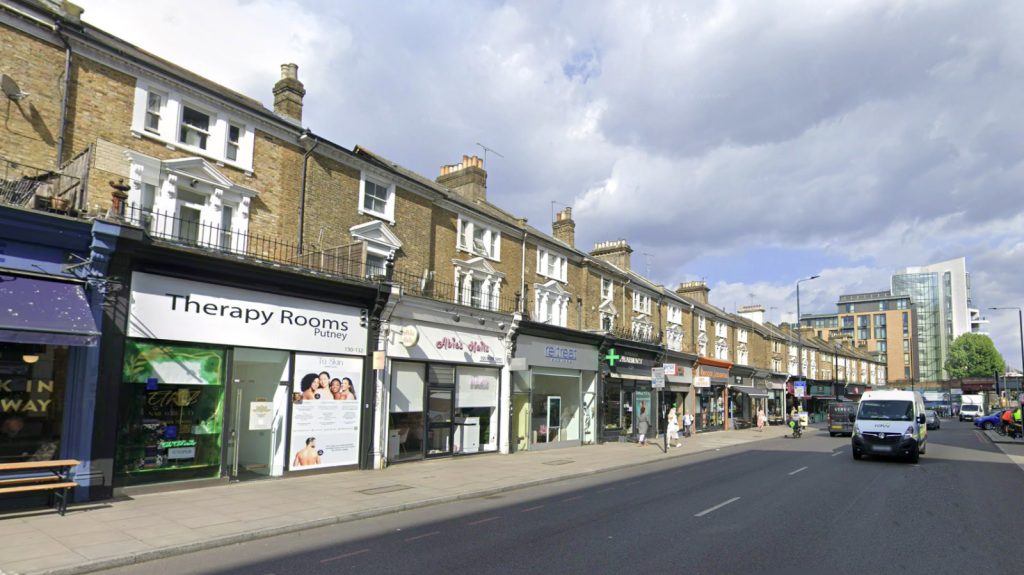
In the past decade, the number of Botox procedures has doubled and the number of filler appointments tripled. The number of complaints have increased at the same rate. Of 2,824 aesthetic treatment complaints made to SaveFace in 2022, 69% of these were due to dermal filler, and 1300 of these complaints were specifically down to lip filler treatments. Save Face runs an accredited practitioner register and is the closest the industry has to a regulator. There are over 5,000 clinics across the UK offering these services, and 10 of them are in Putney and Wandsworth Town, with a cluster on Upper Richmond Road.
If you are thinking of booking one of these treatments, you would be smart to ask more questions than you would at the nail bar.
The Government knows
Concerns have been growing for some time. Parliament changed the law in 2022 to let ministers create a licensing scheme for these treatments, run by councils. Four years later however, it has still not been switched on.
The Government consulted in 2023, and in August 2025 it said it would restrict the riskiest procedures first, after a further consultation “early next year.” In October the health minister Karin Smyth told MPs “hold me to a date.” By November, it was spring 2026.
In February a cross-party committee of MPs called the delay unacceptable. The Government’s reply was due on 18 April and did not come. On 12 June the minister wrote to the committee promising to “consult on draft regulations in June.” Nothing has been published. Scotland passed its own law on 18 March, without a vote against; it takes effect next September.
The licence works when it exists
Wandsworth does enforce the licence it has. In January a council officer found unlicensed laser and microblading being carried out at a premises on Upper Richmond Road. By March a second business on the same road, the Pilates Room, had lost its licence over forged documents and a criminal investigation was under way. It took an inspection, a postponed hearing and five months, and it worked. Every treatment involved was one the council licenses.
For the ones it doesn’t, there is nothing to enforce. Wandsworth Council was asked under the Freedom of Information Act what campaigns, projects, inspections or checklists it had run on businesses offering cosmetic injections since 2018 – asking for the same information across five departments. It only answered for one: Trading Standards had run “no local authority Trading Standards campaign, project, initiative or targeted inspection activity” in the sector and had no checklist for it. The other four departments were not mentioned.
The one power the council does have in this area, prosecuting anyone who injects an under-18, is one it has used for alcohol sales, a Putney corner shop lost its licence this month after a test purchase, and never for a syringe.
Across the seven wards covering Putney, Roehampton, Southfields and Wandsworth Town, 30 premises hold a special treatment licence: nail bars, tanning shops, massage rooms, beauty salons. At least ten businesses in the same wards advertise anti-wrinkle injections or fillers. None is on the register, and none is breaking any rule by not being there. There is no licence for them to apply for.
Some regulation does reach injectables. Botox is a prescription-only medicine; a doctor, nurse or pharmacist has to prescribe it and the medicines regulator pursues unlicensed supply. A nurse or doctor who injects answers to their professional body. A clinic run under a GMC-registered doctor is exempt from the council’s licence entirely. What none of that covers is the room, the records, the insurance and the training of a practitioner who is not a nurse or a doctor, which is the check the council makes for a manicure and does not make for an injection.
Last week, we put a number of questions to Wandsworth Council, including whether it still regards injectables as outside its licensing regime, how many premises in the borough offer them, and whether any of its departments has done any work on the under-18 ban. It has not responded.
Before you book
The council isn’t checking the person, the product, the room or the training. These are the checks you can make yourself.
Check the person. Two voluntary registers accredited by the Professional Standards Authority fill some of it: Save Face, which lists only registered healthcare professionals and inspects their premises, and the JCCP, which also lists trained non-medical practitioners. Neither is a legal requirement, but both mean someone has checked the practitioner’s training and insurance, which the council hasn’t. If your practitioner is on neither, ask what training they have, whether they are insured for this treatment, and what they would do if something went wrong.
Check the prescriber. Botox needs a prescription from a doctor, dentist, pharmacist or nurse prescriber, after a face-to-face consultation with you. If the person injecting isn’t a prescriber, ask who is and whether you will meet them. If you won’t, you may want to walk away. The drug that reverses filler in an emergency is prescription-only too; a clinic that says it keeps it on site should be able to say who prescribed it. If it doesn’t keep it on site, that is also a warning sign.
Check the product. Ask which brand and ask to see the box. Only six brands of botulinum toxin are licensed for cosmetic use in the UK: Azzalure, Bocouture, Botox, Alluzience, Letybo and Nuceiva. For filler, ask the brand and that it carries a CE or UKCA mark.
Red flags. Home visits or “Botox parties.” Booking only through Instagram or WhatsApp with no clinic address. A price well under £150 for one area. No medical history taken, no written consent, no cooling-off offered. Anyone willing to treat someone under 18: that is a criminal offence.
If it goes wrong. Sudden pain, whitening or mottling of the skin, or any change to your vision after filler: go to A&E now and take the product details. Drooping eyelids, double vision or trouble swallowing after Botox: the same. Then report the reaction to the MHRA’s Yellow Card scheme; report the practitioner to their professional regulator, or to Save Face or the JCCP if they are listed; and report a suspected unlicensed product, or treatment of an under-18, to Trading Standards through the Citizens Advice consumer helpline, 0808 223 1133.
For everything the council does license. Any Wandsworth business offering massage, nails, laser, semi-permanent make-up, electrolysis, tattooing, piercing or sunbeds must display its special treatment licence on the premises. You can search the register on the council’s Regulatory Services Hub (choose Wandsworth, then “MST Premises Licence”). Report an unlicensed premises to the council’s licensing team: Licensing.Committee@wandsworth.gov.uk or 020 8891 7275.