


Brad Sutherland was crossing Lower Richmond Road beside Putney Common. The green man was showing. A man on a bicycle came straight at him.
“I panicked and stopped walking trying to anticipate if he would swerve,” Sutherland told us. “Keep going,” the rider ordered. Sutherland got out of his way and said, “You’re running a red light.” The answer came back calmly: “Yes, I know.”
Sutherland rides a bike himself. “I have had many experiences like this,” he explained, outlining another when his son was small the two of them were nearly hit on a crossing on the Upper Richmond Road. A surprisingly number of other readers have also written to us since we ran a piece this week about the increase in dangerous cycling, and they describe the same two things: bikes going through red lights, and bikes on the pavement.
Four pedestrians have been hurt by bicycles on Lower Richmond Road since 2017, according to Transport for London’s official collision records.
Jonathan Lott is a cyclist as well. When he crosses Putney High Street on foot, he now looks round the line of parked cars before he steps past them, because that is where the bikes come from. He has seen, he wrote, “cyclists cycling at speed through pedestrians on crossings”, often when the light was green for the people walking. “I have often been driven at by cyclists on the pavement,” he told us.
Julia Bright wrote in about riders who “seldom give hand signals so you have to guess what they are likely to do or leave bags of room, no helmets, and an attitude that they are more entitled than anyone else!” She added: “I’m a cyclist but was taught to be aware of others on the road: hand signals are quite important.”
Five pedestrians have been hurt by bicycles on Putney High Street since 2017. Three of them were hurt in 2024.
Across the borough, from the start of 2017 to March this year, 108 pedestrians were hurt in collisions where a bicycle was the only vehicle involved. Forty of them were seriously injured and 68 slightly, accounting for 7.1% of all pedestrian injuries in Wandsworth. Across London the share is 5.3%, with Wandsworth ranking ninth of the 33 boroughs.
What’s important to note is that none of the incidents that readers felt compelled to write to us about will be included in the official figures. As another resident, Graham Morrow, put it at this week’s meeting with local police officers where the issue was discussed in depth, we are currently dealing with an epidemic of dangerous cycling.
Not only Putney
We decided to look around and see if places other than Putney are reporting the same issue. It didn’t take long. We are not alone.
Camden has just made cycling offences a formal policing priority in two of its wards: Kentish Town North and Kentish Town South. As of 1 September, its local police force has been asked to focus on “cycling on pavements, failing to stop at red lights, and riding in a careless or antisocial manner.” The response, it has been agreed, will be “warnings, fixed penalty notices, or reporting offenders”. Camden came third in the London boroughs with the most pedestrians hurt by bicycles – 215 of them, 64 seriously, making up 12% of all pedestrian casualties.
Islington comes sixth in the list (116 hurt, 28 seriously, 9.7%). Its council leader put the hire-bike companies on a “last warning” in December, in an open letter setting out what the council expected them to fix. Riders running red lights was on the list.
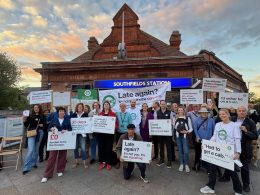
On Wednesday night, the day after Camden’s priority was published, residents at the Thamesfield ward panel asked for cycling offences to be added to the ward’s policing priorities. The local sergeant argued that it could be added under an existing priority called “Theft – Pedal Cycle” – something that his officers have been investing heavily in and want to retain, for now, because of resource constraints. The current priority was kept.
Our research also turned up another interesting fact: when cycling last had a big boom in interest – over a hundred years ago in the 1880s – the same problem of a shift in behaviour where many more people started travelling on fast moving vehicles and its subsequent impact on pedestrian safety also become a big topic.
The “Safety Bicycle” which featured two wheels of an equal size, with a steerable front wheel and a rear chain-drive – effectively the same model we have today – was invented in 1885. Pneumatic tyres were invented in 1888 and made bicycles much more comfortable to ride – and as a result people rode faster. The law that bans riding on the pavement was written in 1835 and was extended to bicycles in 1888 in response to these technological developments that led to a societal shift in transport.
As such, it is not a coincidence that new, readily available e-bike technology that enables people to grab the nearest bicycle to them and go further faster with a battery has resulted in a jump in serious incidents and an increase of complaints about dangerous cycling. Cycling in London is up 43 per cent on 2019, by TfL’s count, at 1.5 million journeys a day.
| 2015 | 1.09 |
|---|---|
| 2016 | 1.05 |
| 2017 | 1.12 |
| 2018 | 1.09 |
| 2019 | 1.05 |
| 2020 | No comparable data |
| 2021 | No comparable data |
| 2022 | 1.19 |
| 2023 | 1.26 |
| 2024 | 1.33 |
| 2025 | 1.50 |
Why the law is not enforced
While dangerous cycling may be a resurfaced issue, the risk to pedestrians from cars has long been something we have dealt with and have developed a whole arm of rules, regulations and infrastructure to limit that harm: cameras at junctions, a national register of who keeps every vehicle, penalty points on a licence, insurance that costs more once the points arrive, and the courts behind all of it. A driver who goes through a red light can expect to hear about it, usually by post. Nothing comparable has been built around the bicycle.
A car that goes through a red light on Putney High Street is photographed. Its plate is read. The DVLA says who keeps it. A letter arrives, points follow, the insurance premium goes up, and a court is there if it comes to that. Not one of those steps needs a police officer standing at the junction. A car without a plate is an offence in itself, and an officer can stop it for that alone. The whole system hangs from a seven-character string on the front and back of the vehicle: the licence plate.
A bicycle going through the same red light is seen by the same camera. But this time, the camera can do nothing with what it saw. There is no plate to read, no keeper to look up and no address to write to. The law has been broken in full view and there is nobody to send the letter to. Unless a person is physically standing at that junction, the only thing anyone can do with the offence is notice it. Mothers with pushchairs notice it. Older people on the pavement notice it. And when they are nearly hit, or have abuse hurled at them for challenging the behaviour, it sticks in their mind.
This week, one local police officer told residents he had stopped and ticketed a number of cyclists in recent months but senior officers were also clear that this is not the best use of limited resources. An officer could write tickets all day and change very little. The behaviour is everywhere and a ticket written by hand deals with one rider, at one junction, on one afternoon.
And then we have the jurisdictional issues. Transport for London (TfL) owns the cameras. This week, Putney.news asked what it could do with them. It got back: “TfL does not have powers to enforce cycling offences and would not issue penalties for offences such as cycling through red lights or cycling on the footway. Enforcement action in relation to these offences is undertaken by the Metropolitan Police Service and City of London Police, which may issue Traffic Offence Reports or take other action as appropriate.”
Wandsworth Council does not hold the criminal powers. The Traffic Management Act 2004 defines the owner of a vehicle as the person it is registered to. The same Act says civil enforcement officers may not be given the power to stop a vehicle. Between them, those two facts mean a council camera can only ever write to the person who has registered a vehicle, and bicycle are not registered, so it has no one to contact even if it wanted to.
TfL has the eyes without the authority. The council has the authority but not the data. And the police can’t be there all day. There is, simply put, no joined-up, institutional way to address bicycles riding on pavements or through red lights.
-
1. It is an offenceCar: YesBike: Yes
-
2. Someone can act on itCar: Police, TfL and the councilBike: Police only
-
3. The camera can say whoCar: Plate read, keeper found at the DVLABike: Nothing to read. Only an officer standing there can say.
-
4. A letter goes outCar: Penalty, points, higher premium, a court if neededBike: Nobody to write to
-
5. A record is keptCar: 187,261 red-light offences in London, 2023 to 2025Bike: Only where an officer wrote a ticket
-
6. The numbers decide where cameras goCar: 245 junctions out of more than 6,000 sets of signalsBike: No numbers, so no decision
-
7. The behaviour changesCar: Patchy, but it can be pointed at any junction tomorrowBike: Nothing to point
Is the answer number plates?
If you thought the problem was limited to Wandsworth, Camden and Islington, you’d also be wrong. For five years, the problem of cycling offences has been periodically flagged in Parliament along with proposals for new restrictions.
In November 2021, the government was asked if it would consider number plates for bicycles. A transport minister gave an unequivocal answer in the Lords: there were no plans for registration; the costs would outweigh the benefits; it would put people, including children, off cycling; and a plate big enough for a camera to read would not generally fit on a bicycle.
But the issue has not gone away and has been raised repeatedly since then as more complaints about dangerous cycling have arrived. In June 2025, Lord Hendy, the transport minister, said “the Government have no plans to legislate for the registration or insurance of e-bikes or pedal bikes”, and that doing so “would be likely to put many people off cycling”.
The government’s position rests on a review the Department for Transport carried out in 2018 – before the current boom. But while bicycle licence plates may seem like the most logical answer – you can simply add them to the current system and infrastructure – that doesn’t necessarily mean it’s a good one.
Plates for private bicycles have been tried all over the world as – as far as we are aware, have never been successful. Toronto licensed bicycles from 1935 to 1957 and gave up. Switzerland ran a national scheme until 2012 and also gave up. Toronto’s own explanation, still on the city’s website, is that licensing “in and of itself does not change the behaviour of cyclists who are disobeying traffic laws”.
In a Lords debate in September 2024, Lord Austin of Dudley, a lifelong cyclist who chaired the all-party cycling group, make a key point about licence plates on bikes:
“The majority of cyclists who break the law are on electric hire bikes, which are already numbered and registered, so the people riding them could be arrested and prosecuted; but of course, the police do not enforce that.”
Later in the same debate Lord Shinkwin, who uses a wheelchair, described crossing a road the previous week as a cyclist came at him through a red light. “The light’s on red,” he shouted. “Yes, I know,” the rider said, and carried on. Shinkwin told him to stop, because it was illegal, and the rider sailed past. Brad Sutherland heard the same three words at the Lower Richmond Road crossing.
The ministerial answer from November 2021 – which was the first official sign that this was becoming a problem – has a second paragraph that may contain the solution instead. Having explained that plates could not be made to work on bicycles, the minister went on to say that trial e-scooters were required to carry a unique identifier “that will aid with enforcement”. The government said it could not be done and, in the next paragraph, confirmed that it was already being done.
Every one of Wandsworth’s hire bikes carries a number on its frame, reports its position by GPS and is rented through an account in someone’s name. The operators built all of that in a couple of years, because councils across London complained about bikes dumped on pavements.
In November 2022, Wandsworth had no agreement with Lime, and the council’s leader was threatening to have Lime bikes seized from its streets. In July 2025 the council signed a deal with Lime, Forest and Voi: 170 on-street parking bays, no-parking zones in the town centres, and half-price rides for residents on the council’s Access for All scheme. Zones where a hire bike slows itself down as it enters, and zones where the app will not let a ride end, were built to order once councils asked for them.
In the year to May 2025, hired e-bikes made 6.8 million trips in the borough, by the council’s count. That is close to 18,600 a day, somewhere in Wandsworth, right now. Of the eight borough agreements with operators that we have looked at, Islington’s is the only one that mentions how the bikes are ridden.
- IslingtonParkingRed lights raised in a warning letter, December 2025
- LewishamParkingNothing published
- MertonParkingNothing published
- LambethParkingNothing published
- HaringeyParkingNothing published
- HounslowParking (Lime banned)Nothing published
- City of LondonParkingNothing published
- WandsworthParking: 170 bays, no-parking zones, impoundingNothing published
Wandsworth has every tool it needs
Wandsworth Council already fines cyclists in its own parks. Under byelaws inherited from the Greater London Council, riding faster than twelve miles an hour in Wandsworth Park in Putney, in Battersea Park or on Tooting and Wandsworth Commons can bring a penalty, and the council used those byelaws on Tooting Bec Common last winter.
Wandsworth’s agreement with Lime, Forest and Voi is where that could be asked for. The Cabinet Member for Transport, Jenny Yates, said in July 2025 that e-bikes were “here to stay as a key part of Wandsworth’s transport network”. The agreement says nothing about how the bikes are ridden.
Last October, the council renewed a borough-wide Public Spaces Protection Order. A PSPO is the council’s own instrument: it names behaviours in a defined area and lets council officers, as well as the police, fine anyone caught doing them on the spot. The order covers drinking, drugs and dogs, but not cycling.
Some councils however have extended PSPO to include cycling offences. In Kensington and Chelsea, a PSPO bans cycling on the pavement and an enforcement officer can fine a rider for it there and then. So the council has the ability to empower itself to tackle one of the two key cycling offences.
The council could also put riding behaviour into the agreement it already holds with the operators. No law makes an operator tell a council or the police who was riding one of its bikes, and nobody can compel them to. The council can only ask, and the next renewal is the moment to ask. But the truth is that it doesn’t need to push at privacy laws if the e-bike operators can be persuaded to police the situation themselves.
A hire bike has everything a car has except the plate on the front, and the number on its frame does the plate’s job. A photograph taken of a cyclist riding on a pavement or through a red light – whether taken by a council camera, a TfL camera, or a pedestrian’s camera carries with it location and time. And the e-bike companies know exactly where all of their bikes are at any given time. They also know who is riding it, and they have their card details.
The laws – and fines – already exist
In 2023, across the whole of Great Britain, 44 people were prosecuted or convicted for careless cycling and five for dangerous cycling.
The laws and corresponding penalties already exist: a cyclist who goes through a red light can be given a £50 fixed penalty on the spot, or fined up to £1,000 in court. Riding on the pavement is a £50 fixed penalty, or up to £500 in court. Careless cycling carries a fine of up to £1,000 and dangerous cycling up to £2,500.
A driver caught by a camera at the same red light pays £100 and takes three points on a licence. Cyclists do not have licences but it is easy to see how an e-bike company could boot a persistent offender from its service.
Julia Raeburn, a daily cyclist from Southfields and Putney.news reader, also suggests a softer approach that could help reset cyclist behaviour: every six or eight rentals, the app should make the rider confirm the basic rules, stopping at a red light among them, ticking each one separately before the bike unlocks. She would also have the operators show riders what their own figures say about injuries.
It can’t just fall on the council though. As TfL noted, and the police has acknowledged, in London it is the Met that has the power to enforce the law when it comes to cycling offences. The whole idea behind residents setting local policing priorities is that residents often have a better idea of what is going on in their neighbourhood and if somebody is prepared to go to the trouble to attend a meeting and argue their case, it is usually a good sign that it is a real problem.
All of Putney’s seven wards hold a quarterly meeting where these priorities are set and with the Met increasingly focused on data and provable results, it is a good place to starting turning resident frustration into action.
| Riding through a red light | £50 fixed penalty | Up to £1,000 |
|---|---|---|
| Riding on the pavement | £50 fixed penalty | Up to £500 |
| Careless or inconsiderate cycling | No fixed penalty | Up to £1,000 |
| Dangerous cycling | No fixed penalty | Up to £2,500 |
| Cycling unfit through drink or drugs | No fixed penalty | Up to £1,000 |
| Wanton and furious driving, injury caused | No fixed penalty | Up to two years in prison |
| Causing serious injury by careless cycling (2026 Act) | No fixed penalty | Up to two years in prison |
| Causing serious injury by dangerous cycling (2026 Act) | No fixed penalty | Up to five years in prison |
| Causing death by careless cycling (2026 Act) | No fixed penalty | Up to five years in prison |
| Causing death by dangerous cycling (2026 Act) | No fixed penalty | Up to life imprisonment |
| A driver through the same red light | £100 fixed penalty and three points | Up to £1,000 and possible disqualification |
The count nobody has
So what’s stopping the council, TfL and the Met was acting on this right now?
The simple answer is that nobody knows how bad it is. No one is measuring it. What we have instead are anecdotal records of near-misses, and records of the very worst cases. The 108 people hurt across the borough are the only count there is, and each of those records was made because someone was hurt badly enough to need one. Every red light run, every pavement ridden and every near miss that hurt nobody is in no dataset anywhere.
It is worth reflecting on how the problem that residents are reporting is seen when looked at dispassionately by the authorities through data. How many red-light offences do you think are reported every year in London alone? 1,000? 10,000? On average it is 62,400 a year or roughly 170 a day. And that comes from just 245 camera sites. So while the vast majority of us would never consider jumping a red light, it is something that requires constant enforcement which tells you something about human behaviour at scale.
Those figures are what the authorities check against when trying to decide whether something is an issue and where to focus resources. As things stand, without the buy-in of the authorities and without the structure to record cycling offences except for those that are dealt with by on-the-ground police officers, the cycling figures are less than a tenth of that: 11 cyclists a day. The number of cyclists fined for pavement riding? Annually, in London, under 200. The only serious dataset there is counts injuries, assigns no blame and cannot tell an e-bike from a pedal cycle. We are, in short, working blind.
The man who came at Brad Sutherland on Lower Richmond Road is not in any of the figures and it is safe to assume that was not the first time he went through a red light, and equally save to assume it is not the first time a pedestrian had to jump out of his way.
He went through a red light with the green man showing, told the person in front of him that he knew, and rode on. Nobody was hurt, and nothing was written down. No Freedom of Information request will find him.
What you can do
The four bodies that would have to agree are the Met, Wandsworth Council, the hire operators and TfL. Each of them can be asked now.
The Met. Ward policing priorities are set by the residents who turn up to the ward panel. Camden’s new priority names “cycling on pavements, failing to stop at red lights, and riding in a careless or antisocial manner”; the same words can be asked for at any of these:
- East Putney: Thursday 17 September, 6pm to 7pm, Putney High School (Putney Hill entrance)
- West Putney: Tuesday 29 September, 6.30pm, Granard School
- West Hill: Tuesday 20 October, 6pm to 7pm, Southfields Library, 300 Wimbledon Park Road
- Wandsworth Town: Wednesday 21 October, 5.30pm to 6.30pm, Wandsworth Library
- Southfields: Saturday 24 October, 10.30am to 11.30am, St Barnabas Church, Lavenham Road
- Thamesfield: Tuesday 1 December, St Mary’s Church, Putney High Street
- Roehampton: no date advertised yet; the last panel was at the end of May
Wandsworth Council. Two questions for your councillors, ready to send below: will the council put riding conduct into its next agreement with Lime, Forest and Voi, and will it add pavement cycling to its Public Spaces Protection Order, as Kensington and Chelsea has done? If your councillor replies, forward it to postbox@putney.news.
Everyone ticked gets the email. Untick anyone you would rather not write to.
The operators. If a hire bike is ridden at you through a red light or along a pavement, report it in the operator’s app with the number on the frame. That is the one record an operator has to act on. Lime says the number is there so it can identify the rider.
TfL. TfL has not said what its junction cameras can see or record. Your London Assembly member can ask it that at Mayor’s Question Time.
You. A photograph of a hire bike carries the time, the place and the frame number. Take it from the kerb, not the road, and send it to the operator. For a collision or a crime in progress call 999; the Met’s online reporting form takes video for anything else.
On the comments across this series
Over the past fortnight a dozen comments from five readers, across four stories, have made one argument: cars hurt far more pedestrians than bicycles do, so a series about dangerous cycling is disproportionate, selective, or a case against cyclists.
The first half is true, and nobody here has said otherwise. Our own figures show it: bicycles were the only vehicle involved in 7.1% of pedestrian injuries in Wandsworth since 2017. The other 93% involved something else, overwhelmingly cars. That is a pedestrian-specific figure, from Transport for London’s collision records, and it is in the piece.
The second half does not follow from the first. The series has never claimed cycling is the biggest danger on the road. It reported a specific harm that more than a dozen residents wrote to us about, and then asked why nothing is done about it. The answer is an enforcement gap: a driver who runs a red light can be identified afterwards, where a camera catches it, by plate, DVLA record and licence; a cyclist cannot, because none of that exists for a bicycle. Across Great Britain in 2023, 44 people were prosecuted or convicted for careless cycling. That is not an argument that driving offences don’t matter. It is the reason this one is hard to enforce.
What the series actually did: ran a whole piece in cyclists’ own words; examined number plates and rejected them; used cyclists as its witnesses; and took its proposed fixes from a daily rider. If it reads as a case against cyclists, it is worth checking that against what is on the page.
This point has now been answered twice in the comments, on 3 and 8 September, and this note is the record for the series. Comments that repeat it will not be published. Comments that add something – an experience, a fact, a fix – are what this space is for, and they are welcome.


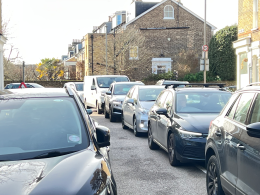
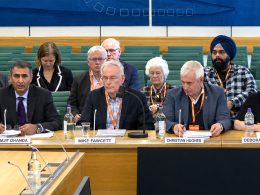
There must be a simpler way of doing this than requiring four different bodies to agree before anything happens: enforce the laws that already exist.
And this isn’t an argument for letting motorists off the hook. Speeding, dangerous overtaking, parking where they shouldn’t, mobile-phone use and running red lights are all serious problems and should be enforced just as rigorously. Road safety shouldn’t be a competition between different groups of road users.
But the same principle has to apply to cyclists. Riding on pavements and going through red lights isn’t made acceptable because some motorists behave badly.
Wandsworth lists several static CCTV enforcement cameras on Putney High Street, while TfL has cameras capable of enforcing red-light offences. So the obvious question is: if we know there is a problem, and the technology exists, why does enforcement apparently require four organisations to agree before anything can be done?
Perhaps we should be grateful it only takes four.
And if the eventual solution is to put number plates on bicycles, there is one country we can look to for inspiration: North Korea. It is, apparently, the only country that routinely does so. I don’t think that’s the particular model Putney needs to follow.
Enforce the rules fairly, whoever breaks them. That would be a much better starting point.
It’s a common misconception that cyclists are not drivers. I would argue most adult cyclists also drive and hold driving licences, so could end up with points if prosecuted.
Excellent article as usual, very detailed and perhaps a tad long? so why save 2 or 3 characters by using “As of 1 September” what is wrong with “September 1st”? We are lowering standards everywhere, whilst cycling certainly, do we need to lower journalistic standards as well?
It’s a fair question. Plenty of cyclists also drive, so the instinct makes sense: if the licence is already there, why not use it? The problem is that the law has to join the offence to the licence, and for cycling it never has.
Points only apply to offences on a specific list, and everything on that list is a motor vehicle offence.
The idea isn’t far-fetched, though. Courts here can already ban anyone from driving after a conviction for any offence at all, under section 163 of the Sentencing Act 2020. Germany goes further, taking the car licence off anyone cycling at twice the English drink-drive limit. Japan lowered its threshold in November 2024 and suspended nearly 900 driving licences for drink-cycling in the first nine months of last year, against two the year before.
It has been looked at here too. When the new cycling offences went through the Lords this year (Crime and Policing Act 2026) peers tried to add exactly what you’re describing, up to 12 points on a driving licence. The government turned it down, arguing that the courts don’t need points to reach a cyclist’s driving licence because section 163 already lets them impose a ban directly. So the gap isn’t an accident. Parliament looked at closing it in March and decided not to,
From the behaviour of those on hire bikes I rather suspect they don’t drive. They show such little road sense and such an apparent lack of knowledge of the Highway Code, that it would be a surprise if they had gone to the time and expense of sitting their driving test.
I tend to think the short term fix lies with the hire companies. If reporting to them bad cyclist behaviour straight away, ideally by uploading a photo of the cyclist on the pavement or going through a red light, the hire company will know a) who the culprit is and b) be able to sanction them. Ideally by blocking the bike while they’re still on it.
The longer term fix is a return of the cycling proficiency test.
The other point about the dangers of being a pedestrian is of course the statistical reality that cars (more precisely, their drivers) are far more dangerous, not to mention far more polluting.
So let’s keep a sense of proportion about what the real problem is (a cyclist writes!).
Might I suggest some other things that we as local residents can do to improve road safety? As part of our contact with councillors maybe we could make some positive suggestions as well as complaints? For example – meet your local school head and governors and support them to lobby for school streets and/or schools to join the councils excellent air quality accreditation programme. This would help establish safe routes to school on foot, bikes or scooters for children and their families and does not disadvantage local residents, and helps those who genuinely must drive by reducing car journeys that could be made by other means. Or – for those who want to got further – could you make one less car journeys a week or leave your car at home for a day? Talk to a neighbour or friend who cycles and ask them what would help? I am sure others have better ideas that will take us forward rather than entrench us further
Before commenting on this, I want to make it clear that law-breaking by cyclists is, simply, wrong, anf it makes me furious, not only for the harm it causes, but because it reflects badly on me as a cyclist: “You’re all the same!” is the mantra.
Having said that, we have another monstrously long piece (at least the third on Putney News) on this issue, but nothing comparable on the harm that cars do – only one statement, that “the risk to pedestrians from cars has long been something we have dealt with and have developed a whole arm of rules, regulations and infrastructure to limit that harm: cameras at junctions, a national register of who keeps every vehicle, penalty points on a licence, insurance that costs more once the points arrive, and the courts behind all of it” Oh yeah? And yet, despite this long list of supposed restrictions, cars cause 30 times the number of deaths and serious injuries suffered by pedestrians – and we gewt all this stuff about cyclists!
And that’s the point, really: not that there is anything different in the death or serious injury caused to a person whether by car or pedestrian, but that the whole issue is wholly, absolutely, completely out of proportion. The silly meme everywhere is “The war on the motorist,” but reading this stuff almost makes me descend to the same abysmal level and complain about “The war on the cyclist.” But I won’t.
I’ll start to take this campaign seriously when it devotes rather more time to the really big issue of harm to pedestrians from cars. Interestingly, even Peter Hitchens, not the most likely source, is writing a book on “The madness of Cars,” so perhaps there’s some hope yet.
Maybe we should instead focus on the mode of transport actually killing multiple people a day in the UK. The mode of transport worsening our air quality. The mode of transport clogging Putney’s roads. The mode of transport routinely breaking the law by speeding.
Cars.
This whole article is probably the most ridiculous nothingburger I have ever read. An absolutely bizarre tirade as if police had nothing better to do. If only people devoted as much energy to things that actually matter. Facebook level drivel.
This piece exists because over a dozen residents wrote to us about what happened to them and their concerns about a big increase in dangerous cycling. Our neighbours also raised the same issue with police last week.
It isn’t the case that the article ignores what cars do: the comparison is in there around how much enforcement already exists for drivers – camera, plate, DVLA, points, insurance, courts – precisely because none of that exists for bikes so there is no effective enforcement for poor cycling.
One last thing: the tone of your comment reads more like X than like neighbours talking to each other, which is what this space is for.
I live in Wimbledon and cross the traffic lights outside Parkside Hospital on average twice daily.
It is rare for cyclists to stop when the lights are on red. They will simply cycle straight in front as you’re crossing.
I frequently walk the underpass at Tibbets Coner; no one seems to know which lane is for cyclists, and which for pedestrians. Why not place signs saying which is which?
Also would cyclists please have a bell – and use it. We cannot hear you if you come up behind us, and could easily step left or right directly in front of you, because we don’t have a clue you are anywhere near!
The increasing number of bikes on the road without Highway Code knowledge and adherence is becoming more dangerous by the day and by the increased numbers, as noted in the article and comments above.
They now need to be liscenced. Schools should be training and licensing all school children who want to participate, or perhaps just all of them. The Highway Code should be taught in schools so that the upcoming generations are safer to pedestrians and to themselves on the roads. The danger to cars and pedestrians by cyclists is because you have two sets of vehicles following different rules. Cyclists need to be licensed so that all on the roads know and are following the same rules. The number of times cyclists overtake from the left, cycle outside cycle lanes , ignore red lights, don’t slow down for children, or the elderly is simply dangerous and unacceptable.
In Richmond Park they almost always exceed the speed limit and my elderly mother was almost mowed down on the pavement by a cyclist who refused to give her way, despite seeing her from a distance , and it being obvious she could not move out of the way in time, while another cyclist went straight into the back of a car in front, because the cyclist was cycling so fast, it didn’t bother slowing down for the car ahead making way for another cyclist! Too many cyclists are playing recklessly with dangerous vehicles and they need to be regulated.
While it is ridiculous to require so many groups in order to police them, it needs to be done, but from what I can see licensing and /or at a minimum, Highway Code lessons in schools also needs to happen to keep all parties safe.
I would further add, having re-read this piece several times, that it comes over less like a balanced examination of dangerous road behaviour and more like a case assembled specifically against cyclists.
There is very heavy reliance on anecdotes, but very little comparative evidence. It is stated that five pedestrians have been injured by bicycles on Putney High Street since 2017. How many have been injured by cars and why is that comparison absent?
The red-light example is also misleading. The article suggests that a car running a red light on Putney High Street will be photographed. There is no red-light camera on Putney High Street. In London, only around 4% of traffic signals have red-light cameras. Those cameras generated more than 71,000 tickets in 2025 — but that clearly doesn’t mean every red-light offence is automatically detected.
Most tellingly, the article provides a comprehensive list of cycling offences and penalties, yet compares cyclists with motorists on only one offence: running a red light. Why not compare the equivalent offences across the board — careless cycling/driving, dangerous cycling/driving, cycling/driving while unfit, and offences causing serious injury or death?
Perhaps those comparisons wouldn’t produce quite the desired narrative?
Dangerous cycling is a legitimate problem but so is dangerous driving, a much bigger issue. So why not compare like with like, use evidence rather than anecdotes, and avoid cherry-picking comparisons that make an argument look stronger?