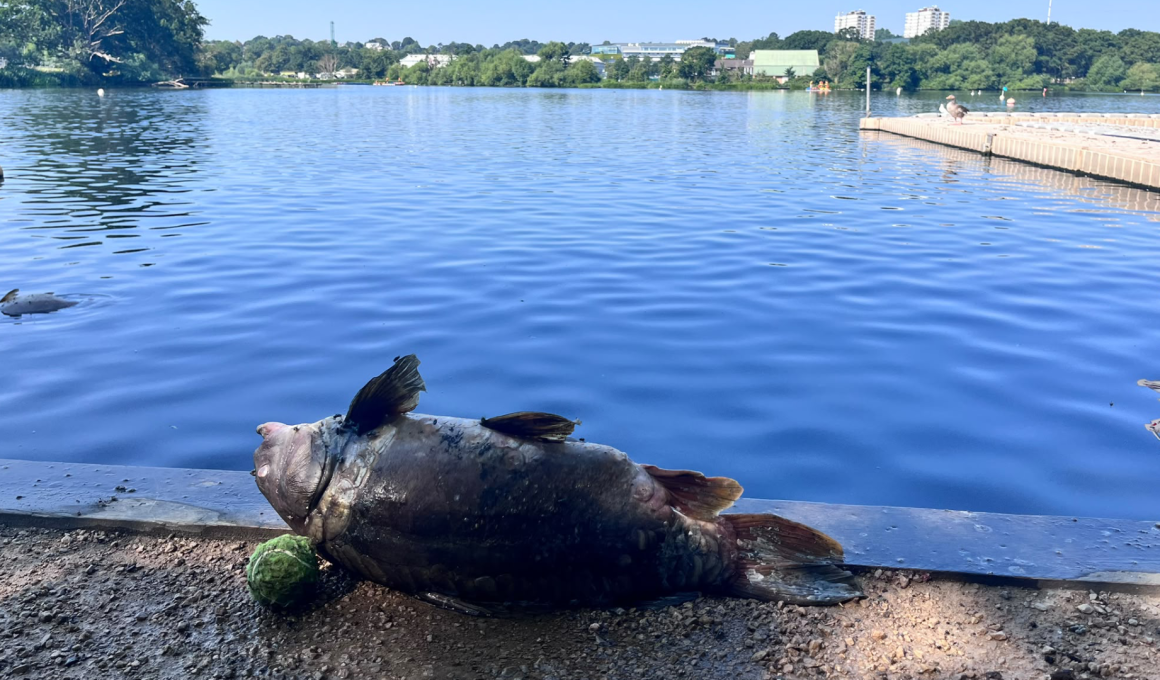
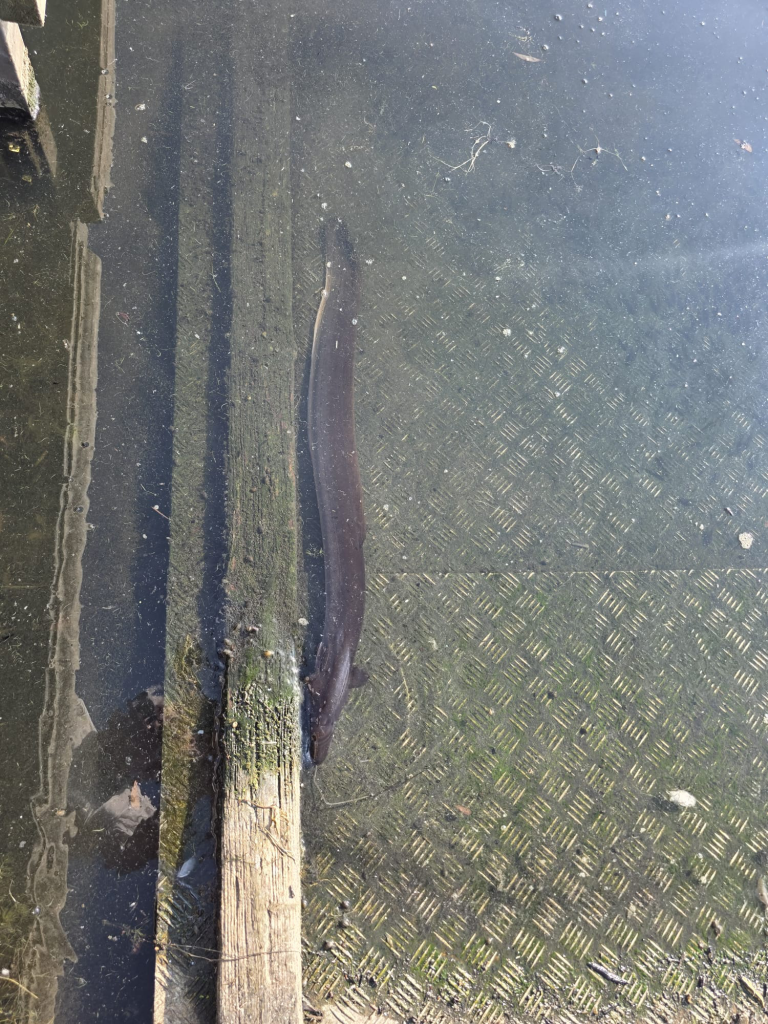
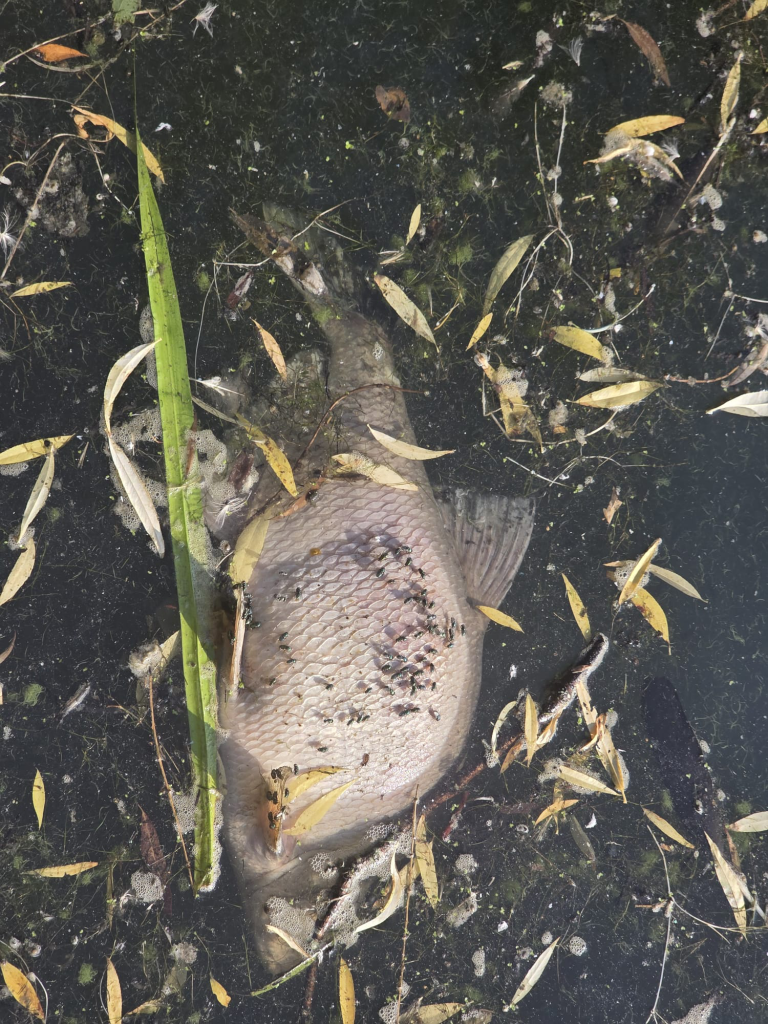
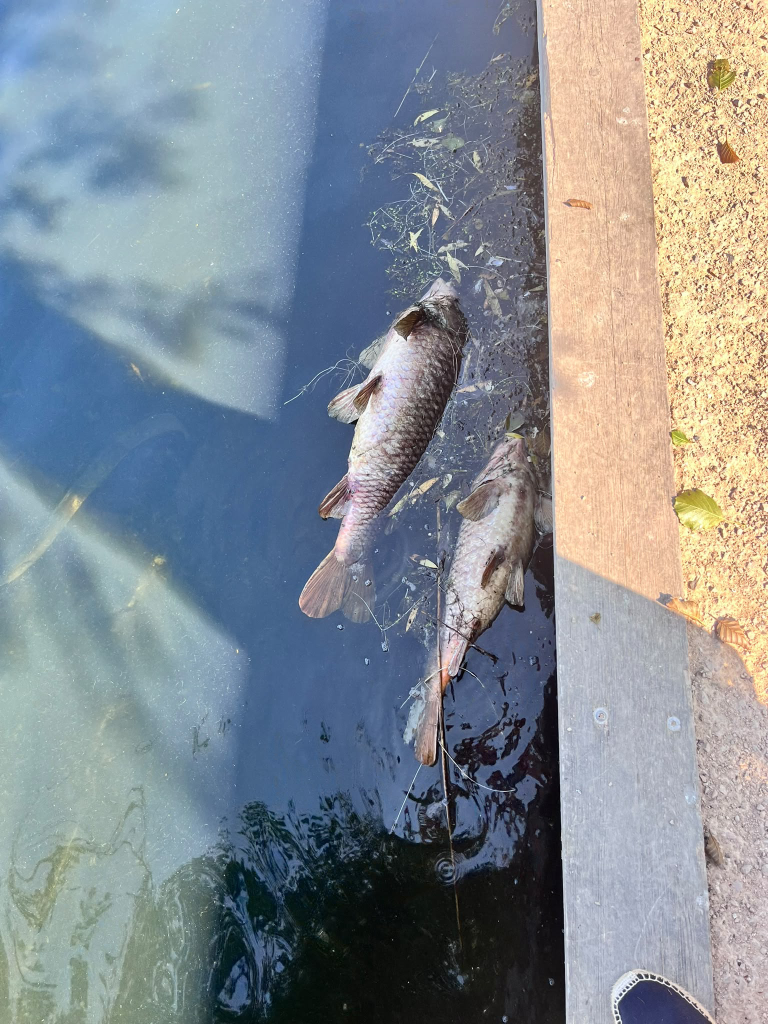
Dozens of dead fish and, more worryingly, endangered eels, have been found in Wimbledon Park Lake this week, prompting a council safety notice and a multi-agency investigation.
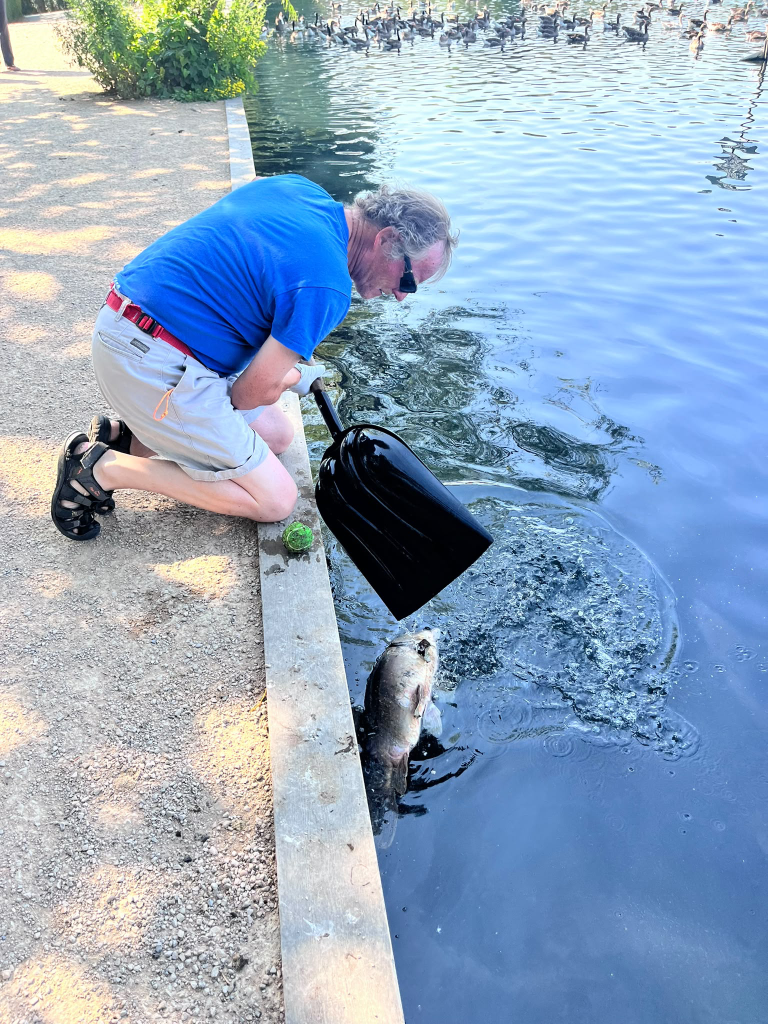
The London Borough of Merton, which owns the lake, said this week that early tests point to the summer’s heatwave as the likely cause, warning that unusually high temperatures have significantly depleted oxygen levels in the water. A ban on swimming and dogs entering the lake is in force until Monday. Dead fish are being removed from the lake as quickly as possible, the council said, to help protect water quality and limit the impact on wildlife.
The Environment Agency (EA) and Thames Water are working alongside Merton on the response. EA said an algal bloom may also have contributed, and that there is currently no evidence pollution is to blame. Thames Water has installed aeration equipment at the lake to help raise oxygen levels while the investigation continues.
What’s worrying locals though is that this is the second time in successive Julys that fish have died in the lake in near-identical circumstances during the Wimbledon tennis tournament. A similar incident last year ended with the All England Lawn Tennis Club (AELTC), which owns land bordering the lake, publicly denying any responsibility. But in making inquiries this year, two residents have confirmed to Putney.news that the Environment Agency told them the 2025 kill was caused by contractors from the All England Lawn Tennis Club (AELTC) discharging waste into a drain, and that the Agency and Merton had worked with AELTC specifically to prevent a repeat ahead of this year’s Championships.
That account was disputed by AELTC with a spokesperson telling Putney.news that blue-green algae was “very clearly confirmed” as the cause of the 2025 incident, and that no agency statement has suggested its contractors involvement, calling the residents’ account hearsay.
The lake supports a small, nationally critically endangered population of European eels, five of which were recorded in a 2018 survey, so any repeat die-off carries real stakes for a species already under pressure well before this week’s deaths.
| Party | 2026 cause | 2025 AELTC question |
|---|---|---|
| Environment Agency | Heat, shallow water, possible algal bloom. No evidence of pollution. | Not addressed |
| Merton Council | Heat-driven low oxygen. No evidence of pollution. | No response |
| AELTC | Agrees heat is likely cause. Offering support. | Disputes it, cites blue-green algae |
| Thames Water | Likely linked to recent hot weather. | Not addressed |
Putney.news put the residents’ account to the Environment Agency, Merton Council, AELTC and Thames Water this week and asked what caused last year’s incident.
The Environment Agency addressed the current incident but not the 2025 question. It said early observations point to a combination of high temperatures, shallow water levels and a possible recent algal bloom, and that there is currently no evidence pollution is to blame. It confirmed its fisheries officers have attended the site and taken samples to test for algae.
Thames Water said it is working alongside multi-agency partners at the lake and that indications suggest the incident may be linked to the recent hot weather, which can reduce oxygen levels in shallow water in particular.
AELTC denied any accounts it was involved and separately confirmed it will desilt the lake once work begins on its Wimbledon Park expansion – the subject of significant local opposition – saying it is “disappointing that such a significant public benefit continues to be denied as a result of the various legal challenges brought by the objector group.”
Why the silt matters
A heavily silted lake bed can make the death of fish more likely. Shallow water heats up faster and gives fish nowhere cooler to retreat to. Decomposing sediment on the lake bed consumes oxygen in its own right, through the same bacterial breakdown that affects any organic build-up in warm water. And the nutrients silt carries feed the kind of algal bloom the Environment Agency has flagged as a possible factor here. Merton’s own statement acknowledges the lake has a historic nutrient build-up problem, from natural sources such as waterfowl, and says an ultrasonic treatment system to help improve water quality and oxygen levels is due to be installed shortly, alongside the aeration equipment already in use.
Residents who spot dead fish, distressed wildlife or unusual water conditions at the lake can report it to the Environment Agency’s 24-hour incident hotline on 0800 80 70 60, or via gov.uk’s water pollution reporting service.