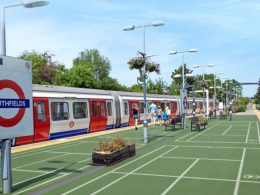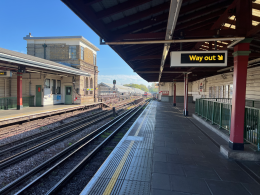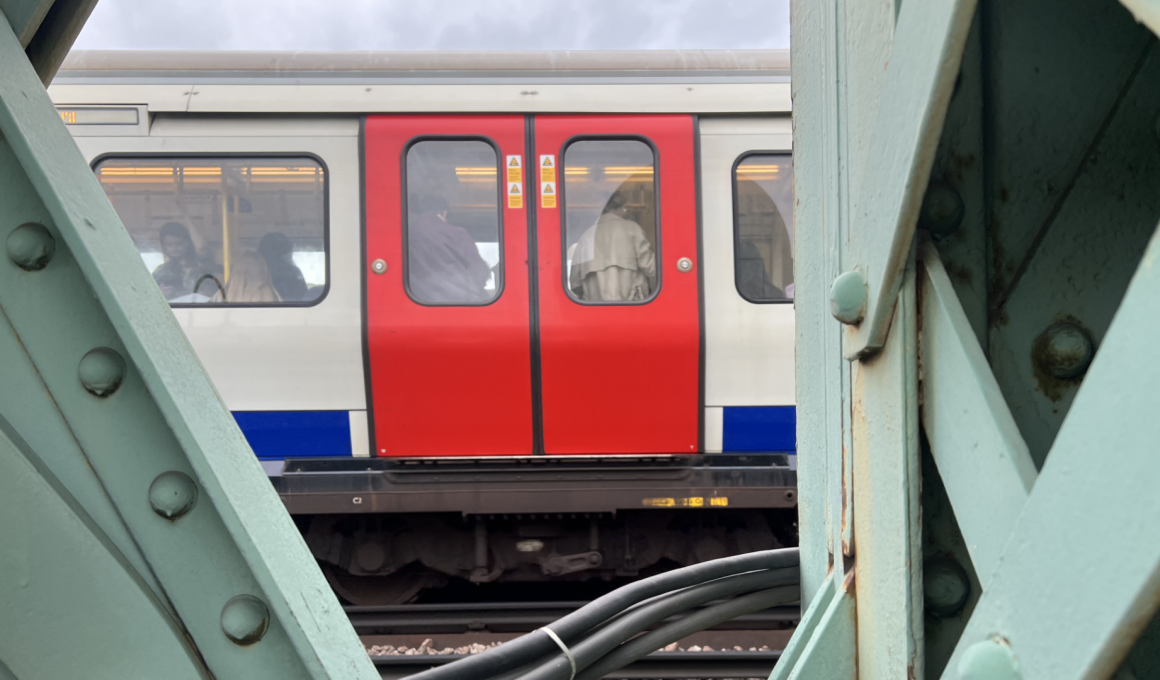
Putney faces one of its worst single-day transport failures in months today, with the District Line on strike, Putney Bridge bus stops closed and the junction connecting both running at absolute capacity.
Thames Water has disrupted Putney’s buses three times in two weeks. Conditional June strike dates were public from 18 May. Whether any of the works were scheduled with that in mind is not known.
What to do today
South Western Railway from Putney station is the most reliable alternative. It runs direct to Waterloo, roughly every ten minutes, and is about 500 metres from East Putney station.
The District Line is on strike all day. RMT members are walking out; ASLEF members are not, so some trains may run, but the service is unpredictable and should not be relied on.
Three stops at Putney Bridge Bus Station have been closed since Saturday morning because Thames Water shut Gonville Street for pipe works. The closure runs until 5pm on Saturday. Routes 85, 265, 270 and 378 are diverted. Routes 39 and 93 start and end at Putney Heath Green Man instead. Alternative stops FH (towards Putney Bridge), FE (Kingston and Mortlake) and FD (Mitcham) are in use, marked at the station.
Three disruptions. Two weeks.
The Gonville Street closure is the third time Thames Water has hit Putney’s buses in two weeks. Earlier this month, it diverted route 424 twice in one week. Then it dug up Putney High Street near Disraeli Road for three days. Now the bus station itself has three stops out of service.
Each was a separate works project. Conditional June strike dates were public from 18 May – the Gonville Street closure began on 30 May, the day before they were formally confirmed. Whether any of the works were notified to TfL in advance is not known.
Why it keeps happening
Thames Water is replacing over 550km of Victorian water mains (roughly the distance from London to Edinburgh) across its network over the next five years, a programme the company describes as the biggest upgrade in 150 years. The pipes under Gonville Street and Disraeli Road needed replacing. These works are not optional and they will continue.
The problem is coordination, not the works themselves. Parliament’s Transport Committee found last July that councils are “ill-equipped to monitor and coordinate utility companies’ street works, or to penalise companies that behave badly.” More than 200 organisations have the legal right to dig up roads in England. The government published proposals last September for stronger coordination requirements, but they are not yet law and would not have changed anything this week.
The tube is a harder problem. East Putney is the worst-performing station on the entire Underground network for signal failures, losing 147 hours to faults last year, more than double the next worst station. As we reported earlier this week, fixing the signalling on the Wimbledon branch is “not feasible within any reasonable planning horizon”, according to internal TfL and Network Rail documents. When the tube fails, buses absorb the overflow. When the bus station is compromised at the same time, the Putney Bridge junction has nowhere to put the load.
We established in February that the junction runs at absolute maximum capacity under normal conditions, with no margin for any additional pressure. One set of temporary lights multiplies across the network. Three simultaneous disruptions leave the worst transport day Putney has seen in months.
What could change
Lane rental schemes charge utility companies per day on the road, giving them a direct financial incentive to finish quickly. Parliament’s Transport Committee has called for all highway authorities to be able to adopt them. Wandsworth does not currently operate one.
TfL runs an Infrastructure Coordination Service with City Hall, designed to sequence major works on bus routes. Whether it was active here is unclear.
Route 14 through Putney averages 5.7mph, the slowest measured bus route in England. Industry analysis puts the value of a 10% improvement in London bus speeds at £283.9m a year. Roadworks coordination is one of three identified ways to get there. None are quick fixes.
Get in touch
Fleur Anderson MP is on record on the District Line and has been pressing TfL on signalling and reliability. She can be reached at fleur.anderson.mp@parliament.uk.
Cllr Dan Hamilton holds the transport brief in the new Conservative administration. He can be contacted at cllr.d.hamilton@wandsworth.gov.uk.
For Thames Water enquiries: 0800 316 9800 or thameswater.co.uk/live.
The bus station reopens Saturday at 5pm. The District Line runs normally tomorrow.
The Championships start at Wimbledon in 26 days. The signalling will not have been fixed. The pipes under Gonville Street will have been dealt with. There will be others.