

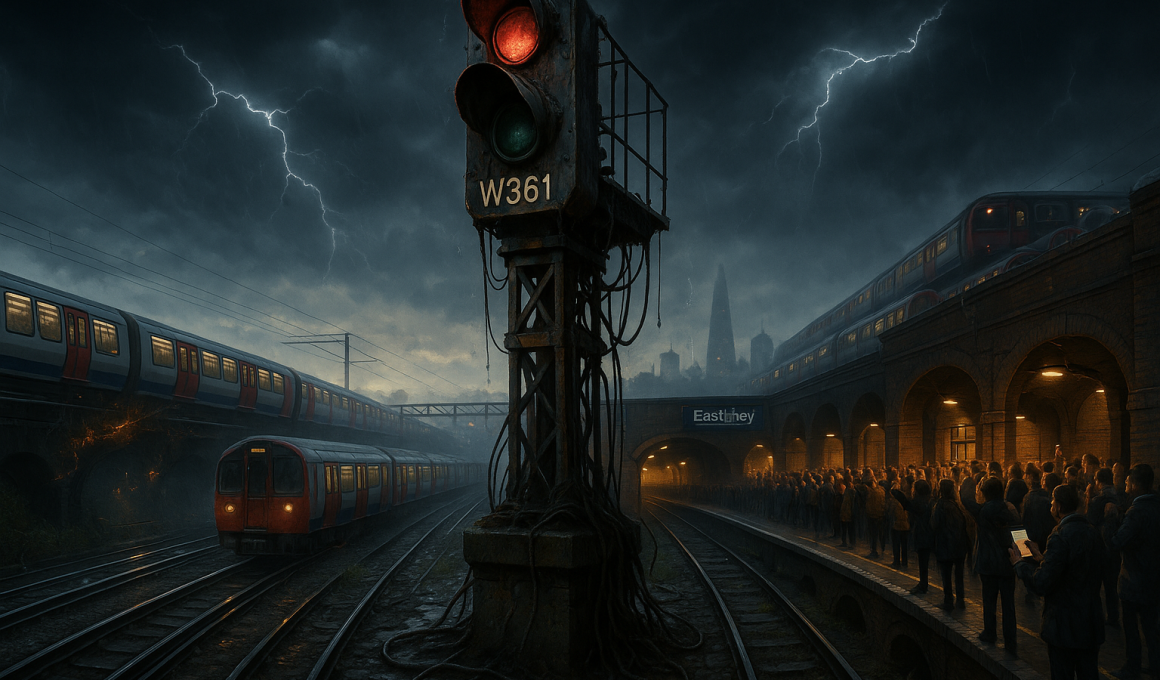
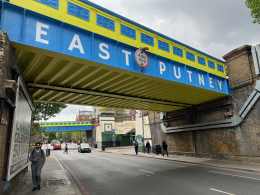
In the past week, as Putney’s traffic ground to a standstill, District Line commuters have faced yet another round of delays and cancellations. The familiar TfL announcement echoes across platforms: “Minor delays between Parsons Green and Wimbledon due to a Network Rail signal failure at East Putney.”
For long-term residents, this has become the soundtrack to their commutes. But if you think it’s just your perception that this stretch of track is cursed—you’re wrong. It’s real, it’s measurable, and it’s getting worse.
Meet Signal W361 – a piece of Victorian-era infrastructure that has become the single biggest transport nightmare in southwest London.
The numbers don’t lie
The District Line accounts for 25% of all London Underground signal failures despite being just one of many lines. Between 2015-2018, it recorded 1,192 signal failures; more than any other line. And the worst culprit? The East Putney area, where Signal W361 sits like a bottleneck strangling the entire Wimbledon branch.
Recent disruptions follow a predictable pattern. It rained last week, and water got into old, outdated equipment. Network Rail’s own analysis identifies “water ingress through damaged cable jackets” as the primary cause of signalling failures. These cables, some over 60 years old, snake through Victorian-era installations where rain and time conspire against reliability.
But here’s the kicker: “Signal failure at East Putney” has been a common occurrence for over a hundred years. This isn’t a recent problem—it’s a century-old curse that modern London has simply learned to live with.
Why this one signal paralyzes thousands
When W361 fails, the entire system breaks down. Every District Line train requires individual authorization from a Network Rail signaller to pass the failed signal. London Underground’s safety systems then force trains to crawl at 10mph for three full minutes.
Picture the chaos: trains reaching almost to Southfields before they can speed up again, with the signaller refusing to authorize the next train until the previous one has completely cleared the station. On September 15, passengers at Putney Bridge faced crush-loaded trains arriving every 10 minutes instead of every 3 minutes.
Information boards went blank. Platform overcrowding became dangerous. Many trains terminated early at Parsons Green, forcing thousands onto buses for a single-stop journey that should take two minutes.
The driver’s nightmare
Here’s what District Line drivers experience every day: approaching East Putney from central London, their train drives itself through state-of-the-art automatic systems. At East Putney station, they must suddenly “change over to manual operation” and navigate century-old signalling for the rest of their journey.
It’s like switching from a Tesla to a horse and cart mid-journey. While the rest of the District Line received £5.4 billion worth of modern Communications-Based Train Control systems, East Putney was deliberately excluded due to “complications from Network Rail’s signalling control.”
The result? A transport time machine where 21st-century London commuters are held hostage by Victorian infrastructure.
Five years of promises, zero progress
The political response has been a masterclass in buck-passing. MP Fleur Anderson made East Putney her first parliamentary debate in March 2020. Five years and 3,176 petition signatures later, TfL responded by placing East Putney on its “consideration list”—bureaucratic speak for “acknowledged but unfunded.”
The excuses are increasingly absurd. The Mayor promised in 2018 that signalling problems would be “ultimately remedied when the current signalling system is replaced and upgraded, by 2018.” Seven years later, Signal W361 continues its regular failures.
Meanwhile, during Network Rail strikes, District Line services can only operate to Parsons Green because no signaller is available to authorize passage beyond East Putney. It’s a perfect illustration of how divided responsibility creates chaos.
TfL’s bureaucratic shell game
TfL has perfected the art of responsibility dodging. Every status update carefully emphasizes “Network Rail signal failure,” shifting blame while TfL operates 95% of the affected trains.
When contacted about disruptions, TfL admits they “do not have direct influence on the maintenance of signals” and have “done our best to encourage, support and cajole a fix.” This transforms a transport authority into a powerless bystander.
The “minor delays” narrative particularly galls regular passengers. When service frequency drops to 33% of normal, calling it “minor” becomes satirical.
The step-free access campaign exposes TfL’s cynicism perfectly. After five years of pressure, TfL’s “consideration list” provides no funding, no work, and no timeline—it exists solely “to acknowledge local campaigns without making financial commitments.”
The £25,000-a-day problem nobody wants to own
Here’s the math that should horrify everyone: East Putney serves 6.2 million passengers annually. When W361 fails during rush hour, thousands face delays, missed appointments, and expensive alternative transport. The economic cost runs into tens of thousands of pounds per failure.
Yet Network Rail treats this as low priority because it’s “only used for shunting and a couple of trains a day to keep service rights.” They’ve fundamentally misunderstood that their Victorian relic is choking one of London’s busiest commuter routes.
During Wimbledon 2025, District Line reliability dropped to 69%—the worst performance in over a decade. Mayor Sadiq Khan issued a “humble” apology for the “horrendous experience,” but apologies don’t fix Signal W361.
The obvious solution nobody will implement
The fix is blindingly obvious: hand the whole thing over to TfL.
Every transport expert, every rail forum discussion, every frustrated passenger reaches the same conclusion. Extend modern CBTC signalling to the Wimbledon branch, eliminate the Victorian-era equipment, and bring the entire line under unified control.
The technology exists. The passenger need is undeniable. The political pressure has lasted five years. The only thing missing is the will to bash heads together and force a solution.
Instead, we have a perfect storm of institutional failure where TfL operates trains they can’t fully control, Network Rail maintains infrastructure they don’t prioritize, and 6.2 million annual passengers pay the price.
Signal W361 will fail again next week, next month, and next year. The only question is whether London’s transport authorities will continue this century-long farce, or finally admit that some problems require someone to take charge and solve them.
Until then, residents of southwest London will continue to hear that familiar announcement: “Minor delays due to a signal failure at East Putney.” It’s the sound of a transport system that’s given up on its passengers.



What baffles me- as someone who found myself chucked out at Parsons Green near midnight for second time in days last night – is why nobody can seem to manage the thing being broken, in a consistent way.
So it’s been broken now constantly for two weeks- and sometimes it’s not that bad, fewer trains and a bit slower as they have to manage the auto brake thing. Annoying but ok. Then suddenly it’ll get worse in some undefined way and its ’signal Is broken no trains can go through everyone off!’
Plus TFL have taken to sometimes not even mentioning when it’s broken, on their status page. Last night it was and the district line wasn’t mentioned at all on service issues.