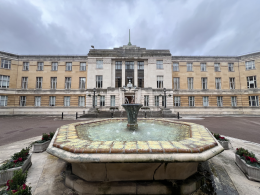
Wandsworth Council has imposed a new tax on second homes and long-term empty properties across the borough, doubling or tripling council tax bills for around 1,800 owners.
The scale of the charge is revealed in a taxbase document [pdf] signed by the council’s finance director in December 2025 but published quietly on the council’s democracy portal on Monday, the same day the UK Statistics Authority wrote to council leader Simon Hogg warning that his administration’s council tax communications had “the potential to mislead.”
The document, known as DD 76, shows a 78% increase in the adjustment made for premium properties. The council’s own summary attributes this to “the further identification of more 2nd homes subject to a premium from April 2025.”
The premiums were enabled by the Levelling Up and Regeneration Act 2023, which gave councils across England the power to charge a 100% premium on second homes and to reduce the threshold for empty property premiums from two years to one. Wandsworth chose to apply both measures from April 2025.
Based on the band-by-band figures in DD 76, an estimated 1,817 properties across the borough are now subject to premium charges. The additional revenue to the council from these premiums is estimated at around £1 million on the Wandsworth element alone. When the Greater London Authority precept is included, the total additional revenue is approximately £2 million a year. This is a floor estimate: some long-term empty properties will attract premiums of 200% or 300%, which would push the figure higher. The council has not published a disaggregated breakdown.
The premium applies at every council tax band. The largest single group of affected properties is Band C, which includes many newer-build flats in areas such as Nine Elms and Battersea, with an estimated 425 properties paying a premium. The smallest group is Band A, with around 36. But the cost per property rises steeply with band: a Band D second home owner pays an additional £507 a year on the Wandsworth element, while a Band H owner pays an additional £1,014.
| Band | Est. properties | Additional charge per property | Additional revenue |
|---|---|---|---|
| A | 36 | £338 | £12,168 |
| B | 131 | £394 | £51,614 |
| C | 425 | £451 | £191,675 |
| D | 379 | £507 | £192,153 |
| E | 329 | £620 | £203,980 |
| F | 297 | £732 | £217,404 |
| G | 154 | £845 | £130,130 |
| H | 66 | £1,014 | £66,924 |
| Total (borough) | ~1,817 | ~£1,066,000 |
The figures above cover the Wandsworth borough element only. Properties in the Conservators’ area (Wimbledon and Putney Commons) attract an additional premium estimated at ~£257,000. Including the Greater London Authority precept, which scales similarly by band, estimated total additional revenue is approximately £2 million a year.
Band C has the most affected properties, reflecting newer-build flats in areas such as Nine Elms and Battersea. Additional charge is the Wandsworth council element only. Some long-term empty properties attract premiums of 200% or 300%, which would increase revenue above these estimates. Property estimates are derived from DD 76 Appendix 3 (premium-equivalent figures divided by four).
How it connects to the freeze
The council’s leaflet, distributed with council tax bills earlier this year, told residents the freeze was achieved through “£14m saved through efficiencies, service redesign and smarter staffing.” It made no mention of additional premium revenue.
A Putney.news fact-check published on 16 March found all four claims in the leaflet to be false. The council’s response, published on 22 March, confirmed the £14m figure was a budget assumption given to department heads, not a delivered saving.
The taxbase document adds a piece to this picture. An estimated £2 million a year in new revenue from second homes and empty property premiums is now part of the financial arithmetic behind the freeze. This revenue stream did not exist before April 2025 and was created by Parliament, not by the council.
Whether taxing second homes is good policy is a matter for readers. The council’s decision to apply the premiums is a choice most boroughs in London have made or are making. The question the taxbase document raises is narrower: why the council’s public communications describe the freeze as the product of its own efficiency when a material part of the arithmetic depends on a revenue stream it did not create.
The wider taxbase picture
DD 76 sets Wandsworth’s taxbase for 2026-27 at 147,999 Band D equivalents, up 0.9% from 146,613 the previous year. The borough had 158,816 properties at 1 December 2025, a net increase of 1,230 over the year, with new properties entering at an average mid-to-high Band E level.
The document also records 48,357 properties receiving a single person discount (31% of chargeable dwellings) and £11.2 million in council tax reduction spend, supporting 11,576 equivalent properties removed from the taxbase entirely. The collection rate is assumed at 97%.
The decision was signed by Fenella Merry, the council’s Executive Director of Finance, on 19 December 2025. It was published on the democracy portal on 23 March 2026, three months later.
What you can do
The full taxbase document (DD 76) is available here.
All 60 Wandsworth council seats are up for election on 7 May 2026. You can check whether you are registered to vote at gov.uk/register-to-vote.