A fight over Wandsworth’s £3.3bn pension fund has now entered its third year, with no end in sight. The council still won’t say whether it will divest from companies linked to Israel’s actions in the Palestinian territories.
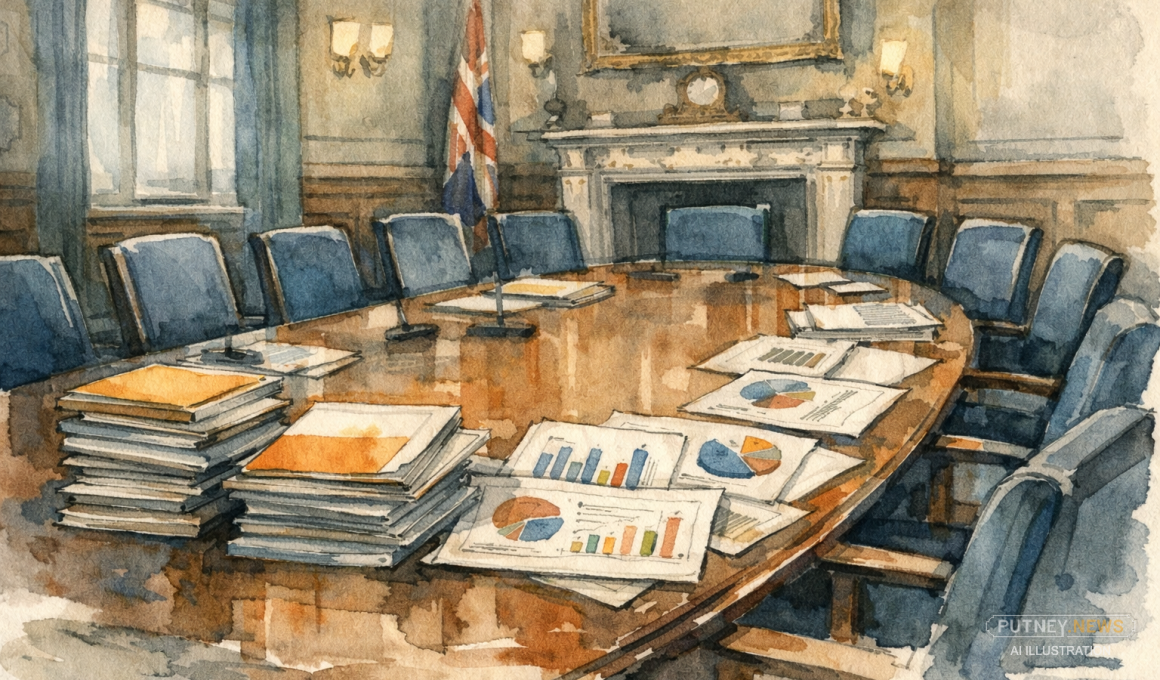
New papers published this week for Monday’s Joint Pensions Committee meeting show why: a legal challenge to the fund’s proposed rules has gone unanswered for three months, and the company the council has been using as its expert advisor and which devised the rules has declined to defend them.
The papers show, for the first time, a letter from UK Lawyers for Israel (UKLFI) to committee chair Cllr Melanie Hampton, arguing the fund’s proposed exclusions are legally flawed. The fund’s own adviser, Mercer, replied seven weeks later. But rather than defend the criteria UKLFI is attacking, notes that it was never its job to do so, and recommends the council take the question instead to London CIV, the body that actually sets the rules.
The legal question sits exactly where it did in June, with the committee’s other papers showing a familiar pattern: a decision taken behind closed doors with no record of what was decided, and a member survey that has incorporated one of six specific wording objections raised against it, and ignored the rest.
A petition on this issue was originally delivered to the council in August 2024 and led to two resolutions, in October 2024 and again, unanimously, in December 2025. But the pensions committee has gone to significant lengths to avoid implementing any changes. This month, it will discuss revised wording of a survey to be sent to pension holders asking their views.
What UK Lawyers for Israel is arguing
UKLFI’s letter, dated 5 June and marked for Cllr Hampton’s attention three days before her first meeting as chair, argues that Mercer’s analysis of the fund’s proposed exclusions was “made on an erroneous basis.”
Its central claim is that companies on a UN watchlist used to define the exclusions have not been found to have violated human rights, only identified as operating in contested territory, and that applying the same standard consistently would require excluding roughly 40 further companies operating in Western Sahara and Northern Cyprus, including Shell, Vodafone and Ford. UKLFI’s chief executive, Jonathan Turner, wrote: “Mercer’s assessment of the impact of exclusions in London CIV’s Pillar 3 has been made on an erroneous basis.”
Mercer’s reply, dated 28 July and marked “Private & Confidential” (published by the council as a public committee appendix), does not dispute the substance. It says the letter’s points don’t change Mercer’s own financial analysis, but adds: “Mercer was not asked to provide an opinion on the appropriateness of London CIV’s exclusion criteria, nor to make a determination as to whether use of the UN OHCHR database is an appropriate input for defining the exclusions under pillar 3. We therefore suggest that the Fund liaises with London CIV on the points raised in this regard.”
A second warning, from a different body
Minutes of the council’s Local Pension Board, a separate oversight panel that reviews the committee’s work, record officers warning on 2 July that excluding investments by country or region “was also highly likely to be in breach of equalities legislation.”
The same minutes record a second warning: if divestment reduced the fund’s returns, the council as an employer would have to make up the shortfall by “reducing its costs elsewhere or increasing its income from fees, charges or council tax.” The argument that the divestment would call a fall in value of the pension however has been previously dealt with in the other pensions committee and officially concluded that was not provably true.
Neither warning has yet been put to the full Joint Pensions Committee that will vote on Monday.
A decision with no record of what it was
Immediately after the committee’s divestment discussion at its 8 June meeting, the press and public were formally excluded under Section 100A(4) of the Local Government Act 1972 to consider a single further item: a proposal to expand the Pensions Shared Service. The published minutes record that the committee “received a report” on the proposal. Nothing else. Every other item that night, including the routine ones, closes with a formal resolution recording what was decided. Item 8 does not.
What was, and wasn’t, fixed in the revised survey
The survey the committee will sign off on Monday has been rewritten since June by a working group of councillors following objections from unions in June (the original wording implied members’ pensions were at risk, which is not how a guaranteed scheme works) and, separately, from UKLFI in its letter (which raised six specific wording points about the current draft).
Checked against the version published this week, one of UKLFI’s six points has been incorporated: a new question now asks how far the impact on council tax and employer contributions should influence the policy.
The other four checkable objections have not been. The question UKLFI called out as most significant, on whether to avoid investing in UN-listed companies, still offers three “yes” variants and only one heavily qualified “no,” with none of the plain “no, based solely on financial considerations” option UKLFI suggested. The vague terms UKLFI flagged elsewhere (“linked to human rights violations,” “organisations such as the United Nations,” “very small impact”) remain unchanged.
The long history
This is just the latest story on the pension fund’s governance since March 2025. At the 8 June meeting, the chair was heckled while officers admitted the original survey wording had misled members into thinking their pensions were at risk.
Mercer separately told that meeting none of the divestment options under consideration would significantly harm the fund; committee member Judi Gasser called the finding one that “has just changed everything.” That finding stands unchallenged in the new correspondence. What has changed since June is not the money question, but who is being asked to answer for the process.
How to follow this
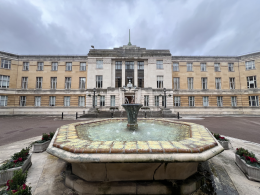
The 16 September meeting is open to the public at Wandsworth Town Hall from 7.15pm. Papers, including the full UKLFI letter and Mercer’s response, are published at democracy.wandsworth.gov.uk. Fund members with questions can contact the Pensions Shared Service on 020 8871 6594 or pensions@richmondandwandsworth.gov.uk.