Since the autumn of 2024, workers in Wandsworth have been asking an uncomfortable question: is the pension fund that holds their retirement money invested in companies supplying weapons used in Gaza?
A petition delivered to the council in August 2024, signed by more than 1,000 people, claimed the answer was yes: that the fund held around £32 million in companies including BAE Systems, Airbus, HSBC, and Barclays. The petitioners asked the committee that oversees the fund to divest. The committee passed a formal resolution promising to evaluate doing so. Then another resolution, unanimously, demanding specific recommendations within six months. Seventeen months after the first vote, no decision has been made, and the earliest one could come is September 2026.
At the most recent meeting, in March, something else emerged. The council leader, Simon Hogg, had already written privately to the investment body that manages the fund, asking it to adopt the most restrictive responsible investment option available, the one that would exclude weapons manufacturers and companies listed by the UN as operating unlawfully in occupied territories. That letter was not in any committee paper. The committee chair learned about it during the meeting itself.
Why, given that the political will appears to exist at the highest level, has nothing happened? The answer involves the specific and rather peculiar legal position of a local government pension fund, and it matters for understanding whether September 2026 is a genuine commitment or another delay.
The pension fund cannot simply sell shares
Wandsworth’s pension fund does not hold individual shares that a committee can vote to sell. Like most council pension funds in England, its assets are pooled across 33 London boroughs through a body called London CIV. From 1 April 2026, London CIV will manage all of the fund’s investments.
The committee retains one meaningful lever: it can choose which tier of responsible investment policy the fund adopts. The most restrictive tier, the one the petition has been demanding, would apply to weapons manufacturers and any company the UN has listed as linked to illegal activity in occupied territories, including in Gaza. But choosing that tier does not mean Wandsworth can unilaterally exclude those companies. It means Wandsworth tells London CIV it wants that policy. London CIV then has to build an investment product reflecting it, as a compromise across all 33 boroughs. As Paul Guilliotti, the council’s Director of Financial Services, put it: “We can [tell the CIV what to do], but there’s 32 other funds that also have their say as well, so it’s a compromise.”
There is also a legal constraint that applies specifically to pension funds and does not apply to other council decisions. The committee’s primary duty is not to residents or voters. It is to the 44,000 current and former council and school workers whose retirements depend on the fund. Pension trustees who let political or moral considerations override their duty to protect members’ financial interests can be challenged in court. A King’s Counsel opinion obtained in January 2026 confirmed that excluding companies on non-financial grounds is permissible, but only after a financial impact assessment shows it will not materially harm returns, and only with evidence that members support the policy. Guilliotti told the committee: “Your duty as a committee is to act as a quasi-trustee of the fund. That is your duty and your duty is to the fund.”
This is not a procedural excuse invented by officers. The rule exists because pension money belongs to scheme members (the workers and retirees), not to the council. A committee that directed it according to its own political preferences, however widely shared, without meeting the legal test, would be vulnerable to legal challenge by any of those 44,000 people.
What was promised and when
The October 2024 resolution, made after hearing the Friends of Palestine deputation, asked for an evaluation of divestment options (deliberately cautious language). No report came back. Officers say the government’s Fit for the Future programme, announced after the October vote, transferred investment control to London CIV and changed what individual funds were permitted to do, making a report on the old framework redundant before it could be written.
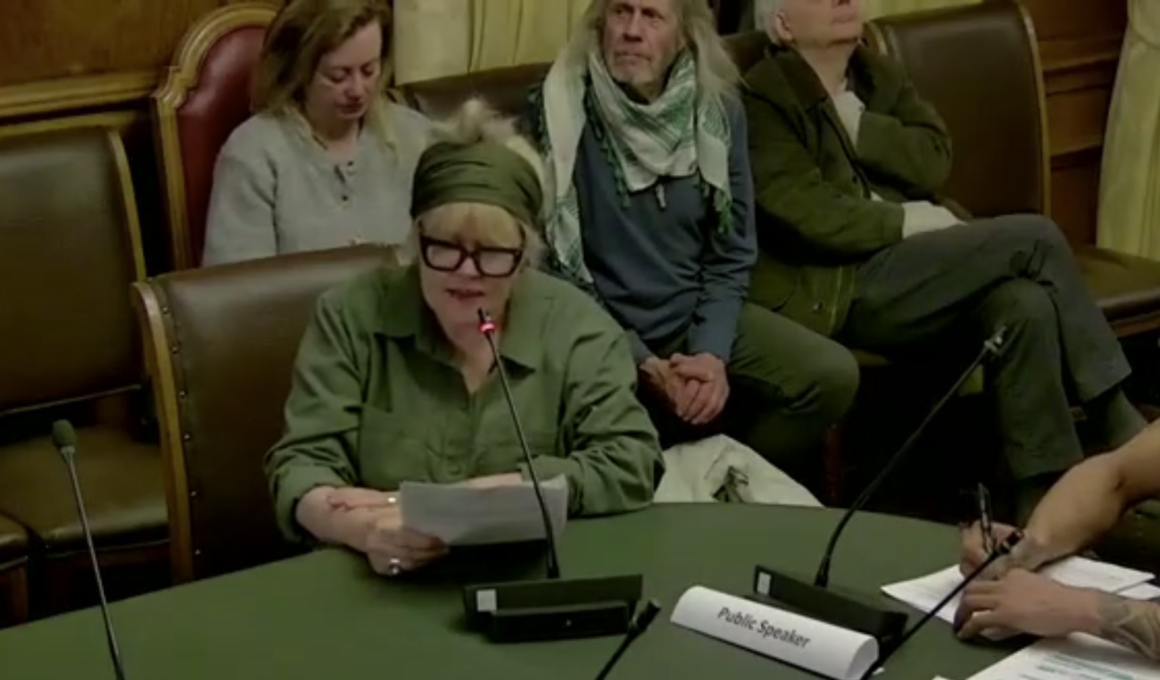
Unions are not satisfied with that explanation. Kathy Cattell of the GMB told the March meeting: “The committee resolved to carry out an evaluation of divestment options, but that evaluation never materialised.”
In December 2025, the committee escalated. A unanimous motion instructed officers to return with specific recommendations (not a further options paper) within six months, covering disclosure of holdings in UN-listed companies, a phased divestment plan, and formal consideration of the most restrictive responsible investment tier. When the committee met in March 2026, it received a process timetable instead.
Cattell: “Instead of the divestment recommendations requested in December, the proposals before you push meaningful decisions to September 2026 at the earliest. That is a significant delay from what the committee agreed.” A UNISON representative was more concise: “It is clearly a review and not a plan.”
The committee chair, Councillor Marshall, did not dispute it. “We first agreed this, didn’t we, October 2024. The timeline now is 2026. It is really frustrating.”
The letter no one knew about
Part way through the March meeting, Councillor Aydin Dikerdem raised what he called a point of information. Dikerdem’s register of interests records his membership of the Palestine Solidarity Campaign. Council leader Simon Hogg had already written to London CIV asking it to develop a responsible investment product at the most restrictive tier, the one that would cover companies linked to Gaza. The letter had not been mentioned in any committee paper and had not been announced.
The chair’s response was telling: “Let’s make sure that one is joined up and it’s all matching.”
Three tracks are now running in parallel: the formal committee process, the officers’ legal framework requiring financial assessment before any decision, and the council leader’s independent correspondence seeking the outcome the campaigners have been asking for. The council did not respond to a request for information about the letter before publication.
What comes next
The exercise approved at the March meeting will establish exactly what the fund currently holds in companies on the UN list. It reports back in June 2026. The committee will then decide whether to consult scheme members, a step the KC opinion says may be legally required before any exclusion policy can be set. If the consultation proceeds, a formal policy could be agreed in September 2026.
That would meet the six-month deadline the December motion set, at the outer edge of the window. The committee that made both resolutions will not exist in its current form after May’s local elections. Chair Councillor Marshall is standing down. Whether the new committee treats its predecessor’s commitments as its own is an open question.
Members of the public can apply to speak at the June meeting through the council’s Democratic Services team: Daniel Kuszel, daniel.kuszel@richmondandwandsworth.gov.uk. The findings of the mapping exercise are committed to be published (Paper 26-93, Recommendation b) and readers can watch for this.
Previously: in June 2025, Putney.news reported that the pensions committee had taken its responsible investment update in private, excluding the public from that discussion.