The 29-storey tower beside Battersea Bridge that Mick Jagger called “wrong on every level,” that the council unanimously rejected, and that more than 2,000 residents objected to has just been through a seven-day public inquiry. The developer wants to build it anyway.
The inquiry at Wandsworth Town Hall closed on Friday after two weeks of evidence, cross-examination, and one of the most dramatic confrontations a planning hearing in this borough has produced. An expert witness accused the developer of running a “deceitful” campaign and refused to apologise when the developer’s barrister demanded he withdraw the claim. The Environment Agency intervened at the last minute with concerns about flood defences.
And the developer’s lawyers advanced an argument that, if an inspector accepts it, could undermine height restrictions not just at this site but across the entire borough, including in Putney.
Inspector Joanna Gilbert’s decision is expected in early May. Here is what happened, what the documents reveal, and why it matters well beyond one stretch of riverfront.
The scheme
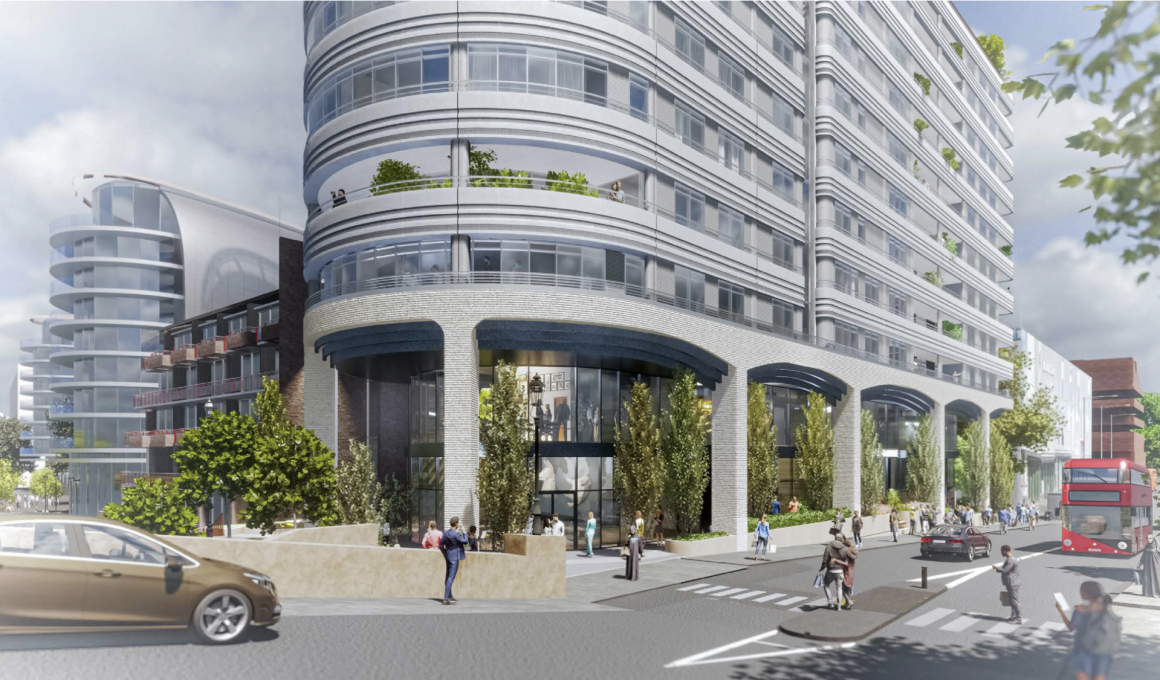
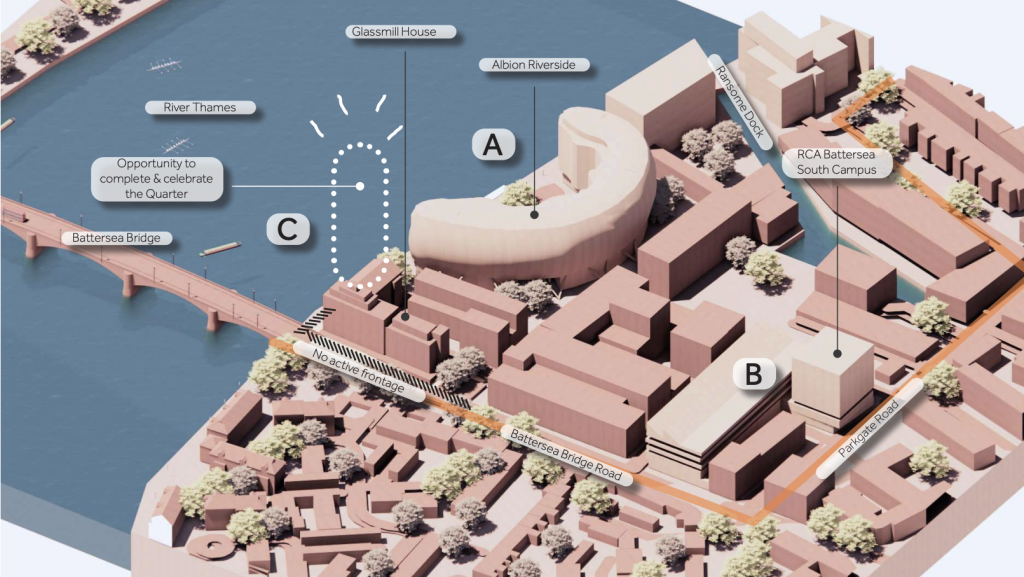
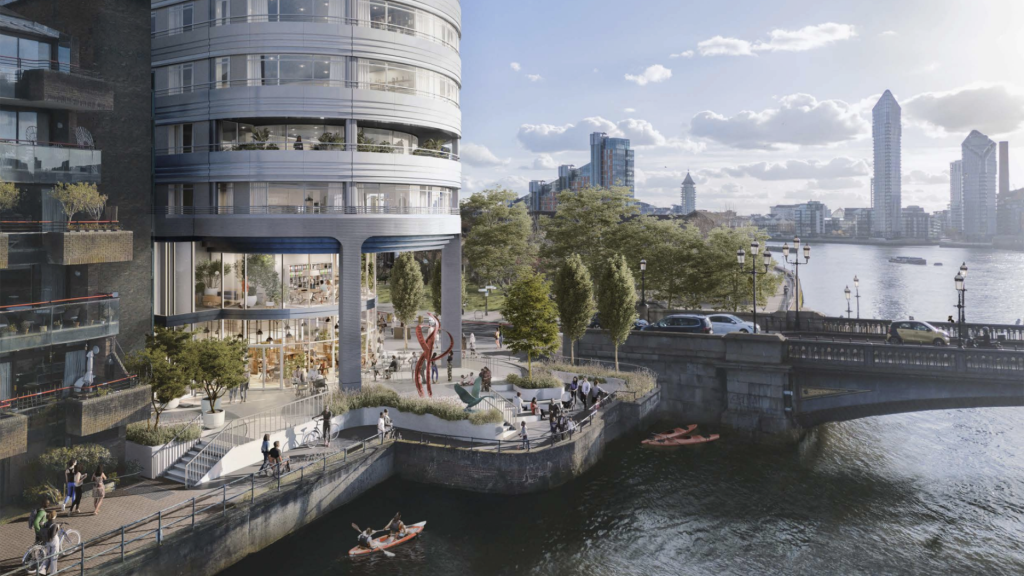
The proposal is to demolish the Glassmill, a tired 1980s office block at 1 Battersea Bridge Road, and replace it with a part 10-storey, part 29-storey tower containing 110 homes. Fifty-four would be social rent, 50% of the total by habitable room. The architect is Farrells. The developer is Promontoria Battersea Limited, a subsidiary of Rockwell Property linked to Cerberus Capital Management, a New York-based private equity firm.
The site is in a mid-rise zone under the Local Plan. The maximum permitted height is six storeys. At 29 storeys and approximately 97 metres, the proposed tower would be nearly five times that limit. It would also be more than double the height allowed in the adjacent tall building zone, which caps at 12 storeys.
Rockwell originally proposed a 33-storey tower with 35% affordable housing. In October 2024 it reduced the height and increased the affordable offer to 50%, all social rent. That escalation matters. At 50%, the scheme exceeded the threshold that triggers the GLA’s “fast track” viability route, meaning no viability assessment was required. It also put the developer in the strongest possible position to argue that benefits outweigh harm.
Wandsworth’s planning committee unanimously refused the application in April 2025. Officers had recommended refusal. The GLA declined to call it in. Rockwell appealed.
There is only one substantive reason for refusal: the tower’s height and scale would cause significant harm to the character of the area. A second reason, the absence of a completed Section 106 agreement, is procedural and both sides agree it can be resolved.
The entire inquiry turned on a single question: is the harm worth the homes? As we reported when the inquiry opened, both sides came prepared to fight hard. Here is what happened.
The case for the tower
Russell Harris KC, Rockwell’s lead counsel, opened by framing the case as a housing emergency. The tower would deliver 110 homes, half at social rent, on a brownfield site currently wasting away. The existing Glassmill building, he said, was something “all should be collectively ashamed” of, calling it “a sad hymn” on the riverfront.
Harris argued that the Local Plan does not impose an absolute bar on tall buildings outside designated zones. He pointed to what he described as 12 to 14 pre-application meetings with the council at which, he claimed, officers never once asked for a mid-height building.
His planning witness, Jonathan Marginson of DP9, made the most significant argument of the inquiry. In his proof of evidence, Marginson argued that the draft National Planning Policy Framework published in December 2025 fundamentally changes the weight councils can give to policies restricting density.
The government described the draft as “a truly seismic regearing of the system in support of growth.” Under it, Marginson argued, local policies setting maximum heights would be inconsistent with the new national expectation that development should increase density.
This is Rockwell’s most potent weapon. If accepted, it does not just help this tower. It weakens every height restriction in the Local Plan.
Marginson also pointed to London’s collapsing housing delivery. According to his evidence, London achieved only 4,261 housing completions in 2025/26 against a target of 52,287, just 8.1%.
Peter Barbalov of Farrells presented the design case, including AI-generated views of the tower from positions along the river. The tower, he argued, would sit “comfortably” within the pattern of tall buildings along the Thames. A member of the public gallery laughed during his presentation and was rebuked by Inspector Gilbert.
The case against
The most explosive moments came not from the lawyers but from the community.
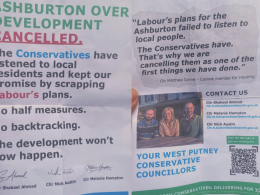
Dr Michael Jubb, chair of Wandsworth’s Conservation and Heritage Advisory Committee and a 50-year Battersea resident, gave evidence for the consortium of six civic societies granted Rule 6 party status. Jubb accused Rockwell of running a “deceitful PR campaign,” alleging bogus newsletters, orchestrated pro-forma support letters, and misleading the public.
Harris KC demanded Jubb apologise. He refused: “I will not withdraw from calling the campaign deceitful.”
The allegation is not new. When the application first came to committee, ward councillors noted that many support letters appeared “heavily guided or scripted” with language “many residents would not naturally use.” One interested party told the inquiry that template letters came from addresses as far away as Stoke and Rochdale.
Committee members had also questioned the economics. The applicant, they suggested, “may have paid too much for the site, and were trying to recover these costs via the extreme height of the proposed building.” Their conclusion: “the residents, the Council and the local community should not have to bear the consequences of the decision made by the applicant.”
The Royal Borough of Kensington and Chelsea formally objected, calling the tower “discordant, dominant, and oppressive.” Historic England called it “visually intrusive and incongruous.”
In the second week, Joanna Chambers, Wandsworth’s planning expert, described the tower as “overbearing.” “Brownfield land has to be developed, of course,” she said, “but it has to be the right scheme.”
A dramatic late intervention came on day six when the Environment Agency emailed the inspector. EA planning adviser Shea Bunyan warned that Rockwell must prove the scheme would not damage Thames flood defences less than 16 metres from the site. Harris KC said a full flood risk assessment had already been done. But the intervention added a new uncertainty.
Both sides had agreed that Wandsworth has a 5.5-year housing land supply. This means the “tilted balance,” which gives developers the benefit of the doubt where councils cannot show a five-year supply, does not apply. Wandsworth’s Housing Delivery Test score of 112% also shows the borough is meeting its targets.

What hasn’t received as much attention
Several pieces of evidence in the inquiry documents deserve a closer look.
The independent Design Review Panel rejected the case for height at this site twice. In December 2023, reviewing the original 38-storey version, the panel stated: “Whilst we are not against height per se, we are not convinced on the need for height in this location.” In its second review, of a 33-storey version, it remained “unconvinced” and noted the benefits were “not sufficient to justify a building of this height.”
The reduced 29-storey scheme was never shown to the Design Review Panel before it was submitted.
The Arup Urban Design Study that underpins the Local Plan is explicit. Heights along this stretch of riverfront are “at capacity.” Buildings should “step down towards the approaches to the listed Battersea Bridge and Albert Bridge to maintain their visual prominence.” The developer’s proposal does the opposite.
There is also the question of how tall this building actually is. Dr Jubb pointed out that at 97 metres, the tower is significantly taller than 29 standard residential storeys. At the three-metre floor height assumed in the Local Plan, 29 storeys would be 87 metres. The developer’s description of “29 storeys” does not capture the full scale.
Rockwell’s “bridge marker” argument, that the tower would serve as a landmark signalling the location of Battersea Bridge, was challenged directly. Dr Jubb called the claim “partial and misleading, even where it is not simply wrong.” As he put it: “Any tall tower anywhere would provide a reference point. That is not a reason for building one.”
The closing arguments
On the final day, three closing statements set the battle lines for the inspector.
William Walton, for the civic societies, argued the tower would cause “substantial harm” and called the consultation campaign “deceitful.” He warned the scheme could “open the floodgates to more high-rises.”
Douglas Edwards KC, for Wandsworth, argued London’s housing need “is addressed strategically through the London Plan, not by individual speculative applications.”
Harris KC delivered his closing over 85 minutes. The tower would “enhance” the Thames. The Local Plan was “out of date.” Suggestions of a lower building were “a confection, implausible and undeliverable.”
The council’s own record
Wandsworth is defending its Local Plan at this inquiry. But its recent record on tall buildings tells a different story.
In March 2025, the council approved a 29-storey tower at the former gasworks site on Swandon Way despite fierce opposition, in a zone where the Local Plan anticipated far less height. It was pushed through because of the affordable housing it promised. Nearby, an even older approval is now making itself felt: the Wandsworth Mills tower, approved in 2013, is rising visibly above the Putney skyline.
It is not an isolated case. The council broke its own rules to push through a hotel deal nearby. A student tower approval raised questions about a hidden financial arrangement. The pattern is consistent: when the prize is large enough, the Local Plan’s protections have proved negotiable.
Rockwell’s escalation from 35% affordable to 50% social rent looks like a developer that has studied this pattern and drawn the logical conclusion. If height limits can be overridden when enough affordable housing is offered, the rational strategy is to keep increasing the offer until it becomes impossible to refuse.
Wandsworth did refuse this one, unanimously. But a developer making the case that height limits should not stand in the way of housing delivery will find helpful evidence in the council’s own decisions. If the inspector looks at what Wandsworth says about its Local Plan and what it does with it, the two pictures do not match.
What to watch for
The inspector’s decision, expected in early May, turns on several questions.
Does Policy LP4 impose an absolute bar on tall buildings outside designated zones? If the inspector reads it as a blanket prohibition, Rockwell’s case is extremely difficult. If she reads it as a strong presumption that can be overcome, the door opens.
How much weight does the draft NPPF carry? This is the argument with the widest consequences. If it is given material weight, it weakens height policies across the borough.
Is “significant harm” the same as “substantial harm”? The council’s reason for refusal uses “significant harm.” The NPPF says brownfield sites should be approved “unless substantial harm would be caused.” Whether the inspector treats these as the same could be decisive.
Do the benefits outweigh the harm? Fifty-four social rent homes is not a trivial benefit. The inspector will weigh it against harm to a sensitive stretch of Thames riverfront, multiple heritage sites, and the integrity of a Local Plan adopted less than three years ago.
What precedent would approval set? If a 29-storey tower is permitted on a site zoned for six storeys, what does that mean for every other height restriction in the borough?
The inspector’s decision is expected in early May, roughly five weeks from now. It will be published on the Planning Inspectorate’s website. We will provide full analysis when it is released. The Glassmill appeal core documents are available for public inspection.