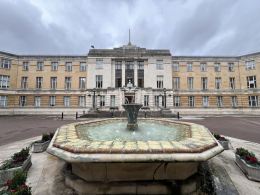
LONG READ: In two weeks’ time, over 13,000 residents of the Alton Estate will receive ballot papers asking whether they want their neighbourhood demolished and rebuilt.
After 17 years of failed regeneration attempts, broken promises, and millions in wasted public money, this democratic vote represents the estate’s last realistic chance for comprehensive renewal.
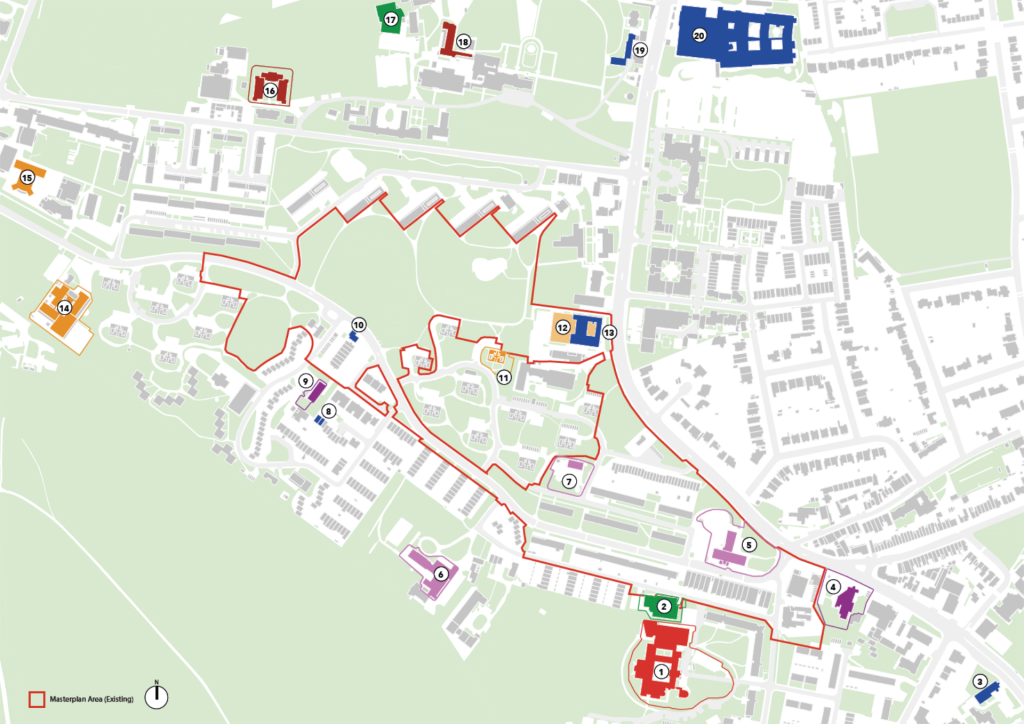
The proposal [pdf] would demolish around 178 homes across several buildings to create 600-650 new units, delivering a net gain of 130 council homes. The September 22–October 16 ballot requires only a simple majority, with no minimum turnout. Success would trigger London’s largest council-led housing project in decades. Failure would likely consign this architecturally significant estate to slow decay.
From International Showcase to Filming Location for Dystopia
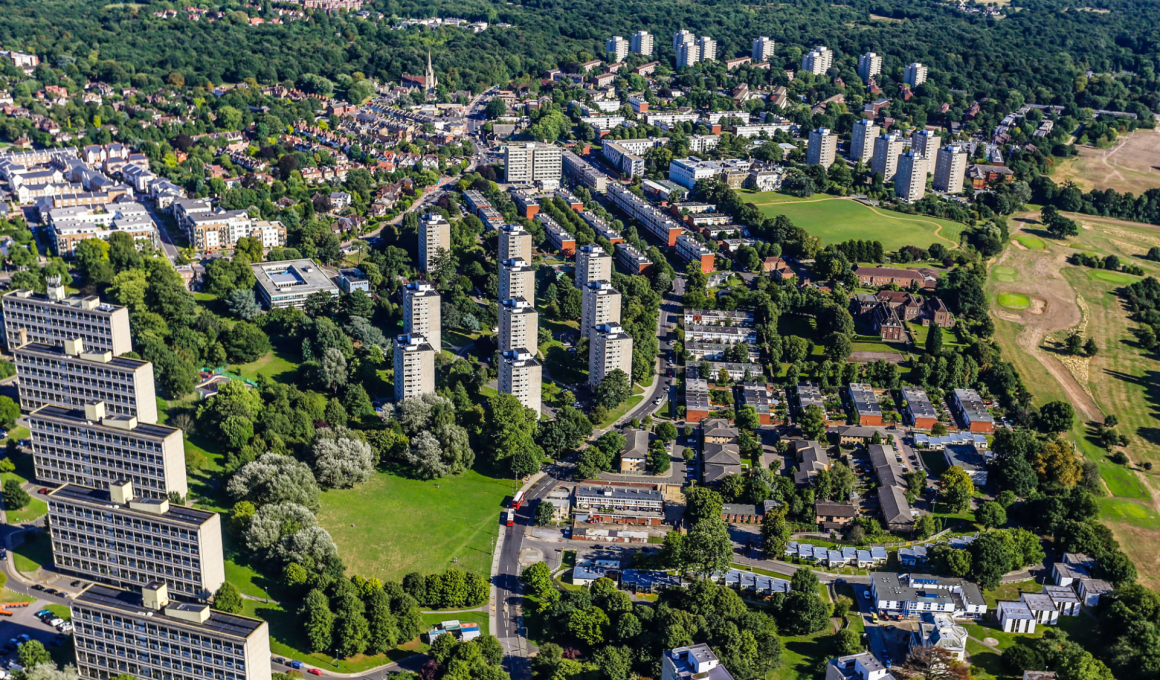
Built between 1952–1961 on 305 acres of Georgian parkland, the Alton Estate was conceived as Britain’s answer to Le Corbusier’s revolutionary urban vision. The London County Council architects, led by Rosemary Stjernstedt, were constructing a manifesto about how society should live.
The estate consumed some of England’s finest 18th-century landscape. Where Georgian aristocrats had built magnificent country houses like Parkstead House (1760, home to socialite Lady Caroline Lamb) and Mount Clare (1772, designed for George Clive and landscaped by Capability Brown), modernist tower blocks now rose between the ancient trees. The grand houses survived—they’re now part of Roehampton University—but their formal gardens became the setting for one of the world’s most ambitious social housing experiments.
The architectural talent was extraordinary. Colin Lucas, Bill Howell, John Killick, John Partridge, and Roy Stout created two contrasting neighbourhoods. Alton East featured Scandinavian-influenced red brick towers. Alton West showcased uncompromising Le Corbusier-inspired concrete slabs that seemed to float above the landscape on pilotis.
International critics were rapturous. American architectural critic G.E. Kidder Smith declared it “probably the finest low-cost housing in the world,” while Nikolaus Pevsner called it “brilliant […] aesthetically the best housing estate to date.” Over 2,000 international visitors toured the completed development annually, coaches arriving from across Europe to study Britain’s modernist masterpiece.
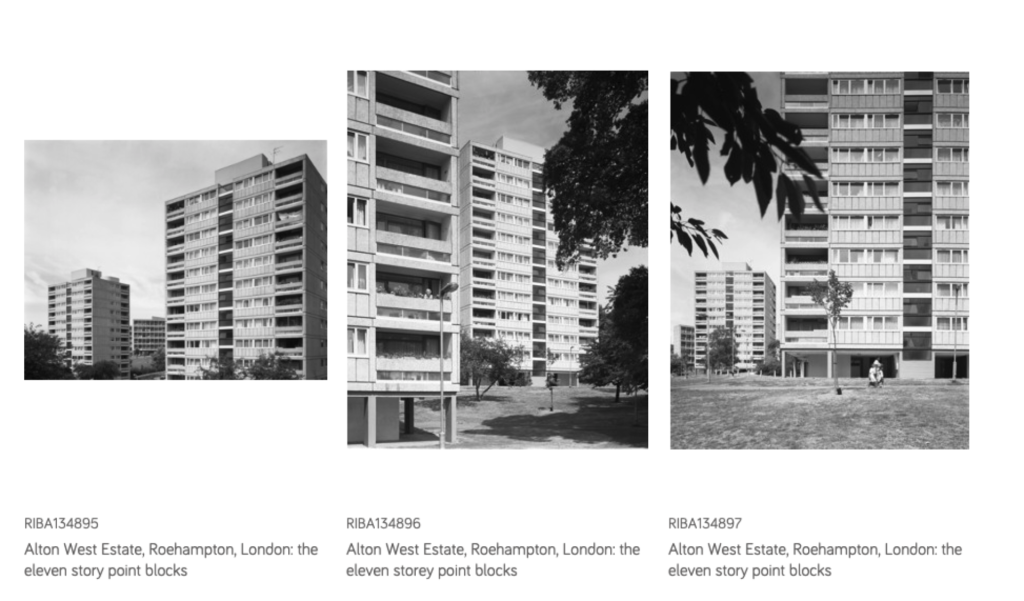
Architects continue to be fascinated with the estate. Dozens of black-and-white photos of the estate are licensed by the Royal Institute of British Architects (RIBA); architecture journals have frequently covered the estate’s comings-and-goings, and renowned architect Richard Rogers even hosted a dedicated TV show about the estate, exclaiming his love for it.
Following Aneurin Bevan’s principle that “the working man, the doctor and the clergyman will live in close proximity to each other,” the estate mixed bus drivers with teachers, creating genuine social diversity that planners today struggle to achieve.
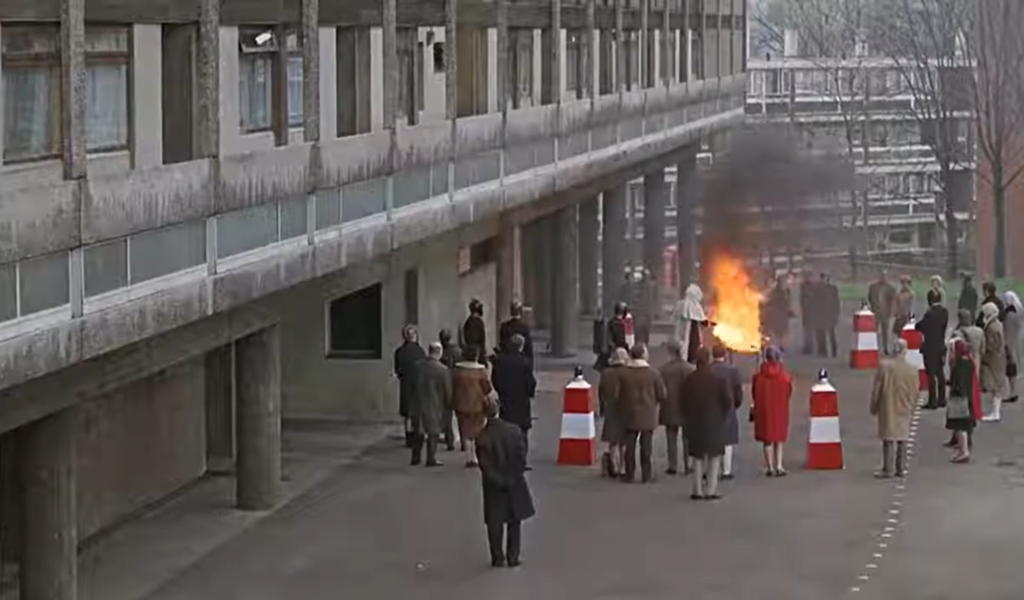
But the Alton’s cultural significance took an ironic turn. The striking brutalist architecture that had symbolized progressive social housing became a go-to filming location for dystopian dramas. The 1966 film Fahrenheit 451 used the estate as a backdrop for Ray Bradbury’s authoritarian future. Thames Television filmed scenes from The Sweeney on Danebury Avenue. Later productions included episodes of The Bill, Prime Suspect, Minder, and even Little Britain. As one resident noted: “It’s more than likely the only police you’ll ever see on the estate are actors in costume.”
The estate’s architectural significance clashed uncomfortably with its media representation. While housing experts celebrated its Grade II* listed slab blocks as masterpieces of modernist design, television audiences knew it as a symbol of urban decay.
When Paradise Became Purgatory
Both Alton East and West “suffered the usual problems with vandalism in the 1970s,” as the optimistic social consensus of the 1950s gave way to economic crisis. But the problems went deeper than social change.
The estate’s signature modernist features – floor-to-ceiling windows, minimal heating systems, innovative but complex building technology – proved expensive to maintain and poorly suited to British weather. The open undercrofts beneath slab blocks, designed as community spaces, became what official assessments later described as “unsafe, hidden spaces.” Planning documents note that “fundamental design flaws have created an abundance of dark and insecure settings, including non-overlooked alleys and external stairwells, which are conducive to antisocial behaviours.”
Transport isolation compounded the problems. The estate sits at the end of bus routes, poorly connected to employment centres. Even today, the nearest Underground station requires a 40-minute journey.
The fatal blow came from Margaret Thatcher’s Right to Buy policy. Wandsworth Council had introduced right-to-buy even before it became national policy. By 1990, 40% of the borough’s 28,000 council homes had been sold off—among the highest disposal rates in Britain.
As better-off residents bought their homes and moved on, the estate increasingly housed only those with limited choices. The careful social mix that had been the Alton’s pride gradually eroded, concentrating poverty and overwhelming support systems.
By the 2000s, residents were complaining bitterly about conditions. Community feedback revealed: “Concrete falling off of Allbrook House”; “Poor maintenance of blocks, moulding walls. Disgusting communal areas,” and “The housing maintenance service is very poor and many residents are left for weeks/months getting little or no response from the housing team whilst their repair issues are not addressed.”
Seventeen Years of Spectacular Failure
Starting around 2012, Studio Egret West won a competition to masterplan the estate’s regeneration. The prestigious practice conducted extensive consultation offering “four levels of improvement” and sent questionnaires to 3,800 households, achieving a dismal 7% response rate. Then Studio Egret West simply disappeared from the project with no clear explanation.
The most significant attempt partnered Wandsworth Council with housebuilder Redrow from 2017–2020. This joint venture, masterplanned by Hawkins Brown, proposed demolishing 288 homes to build 1,108 new ones – but the scheme was fundamentally flawed from conception.
The Conservative council’s approach prioritised private profit over community need. Only 23% of new homes would be affordable; well below even Wandsworth’s modest 33% target and far short of the 60% social housing that had made the original Alton special. Worse still, these affordable homes would be segregated on the site’s periphery, creating exactly the kind of social apartheid the original estate had been designed to avoid.
As community feedback revealed, residents saw through the false promises: “While the previous plan replaced existing council homes it was skewed towards private housing. Any development of the Alton estate should incorporate at least 50% council housing to produce a mixed development.” Others noted: “Social housing is what Roehampton’s Alton estate was built for—that is the heritage that should be preserved.”
London Mayor Sadiq Khan’s planning team condemned this spatial segregation as unacceptable, arguing it violated basic principles about mixed communities. The Mayor’s office identified that concentrating market housing in the estate’s heart while pushing social housing to the edges would fundamentally alter the development’s character and undermine its social purpose. Yet Wandsworth’s Conservative-controlled planning committee unanimously approved the application in October 2020 – only for Redrow to withdraw months earlier, citing rising costs and market conditions.
For residents who had endured three years of consultations and community meetings, the betrayal was complete. As one noted: “We have been promised regeneration for more than 12 years. Please do it this time. Otherwise I will be too old to enjoy this area.”
Labour’s May 2022 election victory ended 44 years of Conservative control and scrapped the failed scheme, but 17 years of failure had created deep suspicion about any regeneration promises.
A Different Approach – But Is It Really?
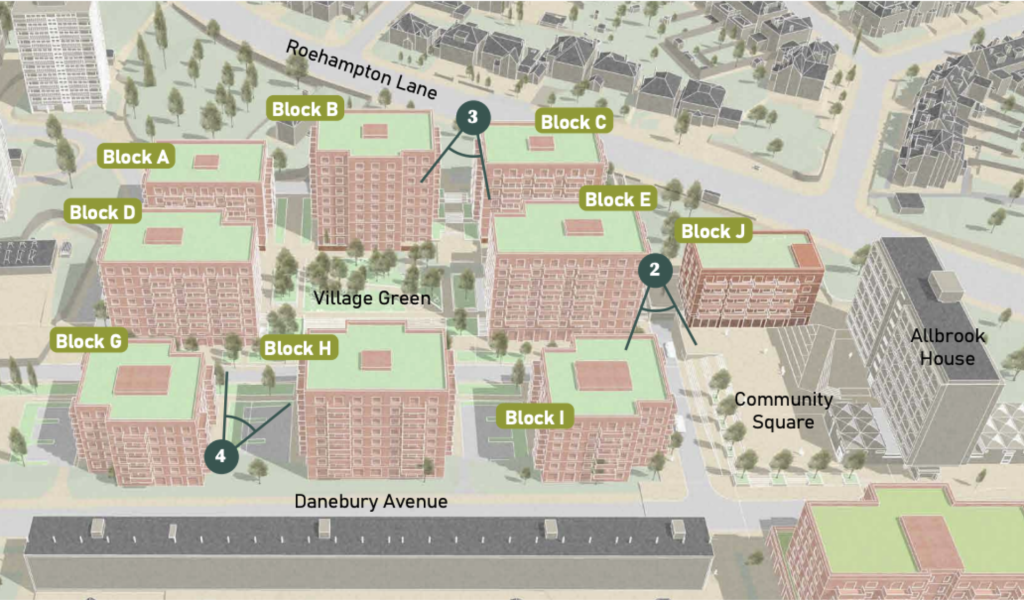
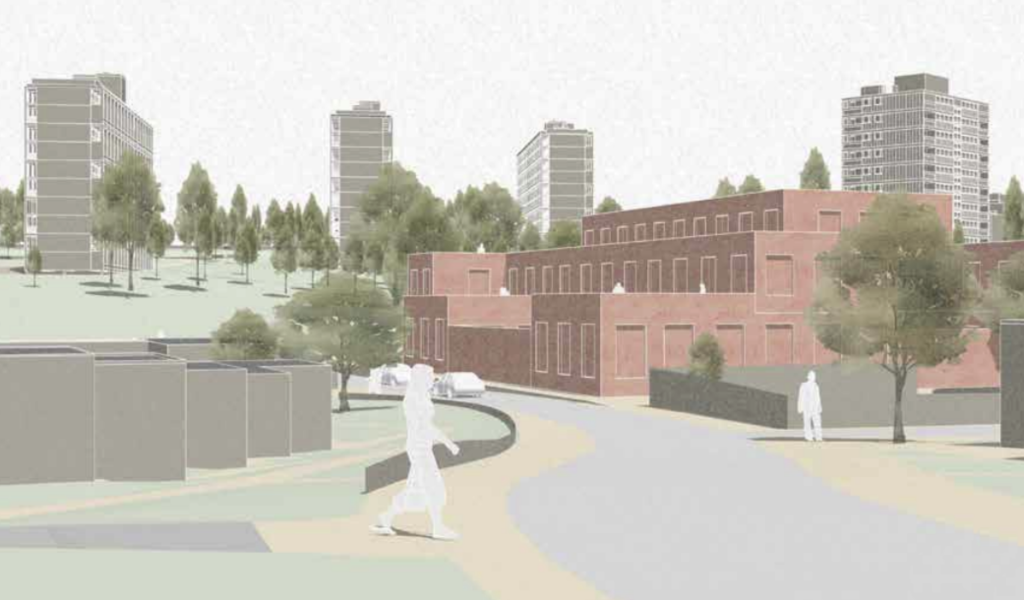
The current scheme, developed by HTA Design, proposes demolishing 167–178 homes to build 600–650 new units with 57% affordable housing – a significant step-up from Redrow’s offering. The £84 million from the Housing Revenue Account, plus £16 million GLA funding, represents genuine public investment rather than subsidising private returns.
But this money is essentially the residual balance from previous failed schemes—there may not be another opportunity if this ballot fails. The proposals still involve substantial demolition and years of construction disruption, with no guarantee that promises will materialise.
More concerning, the transport issues that have plagued the estate for decades remain largely unaddressed. Adding 425–475 net new homes will significantly increase pressure on already inadequate bus services. The council has launched new transport initiatives, but these operate limited hours and recent reports describe services as unreliable due to traffic congestion. Wandsworth Council has no direct control over Transport for London bus services – and there is no public transport proposal beyond buses.
The HTA proposals include four main development areas:
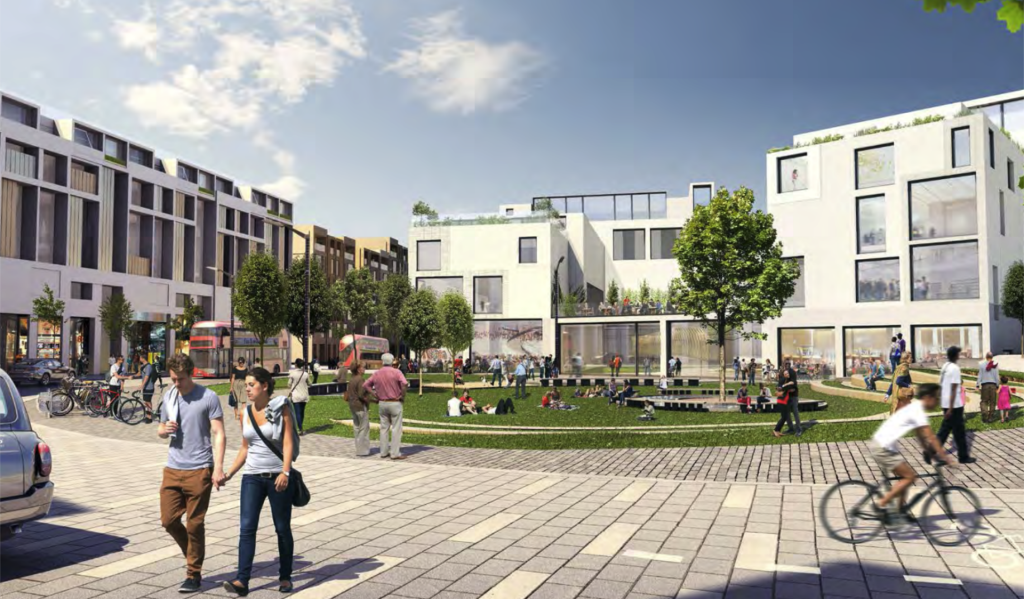
- The Danebury Neighbourhood with new mid-rise blocks around a central green square
- Replacement shopping facilities with larger supermarket
- A new community facility relocating services from 166/168 Roehampton Lane plus GP surgery
- And apartment blocks on Roehampton Lane
The architectural style would offer “contemporary reflection of Alton West’s original design principles,” though whether this represents genuine heritage respect or marketing spin remains unclear.
If approved, the timeline stretches far into the future. HTA would submit a planning application in June 2026, followed by detailed development of phasing and decant strategies. The council documents note that “each phase of delivery will also be subject to separate financial review and approval,” meaning residents face years of uncertainty about whether promises will actually be delivered. The Roehampton Community Hub could begin construction earlier, potentially providing decant housing, but no overall construction timeline has been published.
The Case Against: Refurbishment Over Demolition
Opposition centres around Alton Action, a resident-led campaign group that has partnered with University College London to develop an alternative “People’s Plan.” Their 155-page proposal [pdf] advocates refurbishment over demolition, projecting £90 million returns from renovation while preserving internationally significant architecture.
Leading architects support this position, arguing that proper renovation could address current problems while preserving the buildings’ historic value. The group argues that current problems stem from decades of underinvestment rather than fundamental design flaws.
But the refurbishment argument faces a credibility problem. Residents have heard promises about better maintenance for decades, with persistent complaints about poor housing services and repairs taking weeks or months to complete. Why should residents trust that the same council that allowed buildings to deteriorate will suddenly transform into an efficient maintenance organisation?

The Case For: Starting Fresh
Supporters argue that the estate’s problems have become too entrenched for cosmetic solutions. The buildings designed for 1950s lifestyles poorly serve contemporary needs. Families struggle in maisonettes accessed via long corridors; elderly residents find the modernist architecture intimidating.
The “Landlord Offer” [pdf] provides stronger protections than previous schemes. Secure council tenants receive guaranteed new secure tenancies without temporary relocation. Leaseholders and freeholders get market value compensation plus up to £75,000 home loss payments, with shared equity options to remain in the community.
Current resident feedback supports change: “These homes are past their sell-by-date. Very difficult and expensive to live in,” and “Need better lifts. Need to be able to move out overcrowded people into bigger homes.”

The Heritage Versus Housing Dilemma
The ballot crystallises a fundamental tension between architectural preservation and housing need. The five Grade II* listed slab blocks represent some of Britain’s most significant modernist architecture, serving as what Historic England called “the showpiece for post-war British public housing architecture.”
But even key buildings lack protection, and for good reason. When campaigners applied to list Allbrook House and Roehampton Library in 2015, Historic England commissioned an independent assessment [pdf] that concluded they “were a significantly and deeply flawed compromise on the original concept, and the least successful part of the LCC Estate.”
The rejection was devastating and detailed. Historic England identified eight critical problems: the buildings failed to fulfil their original brief for a public piazza; their setting created “ill-considered, dark and unpleasant spaces at ground level”; they had no architectural influence and were never published in professional journals; they were “commonplace and derivative 1960s building[s]” that simply copied aspects of the superior Highcliffe blocks without their most successful features; extensive alterations meant the library survived “only as a basic architectural shell with none of its original fixtures and fittings.”
Most damning was the assessment of Allbrook House’s urban design. The report noted that “the poorly resolved ramp or stair access between street level and the communal entrances” created significant problems for residents, while the intended public space “was left as an afterthought in the final design.” Unlike the dramatic Highcliffe slabs set in parkland, Allbrook House felt like “a poorly laid-out compromise, with none of the drama of the Highcliffe slabs in the parkland, nor a proper engagement with Roehampton Lane.”
Yet this architectural significance offers little comfort to residents living in cold, damp, poorly maintained homes. The modernist architecture that so impressed 1960s critics has proved problematic in practice. Features like floor-to-ceiling windows and minimal heating created buildings that photograph beautifully but prove challenging to maintain and uncomfortable to live in.
The Democratic Gamble
The September ballot represents both an opportunity and a risk for democratic participation in planning. The binary choice – approve demolition or accept decline – oversimplifies complex trade-offs. Residents can’t vote for better maintenance or partial renovation; they must choose between a specific proposal and an unsatisfactory status quo.
The voting arrangements favour approval. Only a simple majority is required, with no minimum turnout. Both sides are mobilising supporters, understanding that engagement levels could determine the result.
For residents, the choice involves profound uncertainties either way. Approval means years of disruption with no guarantee promises will be kept. Rejection means accepting continued poor conditions with little prospect of improvement.
The Wider Stakes
The ballot’s implications extend far beyond the estate’s boundaries. Successful council-led regeneration would demonstrate that public housing can be renewed through resident participation rather than developer profit extraction, potentially influencing estate renewal across London.
But failure would vindicate arguments that democratic planning is too slow and complex for effective urban renewal. The £100 million investment represents one of the largest council housing commitments in London—failure would waste this while demonstrating that even Labour councils struggle to deliver regeneration promises.
The September Moment
When ballot papers arrive next month, they will carry the weight of 70 years of architectural history, 17 years of planning failure, and the hopes of over 13,000 residents. This may indeed be the estate’s final realistic opportunity for comprehensive renewal, with political alignment and financial commitments unlikely to be replicated if the ballot fails.
The estate that once symbolised post-war Britain’s highest social ideals now faces a test of whether contemporary democracy can fulfil those ideals through genuine community participation. After decades of broken promises and false starts, residents finally hold genuine power over their community’s destiny.
The question is whether they’ll choose to use it.