

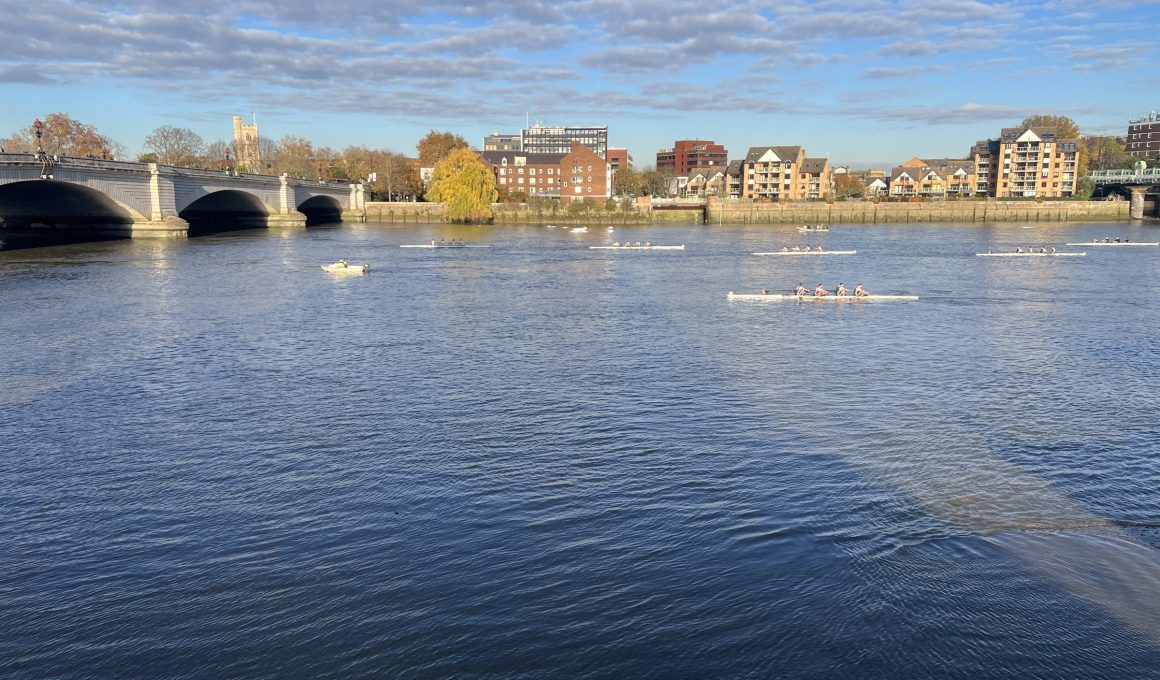
On a Sunday afternoon in April 1667, Samuel Pepys took a boat up the Thames to Putney, went to church, and lost his hat down a hole under the pulpit.
We know because Pepys kept a diary. The afternoon was “mighty pleasant” and the tide was right, so after dinner he went upriver as far as Barn Elms, walked about for a while, then came back to Putney Church. The sermon was good, Pepys was sleepy, and that was when the hat went. The clerk helped him fish it out with a stick.
Then he caught the tide back down to Deptford. Pepys planned his Sunday around the river, the way a Londoner now plans one around the Tube. For him, Putney was a riverside village you could visit by boat on a fine Sunday, and doze through a sermon. The church’s 15th-century tower is still here, though the rest of St Mary’s has since been rebuilt, and restored again after a fire.
Every generation of writers since has found a different Putney. To Dickens and his friends it was the country, just within reach of town. To the Victorians and Edwardians it became a suburb, comfortable and quiet, and to a young writer arriving in 1934 it was a room by the railway and a labouring job. In the 1960s and 70s it was a party by the river and on the Common. Now it is the part of London that kept its past.
The last house in London
Coming to Putney grew easier, first over a timber toll bridge and later by railway. In 1795 the writer Mary Wollstonecraft tried to take her own life at the bridge; she was rescued, and lived.
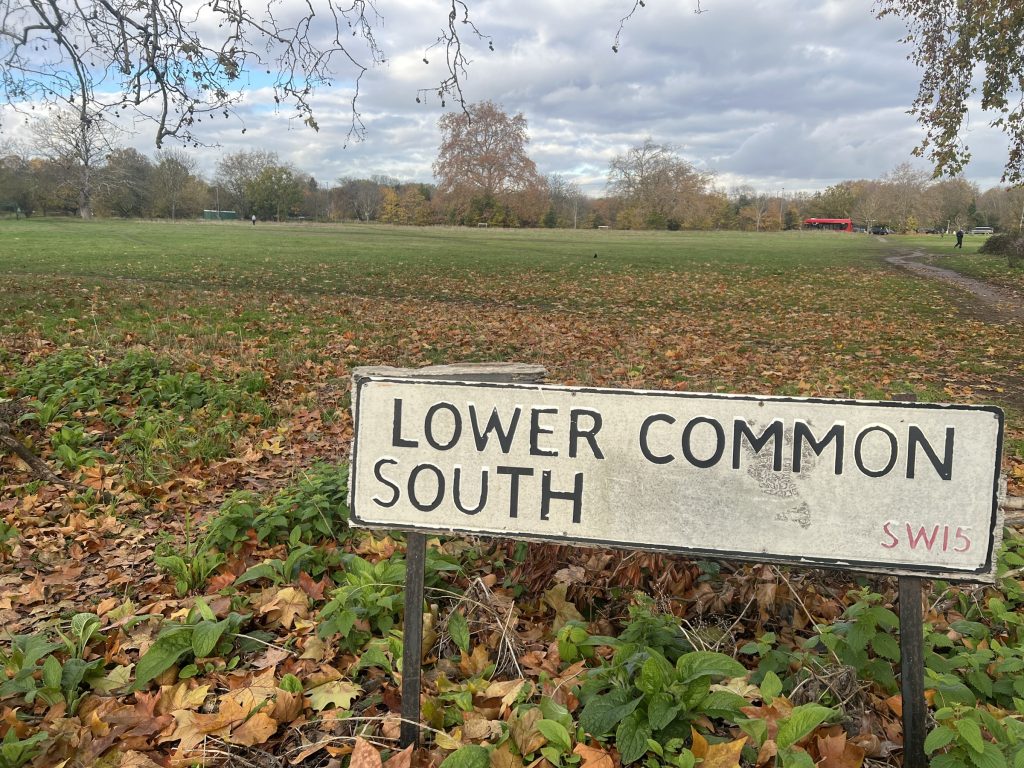
In the 1840s, the playwright Douglas Jerrold, author of Black-Eyed Susan and a regular writer for Punch, came to live at West Lodge, a house on the edge of Putney Lower Common known as “the last house in London”.
His son Blanchard, writing two years after his father died, called his nine years in Putney “perhaps, the most prosperous, the sunniest, of his life”. On summer evenings Jerrold could be found in his straw hat, watering the geraniums, and every visitor was given a glowing account of his mulberry tree. He grew asparagus, kept fowls and a cow, and joked that his cabbages cost him a shilling each. London could reach him now by road and rail, and Putney was still country.
And there were guests. After one dinner under canvas, his son remembered, Jerrold and his friends Charles Dickens, the painter Daniel Maclise, the actor William Macready and the critic John Forster played leapfrog on the lawn “with the real zest of fourteen”. Foremost among them, hair flying, was “the little figure of Douglas Jerrold”. On another evening the guests were editors of papers and magazines and the writers who filled them. They played a game called basting the bear, beating one another with knotted handkerchiefs, and it ended with the whole party trying to turn somersaults on the haystacks in the orchard. One very stout editor was left stuck on his head, unable to get the right way up.
Putney turned up in Dickens’s fiction too. In David Copperfield, Dora’s aunts, two maiden sisters, live at Putney, and after her father dies she goes to live with them. “How I found time to haunt Putney, I am sure I don’t know,” David says. With daily journeys to Highgate to fit in, Putney was “a long way off”, and his aunt walks out to Putney at odd hours rather than take a carriage. When the wedding comes, the novel does not name the church. But a few boatmen wander in to watch, and an old sailor behind the bridegroom fills the place with the smell of rum.
Jerrold’s house has gone. Putney Hospital was built on the site, and the hospital has gone in its turn; a primary school and flats stand there now. Most of the big houses of that first Putney went the same way. What was built in their place, street after street, is the Putney the next writers found.
A cab over the old bridge
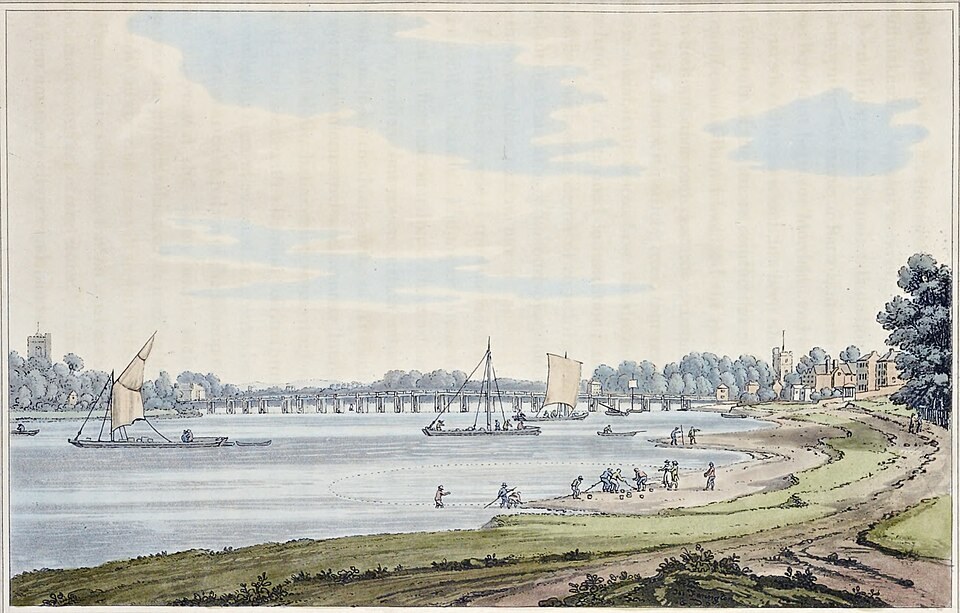
Late on the afternoon of 16 September 1879, a hansom cab came over the old wooden toll bridge with two men in it, on the crossing Londoners had used to reach Putney for 150 years. The smaller, gravely ill from drink, was the poet Algernon Charles Swinburne, whose poems had caused a sensation in Victorian England. The other was Theodore Watts-Dunton, a solicitor and critic, who took him in.
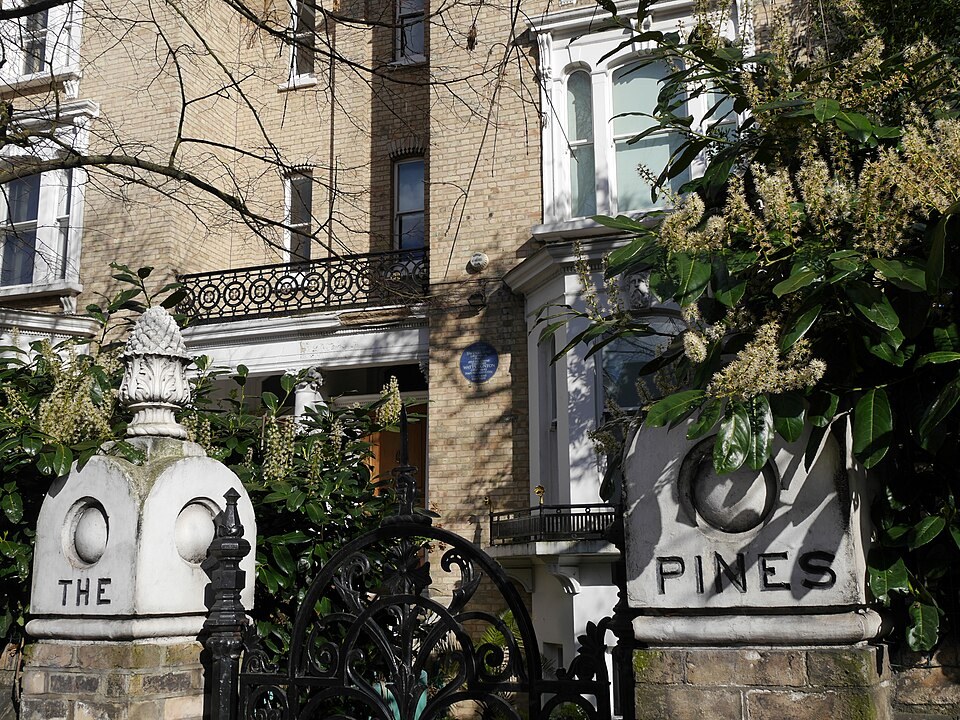
After a short stay with Watts-Dunton’s sister in Werter Road, the two moved to The Pines, a house on Putney Hill. Swinburne lived here for the next thirty years. Some of his old friends thought he had been kidnapped. The household was so formal that the two men did not use each other’s first names for ten years. In Putney his days settled into a routine: a walk of three miles to the first pub in Wimbledon, one bottle of beer, and the walk back. He died at The Pines in 1909. The Pines still stands, with a blue plaque on the front.
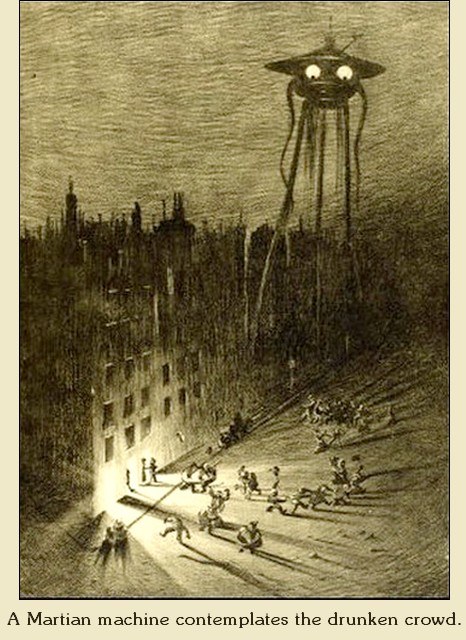
In 1898, with the railway now running to East Putney, H. G. Wells wrecked the place in The War of the Worlds. His narrator spends a night in the inn at the top of Putney Hill, finds the bridge almost lost under red weed, and looks down on a Putney “singularly desolate”. On the hill he meets an artilleryman who has spent a week digging a tunnel from the coal cellar of a house nearby, meaning to reach the main drain under Putney Hill and start the human race again underground, and has managed about ten yards.
Unvexed, untroubled
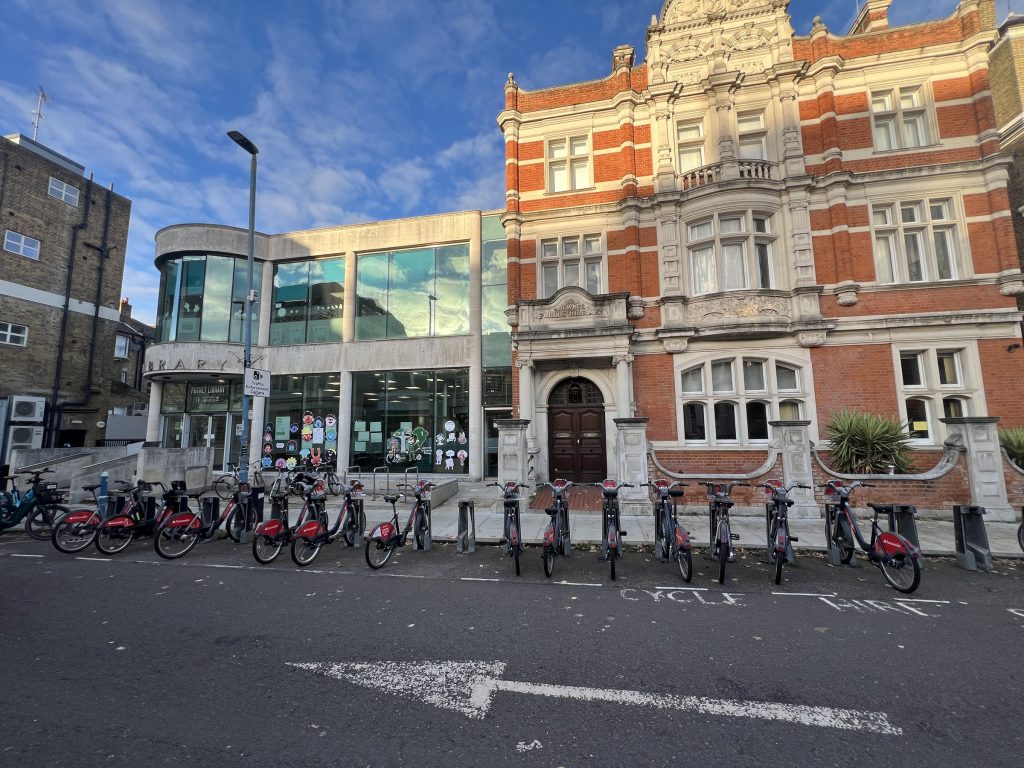
Step back from the writers for a moment, because in twenty years Putney had changed shape. Swinburne arrived over a wooden toll bridge you paid to cross. By the time Wells was writing, a new bridge had replaced it, the District Railway had reached the river and trains ran to East Putney. Putney was no longer somewhere Londoners came for the day. It was becoming somewhere they lived. Then the new suburb got its own public library, paid for by a neighbour: Sir George Newnes, who lived at Wildcroft on Putney Heath and had built a publishing business on popular magazines. One of them, The Strand, was where Arthur Conan Doyle’s Sherlock Holmes stories appeared.
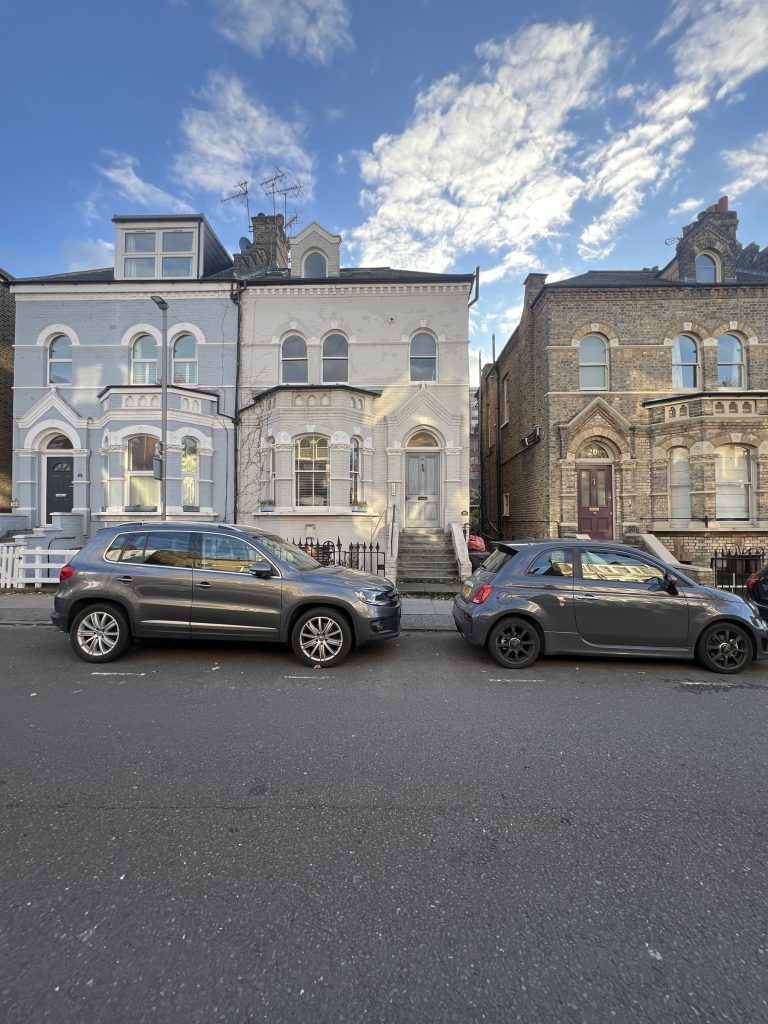
The writers who came next found a suburb, and some of them laughed at it. After a walk through Roehampton and Barnes in December 1907, Arnold Bennett wrote Buried Alive in seven weeks. In it a world-famous painter, painfully shy, swaps identities with his dead valet and hides in the suburbs as a nobody, at 29 Werter Road, Putney, the street where Swinburne spent his first nights here. Bennett’s Werter Road starts at the corner of the High Street “where the fish-shop was”, and the High Street has a music hall, a library and a tea shop “exactly like Regent Street”.
The painter walks down to Putney Bridge, whose arches carry vans and omnibuses above and barges and racing eights below, and watches an electric train cross the river on “a red causeway” a little way downstream.
“Putney was a place where you lived unvexed, untroubled,” Bennett wrote. The painter’s first new picture, a view of Putney Bridge, sits in his tobacconist’s window for weeks and never draws a crowd. Then it sells, for five guineas.
Across the road from Bennett’s made-up number 29, at number 22, E. M. Forster’s aunt lived for real. Forster came to visit, and was photographed there with his mother in 1902.
The suburb also needed building. In 1934 Laurie Lee, nineteen and new to London, found work as a labourer on Manor Fields, the new flats at the top of Putney Hill, up the road from Swinburne’s Pines. He took a room over a cafe beside the railway, the line that had brought London to Putney, and the room shook every time a train went past. It was in that room that he started to write. A poem he sent off won him a prize from a Sunday paper. On the site there was a strike, and 500 men gathered on Putney Heath for two weeks. He told the whole story thirty-five years later, in As I Walked Out One Midsummer Morning. Bennett’s Putney was a place to hide. Lee’s was a place to begin.
A party by the river
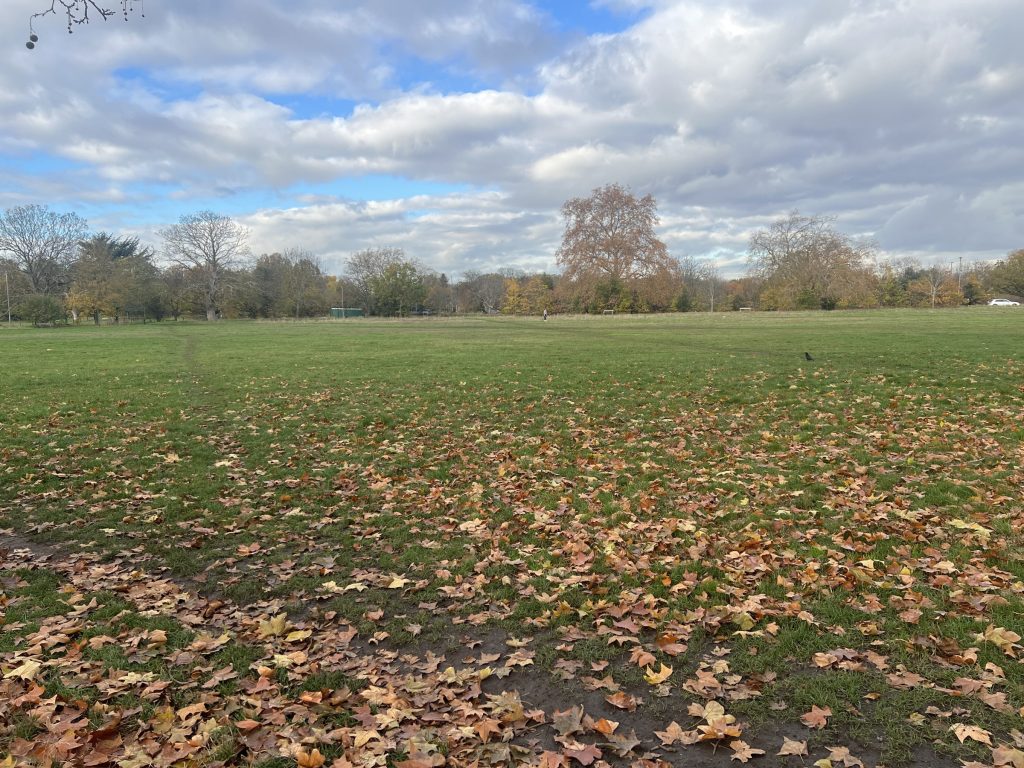
Nearly forty years after Lee laboured on Putney Hill, Jilly Cooper was writing a column for the Sunday Times when she moved in 1972 to Egliston Road, just by Putney Common. Every day for ten years she walked her English setter, Fortnum, on the Common, and the walks became a book. The Common Years, published in 1984, is a decade written as a diary: the seasons, the trees and the birds, the dogs, and the neighbourhood’s love affairs, a lunch with a man in advertising and a dinner with an actor. In one entry Fortnum disgraces himself with a neighbour’s dog in a churchyard just as the old ladies are arriving for the morning service. Later a second dog arrived, which her husband, Leo, called Maidstone. Cooper left for a farmhouse in Gloucestershire in 1982. She died in October 2025, aged 88.
Cooper’s Putney was a party. Two novels written in the last eight years go back to the same decade and find something else.
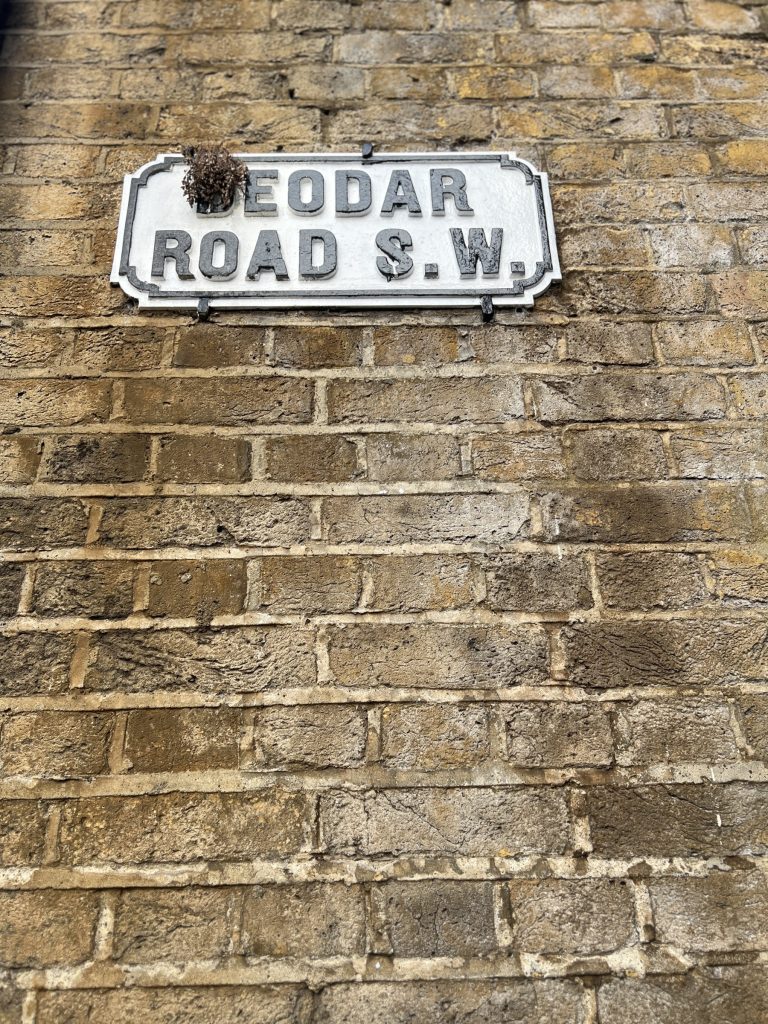
On Deodar Road, by the river, Peter Zinovieff’s electronic music studio started in a garden shed, and his daughter Sofka came home from Putney High School to find Pink Floyd and Led Zeppelin there. Decades later she wrote a novel set in a riverside house in the 1970s, modelled on her family’s, and called it Putney (2018). It is a novel about the sexual abuse of a child, and a reckoning with what the 1970s accepted. Its heroine, grown up, lives across the Thames and looks over at her old home. Zinovieff has said the story is not hers, but the house and its atmosphere are, and she has talked about the book at Putney Library.
John Francis O’Neill set In His Day (2025) on a council estate in Putney in the same decade. Its hero, Shay, a documentary maker of 52, collapses on the estate where he grew up and wakes in March 1976, face to face with himself aged eleven. Using false papers, he gets a job as a teacher at St Michael’s Primary. What he wants to stop is the family’s move from the Kersfield Estate to the World’s End towers in Chelsea, the move he believes broke everything. Our review found a 1970s written by someone who was there: slam-door trains, paper bus tickets, pubs closing at 3pm, and a boy who pockets a sausage from a school-trip meal because being poor has taught him to hoard food. It is a book about class and regret, and its landmarks are a mix of what is still here and what has long gone.
The Putney that kept its past
Other writers have put the Putney they live in into their books. A. S. Byatt lived and wrote in Putney and died at home here in November 2023. In Possession (1990), the novel that won her the Booker Prize, the young scholar at its heart lives in a Putney flat that smells of cats, its garden bounded by the old wall of Fairfax House, one of the big houses that went. Nigel Williams, who has lived here for more than thirty years, set Unfaithfully Yours (2013) in SW15, now: four couples in their sixties and a private detective, told in letters.
Look at what they wrote about, and at what is still here. The Common is still common land, protected by an Act of Parliament since Victorian times. The river still runs at the bottom of Deodar Road, which looks essentially the same. Most of the Victorian terraces Bennett mocked still stand, and apart from the office blocks along the Upper Richmond Road, Putney has few of the big modern buildings that have changed so much of London. Conservation areas followed, among them the ground around the Lower Common, where Jerrold had his lawn and Cooper walked her dog, until about a third of Putney and Roehampton was covered.
Pepys would still know the church tower. Swinburne could walk up the hill to The Pines, and Bennett could stand at the corner of Werter Road where he put his fish shop. Jerrold would find his Common and lose his lawn.
The timeline: how London reached Putney, 1667 to now
- 1667Samuel Pepys loses his hat at Putney Church
- 1729A timber toll bridge opens
- 1836St Mary’s rebuilt; the 15th-century tower is kept
- 1840sDouglas Jerrold comes to live at West Lodge
- 1846The railway arrives
- 1871An Act of Parliament protects the Common
- 1879Algernon Swinburne arrives at The Pines
- 1880The District Railway reaches Putney Bridge
- 1884Today’s Putney Bridge replaces the toll bridge
- 1889Trains reach East Putney
- 1898H. G. Wells The War of the Worlds
- 1899Putney Library opens, paid for by Sir George Newnes
- 1908Arnold Bennett Buried Alive
- 1912Putney Hospital built on the site of Jerrold’s house
- 1934Laurie Lee labours on Manor Fields
- 1967The first conservation areas
- 1972Jilly Cooper moves to Egliston Road
- 1973Fire at St Mary’s; restored by 1982
- 1978The Lower Common becomes a conservation area
- 1990A. S. Byatt Possession
- 1992About a third of Putney and Roehampton protected
- 2013Nigel Williams Unfaithfully Yours
- 2018Sofka Zinovieff Putney
- 2025John Francis O’Neill In His Day
What went were the big houses, Jerrold’s lodge among them. What stayed was the suburb that replaced them, the river, and the open ground around it all. It is a part of London that has held on to its roots and to its past a little more than most.
That may be why novelists reach back to the 1970s to find Putney. They can still walk down the streets they are writing about. Every generation of writers found a different Putney, and ours is the one that kept its past.
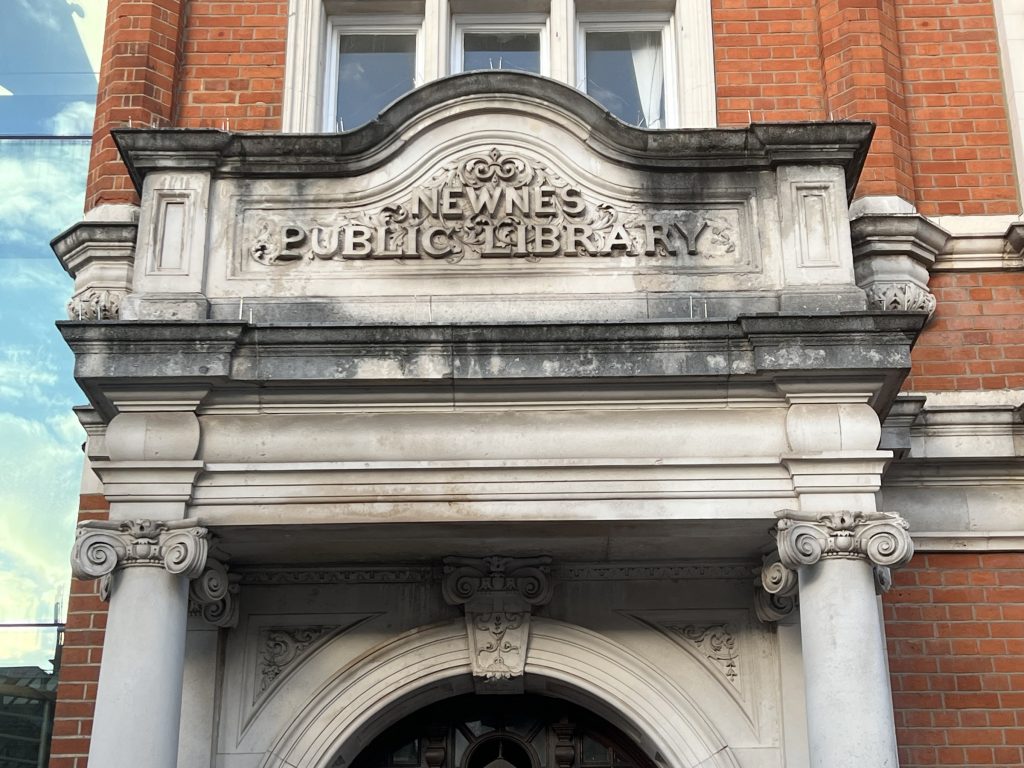
Most of those streets are still here to walk this afternoon, and our guide to the places takes you round three of them: the river and Deodar Road, Putney Hill, and the Common. The books are on a shelf. Sue Rolfe gathered many of these writers, and others besides, in Literary Putney and its Environs, published by the Wandsworth Historical Society with the Putney Society. Scott MacRobert’s Putney and Roehampton: A Brief History tells the story of the place around them. Both are in the Local Studies collection at Putney Library in Disraeli Road. You go in through the glass building, but look up at the red-brick one beside it. Over the old arched doorway the stone still reads Newnes Public Library: Sherlock Holmes’s publisher bought the land and paid to build it, and it was nine years old when Bennett put “a library” on his Putney High Street. Ask for 823.009 and 942.166 PUTN. Our pick of the books themselves has the rest of the shelf.
Sue Rolfe’s book begins with Pepys too: the sermon, the stick, the clerk and the hat, on page 4.
The local who wrote the book
Sue Rolfe wrote Literary Putney and its Environs for the Wandsworth Historical Society. When we rang her this weekend she was surrounded by packing cases: after decades in Putney, she is moving to Oxford. The guide was printed in the days when the council had its own print works and could run off extra copies. Those days are gone, which is one more reason to borrow the library’s.
Her own theory is that Putney drew rebels, people escaping the centre of London, who shared a slight strangeness. Once you know its history, she says, it stays with you.
Before she left she drew up a twelve-stop heritage trail through Putney, ready to go and never funded. She would like someone to pick it up.



What an excellent, informative and entertaining piece. I only have one Sunday Times bestseller under my belt (Dear Lupin) but at a stretch I could be described as an author of sorts! I’ve lived bang on Parsons Green for over forty years and regularly walk to Putney with my better half which we love doing, more so when we take in lunch at The Rocket (Wetherspoons) and then perhaps H&M
In recent years I became good friends with the lovely Jilly Cooper and I adored her book The Common Years which she kindly sent me. In particular I took to one of her many dogs ‘Sexy Rexy!’
These days I write the odd piece for The Oldie
All the best Charlie Mortimer
Lovely piece thanks Kieren, a few things I knew and many more that I didn’t. I’m surprised David McKee didn’t get a mention, maybe not as high brow as the other authors included though! Maybe you’re the right person to pick up Sue’s trial?