The people leading Putney’s fight against a third runway at Heathrow told residents on Tuesday that one more push could end it for good.
They also said that nobody from the airport or government seems to be listening.
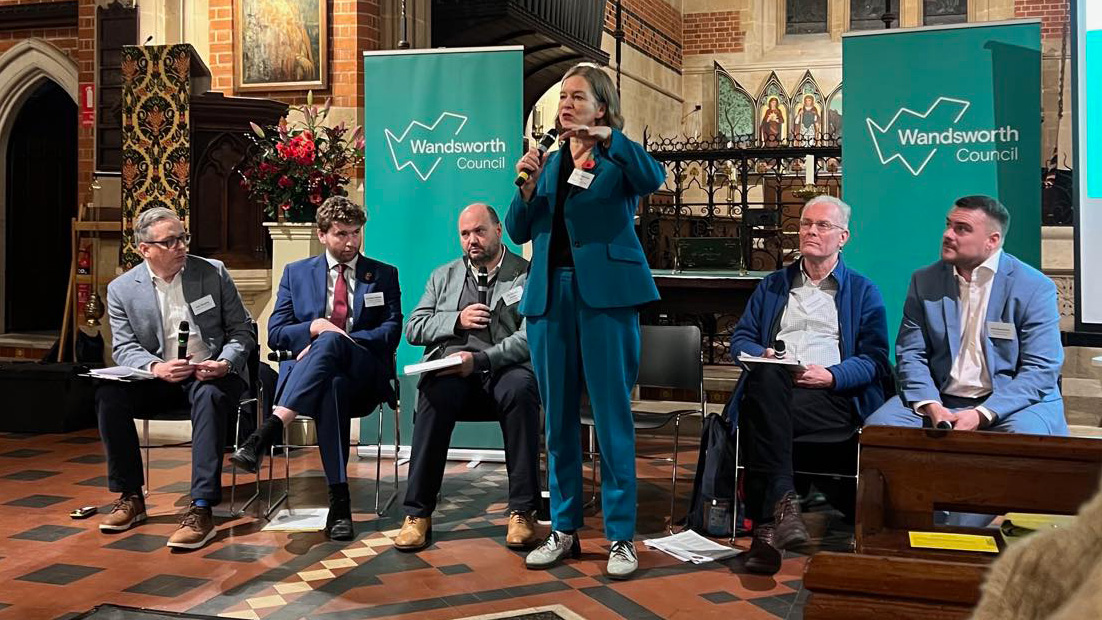
About 40 people came to Wandsworth Council’s public meeting at All Saints Church on Putney Common, two weeks into Heathrow’s own consultation on its plans. That consultation closes on Tuesday 22 December, and everyone on the platform gave the same advice: write in, and describe what the planes do to your day.
“This is probably your last chance,” said Mike Fawcett of the Putney Society. “You don’t have to answer all the complicated technical questions. Just say what you think about this proposal.”
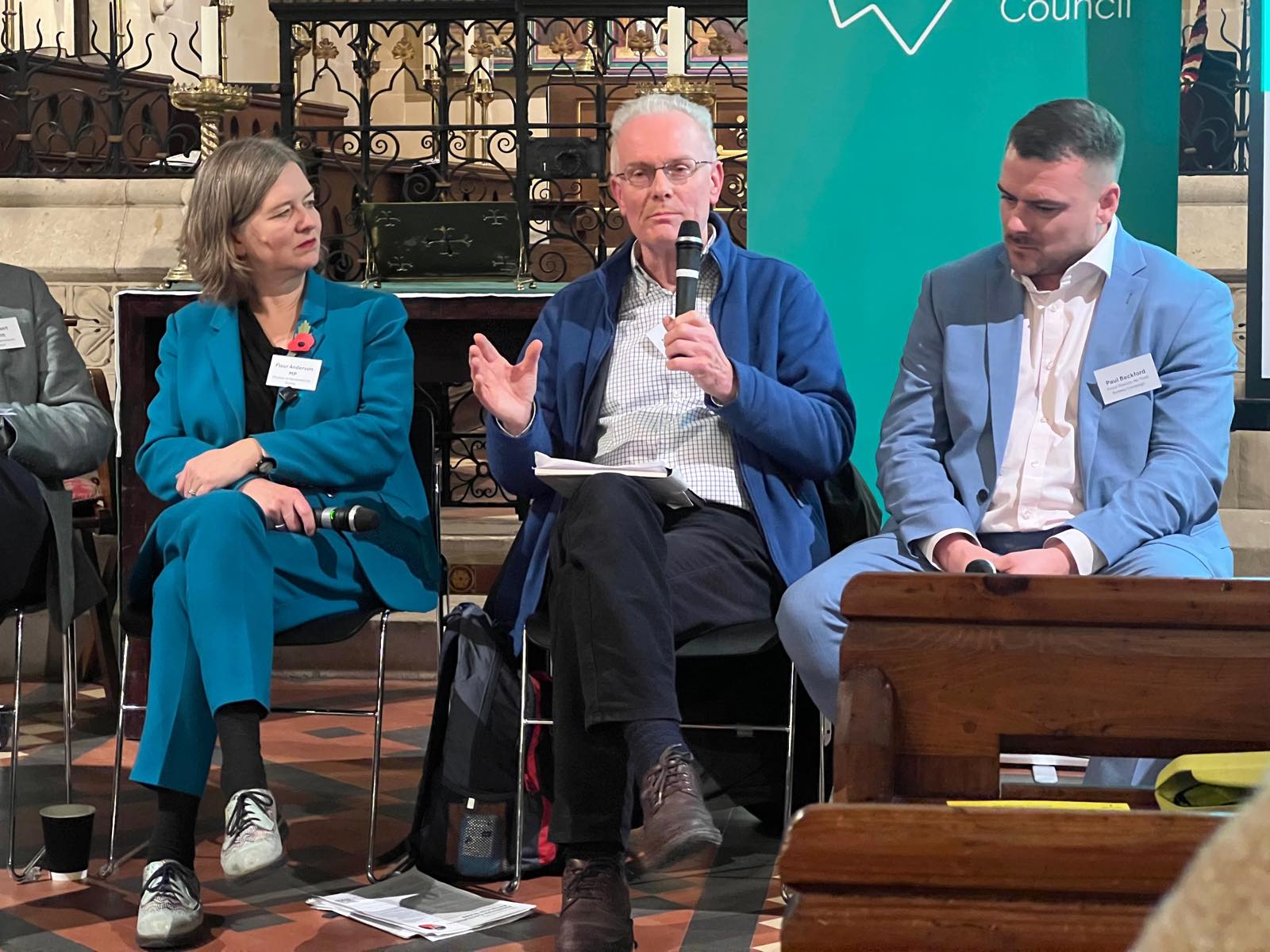
Later, Wandsworth’s Conservative council leader, Robert Morritt, said the trouble was not a lack of evidence. “The problem here is not an absence of information,” he said. “It’s been ignored.”
Back for a third time
The runway is back for the third time in 20 years. A Labour government approved it in 2009 and the coalition government scrapped it in 2010. MPs voted for it in 2018, by 415 to 119, before the courts and then Covid stalled it. In January 2025 the government brought it back.
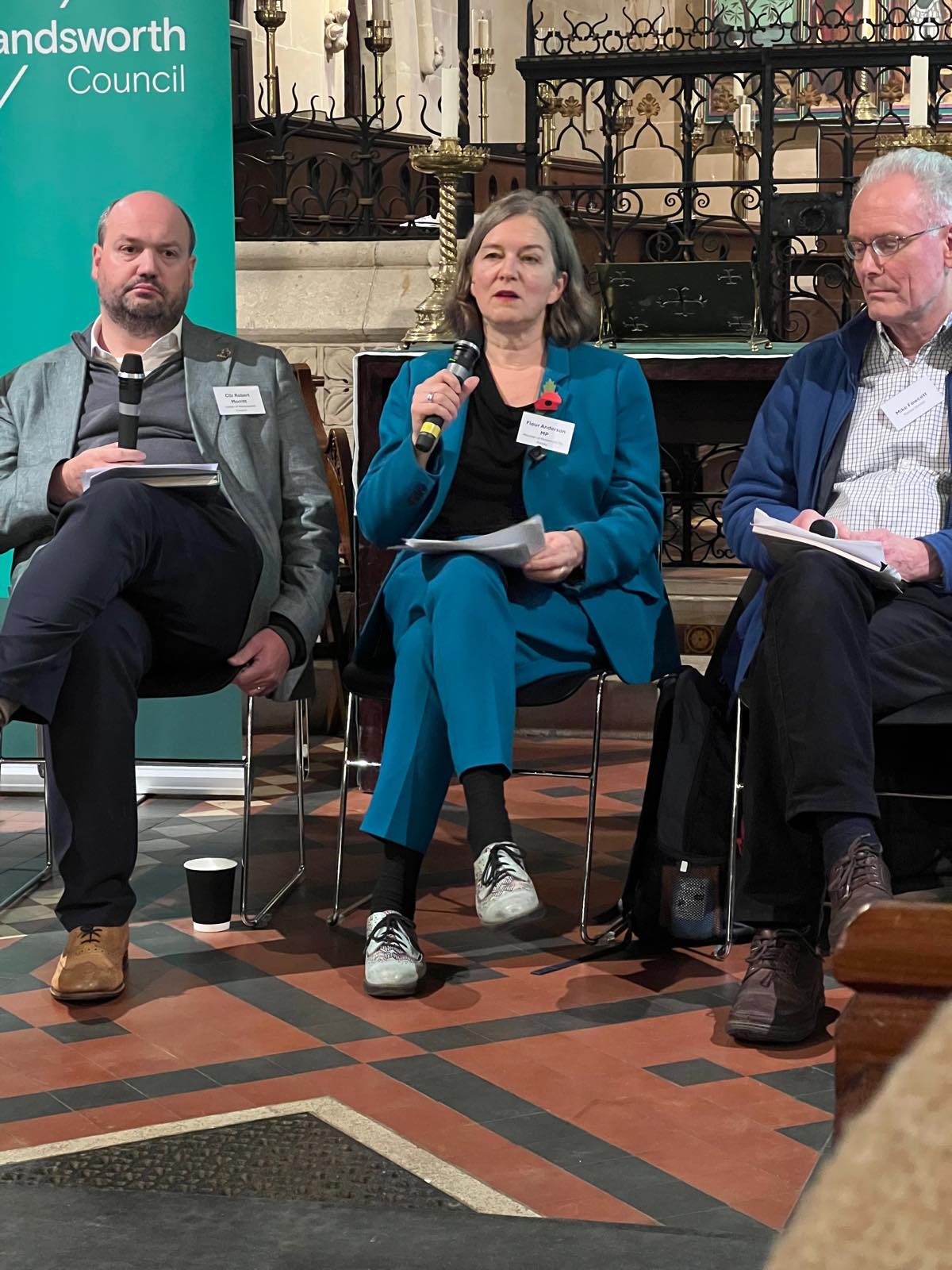
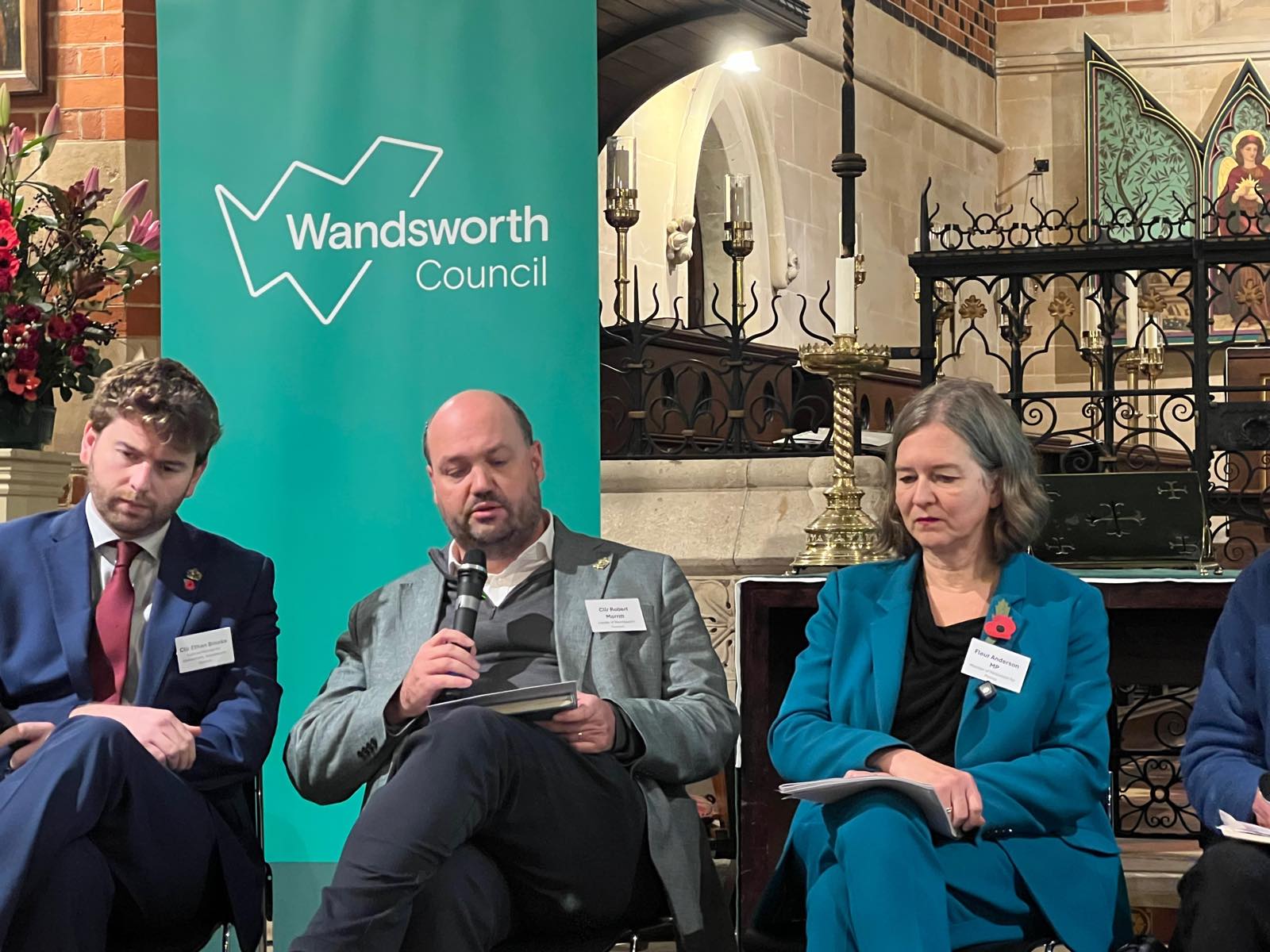
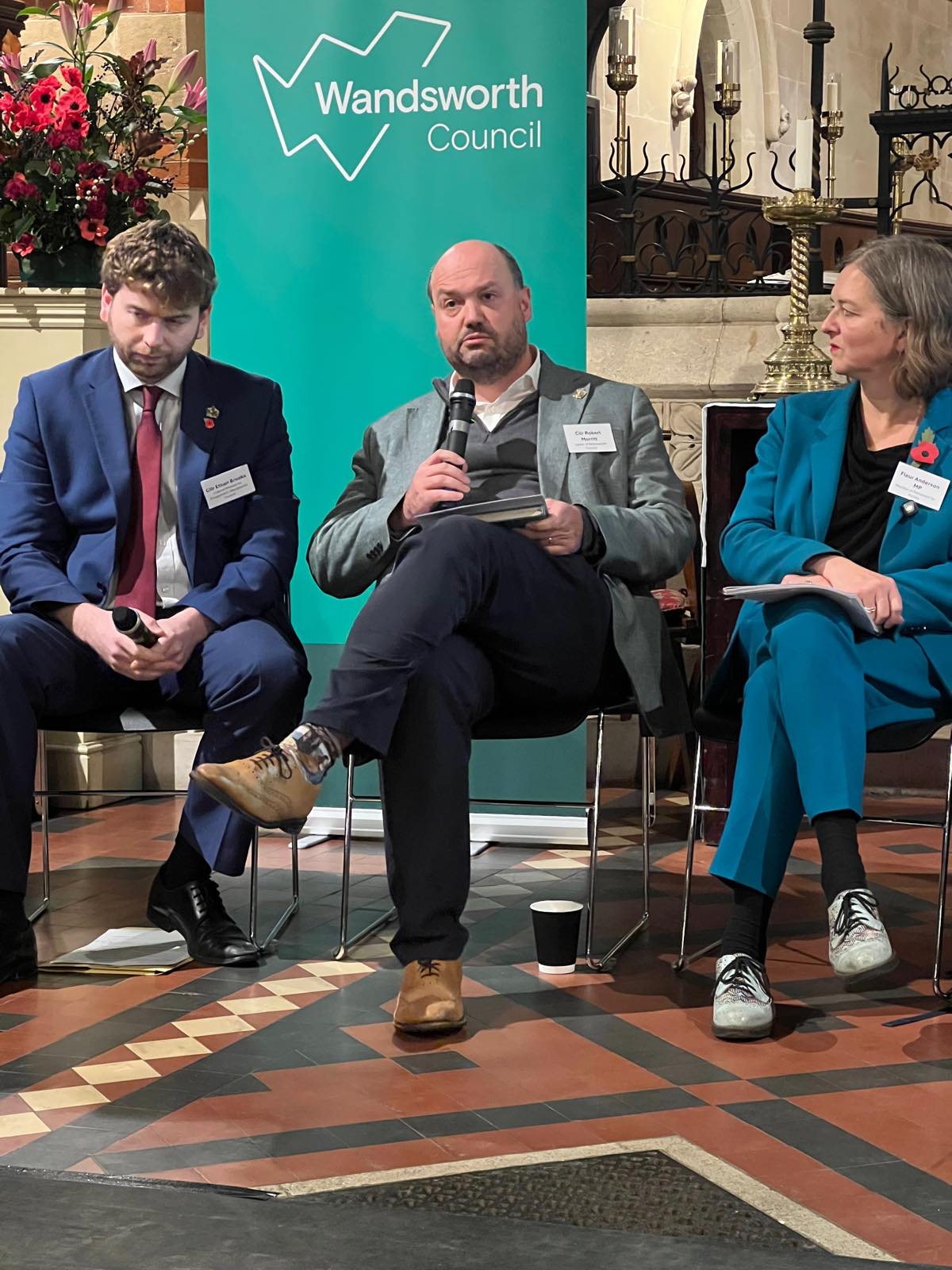
“I know we feel we’ve been consulted to death, and when will it ever end?” said Putney’s Labour MP, Fleur Anderson. Morritt, who shared the platform with her, said the runway was not a party matter between them.
“People have been fighting this for 20 years plus, so there’s a general sense of frustration and apathy,” said Paul Beckford, policy director of the No 3rd Runway Coalition, the campaign that Wandsworth Council helps to fund. “Some people have been led up the hill before.”
When the wind is from the west, which Heathrow says is about 70 per cent of the year, planes land over London, and the approach to the southern runway crosses north Putney. Today the two runways swap over at 3pm, and the order swaps each week, so north Putney gets half the day free of landing planes.
Under both of Heathrow’s options for running three runways, its own tables show, that falls to a quarter. On westerly days, planes would come over from 6am on three mornings in every four, against two in four now: 21 mornings in every 28, instead of 14. The Putney Society told MPs in October that this would happen; Heathrow’s tables now say the same.
Now, homes in north Putney under the flight path to Heathrow’s southern runway get quiet mornings one week and quiet afternoons the next, so half the time from 6am to 11pm is quiet and planes arrive from 6am on 14 of every 28 mornings. Under either option in Heathrow’s three-runway plan, a four-day pattern repeats: quiet falls to a quarter of the time and planes arrive from 6am on 21 of every 28 mornings. Option 1 gives a quiet morning, then a quiet afternoon, then two days of planes all day. Option 2 gives one quiet day, and planes all day on the other three.
The new runway would allow up to 276,000 more flights a year, taking Heathrow to 756,000. Jon Evans, the council’s assistant chief executive, said that was like adding a whole Gatwick to the side of it.
Why this time could be the last
The Prime Minister, Andy Burnham, has declined to back the runway, telling the BBC in September: “Principally, it’s a matter for London and Londoners.” Anderson told the room he had said the same to her when they met.
Beckford said Heathrow expects to apply for permission around the end of 2027, which would put a decision close to the general election due in 2029, and any slip, in his view, raises the risk that Heathrow does not go ahead at all.
And with Gatwick’s second runway already approved, Cllr Ethan Brooks, the council’s cabinet member for the environment, said that if Heathrow’s plans failed again, anyone thinking of putting money or time behind them would learn that they can be stopped.
But the government’s own appraisal, published in June, puts the boost to the economy at no more than 0.05 per cent of national output by 2056, a tenth of the 0.5 per cent Heathrow had promised. The government published it alongside draft rules that still back the runway.
What frustrated people most, Morritt said, was that nothing they said seemed to be genuinely listened to. Heathrow does not have to run this consultation at all, because a change in the law in 2025 removed the duty, and nothing obliges it to tell anyone how many people answer. Heathrow says it is consulting because it values hearing views. It has held no event in Wandsworth.
When Wandsworth and six other councils wrote to the Transport Secretary in August asking for the runway to be scrapped, the reply, Morritt said, came quickly “but didn’t say very much”.
That was why he was wary when people in the audience suggested the council buy its own noise monitor to check Heathrow’s figures. Each of Heathrow’s costs £20,000 to £25,000, Beckford said. Morritt said he would look at buying one, but that ten more monitors would not win the case while the evidence already there was being ignored.
Few in the room had heard of the consultation, said a woman from Battersea Park, and Jasmin Glynne, a Labour councillor for East Putney, asked what more the council was doing to reach residents.
Morritt listed the council’s Brightside magazine, which he said goes through every door in the borough, and its social media, emails and website; a separate leaflet through every door, he said, would cost a lot. A man who called his question the third attempt on communication suggested volunteers hand out leaflets at stations and supermarkets instead.
Beckford said publicising the consultation was Heathrow’s job, and that by his figures it was doing far less of it than before: last time it sent leaflets to four million homes across London, this time to 220,000.
The meeting itself was filmed on two professional cameras, and the council intends to use the footage – and interviews with residents at the meeting itself – to reach as many people as possible, Morritt said.
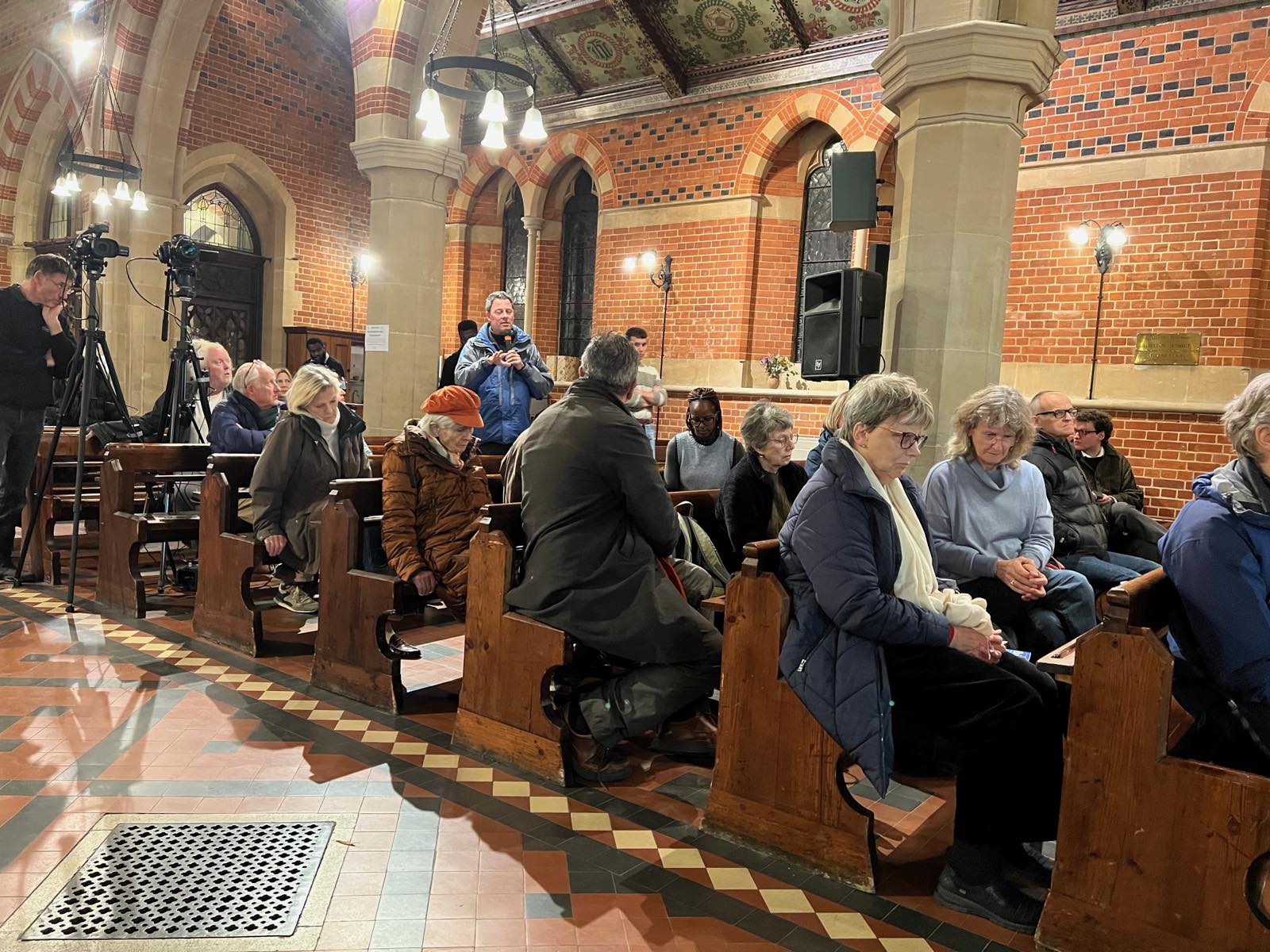
Anderson said she would have loved to see more people there, but that a small room could still carry the word. After the government’s consultation in the summer, Putney sent in a disproportionately high number of responses, she said, because people passed it on through their WhatsApp groups, friends and family.
What counts
Chris Nash, a council officer who works on noise and pollution, told the meeting that measurements were not what mattered most. “The real power in this consultation is resident voice,” he said. “It’s how you are affected, how it impacts you on the ground.”
Some of that voice was already in the room. “It doesn’t start at five in the morning. It starts sometimes at 4.30,” said a resident who lives a few streets from the church. “All of us have spent years having Teams calls interrupted throughout the day by planes going overhead,” said Brooks.
Morritt’s own example came from home. His wife, he said, had flown back from New York on a flight due to land after 6am, and was home in Putney by 6.30. Local people’s experience, he said, was that Heathrow did not stick to its protections, and he did not trust it.
Heathrow’s new night limits would be set by the times on the timetable, not the times planes actually land. It proposes no scheduled flights between 11pm and 5.30am, with late flights allowed until midnight to recover from delays, and early arrivals from about 5.15am. Today about 15 planes land before 6am, the 4.30am arrivals among them.
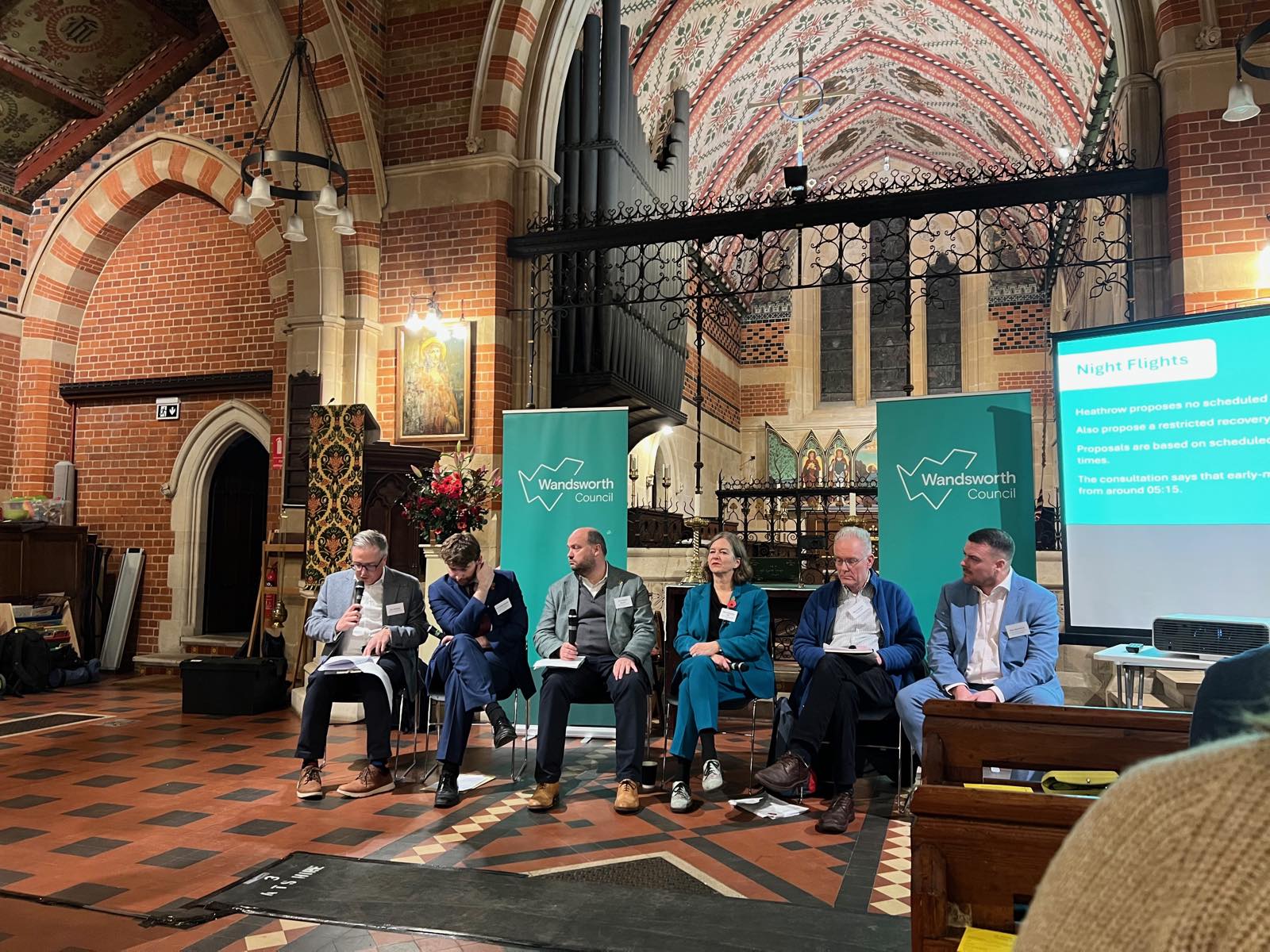
Heathrow could reassure people, Morritt said, by asking the government to write night-flight protection into law. The Putney Society wants a ban from 11pm to 6am, the noisiest planes phased out sooner, and planes coming in at a steeper angle so they are higher over Putney.
Beckford’s advice was to object to what the plans leave out, starting with the flight paths. Heathrow has published none, he said; they come in a separate process, with a consultation not expected until 2029. If its promised breaks from noise rest on modelled flight paths, it should publish that modelling.
Nor has it assessed the effect on local roads, he said, or published carbon figures of its own. Anderson put the extra traffic at 22 million road journeys a year, an increase of about a third, with no money set aside for the roads and railways to carry it. The Treasury, she said, had told her it would not pay.
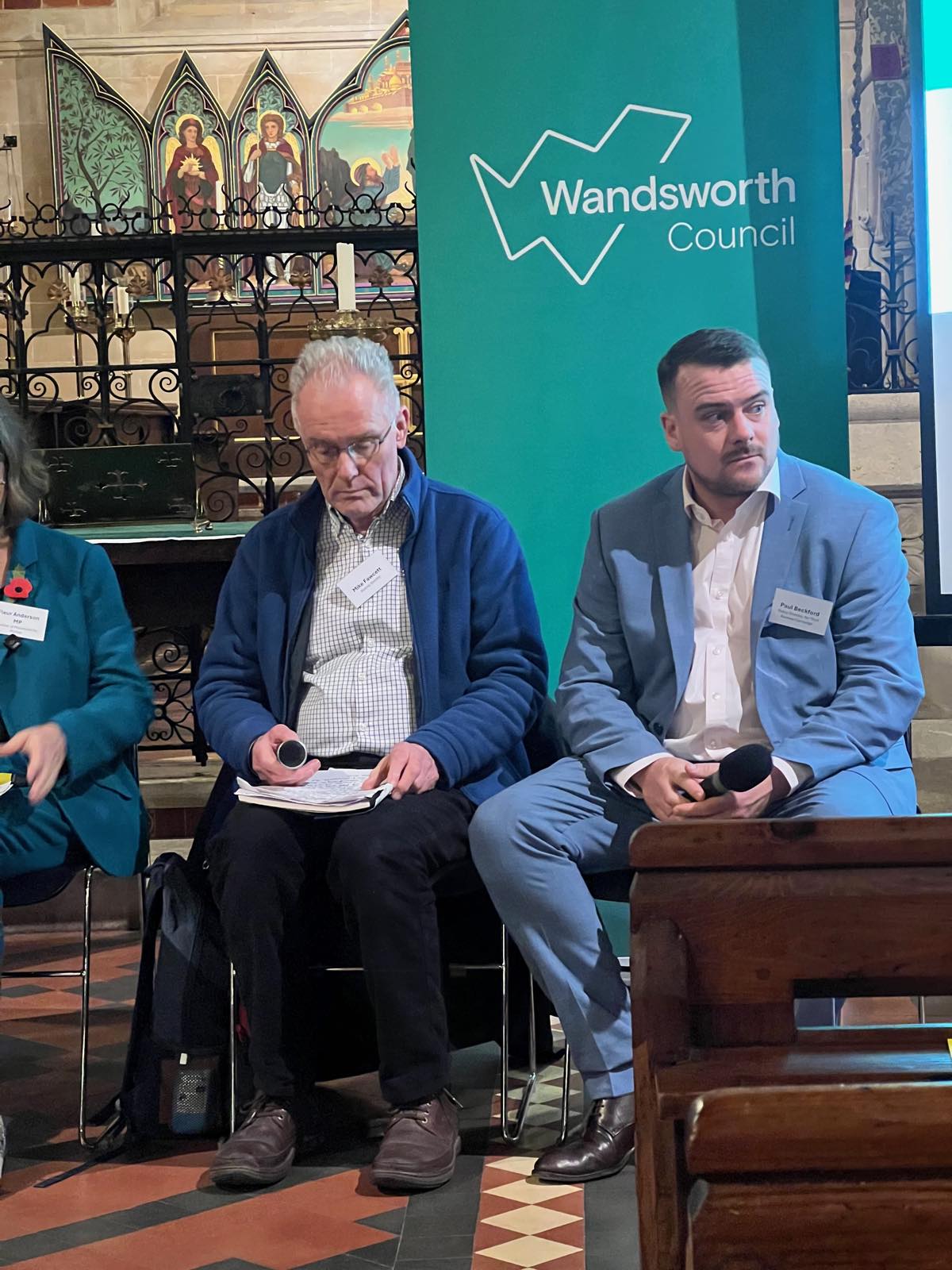
There is no national airports strategy, Anderson said, to weigh Heathrow against Gatwick, Luton and Manchester. The room offered its own answers. A resident proposed moving the hub altogether, to a new four-runway airport west of Luton, with homes on the Heathrow site; an architect wanted a new airport east of London, linked to Heathrow by the Elizabeth line. Fawcett, who once worked on a national airports policy, said an airport on the north Kent marshes had been looked at and had problems, birds among them.
“Who are we up against?” one woman asked. Every one of Heathrow’s owners is based overseas. The largest, with about a third, is the Paris investment firm Ardian; the others are the state investment funds of Qatar, Saudi Arabia, Singapore and China and an Australian pension fund.
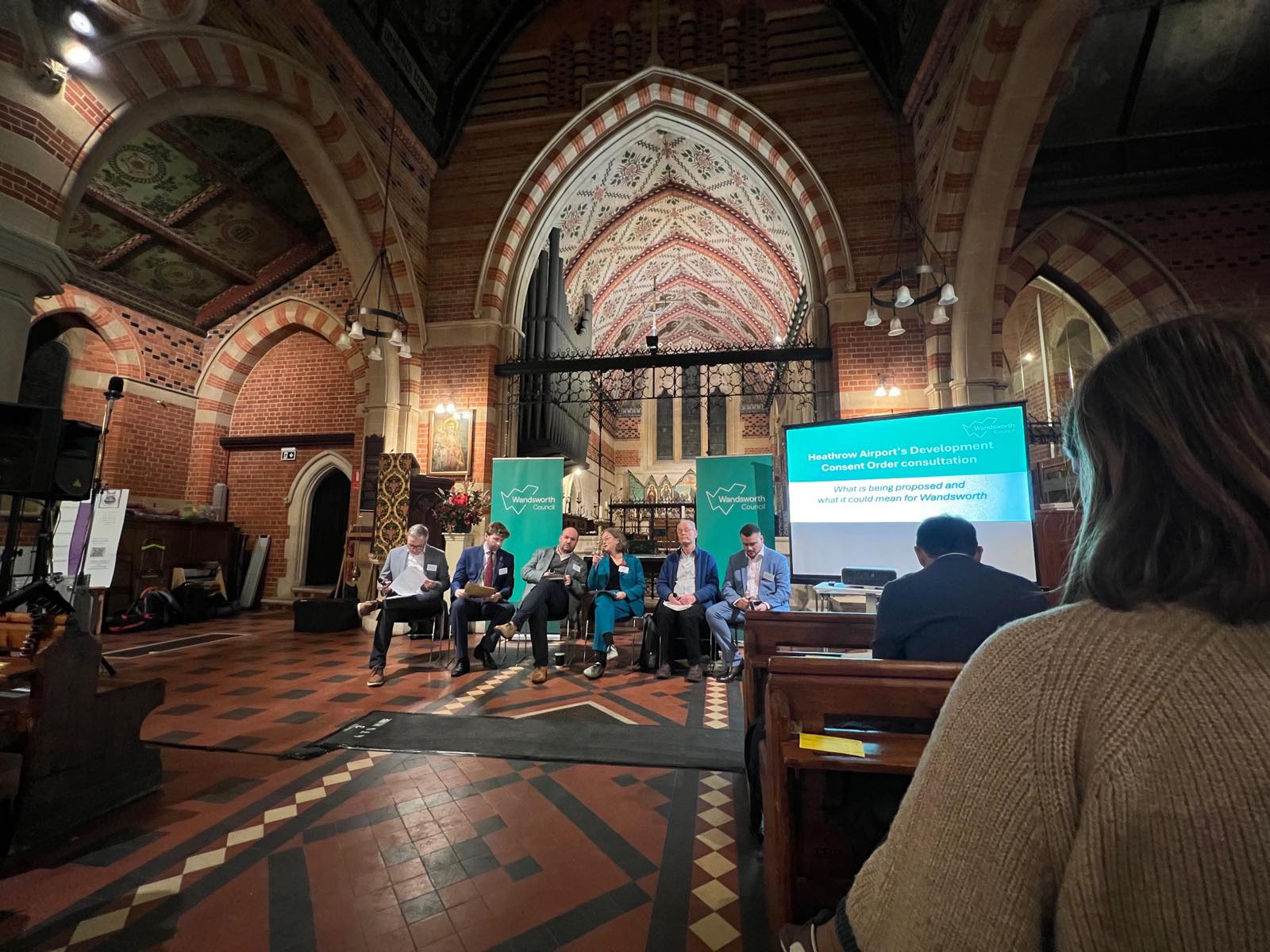
“It feels like David against Goliath,” Anderson said in her closing words.
“If we can send them packing this time,” said Brooks, “we may well send them packing for good.”
How to respond
Heathrow’s consultation closes on Tuesday 22 December. Anyone can respond, and every adult in a household can send their own answer.
- Online: heathrow.com/expansion/consultation
- By email: expansionconsultation@heathrow.com
- By post: FREEPOST EXPANSION CONSULTATION (no stamp needed)
- Questions: Heathrow’s freephone line, 0800 307 7996
You do not have to answer every question. The council’s advice is to say where you live, what you live with now, what the plans would change, and what protection you think is missing.
Heathrow’s nearest event is at the Richmond Hill Hotel on Friday 27 November, 2pm to 7pm. Its online session on noise is on Thursday 19 November, 12pm to 1pm.