


How many motorists have lost their driving licences because of repeated offences in 20mph zones? The answer is surprisingly difficult to find out.
There is no public body or institution that routinely holds this information. The Metropolitan Police will register a defendant’s record of offences but not any subsequent disqualifications. The DVLA records somebody’s penalty points but not how they incurred them.
The Ministry of Justice will note courtroom appearances and outcomes but not whether a speeding offence happened in a 20mph zone or on a motorway. The only place where traceable and recordable examples of speeding in 20mph zone can be found is inside magistrates’ courts. And they have become swamped by them.
Yesterday at Wandsworth’s main Magistrates’ Court in Lavender Hill 53 hearings were scheduled. A remarkable 33 of them related to speeding offences, and 24 of those – 73% – were specifically for exceeding a 20mph limit detected by automatic camera. Half of the court’s day was taken up with one offence.
For several hours, the court dealt with a continual procession of motorists. During the morning session, eight separate cases included seven defendants. Excluding one offence of not possessing insurance, all the others related to speeding offences.
At least six of the defendants were on the verge of becoming a “totter” – meaning they were on the verge of getting 12 points on their licence and risking a six-month ban. Of these seven speeding cases, four were specifically for exceeding a 20mph limit by doing 24 or 25mph: 24mph being the legal limit where somebody can be taken to court.

Half a decade later
A city-wide speed limit on all Transport for London (TfL) roads in central London officially came into force six years ago – on March 2, 2020. Individual boroughs had already started implementing local 20mph zones on residential streets earlier, but this marked the first major rollout.
Half a decade on, why is there such a large number of drivers being prosecuted in court?
FOI data obtained from Transport for London points towards the answer. Last year London’s fixed 20mph cameras generated almost 290,000 penalty notices, compared with just over 51,000 six years ago.
In Wandsworth alone, more than 12,500 fixed-camera offences were recorded in 2024. Nearly two-thirds involved speeds between 21 and 25mph, while almost all the remainder were between 26 and 30mph. Only a very small proportion involved speeds above 30mph.
The picture emerging from court closely reflects those statistics.
Wednesday’s list was not dominated by individuals who were knowingly reckless and dangerous. It was dominated by drivers who, admittedly frequently, had only gone 3–4mph over in the heat of a particular moment.
Inside Court
Inside the courtroom, it was a professional, formal and calm atmosphere that offered little drama. Magistrates handed down their sentences with grace and consideration. There was no sign of frustration at how similar all the cases were.
A single speeding offence in a 20mph limit usually does not result in a driving ban. In the speeding cases, it was the defendant’s pre-existing points accumulation that was eating up the court’s time. Every defendant pleading guilty to speeding violations was at risk of becoming the aforementioned “totter”.
These repeated collections of three penalty points had brought all the drivers to the verge of disqualification for at least six months. With disqualification potentially immediate, all defendants were given the opportunity to make an argument of “exceptional hardship” meaning they must prove to the magistrates that losing their licence would be more than a mere “inconvenience”.
This argument was made four times. It succeeded twice and failed to satisfy the magistrates on the other two occasions. If unsuccessful, the person faced an immediate driving ban and a financial penalty.
Just one example: Andrew Sutherland, 57, of Fentum Road, Guildford, pleaded guilty to three speeding offences after being caught driving at 57mph in a 50mph limit in Christchurch, 21mph in a 20mph zone, and 35mph in a 30mph limit.
He urged magistrates not to disqualify him, arguing that a driving ban would lead to the immediate loss of his job and that, having been out of the computer science profession for 18 years, he lacked the confidence to return to his previous career. However, the bench found that his circumstances did not amount to exceptional hardship and imposed a total financial penalty of £1,172.
While Mr Sutherland’s offences involved different speed limits, they nonetheless demonstrate how repeated low-level speeding can ultimately lead to disqualification.
Watching several of these exceptional hardship hearings in succession revealed a consistent approach. Magistrates listened carefully to defendants explaining how losing their licence might affect employment or family life, but the legal threshold remained high. Ordinary inconvenience rarely appeared enough.
The courtroom demonstrated that people are seldom disqualified because of one journey at 25mph. They lose their licence because that journey is simply the latest in a series of similar offences.

The build-up of low-level offending
Drivers who commit speeding offences for the first time are eligible for a National Speed Awareness Course, which offers them the chance to avoid incurring penalty points by completing it. However, if the driver commits a similar offence within three years of their Speed Awareness Course, they are generally not eligible for another course.
Any further qualifying speeding offences are more likely to result in penalty points, which can trap drivers in a cycle that eventually culminates in the accumulation of the 12-point “totting-up” threshold. Subsequent offences are met with points instead of education and awareness.
It is a pattern that hides in the minefield of national and regional statistics, but becomes immediately obvious and present when you’re in a morning’s court list.
What the courtroom cannot tell us
The hearings answered one question – large numbers of motorists are still appearing before magistrates because of repeated low-level speeding in 20mph zones. What’s missing is why.
Are drivers simply failing to notice reduced limits? Do roads encourage higher speeds than their posted limits? Those questions remain. It cannot be due to low financial penalties. Magistrates add on surcharges (40% of the first financial penalty) before adding on the cost of prosecution.
Some examples of the true cost of low-level, reported offences from yesterday’s hearings:
- £403 (£195 was the fine, + 40% surcharge + prosecution fees)
- £399 (£192 was the fine, + 40% surcharge + prosecution fees)
Revenue from speeding fines goes to central government through the Consolidated Fund rather than directly to councils, the Metropolitan Police or Transport for London.
Crucially, the conclusion has to be drawn that magistrates are still spending a substantial proportion of their working day dealing not with dangerous high-speed drivers, but with motorists repeatedly caught travelling only a handful of miles per hour above the limit.


I was puzzled for a moment, as I haven’t seen a ‘totter’ (aka ‘rag-and-bone man’) for decades, and their horses did not move at 20mph.
It’s not about safety, it’s not about ‘net zero’
It’s about control, they don’t want us to have independent means of transport.
A constant attack on cars.
I am not the least bit sorry for these offenders. Behaving as if rules only apply to others is a symptom of modern society’s general selfishness and entitlement. Instead of taking personal responsibility it must be the signage to blame. Bring on the cameras that fine passengers playing their entertainment out loud on public transport.
It’s not about control, it’s about safety. There is no war on motorists other than the one dreamt up by the Mail and Telegraph.
There is, or should be, a war on stupid and inconsiderate drivers. I manage to drive within the speed limit, or have done since I got 3 points in 1991, it’s honestly not that difficult. I am also a cyclist and my biggest concern is the careless or inconsiderate driver who overtakes too closely or doesn’t see me at all.
As a former magistrate I’m pleased to see they manage to maintain standards of civility, even when these are not shared by the defendant. I dealt with my fair share of speeders, who only came to court when faced with a potential ban. As the report notes, not many reached the high legal bar set by the exceptional circumstances rules. Many years ago lawyers like Mr Loophole tried contesting the evidence provided by a speed camera, but nowadays the technology is a lot more reliable.
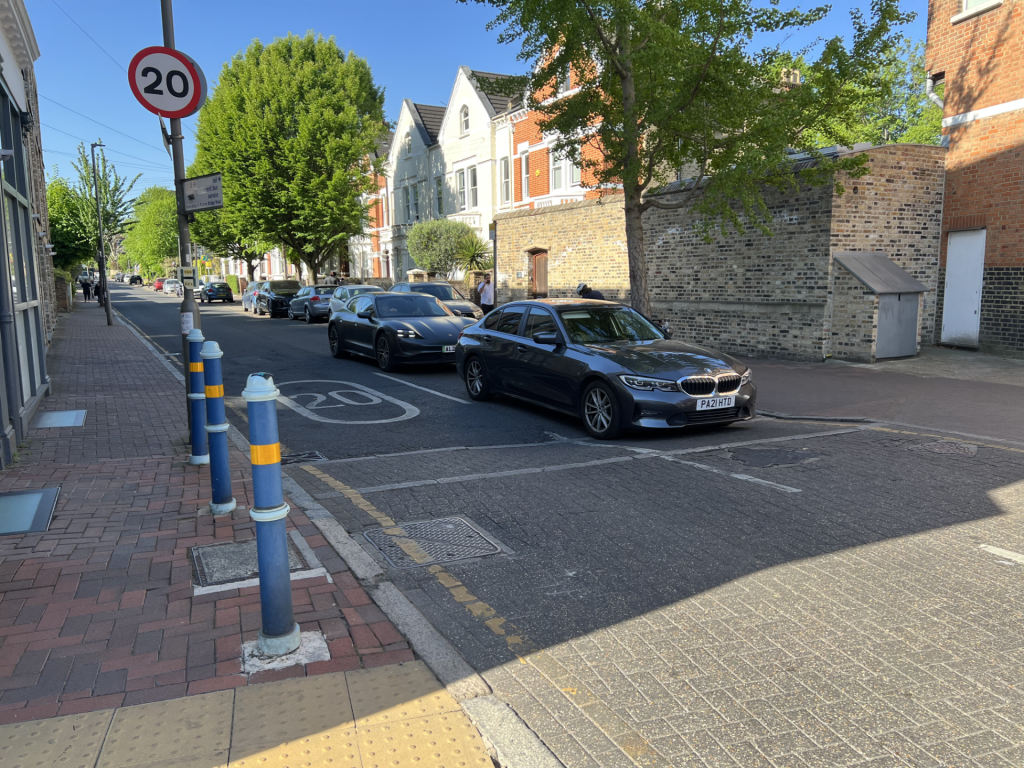
Finally, the camera warning sign in the photo is exactly where one should expect to see it. On London’s roads assume 20 unless it’s obvious the limit isn’t higher. Not difficult!
Another well researched and well written report from Mr MacDonald.
I believe the 20MPH maximum speed limit was introduced as a safety measure in an attempt to reduce the fatalities and serious injuries inflicted by speeding vehicles on pedestrians.
May I suggest Mr MacDonald follow up this excellent piece with a column detailing the survival rates of pedestrians on impact with vehicles at various speeds, statistics on the weight and size of the vehicle could be incorporated (velocity – mass – survival) and the effect the 20MPH has had on the numbers.
It’s all well and good being about safety but during the night when roads are empty pretty much of traffic and people, buses are forced to tootle along at 20Mph extending journey times and what with night buses being at half hourly intervals, often missing a connecting night buses being by a couple of minutes making the bus journey extended by a further half an hour.
These 20Mph restrictions really ought to not apply say between 12pm – 5 am.
Safety argument does not really come into play when the streets are empty during those hours.
The 20 mph speed limit creates a whole set of behavioral shifts that are not appreciated by legislators or even some commentators. Firstly, especially older drivers, will have driven for half a century knowing that there’s always, in principle, a 30 mph limit in urban areas. They didn’t need to check every few yards on main roads to see if there was a changes from 30 to 20 mph we focused on traffic and pedestrians. The 20 mph limit has been applied inconsistently without thought and logic on main roads.
I believe the 20 mph limits are essential to safety in residential neighborhoods especially reducing injury to children.
but more thought is required on their siting on main roads. The 20 mph limits on the 6 lane dual carriageway in Roehampton results in motorists losing respect and ignoring the limits.
Modern cars have speed sign readers and speed limiters which can be set at 20 mph but require manual resetting at every speed limit change. So dash-cams that read signs help if you remember to constantly reset them and they are not infallible and also distract from cyclists and pedestrians.
Its easy to forget to set the limiter at 20 mph when starting only to remember within a block or two, as I have and like many i’m concerned about points on my licence.
Solution: Firstly 20 mph areas should not be applied on a blanket basis to main roads but considered case by case to improve the percentile of those who drive within it and retain general respect for the signage’s purpose
rather than encourage the view they are simply a money generating device – £49m pa by some accounts! Secondly, drivers should have been targeted better with reminder notices, I have a sticker reminder on my speedometer. And lastly: line of site visibility of speed limit signs – mandated in DfT Signage installation Manuals, should be essential in gaining convictions. Too many signs are obscured by foiliage (top of Putney Hill), and by bus stops (Kingston Hill) which begs the question of intention why maintain visibility when we need the income?.
As others have said speeding is a significant safety issue – even at levels between 20 & 30mph – not an harmless irritant to punish motorists. By definition totters have repeated not one off incidents. In my childhood (more than 50 years ago) in suburban Canada all residential roads had 20mph limits, so is nothing new and change long overdue in London and UK. Stats are here – slightly out of date and may underestimate the harm from huge SUVs seen more and more on our roads. Fast aggressive driving also discourages walking and cycling with all the knock on effects to health, community and air quality. Stats here:-https://www.rospa.com/siteassets/documents/active-travel/20mph-zones-and-speed-limits-factsheet-2023.pdf.
As a cyclist and a car driver for over 60 years, I hope that by now I have some idea of driving safely. Exceeding the 20mph speed limit is easy enough on a pedal bicycle and it is more easily done by mistake in a car that does more than 20mph in 2nd gear without straining. Real dangers are caused by drivers who are well aware of where the speed cameras are and race around as fast as they can in between, ignoring the limits. The UK government has not legally mandated Intelligent Speed Assistance (ISA) for new cars sold in Great Britain, whereas the EU required ISA on all newly launched vehicle models starting in July 2022. If controlling speeds was paramount, we have had the technology to prevent cars exceeding the speed limit for half a century or more. ISA could be linked to automatic roadside switching unless overridden manually, which would be an offence unless due to some exceptional circumstance or emergency or dispensation for emergency vehicles. For me, one distinct benefit of so-called driverless cars would be not having to keep glancing down at the speedometer every couple of seconds, which is itself a danger to concentration on the road.