Wandsworth Council has approved a range of cost-cutting measures in an attempt to manage and reduce a £137 million budget gap.
In the first cabinet meeting since the elections in May, the cabinet announced the discontinuation of the Household Support Fund, which was designed to support those struggling during the current cost-of-living crisis. This will be replaced by a smaller Crisis and Resilience Fund.
In a tense atmosphere, significant changes and cutbacks to housing programmes were announced, including the cancellation of 253 planned council homes and the removal of five housing developments from the council’s new-build programme.
Alterations to the council’s policy and attitude towards tackling homelessness were also confirmed.

This session was the first decision-making moment of the new Conservative administration and was historic in that it was the first time an opposition figure sat in on a Cabinet meeting.
Simon Hogg, the leader of the Labour opposition and former council leader, sat alongside fellow Labour councillors Angela Ireland and Judi Gasser as recently elected Conservative council leader Robert Morritt reversed several headline policies of the previous Hogg-led administration.
At various times throughout the meeting, Hogg cut a frustrated figure and regularly used emotive language to describe the administration’s measures as “unacceptable” and “vindictive,” drawing comparisons to “austerity.”
No word yet on council tax rises.
Beginning sharply at 19:30, this new council wasted no time in putting forward its new Conservative agenda.
Two notable and precarious political events hung over this new administration’s inaugural cabinet meeting.
When the announcements and confirmations concluded, there was still deathly silence regarding the inevitable rises in residents’ council tax and the upcoming Trinity by-election.
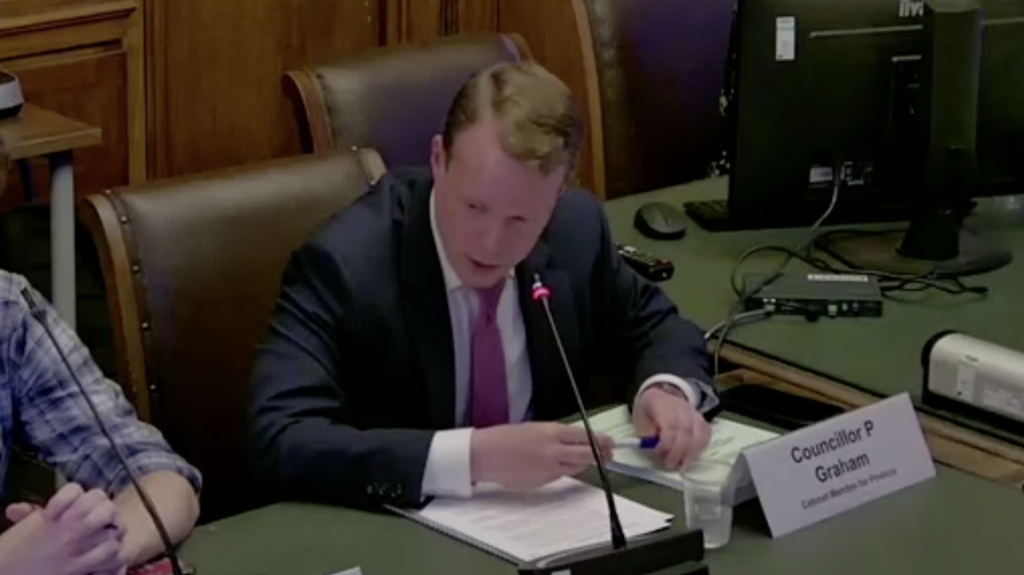
Deputy leader and cabinet member for finance, Cllr Peter Graham, claimed last week that he was forbidden from outlining any new or future financial plans due to purdah restrictions imposed by the Trinity by-election. It was an excuse he reiterated tonight despite the fact the restrictions didn’t come into force until the day after the last council meeting.
It is just the latest part of a long, drawn-out saga regarding a lack of transparency from Wandsworth Council over likely council tax rises. While Kensington and Chelsea Council consulted with its residents regarding inevitable hikes and received over 400 responses to a survey, Wandsworth Council announced a freeze.
Cabinet documents reveal the reality however: central government has told Wandsworth Council it must enforce council tax increases of 4.99% plus an additional flat-rate £150 on a Band D property, unless it wants to see even more cuts to its Revenue Support Grant funding next year, which would only worsen the financial pressures Wandsworth faces.
Wandsworth has been given the right to raise council tax by however much it wants for the next two years without having to consult residents, so the rises could be significant. The lack of honesty around council finances has been such that it formed the first section of the Confidence and Supply agreement reached between independent councillor Malcolm Grimston and the Conservative Party after the May 2026 election. It reads:
“The administration agrees to be honest at all times with residents about the council’s funding position. It will take the difficult decisions necessary to stabilise the council’s finances. In particular, the council tax rate required in April 2027 will be outlined in July 2026, as part of the Spending Review process. This will give residents time to prepare for changes to their bills.”
Despite the clear July 2026 deadline, the Conservative administration has taken the opportunity of the Trinity by-election to push decisions off until September this year. Control of Wandsworth Council is at stake in that election following the resignation of Trinity councillor and former Labour deputy leader Lizzy Dobres. If the Conservatives win, they are entitled, under the terms of the Confident and Supply agreement to walk away from it.
The scrapping of supermarket vouchers
In sweeping changes that will impact 10,000 local children this summer, Cabinet officially approved the creation of the Crisis and Resilience Fund, replacing the Household Support Fund (HSF).
Popular holiday supermarket vouchers for children on free school meals have been scrapped in favour of three smaller-scale support programmes. Families who currently rely on the old HSF may not qualify for this new form of support, and thousands of families who previously received supermarket vouchers may instead receive different forms of support that are insufficient for their families’ needs.

Opposition Cllr Judi Gasser spoke at the cabinet meeting and argued that the council needs to do more, telling the Conservatives: “I think we are throwing some of our most vulnerable families off a cliff, and it wasn’t necessary. The guidance could have allowed us to carry on with food support vouchers in the holidays, at least for a while.”
The council has justified the cut as necessary because national government regulations no longer allow blanket voucher schemes: guidance that changed in April, as we reported on Tuesday, including the council leadership’s own confused account of it at Full Council.
The current administration in Wandsworth claims that this new scheme will save around £2.5 million a year, as previous support packages cost £2,782,000 and will now amount to £277,000.
Spending Review and the cancellation of housing programmes
Cabinet then turned its attention to the largest paper on the agenda: its much-anticipated Spending Review.
Cllr Graham struck a gloomy figure, criticising the previous Labour administration over its mismanagement of Wandsworth funds and predicting that the budget deficit will only worsen.
“The budget gap next year is £96 million, rising to £145 million, rising to £168 million, rising to £184 million by 2030-31,” he said.
The main objective of this Spending Review was to lay out how the council will tackle the estimated £137 million budget gap over the coming years. Cabinet approved the removal of five housing developments from the council’s new-build programme and cancelled approximately 253 planned council homes.
Calling the present situation “a challenge but not a crisis,” former leader Cllr Hogg argued that it unnecessarily cut investment in new council housing and that the council was taking the wrong approach to balancing the books.
“We need a growth, openness, and fresh-talent mindset, not a closed and backwards-looking mindset; someone sweating alone in a room trying to reverse every single decision that’s been made over the last five years.”
Cllr Graham made the case for the cancellations’ importance, saying the council had no realistic alternative: “There is no time to avoid having to get to grips with these decisions.”
Cabinet hopes these cancellations will avoid the necessity of future borrowing to the tune of £77 million. Additionally, it is predicted that these policy alterations will help reduce annual borrowing costs by around £5 million and write off approximately £5.74 million already committed to schemes that will no longer go forward.
Three-quarters of the cancelled homes – on the Ashburton and Lennox Estates, in West Putney and Roehampton – are not being dropped due to costs but rather because of local opposition, the council claimed. The remaining three (Fitzhugh, Tyneham Close, and Lavender Hill) are viewed as financially or technically unviable.
Low-income earners will now see scarce opportunities for affordable housing reduced even further. This will inevitably lead to an increase in demand, reliance, and pressure on temporary accommodation as the borough struggles to meet housing demand.

New attitude towards helping the homeless
Cabinet also announced and approved a new attitude and policy direction aimed at tackling homelessness by offering a household a single private-rented tenancy, either inside or outside the borough. If the household rejects it, the council’s obligation ends there and then, alongside any temporary accommodation.
The policy will come into effect immediately, with no public consultation; a situation that former leader Cllr Hogg lamented and noted that “Tory Westminster had a scheme called ‘Your Budget, Your Choices,’ where they’re engaging with residents, and I think they had more than thirty hours of public consultation. You know, they face serious reductions in government funding, like we do, and still found thirty hours for public consultation over the summer on decisions of this sort.
“And I think the equivalent number for Wandsworth is zero hours of consultation with the public. I think it has just been one person sweating alone in a room trying to put this thing together.”
The council says these measures will save it roughly £650,000 a year, with temporary accommodation costs and demand continuing to rise at an unsustainable rate.
Crucially, tricky questions attached to the passed plan were left unanswered. Under the proposed rules, priority for a property actually goes to households who have engaged less with the steps expected of them.
Cabinet briefing papers show that the council’s own equality assessment has already raised concerns regarding likely negative effects on every protected group, despite a cover report describing the impact as neutral.
Residents and local campaigners will certainly seize on the fact that a household given 21 days to challenge a placement will be given no guarantee that the property will still be available once their review concludes.
Advocating for the measures, Cllr Matthew Corner, the Cabinet Member for Housing, warned that there was a body of evidence showing that “people are actually almost incentivised to make themselves homeless because they feel that it might result in a greater chance of securing social housing in the near future.”
The rest
Additional, smaller cost-cutting decisions designed to stabilise Wandsworth Council’s economic situation passed, including the cancellation or restructuring of several discretionary programmes.
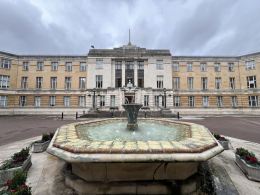
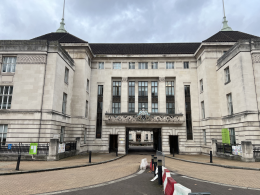
In his first Cabinet meeting as leader, Cllr Morritt formally confirmed that the council will remain in Wandsworth Town Hall, reversing earlier plans brought forward by the previous Labour council to relocate staff to leased office space elsewhere.
This move would have cost taxpayers £240,000. We reported the detail behind that reversal in full on 25 July. Morritt’s administration will also formally discontinue the borough’s youth bus service. The service was introduced in 2023, costing £90,000 a year.
In more positive developments, the Neighbourhood Community Infrastructure Levy (CIL) will be used to pay for additional police officers, with extra funding released through the cancellation of existing neighbourhood projects. This represents the fulfilment of a manifesto commitment the Conservatives made back in May.
It should be noted however that the CIL money, paid by developers of new housing, is supposed to pay for capital expenditure such as additional schools, clinics and transport upgrades that are needed to cover the increases in population that those developments bring. Using it to cover running costs – such as police salaries – may be good politics but doesn’t ensure much-needed improvements are put in place.
Correction, 5pm. We original stated on the section on cancelled homes that the Ashburton Estate was in Roehampton when it is of course in West Putney. We went on to state, wrongly, that this meant the cuts hit Labour-controlled areas hardest. The Ashburton proposals – at Innes Gardens, Hayward Gardens, Cortis Road and Whitnell Way – were strongly opposed by residents whose unanimous views were ignored by the previous administration. The council proposed building on those estates’ limited green space out of cost considerations – because the council already owned the land – and residents opposed them strongly on grounds of over-capacity, parking, impact on sunlight and loss of green space.