Transport for London (TfL) spent £500,000 on the District Line’s Wimbledon branch and told passengers it was ready for the tennis championships. It has failed three times since, proof of something residents already knew: this isn’t a problem that appears every July. It’s a year-round problem that just happens to be on show to the world for two weeks.
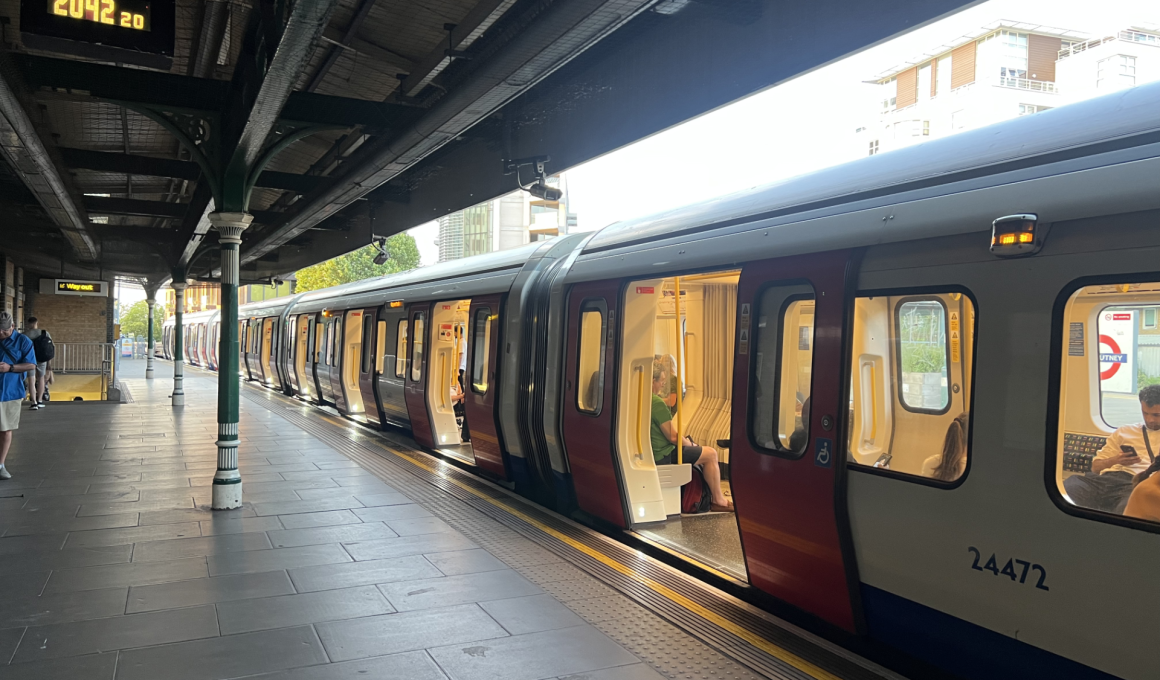
Three days before the start of Wimbledon, TfL was in confident mood, sending out a press release about its signalling investment and promising there would be no repeat of last year’s disruptions. By 8pm the same evening, a signal at Parsons Green had broken down. On 4 July, an engineering job overran and severe delays hit passengers between Earl’s Court and Wimbledon. On 8 July, another signal failure at Wimbledon itself suspended the branch entirely, spreading severe delays back to Earl’s Court.
Not just a tournament problem
For commuters, the school run and the weekly shop, signal failures and delays on this branch are ordinary. What’s different during the Championships is the audience. Visitors from around the world arriving at Southfields see, for a fortnight, the same unreliable service that we live with all year. The embarrassment is new. The problem is not.
It is also not one TfL can claim to have been blindsided by. A fix that would have resolved things was ruled out in 2024, and the £500,000 package announced in June was always a workaround rather than a repair.
TfL’s own board paper, from June 2024, confirms the Wimbledon branch will not be re-signalled. The decision followed a December 2020 recommendation to drop the branch from the Four Lines Modernisation programme, and it means the underlying cause of these failures is not an accident of ageing infrastructure but a choice TfL made and wrote down.
What replaced full modernisation was smaller: a fault-monitoring hardware upgrade, reported “in” by Fleur Anderson MP in early June. Its switch-on was scheduled for 13 to 14 June, then postponed at the last minute citing “last-minute technical issues.” No new date has been set, and TfL has not since confirmed whether the system was ever switched on, so we don’t whether the recent failures happened with or without the monitoring system, or what impact it may or may not have had.
The Mayor of London apologised for exactly this, a year ago this week, when reliability on the District Line fell to 69% during the 2025 Championships, its worst performance in a decade. Twelve months on, the apology has not translated into a fix, only into a smaller monitoring package whose status TfL will not confirm.
Line-wide, the District line’s reliability over the past month sits at 60.5%, ranking 18th of 20 comparable lines. That figure covers the whole District line, including branches to Richmond, Ealing Broadway and Kensington, not the Wimbledon branch specifically, so the true figure is likely to be worse – we don’t know for sure, because TfL refuses to release the figures. What figures we have managed to obtain from before last year, show East Putney is officially London’s worst station.
About to get bigger
The demand this branch has to absorb is not shrinking. AELTC’s expansion of the Wimbledon Park grounds, still legally contested on two fronts, would raise daily attendance at the Championships from 42,000 to 50,000, roughly a fifth more people moving through Southfields station in future years.
Susan Cusack of Save Wimbledon Park says the station “doesn’t have any capacity to expand,” and that AELTC’s own plans contain no station-capacity measures, only funding for additional TfL staff, which she says “doesn’t do anything to manage the numbers.” AELTC’s plans would add 38 to 39 new courts and an 8,000-seat stadium on the former golf course.
It is not the only London infrastructure failure we are dealing with. At Hammersmith Bridge, a different authority has spent years promising remedial work that has not arrived on the timeline it set. And of course there is the failed redesign of Putney Bridge junction – where TfL again plays a part alongside our own council. Different assets, different authorities, but the same pattern: a public promise, and a gap between the promise and what actually happens.
What has been the response in each case to these increasingly lengthy, nationally and internationally embarrassing failures to keep London in line with the modern world? Periodic promises that buy time but never quite arrive.
It’s a cycle that numbs with each repetitive failure and our politicians appear powerless to prevent. What they can do, however, is start being honest about the depth of the problem and their persistent failures to fix it. Perhaps then we can start to find real solutions.