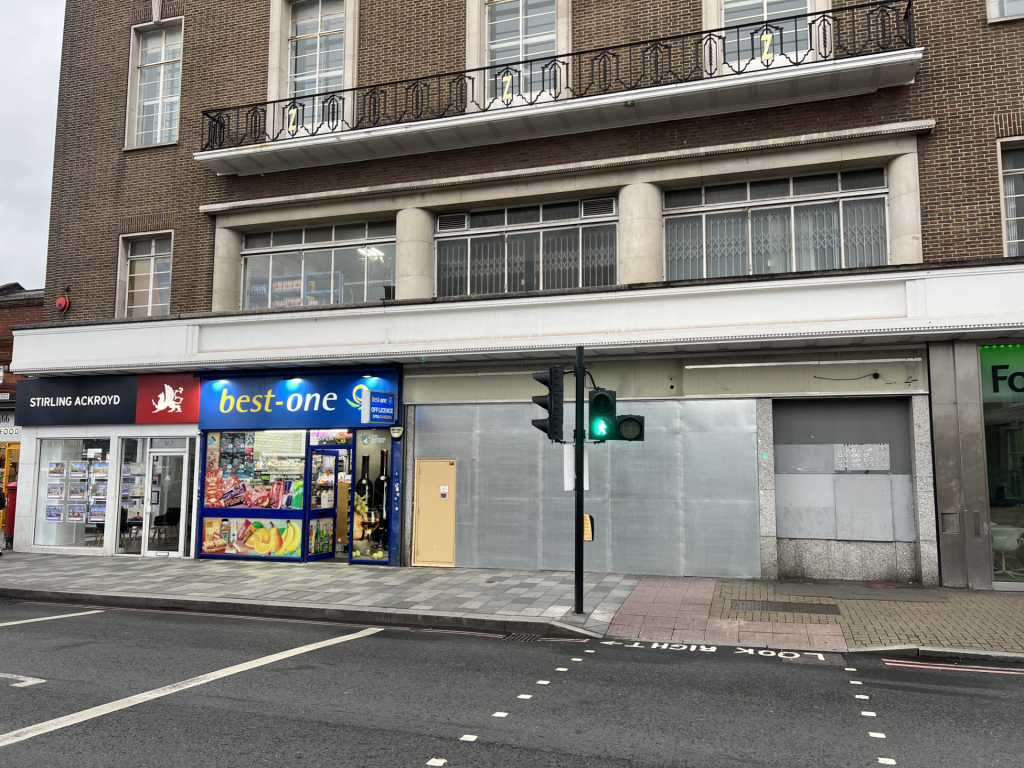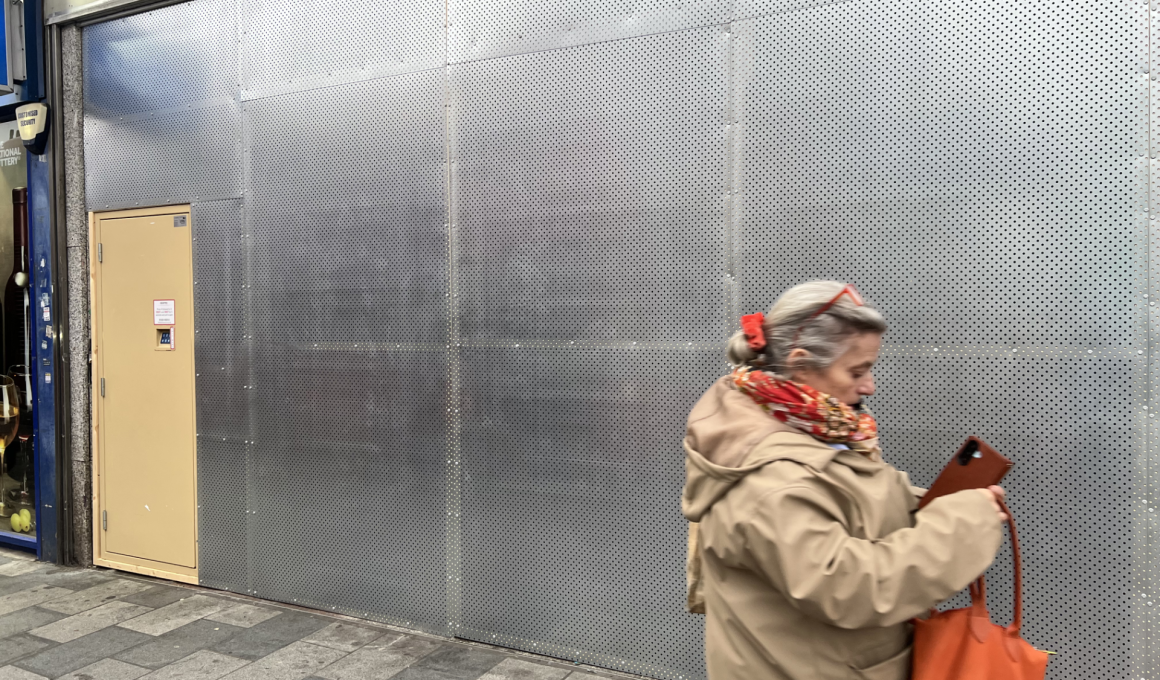
The former Halifax building at the top of Putney High Street was enclosed in metal security hoarding this week. It has been empty for more than two years.
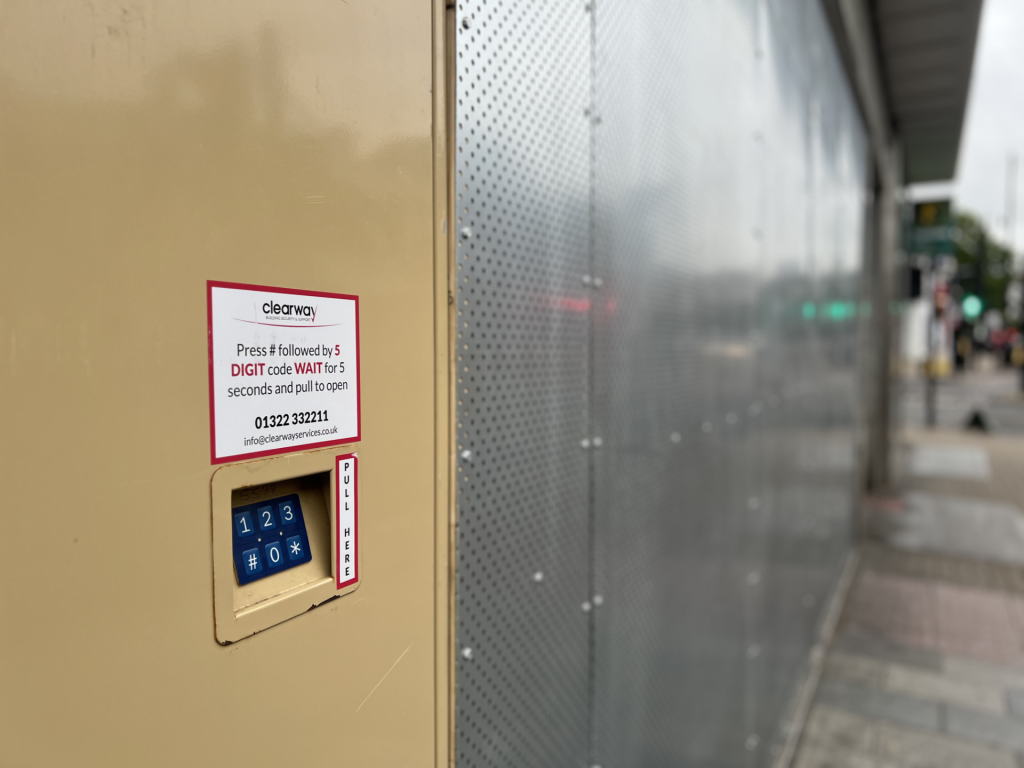
The hoarding covers the full frontage in perforated steel, with an access door fitted with a keypad. Functional, but a steel box at one of the busiest pedestrian corners in Putney, immediately next to the station.
A doorway that kept filling up
Since the building closed, its deep entrance recess has become a regular spot for rough sleepers. By April 2025, a year after Lloyds left, someone was sleeping in the doorway under the CBRE “To Let” sign. By May this year the same space held a bamboo screen, a sofa, bedding, a wooden pallet. A man named Levi was living there with his girlfriend. The council gave him a bin.
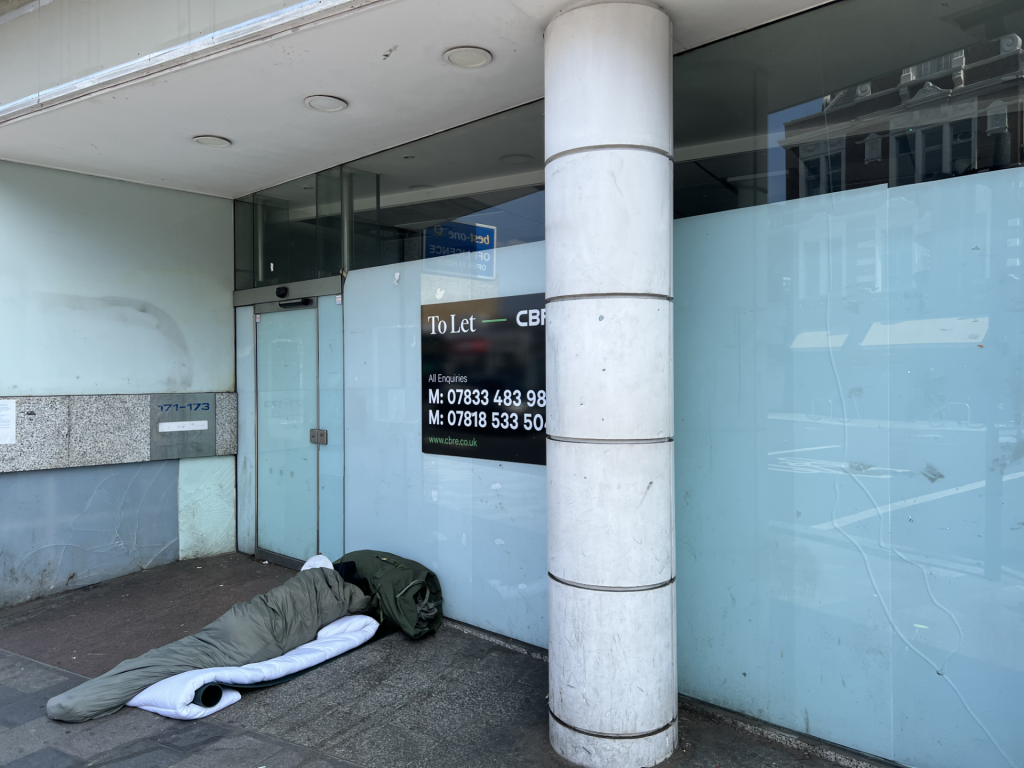
The situation had grown uncomfortable. Footfall at the station corner is among the highest on the High Street, and the shelter had become hard to ignore. The building’s owners were eventually asked to act. CBRE issued an eviction notice on behalf of Lloyds Banking Group, after requests from Positively Putney and local police.
It told Levi the building was “private property and not authorised for occupation” and warned that any belongings left after the deadline “will be removed and disposed of without further notice.” At the bottom, it referred him to his local council for support. He told Putney.news he had already asked the council for help and been refused. That story is here.
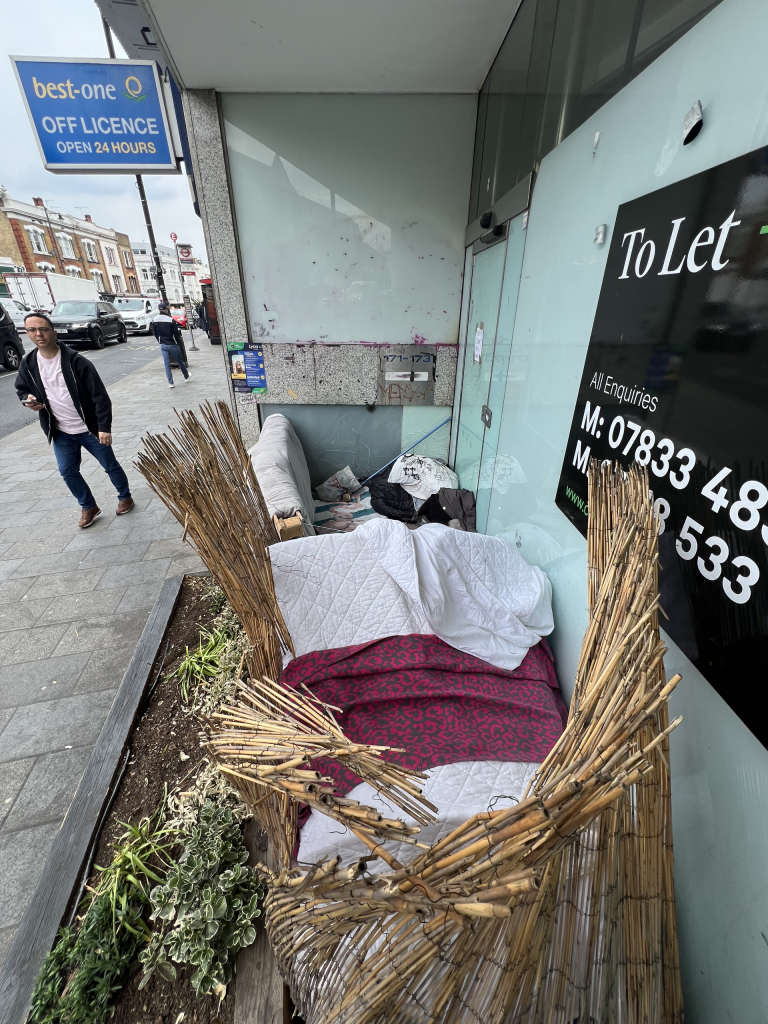
Within days, he had returned, with his tent now sticking out into the High Street itself. The hoarding is the direct result. In three weeks, the building has gone from a rough sleeper’s eviction to a steel box.
The building that banks left behind
Lloyds Banking Group owns the building. It was originally the Halifax branch; then Lloyds closed its own Putney branch in April 2024, the seventh bank to leave Putney High Street in recent years, leaving just NatWest and Metro. Lloyds’ own figures showed why: 42 per cent fewer personal customers between 2018 and 2023, 62 per cent fewer business users, cashpoint use down by half.
CBRE has been marketing the building to let at £127,500 a year since the closure. At the time, Putney.news reported the asking price may prove difficult given the borough’s high business rates. More than two years later, there is no tenant.
The building has a longer history than most passers-by realise. It is part of Zeeta House, an Art Deco block built in 1938 at the junction of Upper Richmond Road and Putney High Street. The second floor was originally a ballroom with a sprung oak floor and a domed ceiling.
In the early 1960s it became the Pontiac Club, one of the busiest music venues in south-west London. Manfred Mann, The Hollies, Donovan, and John Mayall’s Bluesbreakers all played there. By the 1970s the ballroom was Wandsworth Council offices. By the 2010s the ground floor was a bank. Now it is behind steel.
Two responses to an empty shopfront
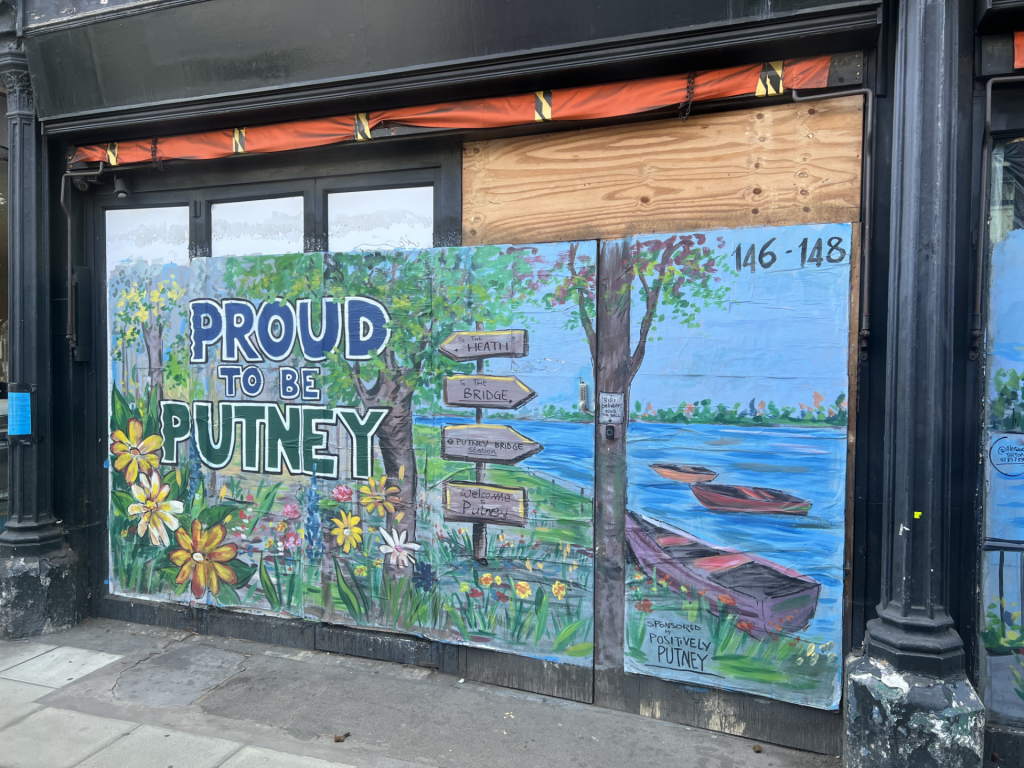
A few doors down at 146-148, Positively Putney sponsored a mural on the former Bill’s restaurant: a river scene, rowing boats, “Proud to be Putney.” At 171-173, there is perforated steel.
Positively Putney has brightened empty units across the High Street with window displays and murals. Metal hoarding is harder to work with. The organisation has not confirmed whether it has plans for the new frontage.
Anyone stepping off the train at Putney station faces a run of empty shopfronts at this end of the street. The former Lost Society bar has been empty for well over a year. The former Bill’s site has been vacant since 2023. Brinkley’s estate agents recently relocated, adding another empty window to the run.
The building at 171-173 sits at one of the busiest pedestrian junctions in Putney. This is our seventh report on the High Street’s vacancy problem.