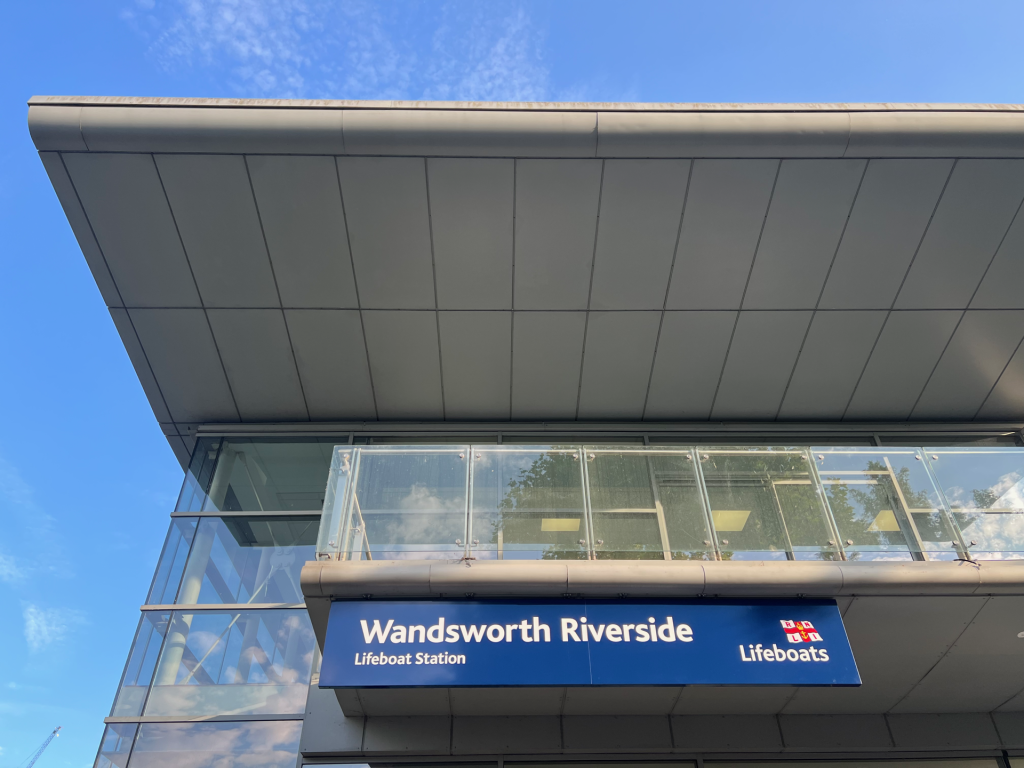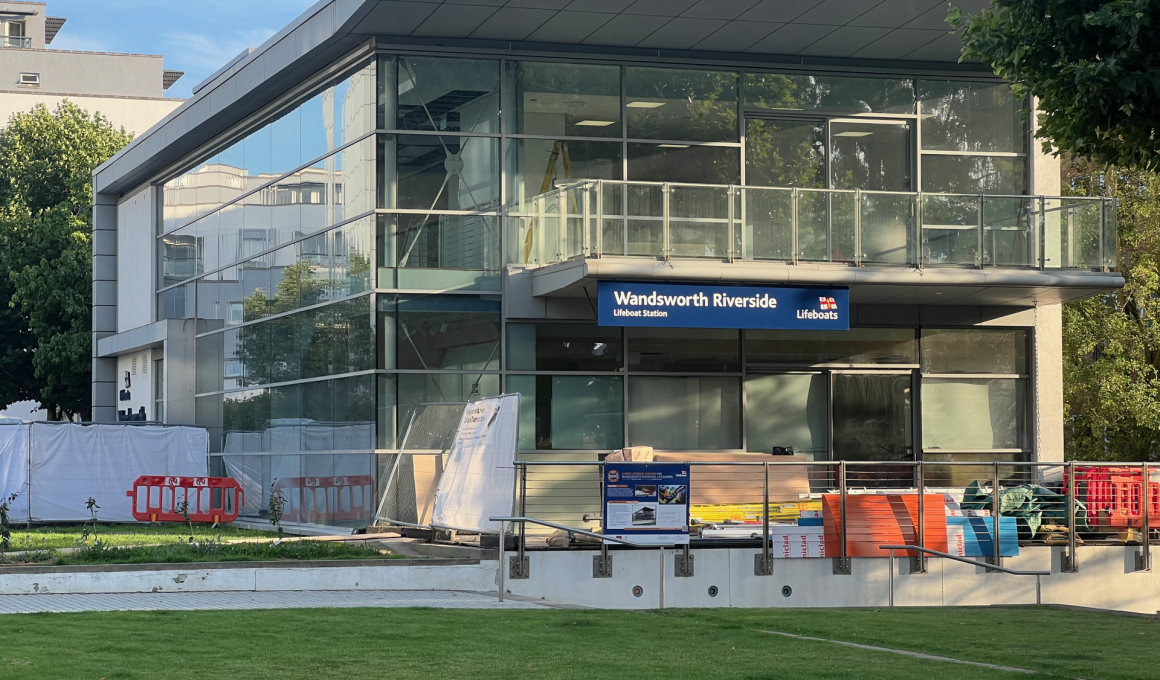
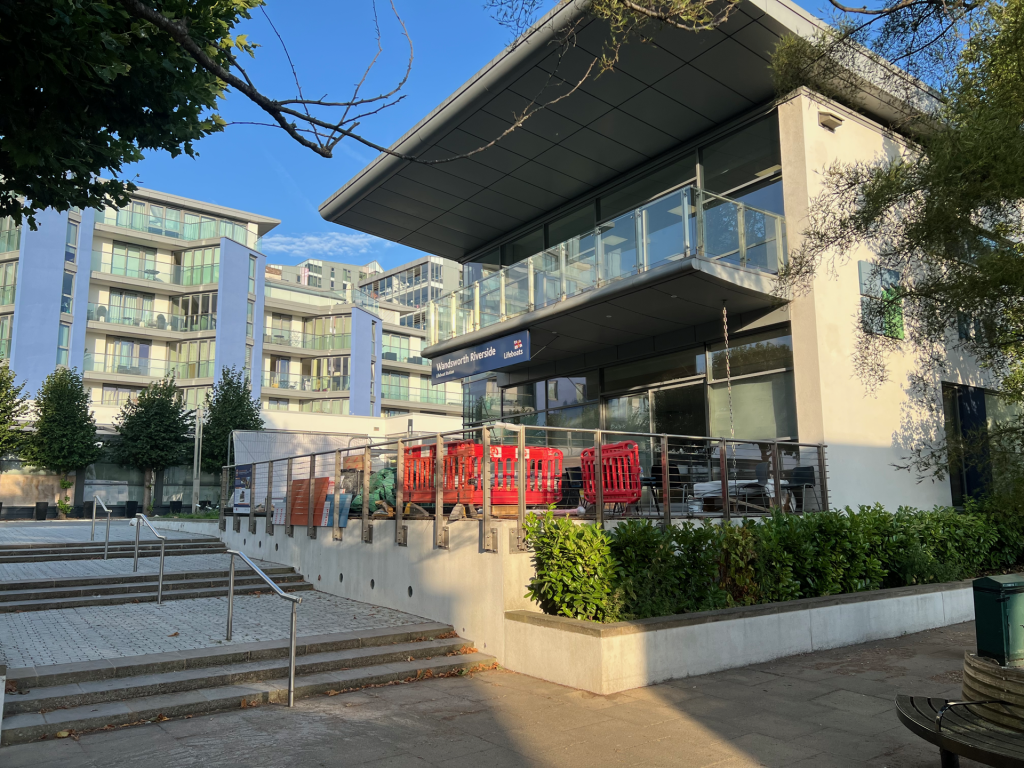
The RNLI’s new lifeboat station at Wandsworth Riverside is nearly finished. The two-storey glass-and-concrete exterior is almost complete with, including lit “Wandsworth Riverside Lifeboat Station” sign, though hoarding and building materials still sit outside on the ground floor.
Inside is a different story. The RNLI says the station is now in the fit-out stage, with stud walls, insulation and plasterboard nearly finished for the crew kitchen, station office, training room and public engagement space. Electrics, plumbing, heating and fire alarm cabling are still to come. The RNLI expects the station to be fully operational, with the pier live and crew moved in, in August.
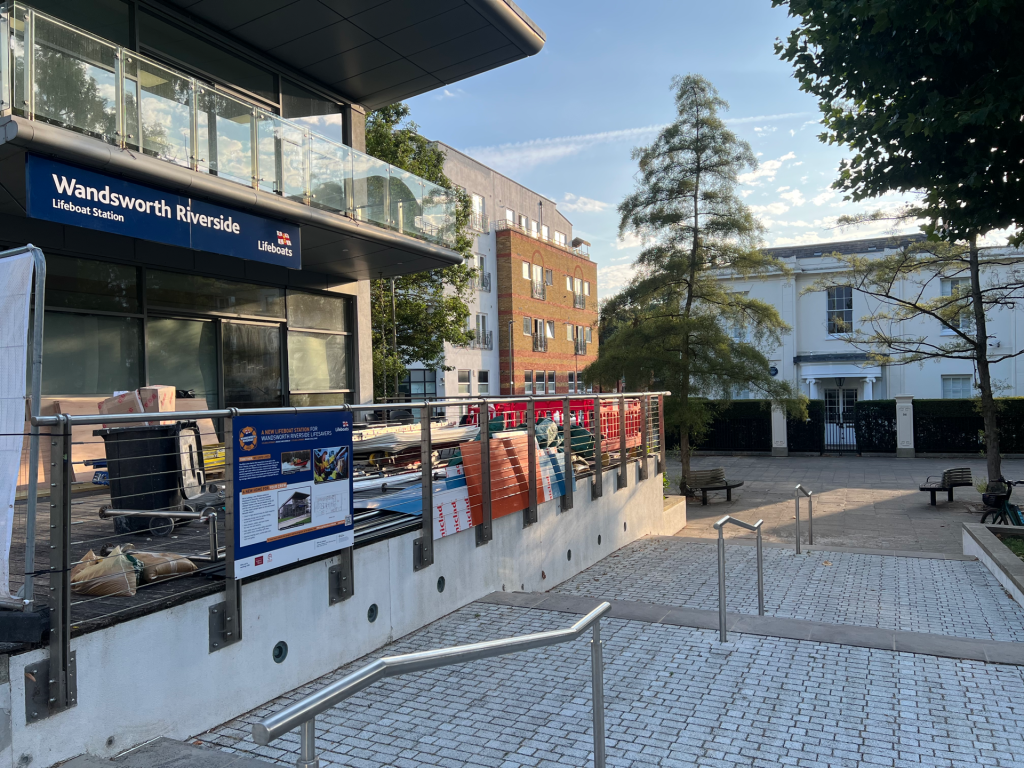
That is significantly later than first expected. We reported planning approval for the conversion back in September 2024, when the RNLI’s own plans pointed to construction starting and finishing within about a month. Two years on, the station is only now approaching completion – fitting out a working 24-hour lifeboat station inside a former marketing suite has taken longer than first thought.
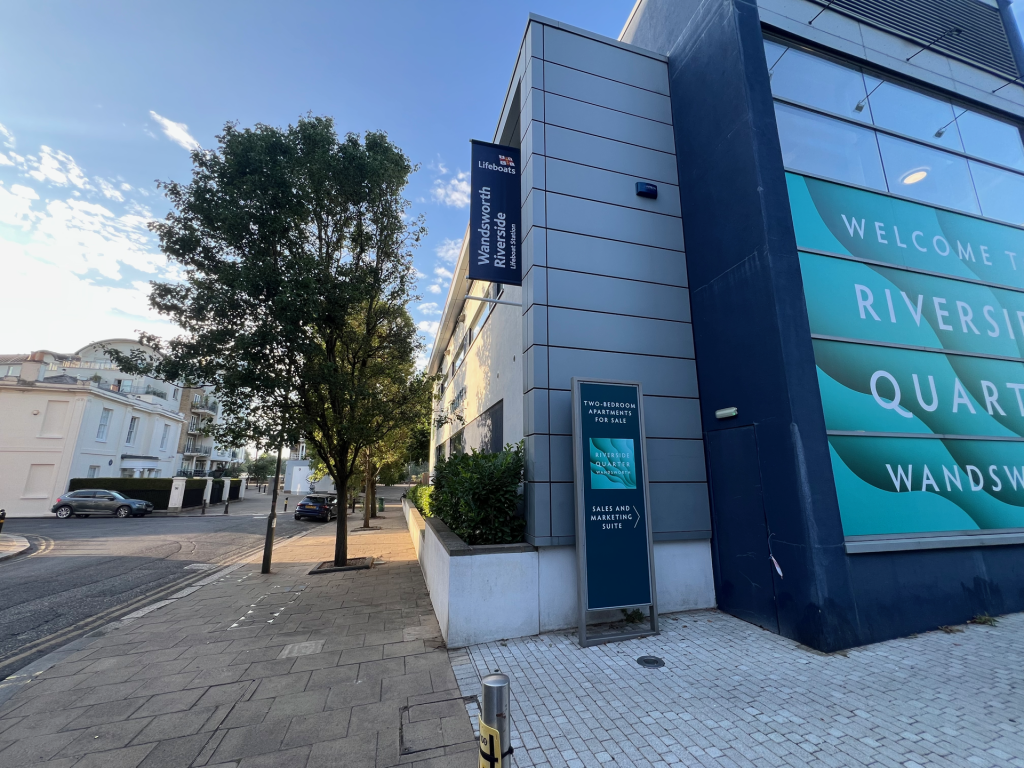
The move brings the crew currently based at Chiswick, reportedly the second-busiest lifeboat station in the UK, to a purpose-built home four miles downstream. They have launched from a small shared building since 2002, working 12-hour shifts. The RNLI estimates the new site, with most call-outs running east towards the city, will cut average emergency response times by around a minute and twenty seconds. Two E class lifeboats, Dougie and Donna B and Brawn Challenge, will move with them, and the station is being renamed Wandsworth Riverside RNLI as part of the switch.
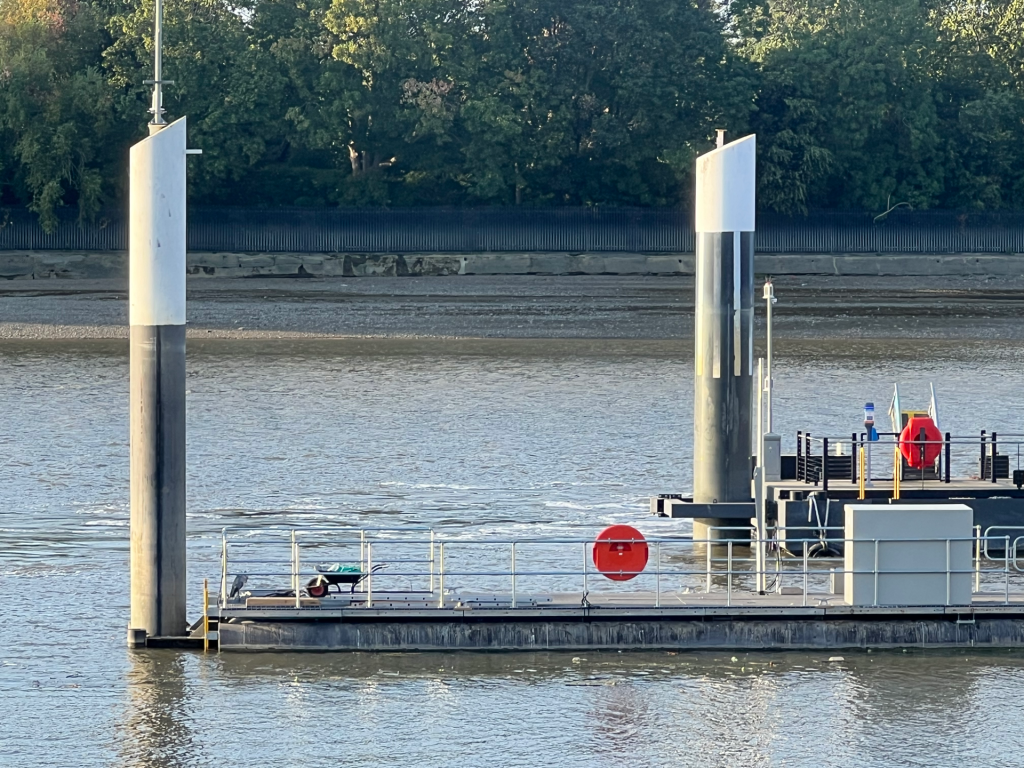
In the 20 years to 2024, launches from Chiswick helped save nearly 200 lives across more than 4,500 call-outs, assisting more than 2,500 people.
The Thames service exists because of tragedy. The RNLI was asked to cover the river after the Marchioness disaster in August 1989, when 51 people died after the pleasure boat collided with a dredger near Southwark. Since Chiswick’s crew went on duty in January 2002, they have kept a duty crew of four able to launch within 90 seconds.
The range of the more than 2,500 people – and dogs – they have helped ranges from paddleboarders to stranded whales – tow of them at Richmond Lock, 15 years apart. Then there was the drifting party boat, with more than 50 people still aboard, that was towed home with the lifeboat’s own mast lowered so they could clear Putney Bridge.
The site, on Eastfields Avenue in the Riverside Quarter development, was previously the marketing suite for the flats built on the former Shell Oil Terminal. Contractors Ingleton Wood and Re-Gen (UK) Construction are carrying out the fit-out.