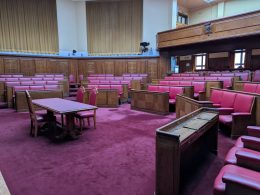
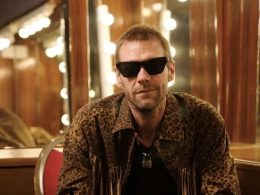
UPDATED On Wednesday night, soon-to-be ex-leader Simon Hogg stood up in the Wandsworth council chamber and praised Malcolm Grimston’s “vision and strength.” Five months earlier, Hogg’s administration had used new constitutional rules to stop Grimston speaking in the same chamber.
The tribute came at Wandsworth’s first meeting as a hung council, the result of May’s local elections, which left no party with overall control. Both Labour and the new Conservative administration arrived with lofty words about collaboration and transparency, and then proceeded to do the opposite.
What both sides promised
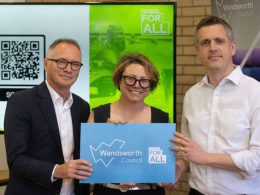
Aled Richards-Jones, the new Conservative council leader, set the tone. “For the first time we’ll invite opposition councillors to chair scrutiny committees, we will invite the Leader of the Opposition and cabinet members to attend cabinet, to join the discussions, to challenge our decisions and hold us to account,” he told the chamber.
He added: “We’ll be transparent about why we have to take the decisions we take, and we’ll invite scrutiny and challenge from everyone across the Council Chamber.”
Hogg, for Labour, also spoke of collaboration. But he addressed his remarks not to Richards-Jones, who was about to take over as council leader, but to Grimston, the independent whose votes Labour would need to win any fight over the next four years. “You gave both political parties similar support and put us into this no overall control and we need to change our mindsets and adapt to that,” he told Grimston. “Let’s keep that space to debate and to disagree well.”
What followed suggested the adaptation was proving difficult.
What Labour did
Labour’s first act was to force a vote on the mayoral nomination they could not win. They put forward Councillor Henderson against the Conservative nominee Emmeline Owens. The result was 29-26. Labour held 28 seats, but two of their own were absent: Kemi Akinola, the Deputy Leader of the Labour group, and Tony Belton, a former leader of the Labour group on Wandsworth Council who served in that role for a combined 23 years. On the first night of a hung council where every seat theoretically carries weight, the second most senior Labour figure and its leader for most of the past 50 years were not in the chamber.
Labour had no realistic prospect of winning the vote regardless of the absences. The contest was a statement, not a competition.
More striking was the tribute Hogg paid to Grimston, described as a man of “vision and strength” whose intervention had brought both parties to this point. What Hogg did not mention was that, as recently as December, his administration had introduced constitutional changes that prevented Grimston from raising ward issues on the floor of full council. Grimston told us at the time: “In effect I can now only talk to an issue which has been raised by another Councillor. I cannot introduce anything that has arisen as a result of my own ward work or investigations.” Mayor Ambache, presiding under Labour’s leadership, ruled him out of order.
The same rules had, by the end of December, silenced two further non-party councillors, between them representing 18,000 residents who lost their voice in the chamber. Our investigation at the time found every promise Hogg had made about making the council more open had been broken.
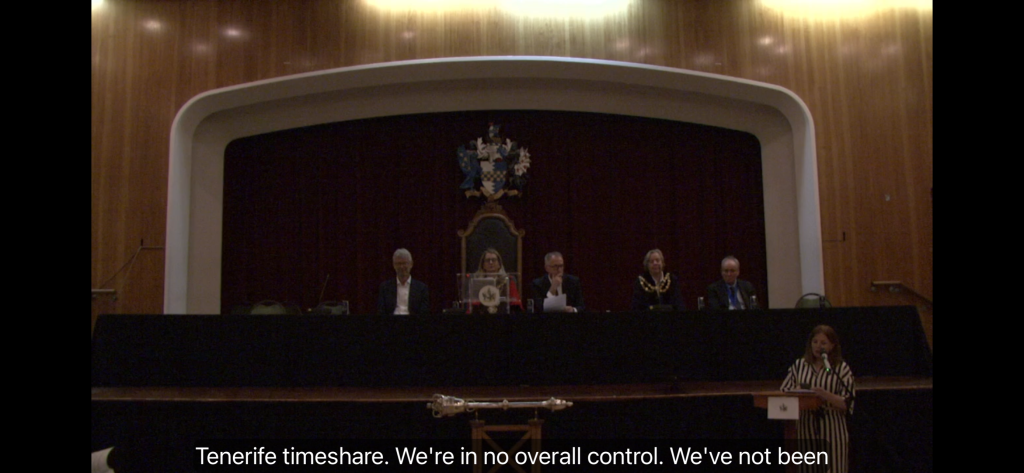
When Councillor Rigby, Labour’s spokesperson on the committee paper that would restructure Wandsworth’s oversight arrangements, was invited to support it, she did not. “We can’t be rushed into signing it like a Tenerife timeshare,” she told the chamber. The council was, she added, in “no overall control,” and Labour had “not been consulted on these changes.”
In his speech earlier in the evening, Hogg had opened by acknowledging that “depending on your allegiance, tonight is bittersweet,” and then made a joke about Arsenal winning the Premier League. “I know the majority of people in Wandsworth did not want this to happen,” he told the chamber. The jokes came easily. What they masked was harder to say: Labour had waited 44 years to run Wandsworth, held power for one term, and lost it. In a video after the election, Hogg blamed the Greens for his loss. He closed with a toast: “Let’s do it again soon.”
What the Conservatives did
The committee paper Labour refused to rush into signing had arrived on the day of the meeting. Richards-Jones had just promised transparency and maximum scrutiny from everyone across the chamber. Councillor Graham, presenting the paper, acknowledged the reality. “I accept that this process has been far from ideal, far from ideal for us and far from ideal for the opposition,” he told the meeting.
That admission came on night one.
The paper suspended all six of Wandsworth’s scrutiny committees for eight weeks, replacing them with a single temporary catch-all committee. Because Labour declined to nominate members in protest at the process, that committee is staffed entirely by Conservatives. The new administration’s first act of “maximum scrutiny” is a scrutiny committee with no opposition on it.
Buried in the same late-arriving batch of papers was a second change: a restoration of the General Purposes Committee as the gateway for all constitutional changes before they reach a full council vote. Richards-Jones chairs it – though the committee’s composition means no change can pass without cross-party agreement.
Richards-Jones has said scrutiny committees will resume in July. That is eight weeks away.
Grimston’s three votes
Grimston entered the meeting having reached a confidence and supply agreement with the Conservatives, under which he would support the new administration on key votes to keep the council functional. As the arithmetic stood going into the meeting, that agreement meant one thing in practice: he voted for Richards-Jones as leader. Result: 30-26. On everything else, he stepped back.
On the mayoral nomination, Grimston abstained. Result: 29-26, Owens elected regardless.
On the committee paper, Grimston abstained again. Result: 29-26, passed regardless.
The votes that passed did so not because of Grimston but because two Labour councillors were absent. Had two Conservatives been absent instead, neither motion would have carried. Both parties voted entirely in block throughout the evening. Grimston, the man both sides had spent weeks courting, was a spectator for most of it.
His stated ambition is to sit to the side of both parties and draw them toward working together for the benefit of Wandsworth. On the basis of Wednesday night, he has a very long way to go.
Correction, 30 May 2026: An earlier version of this story stated that the General Purposes Committee gave the council leader the power to delay or shape challenges to the council’s own rules. In fact, the committee’s composition – two Conservatives, two Labour, and independent councillor Malcolm Grimston – means no constitutional change can pass without cross-party agreement.