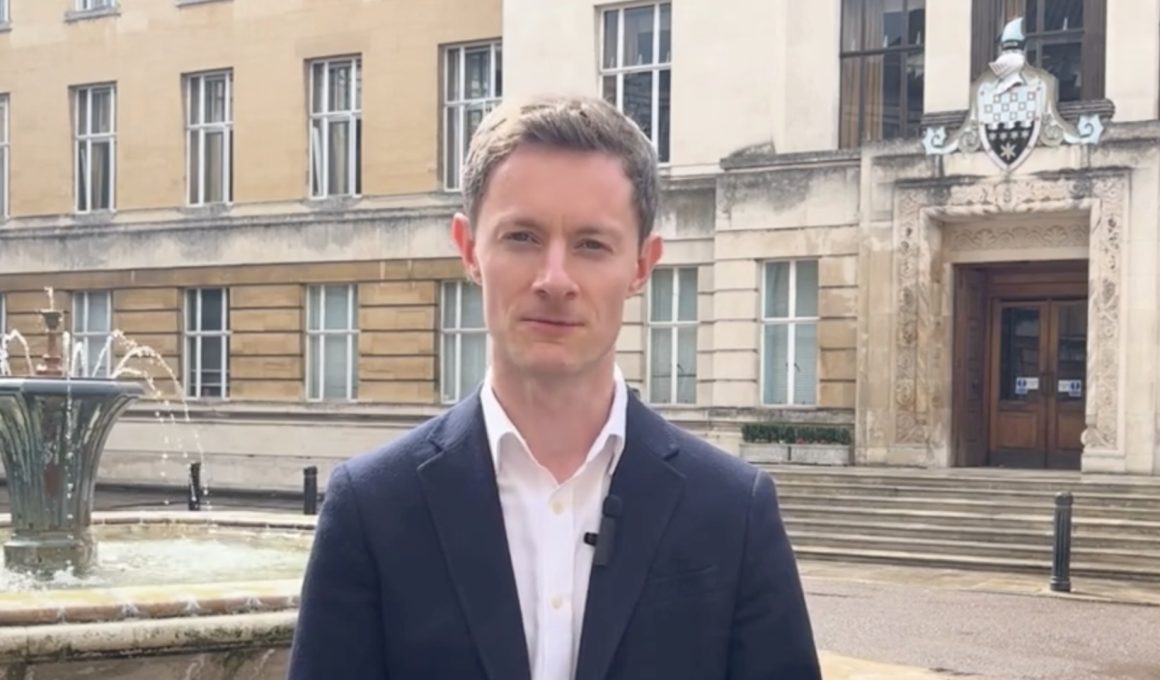
“My priority is straightforward,” Aled Richards-Jones said this week. “A well-run council that delivers for every resident. That means financial responsibility and transparent decision making. That is the foundation for the services residents rely on – like clean streets, safer neighbourhoods, and high-quality housing.”
Wandsworth’s new Conservative leader has ordered a Spending Review and a Constitutional Review, both to report by July. The two reviews are different in kind: one is good governance, the other was the price of the deal that gave him a majority.
Richards-Jones takes formal control at the Annual Council meeting on 27 May. The Constitutional Review is a specific commitment to Malcolm Grimston, the independent councillor whose support makes the administration possible. The Spending Review will determine the fate of several Labour policies that were committed without the money to deliver them.
The deal
The May elections left Wandsworth with its first hung council in modern history: Conservatives 29 seats, Labour 28, independent Malcolm Grimston one. A majority requires 30. Richards-Jones has agreed a confidence and supply arrangement with Grimston, reviewed annually, that provides that margin. Every year, the arrangement and the commitments attached to it must be renegotiated.
Grimston has represented West Hill since 1994. After the election, former Labour leader Simon Hogg visited Grimston’s home to make the case for Labour backing. Grimston declined. He also turned down an alternative arrangement that would have given him even more leverage: a 29-29 deadlock in which his casting vote decided every tied decision. “That would be deeply undemocratic for what’s just happened,” he said. He backed the Conservatives because, in his view, they had earned the right to govern.
The Spending Review
“My team inherits the largest budget gap in the council’s history,” Richards-Jones said. “£137 million.”
The council’s useable reserves are estimated at £116 million, less than the gap itself, meaning it cannot simply be absorbed. The gap has been on the public record since February. It appeared on page 77 of the budget papers, in an appendix. The gap is roughly £85 million in lost government grant and around £50 million in a structural shortfall the previous Labour administration had not resolved. The government has already removed funding from Wandsworth’s settlement assuming a steep council tax rise, and its own model shows the council tax portion near-doubling from around £500 to around £930 by 2030. Richards-Jones did not mention council tax in his statement or video.
Labour’s plan to fill the gap was a £45 million transformation programme. At the Finance Committee in February, Chief Executive Andrew Travers described that target as “a broad, reasonable aspiration to get us going”, not a figure derived from identified savings.
The review will examine all spending across the council, including major projects and projected borrowing of more than £1 billion. Most new recruitment has been paused immediately.
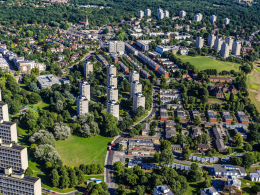
It will also have to confront what Labour’s aspiration left unexamined: a series of committed projects without the money to deliver them. Among those in scope: the Alton Estate regeneration, a long-running programme that has not been fully funded; the Lennox Estate development, which proposes 81 homes on protected green space in Roehampton and has attracted a GLA non-compliance ruling and 287 objections with no support; and Access for All, the council’s disability access scheme, where the council has fought an ICO complaint rather than release basic usage figures.
These are not marginal items. They are specific commitments the new administration opposed in opposition and now controls in government.
The Constitutional Review
The Constitutional Review is Grimston’s specific condition. It was not offered voluntarily.
“The sticking points are around more honesty on the budget, on changing the constitution to make challenge more easy for people, and if possible some things around a members’ charter of behaviour or something of that nature that is actively policed by the two group leaders,” he told Putney.news earlier this month.
The context behind that requirement is documented. In March 2025, Labour’s Executive approved a set of governance reforms in under two minutes, with no debate. Those reforms raised the threshold for decisions requiring advance scrutiny from around £215,000 to £1 million, removing roughly 78% of decisions from that process. They also rewrote standing orders to require motions to be submitted through “Group Whips”, a mechanism that left Grimston, as a sole independent with no group, unable to raise ward matters at Full Council.
“I’ve been very unhappy with a number of the ways that the Labour Group and the Labour Council has sought to make it much more difficult to challenge them,” Grimston said. “It’s acting like an elected dictatorship.”
The review will look at how “councillors from all parties and none can raise issues on behalf of residents at council meetings,” according to the press release. Standing orders will be redrafted, and any proposed constitutional changes will go to a cross-party committee before being brought forward. The words “and none” cover independents specifically. Grimston is currently the only person that describes.
What comes next
Both reviews are due to report at the council’s first ordinary meeting in July. “Although I’m in an interesting position, the fact still remains I’m only one of fifty-eight councillors,” Grimston said. “I’m not omnipotent by any means.”
Richards-Jones takes formal control on 27 May.
“I look forward to setting out the full programme at the Council’s first ordinary meeting in July,” he said, “and to working constructively with all councillors to deliver it.”
The Annual Council meeting is on 27 May 2026 at 7:30pm and is open to the public. Details and the agenda are at the Wandsworth democracy portal. Residents can register views on spending priorities by contacting their ward councillors via wandsworth.gov.uk.