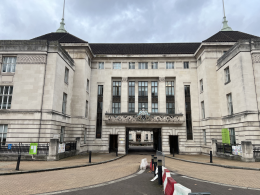
The House of Lords passed Amendment 248 to the English Devolution Bill last night by 162 votes to 55, creating a new legal mechanism that allows the Secretary of State to release land from recreation trusts where councils failed to follow proper procedures at the time of sale.
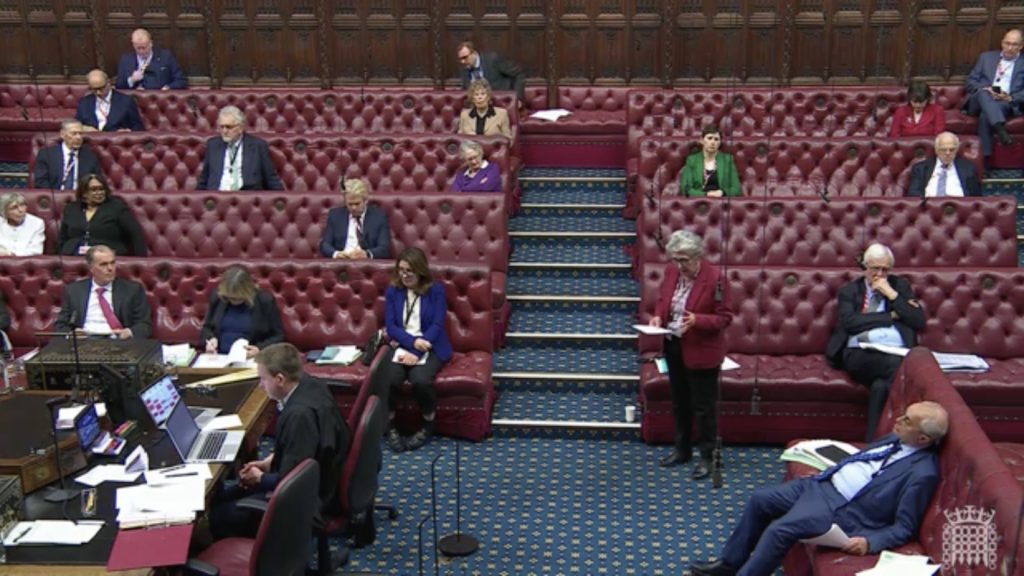
The amendment, which has been at the centre of a six-month parliamentary battle over the future of Wimbledon Park, passed with a margin of more than three to one. A Conservative attempt to delay it pending a UK-wide review of open spaces was defeated first, 135 to 154, before the main vote at 9:44pm.
The Liberal Democrats voted alone against the amendment. Conservatives backed the delay, lost, and then largely left the chamber rather than oppose the main question. The government whipped for passage.
The bill now goes to the House of Commons, where MPs are due to consider it on 21 April.
Lord Banner, the Conservative peer who moved the amendment, told the House it was “in fact academic” for the Wimbledon Park case. The All England Lawn Tennis Club recently won a High Court ruling that no statutory trust existed over the golf course land it bought from Merton Council in 1993.
But Save Wimbledon Park has applied for permission to appeal that ruling. And the statutory trust discharge mechanism now exists in law regardless, subject to Commons approval.
Banner had opened the debate by insisting the amendment had been “wrongly characterised as being only about the high-profile Wimbledon case.” He argued it addressed a wider legal problem: that land purchased from councils in good faith, sometimes decades ago, could remain bound by trusts in perpetuity because of procedural failures by the selling authority.

The debate
Lord Grabiner, a crossbencher supporting the amendment, summed up the legal difficulty. “We always hope that the law and common sense function in tandem,” he said. “We have a tandem here but, unfortunately, it is facing in the wrong direction.”
Lord Pannick said the problem was that a purchaser acting in good faith remained bound by a trust even when the local authority, not the buyer, had failed to advertise the sale properly.
Lord Fuller, a Conservative peer who backed the amendment despite his party’s attempt to delay it, made what was perhaps the plainest case for change. “We cannot orphan land or blight places in perpetuity,” he told the House. “It would be perverse to do that just for want of being able to find an advert in a 100 year-old copy of a newspaper, in a publication that does not exist anymore.”
Baroness Pinnock, the Liberal Democrat peer who led the opposition and acted as teller for the vote against, warned the House it would regret its decision. “Retrospective law is nearly always bad law,” she said. “So let us not do it.”
She pointed to the contradiction at the heart of the vote: that a bill designed to give communities more power was being used to hand authority to the Secretary of State. “This is a devolution and community empowerment Bill, and the last thing we should do is take power from the community and local democracy and give it to the Secretary of State.”
In his closing speech, Banner rejected that characterisation directly. “It is not retrospective,” he said. “The statutory trust discharge order would be prospective.”
The government’s position
Baroness Taylor of Stevenage, the Housing Minister who reversed her opposition to the amendment earlier this year, set out the government’s position in a single sentence: “The Government do not believe that historic procedural failures should indefinitely frustrate sensible, beneficial outcomes.”
She also confirmed that her department was carrying out a separate review of the legal framework governing public recreational green spaces, covering how effective current protections were in practice and where the system could be simplified.
On the Conservative delay amendment, Taylor told peers that a UK-wide review would need the agreement of devolved administrations, over which the Secretary of State had no control. She said that would leave the mechanism “open to factors wholly outside the scope of the Bill to delay or frustrate the use of the power.”
A familiar name in the voting lobby
Lord O’Donnell, a crossbencher and former Cabinet Secretary, told the House he was a member of the All England Lawn Tennis Club committee before speaking in the debate. He voted for the amendment on both divisions.
Putney.news reported in October 2025 that O’Donnell was a serving AELTC director when the original version of the amendment was first tabled. He is no longer a formal sponsor of the current version but remains on the club’s committee.
During the debate, O’Donnell corrected Baroness Pinnock on the trust question. “To be absolutely clear, the courts made it clear that there is no statutory trust on that land,” he said.
What happens next
The amendment is now part of the English Devolution and Community Empowerment Bill, which moves to the Commons on 21 April. MPs will have their first opportunity to accept, amend, or reject it.
Save Wimbledon Park is holding two public meetings in the coming days: on Thursday 16 April in Southfields (St Barnabas Church, 146 Lavenham Road, SW18 5EP, 7pm) and on Wednesday 22 April in Wimbledon (St Marks Church, St Marks Place, SW19 7ND, 7pm). The campaign says it will present alternative proposals for the golf course site.
Local elections take place on 7 May. The outcome in Merton, where councillors have a separate covenant enforcement role over the park, will matter for Wimbledon Park’s future alongside the parliamentary and legal battles.
The amendment was first tabled in October 2025 and abandoned within days after cross-party opposition. Six months later, it has passed the Lords with government backing and a landslide majority.
We have covered the Wimbledon Park story since 2025. The full series is here.
Correction: Tue 14 Apr, 10.30am: We originally wrote that the first Save Wimbledon Park public meeting would be on Wednesday 16 April. It is on 16 April, but that is a Thursday, not a Wednesday. This has now been corrected.