

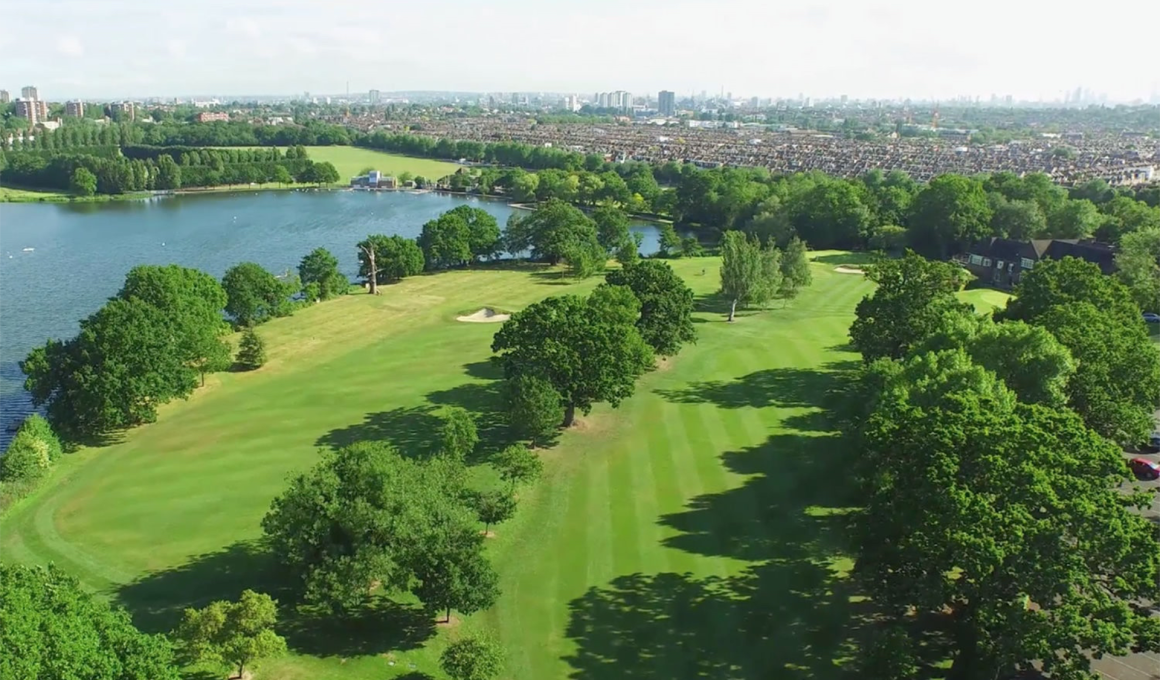
Leader of Wandsworth Council, Simon Hogg, issued a statement on Friday urging the All England Lawn Tennis Club (AELTC) to reconsider its plans to build on Wimbledon Park. Save Wimbledon Park was delighted. The AELTC has not responded, in large part because they know he has no power to compel them to do anything.
That is not a criticism of Hogg’s position. Wandsworth voted unanimously against the development in 2023, and its opposition to it is genuine and longstanding. What Wandsworth’s council leader cannot do is affect any of the three separate contests that will actually determine whether the AELTC builds on this land. All three are now reaching their climax simultaneously, in the next six weeks.
The court case that is long overdue
The most important decision has not yet been made. In January, a High Court judge spent six days listening to arguments about whether Wimbledon Park golf course is protected by a statutory trust (a Victorian-era legal obligation that would mean the land must remain available for public recreation). The AELTC has conceded that if the trust is found to exist, their entire £200 million expansion plan cannot proceed.
The judge concluded the hearing on 23 January. He said he expected one side or other would end up at the Supreme Court, and suggested lawyers should prepare accordingly. A written judgment was expected “within weeks.” That was almost eight weeks ago.
It could arrive tomorrow. It could arrive the week after. When it does, it will either end the immediate threat to Wimbledon Park, or it will make the next two battles the only ones that matter.
The Lords vote that nobody has announced
While the court deliberates, Parliament is moving. In the House of Lords, an amendment is returning to the floor this month. It would create a new legal mechanism: a process by which a landowner could apply to the Secretary of State to have a statutory trust discharged: advertised, publicly consulted upon, tested against a public interest checklist, and then potentially released.
The amendment was drafted by Lord Banner, one of Britain’s leading planning barristers. It is presented as fixing a general legal problem created by the 2023 Supreme Court ruling in Day v Shropshire, which left councils and developers uncertain about land sold decades ago without proper advertising. That general problem is real.
But the amendment arrived precisely when the AELTC needs it. It was debated in the House of Lords on 5 March. The minister, Baroness Taylor of Stevenage, said: “In my view, Amendment 222C does just that,” meaning it closes the legal gap while protecting the public interest. She endorsed it. The government minister whose department is responsible for this bill publicly backed an amendment that would, if the trust ruling goes against the AELTC, give them a route back.
One Conservative peer who chairs the Lords’ Constitution Committee, Lord Lucas, was not surprised by the substance but was startled by the enthusiasm: “I had not realised the noble Baroness was so much in favour of this amendment.”
Banner withdrew it at committee stage (standard practice, to allow refinement before a vote) and said he would bring it back at Report stage. Report stage begins on 24 March. Three sittings are scheduled: 24 March, 26 March, and 13 April. Based on where the amendment sits in the bill, 26 March or 13 April is most likely.
This is not the first time a Lords amendment has targeted Wimbledon Park. The previous attempt was abandoned in November after peers condemned it. A second attempt followed in February, and ministers who had rejected the amendment in November reversed their position shortly before the Grand Committee debate.
The promised wider review of statutory trust protections, which the government offered in November as a reason to wait, has not started. Baroness Taylor told the committee on 5 March that she had been “a bit busy with other legislation.” The review was always a holding position; it has now been superseded by the amendment itself.
The closing window
Purdah for the Wandsworth and Merton elections is expected to begin around 27 March. After that, council leaders, MPs and councillors cannot make significant political interventions without scrutiny for electoral advantage. If the amendment comes to a vote on 26 March, there is a narrow window (hours, not days) for politicians to respond publicly before they go quiet until after polling day.
Paul Kohler, the Liberal Democrat MP for Wimbledon who has been one of the AELTC’s most vocal critics, would likely want to say something. But he is also a Merton councillor. Whether he has time depends on whether the amendment is called on 26 March and whether the vote falls that evening or the following day. If it lands on 13 April, purdah is already in force. Politicians will watch it happen in silence.
Some of Hogg’s calculation in issuing Friday’s statement is almost certainly this: he used his last opportunity before the silence falls. His intervention follows a pattern seen before with Queen Mary’s Hospital: a public statement of position when the window to make it is closing. The fact that he is trying to defend a seat in West Hill in order to stay in power may also have factored into his calculations.
What the amendment actually means, and what it doesn’t
The amendment, whatever it is ultimately numbered at Report stage, is not a free pass for the AELTC. If it passes the Lords, it still needs Commons approval, and even if it becomes law, the AELTC would have to apply through the new process, advertise for four weeks, accept public representations, pass a six-part public interest test, and convince a Secretary of State to make the order. Save Wimbledon Park would contest every stage.
But it matters enormously what the High Court decides first. If the judge finds the trust does not exist, the amendment becomes irrelevant to Wimbledon. The AELTC wins on the central legal question regardless. If the judge finds the trust does exist, the amendment becomes the only legislative route available. At that point, the battle in the Lords would be fierce.
The bill itself is under pressure to complete before the King’s Speech, expected later this spring. It is a flagship government bill, a manifesto commitment six years in the making, too important to let fall. That deadline creates its own pressure to resolve ping-pong between the Lords and Commons quickly. Timing, for once, works in the AELTC’s favour.
The last move: 7 May
Even if the amendment passes and the courts go against Save Wimbledon Park, there is one more contest, and it is the most local of all.
When the AELTC bought the golf course land from Merton in 1993, it signed a covenant: a private, binding legal obligation promising not to develop it. That covenant sits entirely outside the statutory trust question and entirely outside any Lords amendment. No parliamentary vote touches it.
Enforcing that covenant is Merton Council’s choice. The current Labour administration has declined to do so. If the Liberal Democrats take control of Merton in the 7 May elections, they have said they would.
Lord Hayward, a respected election analyst, has specifically identified Merton as a borough where the Liberal Democrats could take control. PollCheck, which models all 136 English councils contesting elections in May, projects no overall control, with Labour the largest party but short of a majority. In 2022, the Liberal Democrats already replaced Merton’s Labour leader with a Lib Dem in the council elections. Merton has been Labour since 1990, apart from four years in the mid-2000s. It is genuinely in play.
If the Lib Dems take Merton and move to enforce the covenant, every other contest in this piece (the High Court, the Lords, the Commons, the King’s Speech deadline) becomes moot. The AELTC would have to fight that battle separately, in a different court, on different legal grounds.
Where this leaves Hogg
The council leader issued his statement eleven days before purdah. He has no power over any of the four contests. He cannot influence the High Court’s timing. He cannot vote in the Lords. He cannot make the Commons accept or reject an amendment. He cannot control what happens in Merton.
What he can do is be on the record, before the silence, as having said the right thing.
As he said: Wimbledon is a world-class tournament. Protecting the green spaces that make it special matters more than commercialisation. His council will work with everyone to find a better path.
None of that changes anything. But it was the last moment he could say it.
Putney.news has asked Wandsworth Council what specific action, beyond Friday’s statement, the council leader intends to take. We have also asked whether the council will make any representation to the House of Lords before the amendment is considered at Report stage. We will update this article when responses are received.
The statutory trust judgment, when it arrives, will change this picture significantly.
Correction, 19 March: In an earlier version, we incorrectly stated that Merton Council had bought the golf course from Wimbledon Park Golf Club in 1993. It was of course AELTC that bought the land, and from Merton Council.


“Even if… the courts go against Wimbledon Park” should read “against ‘Save Wimbledon Park’, the organisation. Wimbledon Park itself is not under threat. In fact, it will be made larger by the proposals. Which is why most local residents support the plans. Please check the plans directly from the source, don’t trust the misleading SWP mistruths.
Yes, good spot – thank you. Have changed.