

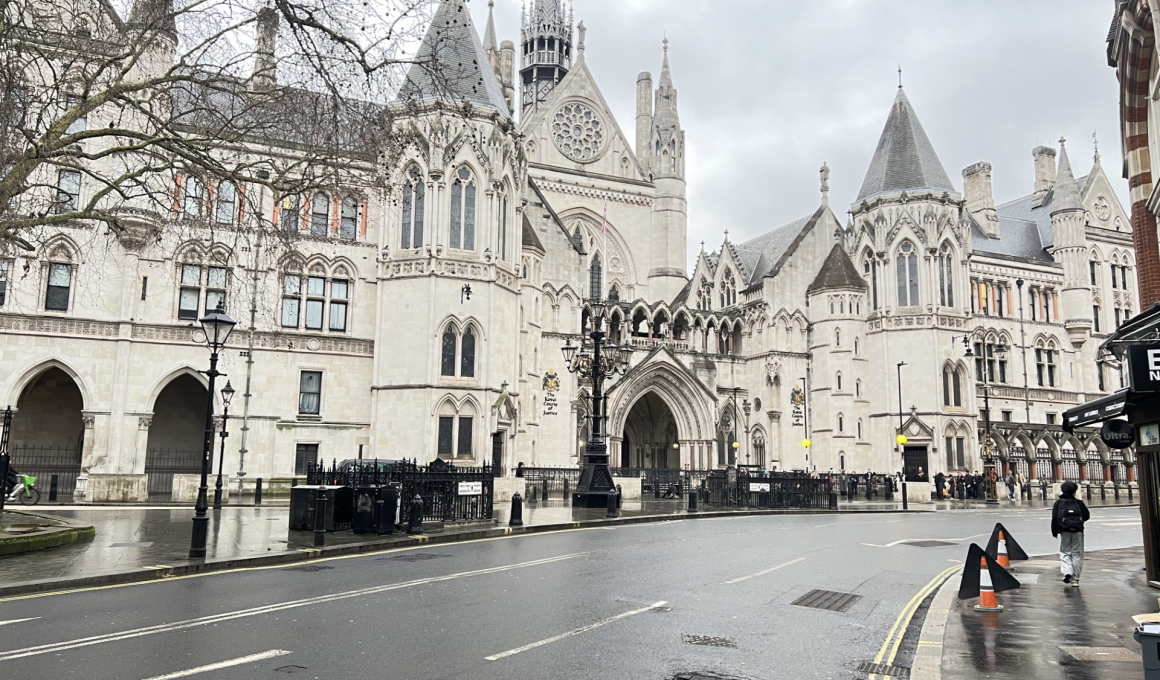
The final day of the Wimbledon Park statutory trust trial concluded on Friday with the judge openly discussing how his ruling might be challenged in the Supreme Court – a striking signal that he may be leaning toward finding against the All England Lawn Tennis Club (AELTC).
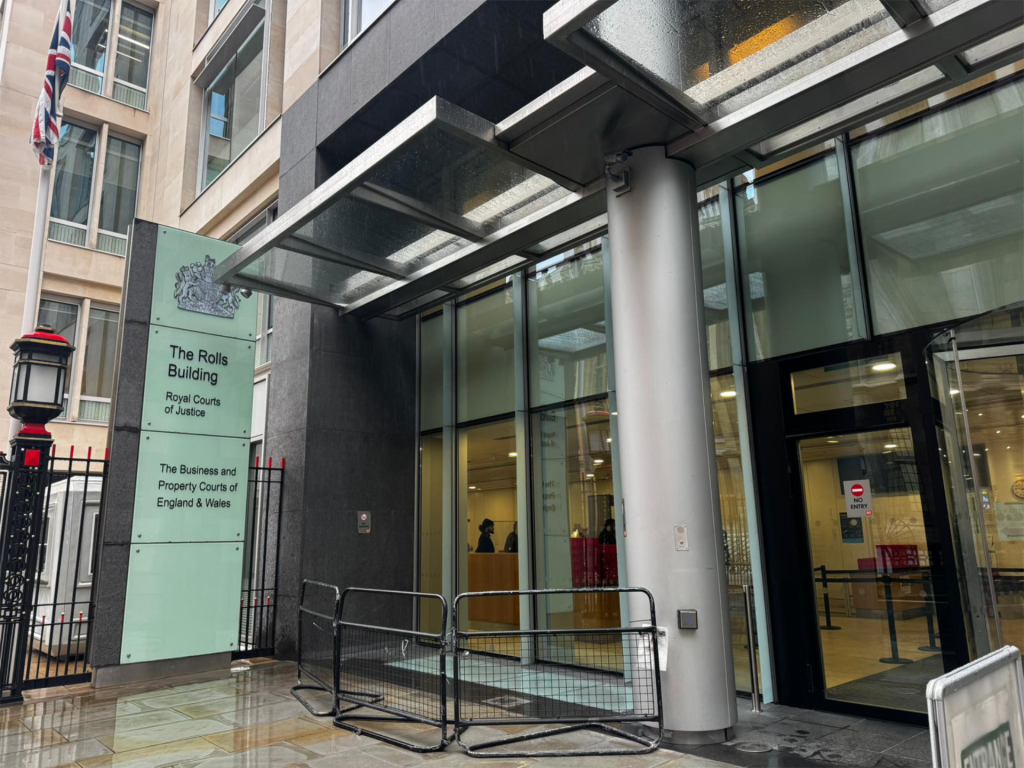
After six days of intensive legal argument in a well-attended courtroom at the Rolls Building, Mr Justice Thompsell thanked lawyers on both sides for helping him navigate what he called “watchmaking” – piecing together the complex springs and cogs of century-old local government legislation.
But his parting words were telling: he said he “suspects that one or other of the parties will end up going to the Supreme Court” and suggested lawyers might want to draft an order for the Court of Appeal “to speed things up.”
The key concessions
Two significant concessions emerged during Friday’s proceedings, which Putney.news attended in person, that may prove decisive.
First, AELTC admitted its proposed development “would breach” the restrictive covenants attached to the land. The tennis club argued this was a problem “for another day” – it would need to resolve the covenants through negotiation or by applying to the Lands Tribunal before commencing any development.
Second, the AELTC admitted that if the statutory trust is found to apply to the land, “it would preclude use of the Golf Course Land for the Project” – in other words, the expansion cannot proceed.
Both concessions were noted in court and may limit the AELTC’s ability to argue the development could somehow proceed even if a statutory trust is found to exist.
In an email to supporters, Save Wimbledon Park highlighted the two concessions as the critical takeaways from the trial, noting the AELTC’s admission that the statutory trust “would preclude use of the Golf Course Land for the Project.”
Judge looks beyond this court
Perhaps the most striking aspect of the last day of the week-long hearing was how openly the judge discussed the case’s likely journey through the appeals system.
When discussing whether the AELTC was a “bona fide purchaser without notice” of the statutory trust – a potential defence that could shield them even if the trust existed – the judge noted this was “one they will keep up their sleeves.”
The implication was clear: this argument would be deployed not in his courtroom, but further up the legal chain.
The judge also referenced the landmark 2023 Supreme Court ruling in Day v Shropshire, which established that councils cannot extinguish public rights over recreation land by selling it without proper consultation. Several times he discussed potential ways the AELTC might try to “get out of Day” – including the bona fide purchaser defence and the concept of “overriding interests.”
His willingness to map out the appeal landscape suggests he has reached preliminary conclusions about how the core legal questions should be answered.
The document controversy
A significant dispute arose over discovery documents from the 1993 purchase.
Save Wimbledon Park’s lawyers revealed that of 170 documents the AELTC identified as relevant to the purchase, the tennis club claimed legal privilege over all but three. In correspondence, SWP’s solicitors Russell Cooke described the disclosure process as involving “cherry-picked” documents and called it “fundamentally unfair.”
More critically, SWP’s lawyers argued that the documents disclosed appeared to be part of incomplete chains – suggesting other relevant documents exist but were not provided.
Caroline Shea KC, for Save Wimbledon Park, specifically asked the judge not to make findings of fact based on incomplete documentation. The judge was somewhat sceptical, asking why he would need to see documents if the AELTC confirmed they did not address the core issues.
Eventually an agreement was reached: SWP will have until Tuesday to decide whether to re-inspect the documents, with access by the end of next week and any resulting issues to be resolved the Wednesday after.
The underlying concern, though unstated, is whether the AELTC knew at the time of purchase that the land might be subject to a statutory trust – and whether documents confirming such knowledge exist but have not been disclosed. If such a document did exist, AELTC’s case would be over, making SWP that much sensitive to the possibility that it does.
Historic views and “absolute tosh”
One exchange provided a moment of levity in an otherwise dry legal proceeding.
The AELTC’s lawyers cited the club’s own Design and Access Statement, which referenced “historic views” across the Wimbledon Park estate. They argued the proposed development would actually “open up historic views as part of the scheme.”
This prompted audible reactions from the SWP supporters. One was heard to mutter “absolute tosh” at the suggestion that an 8,000-seat stadium, 38 tennis courts, and associated infrastructure would improve historic views.
The estate is Grade II* listed, designed by Capability Brown in the 18th century. The judge had earlier noted that the public amenity of the parkland included “something pleasant to look at” across the lake – views that both sides agreed the proposed development would fundamentally alter.
Was the golf club ever truly private?
A substantial portion of Friday’s arguments concerned whether the Wimbledon Park Golf Club was genuinely private – relevant to whether the land was ever “used for public recreation.”
Save Wimbledon Park presented evidence that:
- 75% of golf club members were local residents
- Non-members were “welcome at all times” according to the club’s own documentation
- An angling society had used the lake since 1948
- A Dr Dawson wrote in the 1980s that he used the golf course as a shortcut to his home without being challenged
The AELTC countered that the angling society operated under licence from the golf club, and that occasional trespass does not constitute public use. They also disputed characterisations of the club as “pay and play.”
The judge observed that the “only advantage” of golf club membership appeared to be avoiding green fees – suggesting the club was more accessible than a typical private members’ institution.
Parliament kept at arm’s length
Before presenting its main arguments, the AELTC’s legal team spent considerable time urging the judge to be cautious about using Parliamentary debates from the 1914 legislation.
This appeared strategic: debates from both the House of Lords and House of Commons apparently contain references to Wimbledon Park as “public open space” and discuss the intention to preserve the estate for public benefit.
Jonathan Karas KC, for the AELTC, emphasised the “dangers of relying on parliamentary material” and said statements could only be used “as an aid to construction” for findings of fact.
The intervention suggests the historical parliamentary record may not favour the tennis club’s position that the golf course was always intended to be treated separately from the public park.
The failed legislative bypass
Friday’s proceedings took place against the backdrop of a failed attempt last year to legislate the statutory trust problem away.
In October 2025, Amendment 250 to the Planning and Infrastructure Bill would have retrospectively changed the law to validate the 1993 sale – effectively ending Save Wimbledon Park’s legal challenge before it reached court.
The amendment was proposed by four peers including Lord Gus O’Donnell, who serves as a director of three AELTC-controlled companies. It was withdrawn after cross-party opposition in the Lords.
Paul Kohler, the MP for Wimbledon, accused the AELTC of “bad faith” for pursuing the legislative change while publicly offering to meet with the community.
What happens next
Mr Justice Thompsell said he would deliver his judgment “quite swiftly” – understood to mean within a few weeks rather than the two to three months originally anticipated.
Given his comments about the Supreme Court, the ruling may be crafted with one eye on appeal. Costs will not be contentious: the AELTC is funding both sides’ legal expenses.
This is one of three parallel legal challenges facing the tennis club’s expansion plans. The Court of Appeal has already granted permission to challenge the planning permission itself. A third challenge concerns restrictive covenants from the 1993 sale that require the land to be “kept open and free of built development.”
If the judge finds a statutory trust exists and binds the AELTC, the £200 million expansion cannot proceed in its current form. The tennis club would need to fundamentally redesign its plans or abandon them entirely.
For Save Wimbledon Park, Friday’s hearing offered cautious grounds for optimism. The judge’s frequent references to appeals and the Supreme Court suggested he may be preparing to rule against the AELTC – while simultaneously signalling that the tennis club will have every opportunity to challenge that finding.
As one supporter noted outside court: “We’ve been at this for years. We’re prepared to go all the way.”
The trial began at 10:15am and concluded just before 5pm, with a one-hour lunch break and two short adjournments. Nine supporters of Save Wimbledon Park attended, alongside roughly seven lawyers. The AELTC had four supporters present in the morning, rising to six in the afternoon, with seven lawyers and three King’s Counsel.
A written judgment is expected within weeks.
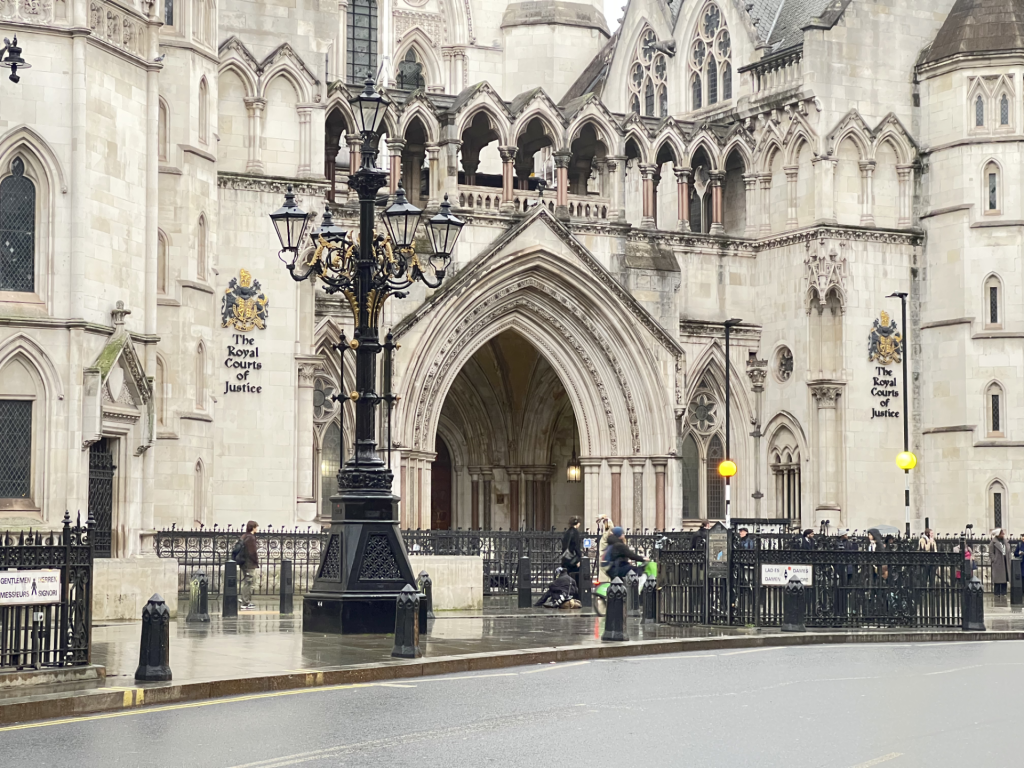
The statutory trust hearing ran from 16-23 January 2026 at the Rose Building, Royal Courts of Justice. Previous coverage: Five questions that will decide the future of Wimbledon Park, Legal battle in High Court continues for Wimbledon Park.




Yet again a fantastic balanced summary of court proceedings. I like many will await the judgment with bated breath. I so wish I could have been there…but feel like I was due to the comprehensive reporting.