Two days before the planning committee votes on a nine-storey block for Roehampton, a leaseholder has written to three of the council’s Cabinet members warning of a legal claim over lost light.
Steve Fannon, who has lived at Hersham Close for more than 25 years, has a lease clause stating “the right to the access of light and air to the Flat.” Under English common law, 20 years of uninterrupted enjoyment of natural light creates a prescriptive right regardless of any written clause. He took the concern directly to his local councillors.
The daylight case has history. The council’s own 2019 Environmental Statement for the original masterplan assessed 73-95 Hersham Close and found the impact would be “long-term, local, adverse of major significance.”
The current application is smaller and the massing is different, so the harm may be lesser. The council’s 2025 daylight report, commissioned from Right of Light Consulting Ltd, still finds multiple failures at the same building – rooms that already receive a fraction of the light the government’s own guidance considers adequate, losing between a quarter and a half of what remains.
The 2019 finding does not appear anywhere in the 2025 committee report. The legal question of right to light is not addressed either, which is standard practice in planning law but does not extinguish the underlying claim.
What the committee will vote on
The application (2025/4614) is a Regulation 3, meaning the council is simultaneously the applicant and the decision-maker. The Growth and Place Directorate submitted it; the Planning Applications Committee votes on Thursday.
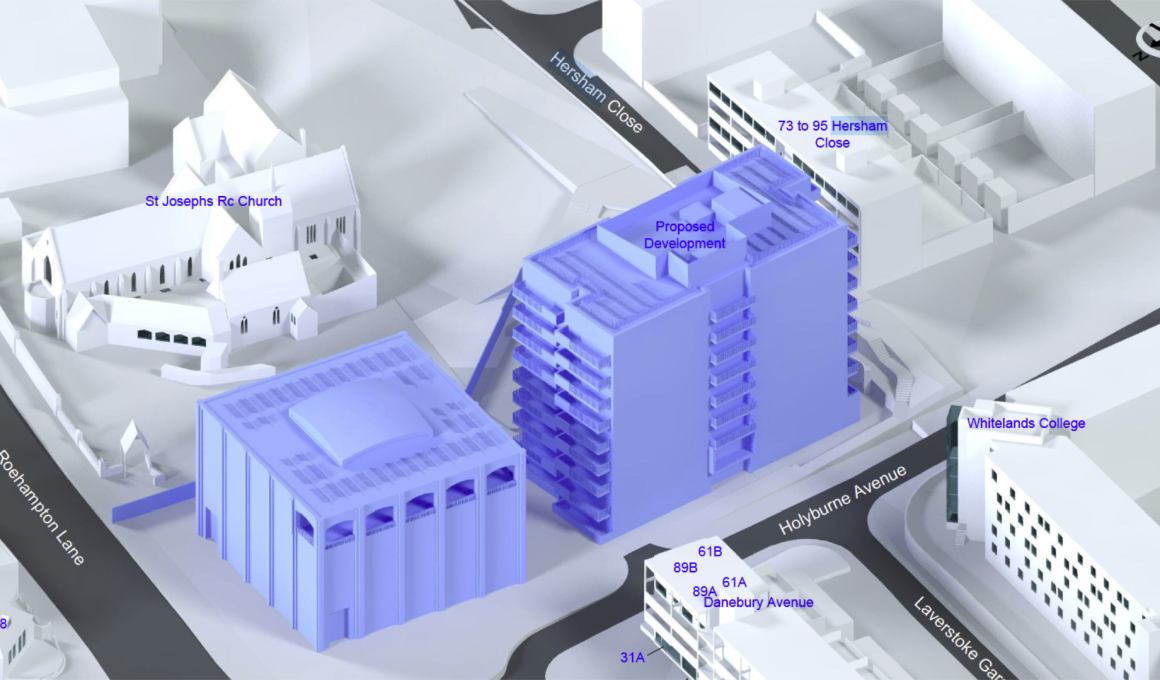
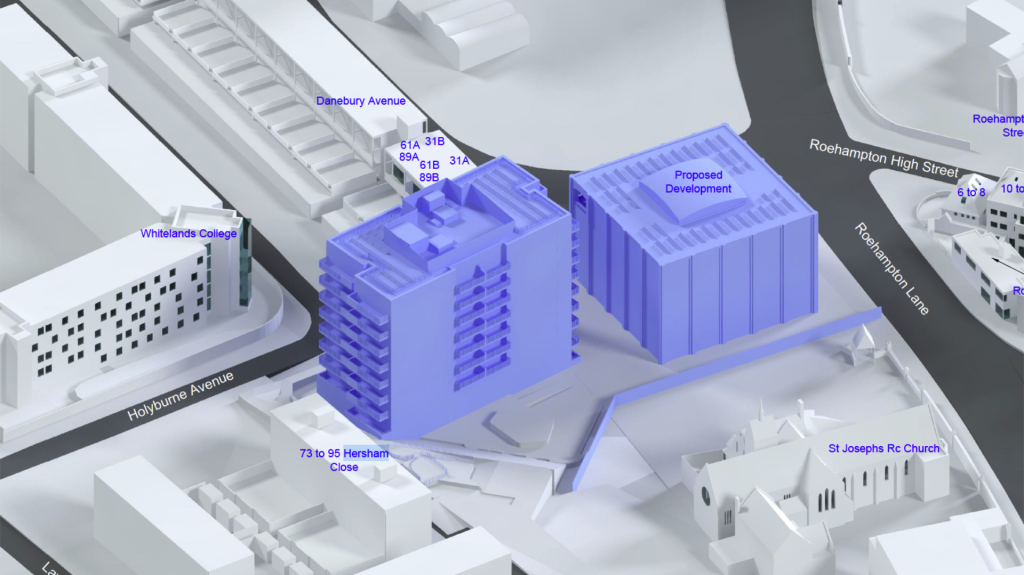
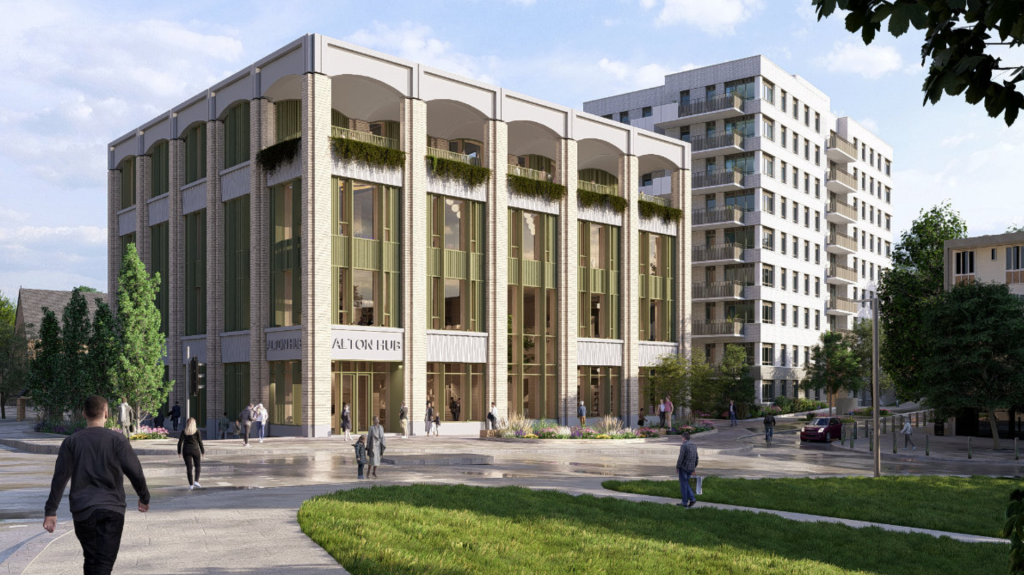
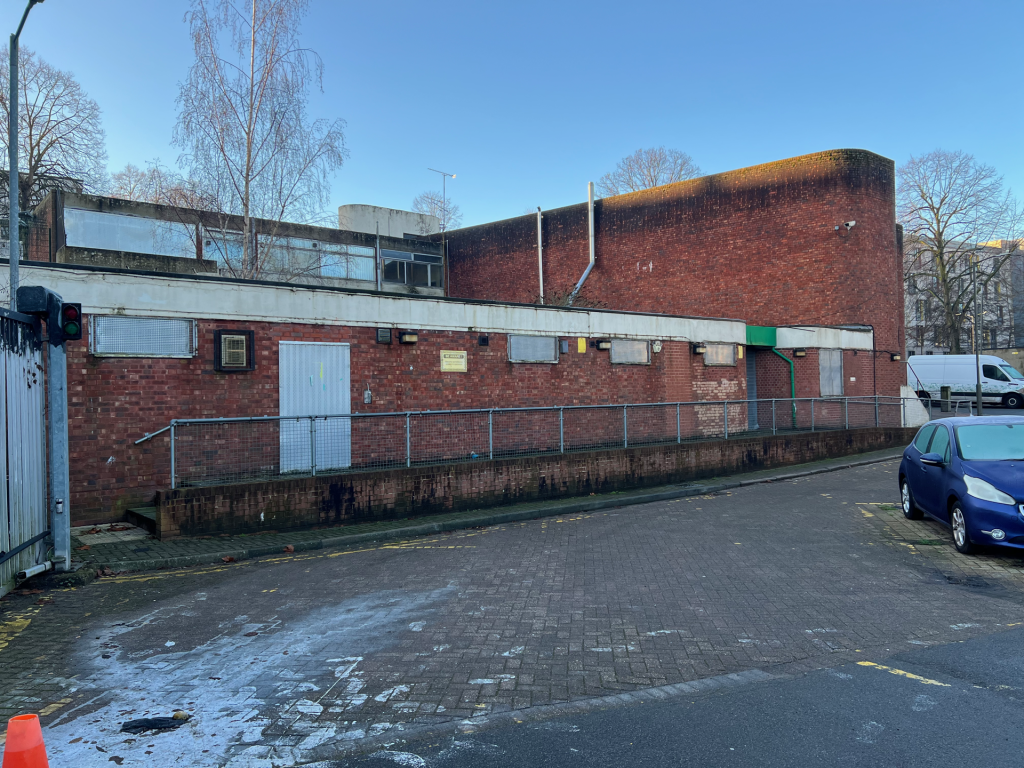
The scheme would demolish old council offices that has been empty for years and build a nine-storey, 32.8-metre block on Danebury Avenue delivering 55 social rent homes, a net increase of 45 on the site. It also includes a separate community hub on the site of the old Co-op containing a replacement library, GP surgery, youth centre and council offices. The scheme has a funding deficit of £27.8 million, covered entirely by the Housing Revenue Account, at roughly £230,000 per social rented home.
The application forms part of the wider Alton Estate regeneration. A 2022 hybrid permission approved demolishing 288 existing homes and building up to 1,108 new ones. That scheme has been paused. Officers describe Thursday’s application as a standalone piece delivering community uses and affordable housing earlier than the full scheme would have. The report refers to an Alton Renewal Plan and gives no timeline for when, or whether, the larger regeneration resumes.
A resident ballot in autumn 2025 produced 34% yes, 7% no, and 58.5% non-participation.
The objections the report rejects
The Putney Society submitted a formal objection to the plans last month. The officer’s report recommends approval regardless.
On the library: the original regeneration plan included demolishing Roehampton Library. That element was dropped but the plans for the new building have been retained. The current library building will be retained and refurbished for commercial use, though what that use will be is deferred to a reserved matters application. What has not been dropped is the new library. The community hub includes a purpose-built library, 655 square metres against the existing 531, into which the current service would relocate. A planning condition prevents the old library closing before the new one opens. The Putney Society asked the obvious question: if the old building is staying, why does the library need to move? The officer’s report concludes that public benefits outweigh the identified harms.
On the GP surgery: the existing Danebury Avenue practice is 235 square metres; the replacement will be 246. In between, it will close. No alternative premises have been identified. No timetable for closure or reopening has been published. The planning documents defer the entire question to a Health Facilities Delivery Plan to be submitted after permission is granted. That plan will include, the officer’s report says, “temporary measures” to ensure GP services continue. What those measures are, where patients will go, and for how long: none of this is answered anywhere in the application.
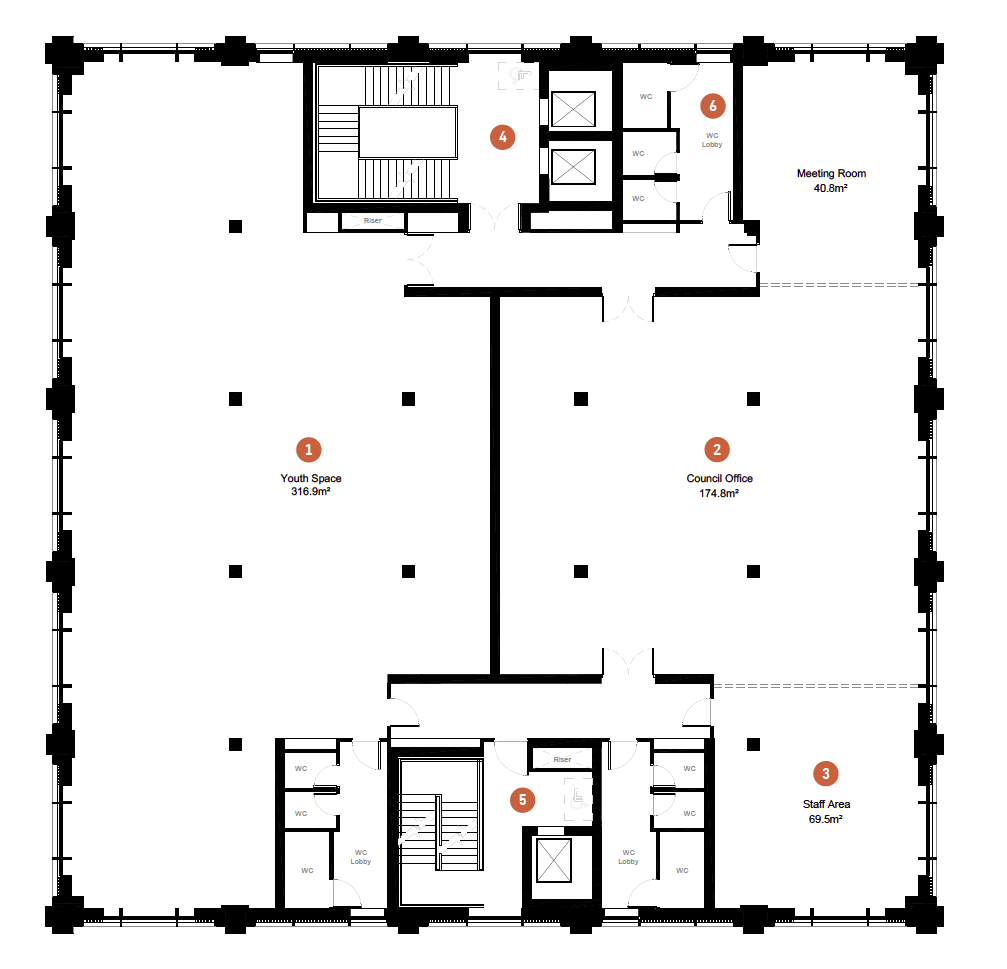
On the youth space: the officer’s report states that “the proposed youth club would be larger than the existing facilities,” going from 536 square metres to 780 square metres. The council’s own Table 4 tells a different story. The dedicated youth space in the new building is actually 317 square metres. The council reaches 780 square metres by adding 246 square metres of community hall and kitchen and 217 square metres of bookable meeting rooms, spaces available to the whole community, not dedicated youth provision. The Youth Advisory Panel, consulted during the design process, said the space “needs to be bigger.” On dedicated floor area, it is 219 square metres smaller than what it replaces.
On transport: the site has a public transport accessibility rating of “moderate,” bus-dependent, with the nearest rail stations at Barnes, Putney and East Putney each around two to two and a half kilometres away. The journey to central London takes 50 to 60 minutes by bus and rail. The Transport Statement, prepared by Arup, proposes no bus service improvements, no cycling network consultation and no pedestrian infrastructure upgrades. Each is listed in the applicant’s own travel plan table as “not required due to the negligible transport impact of the scheme.” The mechanism is trip generation arithmetic: because the scheme replaces existing uses, the net new peak-hour trips are assessed as small. Fifty-five households on a poorly-connected site get no transport improvements as part of the deal.
Whether a private developer proposing a nine-storey block, with no answer on GP continuity and a dedicated youth space smaller than the one it replaces, would receive the same recommendation is a question the report does not address.
Fencing before a decision
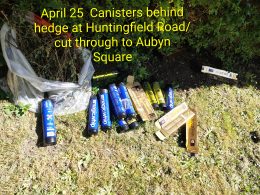
Fannon’s letter raises a further concern. He states that concrete blocks and high fencing have been erected around the development site during the live consultation period, before the committee has made any decision.
Condition 5 of the committee report requires a hoarding scheme to be submitted and approved before development commences. It does not address whether fencing was installed before any planning permission was granted.
Putney.news has asked the council to confirm this and on what basis it was done. The allegation echoes complaints raised repeatedly during the regeneration process. In November 2025, we reported that buildings on the estate had been allowed to deteriorate during years of planning uncertainty, a charge the council disputes.
The council’s response
Wandsworth Council was asked for comment on the Putney Society’s objections, the pre-decision site activity, and a claim that the Residents’ Association hadn’t been consultated. Cllr Tiller – a Roehmapton councillor and member of the Planning Committee was also asked to comment. Neither party had sent responses by the time of publication.
The Planning Applications Committee meets on Thursday 12 March. Members of the public wishing to speak should contact the council’s Democratic Services team. Planning application 2025/4614 can be viewed at planning.wandsworth.gov.uk.