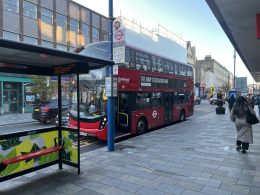
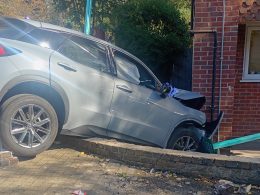
“I have stage 4 cancer and need to get to St George’s hospital regularly, which means we have to build in an extra 25 minutes journey time just to get out of our street. We only live half way down.”
So wrote one resident to all 10 members of Wandsworth’s Transport Committee before last night’s meeting, describing the impact on her life of excessive congestion in Putney. Her husband tells her he can taste the fumes before he reaches the end of their street.
Helena wrote that she walks three children to school. The Lower Richmond Road crossing at Roskell Road is regularly blocked by cars. “We try and creep across on green – and cyclists, dosing drivers put our lives at risk twice a day. Our luck will run out.”
Claire feels the effects. “I find it difficult to breathe on my regular walk to the high street along Putney Bridge Road watching hundreds of cars sitting stationary and pumping fumes into the air. I feel very unsafe with regard to any medical emergency. I would not be able to get my car out of the roads due to the constant congestion – nor would an ambulance have any chance of a blue-light entrance.”
Linda sent hers around lunchtime. “This morning at 8:59am, Putney Bridge Road was blocked from the High Street to beyond Wandsworth Park. Again. This is a consistent pattern.”
They weren’t alone.
Sixty-six Putney residents emailed the Transport Committee before last night’s 7:30pm meeting where, among other things, they received a Putney Bridge junction update. Every committee member received them in their inbox.
What councillors heard
The emails came from individual addresses. Philippa. Stavros. Miles. John. Claire. Linda. Cheryl. Melanie. Ruth. Tricia. Each signed with their own name.
But the message was unified.
“The past week has seen some of the worst traffic we’ve ever had in Putney. It has been documented and shared in local WhatsApp groups. You only have to ask if you want proof.”
Ambulances stuck. Children complaining about car fumes. Upper Richmond Road queues reaching The Lodge Hotel – four roads from West Hill Road. The threat to Wandsworth Town if that junction gridlocks.
“The paper you’re reviewing doesn’t give you the full picture.”
No pre-junction baseline for general traffic. Only June 2025 compared with November 2025 – both after the redesign. Bus data buried in Appendix 3 showing every corridor still running slower than before December 2024. No monitoring of rat-running through residential streets.
“We have had 15 months of ‘the next fix will work.'”
Then the questions – the same five:
- Why does the paper provide no pre-scheme baseline for general traffic when it includes one for buses?
- The bus data shows every corridor still slower than before the redesign. At what point does that trigger fundamental reconsideration of the junction design?
- What monitoring are you doing of congestion spreading toward Wandsworth Town? Do you have contingency plans if West Hill Road starts to fail?
- Will you commit to publishing monthly journey time data for all major routes, with clear pre-scheme baselines, until the junction is demonstrably performing better than before December 2024?
- Will you put Putney Bridge junction on your next agenda to review progress?
It closes: “This isn’t technical. It’s whether the paper gives you the full picture and whether you’ll hold officers accountable for transparency. This is not academic. Traffic in Putney is unbearable for six hours every day.”
Different names. One message.
Personal pleas
The chair of the Deodar/Merrivaile/Florian Residents’ Association noted: “I have been in touch with you many times about the impact the junction redesign has had on our lives. It is an unbearable situation for those of us who live here. Why? We are no longer safe. If we had an accident or an emergency – needed an ambulance or the fire services – there is no way we can trust they could get to us as they could before, simply because of the traffic congestion.”
“We are no longer safe”
Residents Association chair
The same warning came from Geraldine in light of the Albert Bridge closure this week: “The risk of having another major Thames crossing within the Borough of Wandsworth closed for an indefinite period is untenable and I urge you all, regardless of your political standing, to ensure that immediate action is taken to improve the traffic flow at the junction. Please don’t wait for there to be an avoidable death in an ambulance to make the right decision.”
Several residents sent ideas for better solutions. Several more complained about how their emails were routinely ignored.
What the committee said
At 7:30pm, the Transport Committee met to consider Paper 26-32 – the Walking and Cycling Strategy Update containing the Putney Bridge junction review.
The emails were noticed. Councillor Tony Belton opened his contribution: “I thought it was worth saying that just to reassure some people who might be watching, that we all… Well, I think we all have had our 70 odd emails, or 80 or emails today, and congratulate you on a good campaign.”
He called it a campaign. The emails had asked five specific questions about missing data, spreading congestion, and accountability. He didn’t answer them.
Conservative councillors did ask some of the questions residents had raised. Councillor John Locker asked about the missing pre-scheme baseline for general traffic – why do we have one for buses but not for general vehicles? Officers said the data exists from November’s committee meeting and could be included in future monitoring.
Councillor Claire de la Soujeole asked: “At what point does that trigger a fundamental reconsideration of the junction design?” when bus data shows every corridor still slower than before the redesign. Officers explained ongoing monitoring and future changes planned for the summer.
She also asked about monitoring congestion spreading toward Wandsworth Town and contingency plans if West Hill Road becomes overwhelmed. Officers acknowledged monitoring other residential streets but said they haven’t been prioritised yet.
Councillor Annamarie Critchard asked when all the planned changes would be complete. Officers said they hoped for summer for the traffic island removal outside Snappy Snaps and KFC, with October half-term as a likely fallback.
The committee was asked to keep Putney Bridge junction on future agendas.
Residents attended in person. The chair thanked them at the end: “I assume those in the gallery are here for this issue, so thank you for coming along. I know it’s a bit of a one-sided process committees, but we do appreciate you being here and taking the time to do so.”
Full coverage of what was asked, what was answered, and what wasn’t is in a separate story on the meeting.
What it means
Sixty-six residents did what democratic participation asks of them. They read reports. They identified gaps. They asked specific questions. They documented their experiences. They sent their concerns to every committee member with enough time to prepare proper answers.
The emails created a public record. Whatever happened at tonight’s meeting, no one can claim councillors didn’t know. No one can say residents didn’t engage. No one can argue the concerns weren’t documented.
Cancer treatment access. Children at risk crossing the road. Struggling to breathe. Daily gridlock. Bus stop fury.
What councillors chose to do with those emails – whether they asked the questions residents wanted asked, whether they acknowledged the volume of concern, whether they pressed officers for the missing baseline data – that’s the test of whether scrutiny means anything.
Thanks to:
Philippa, Stavros, Miles, John, Claire, Linda, Cheryl, Melanie, Ruth, Tricia, Mike, Rachel, Harry, J McAkland, Manishita, Helena, Susan, Lindsay, Nicola, Ann & Cion, Simon, Venise, Helen, Lee, Gail, Alison, Christopher, Mark, Nik, Alexandra, Rob, Zaberella, Beanie, Emma, Sue, Marcus, Jill, Jane, Spyro, Edward, Rebecca, Deborah, Anna, Tom, Laurent, Sierra, Joanna, Meredith, Geraldine, Dylan and the others we have missed.
Note: Putney.news provided an email button in yesterday’s story that pre-filled the template text for residents who wanted to contact the committee. Residents could edit the text freely before sending. Many did.