Opens your email app. Edit freely before sending.
What the email says (you can edit it)
Subject: Putney Bridge Junction – Tonight’s Committee Meeting
Dear Committee Members, I’m writing about tonight’s Putney Bridge junction update (Paper 26-32).
The past week has seen some of the worst traffic we’ve ever had in Putney…
[Full email opens in your email app when you click the button above]
“This morning was the worst I’ve seen in 30 years as a resident.”
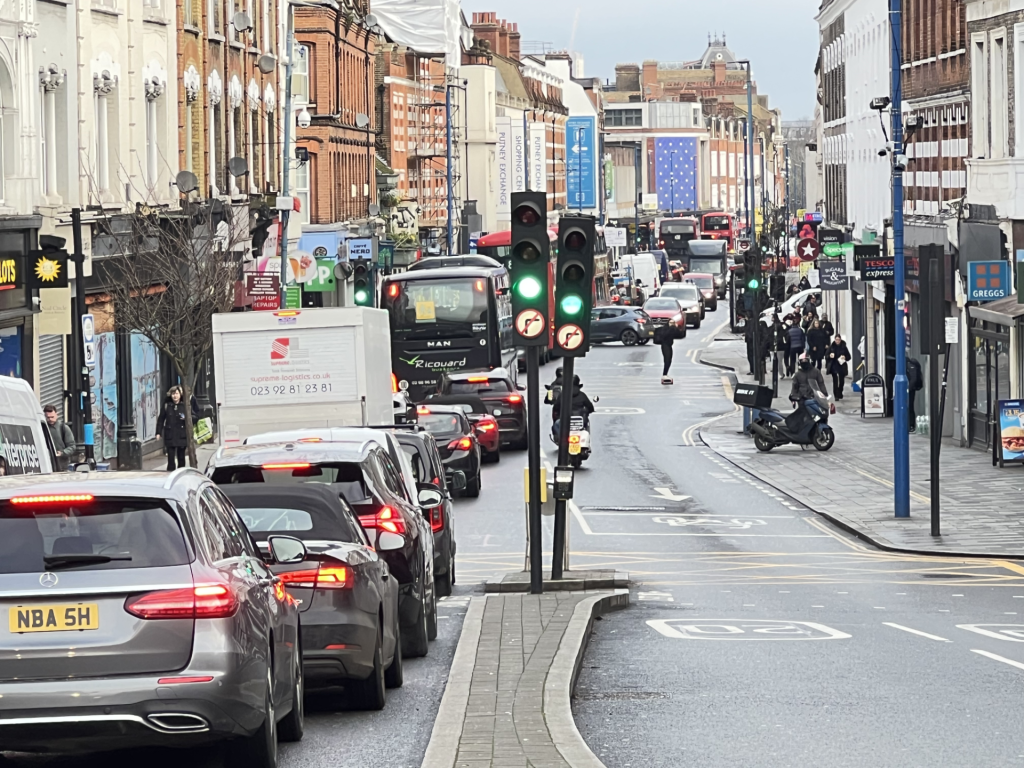
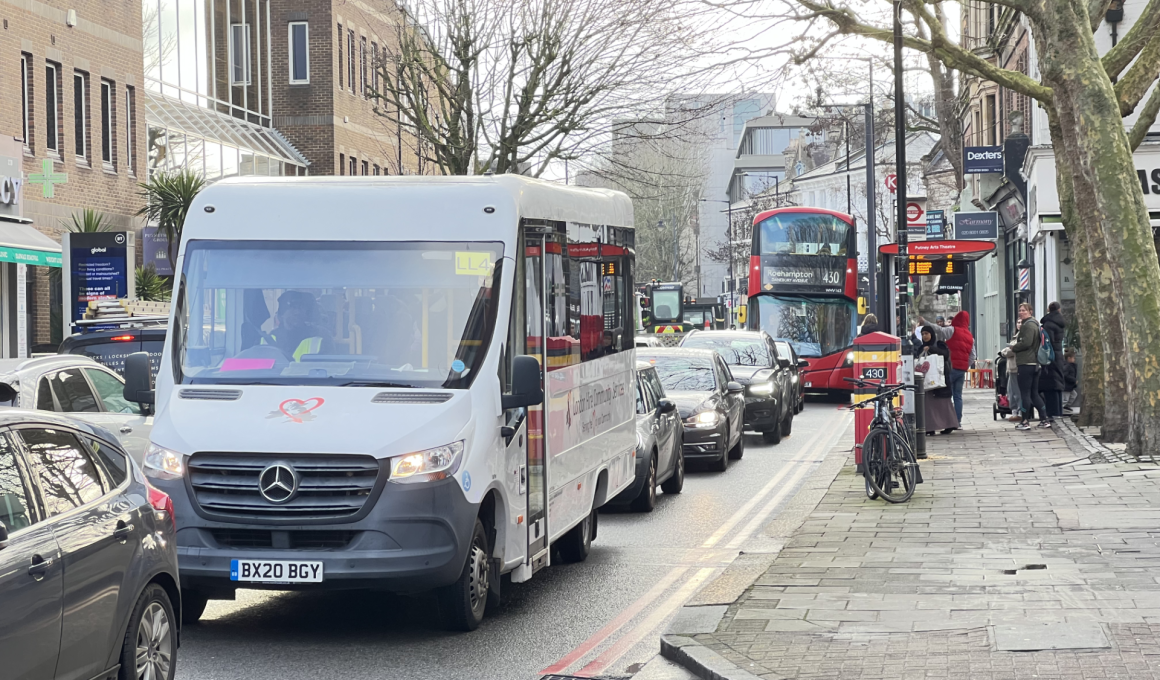
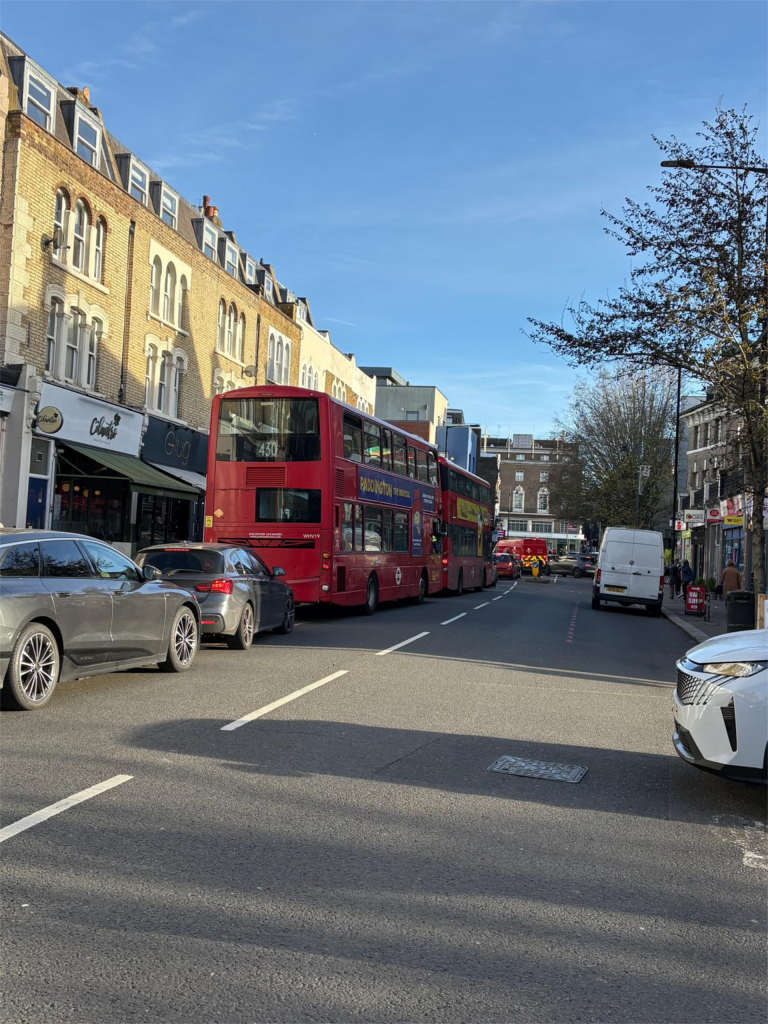
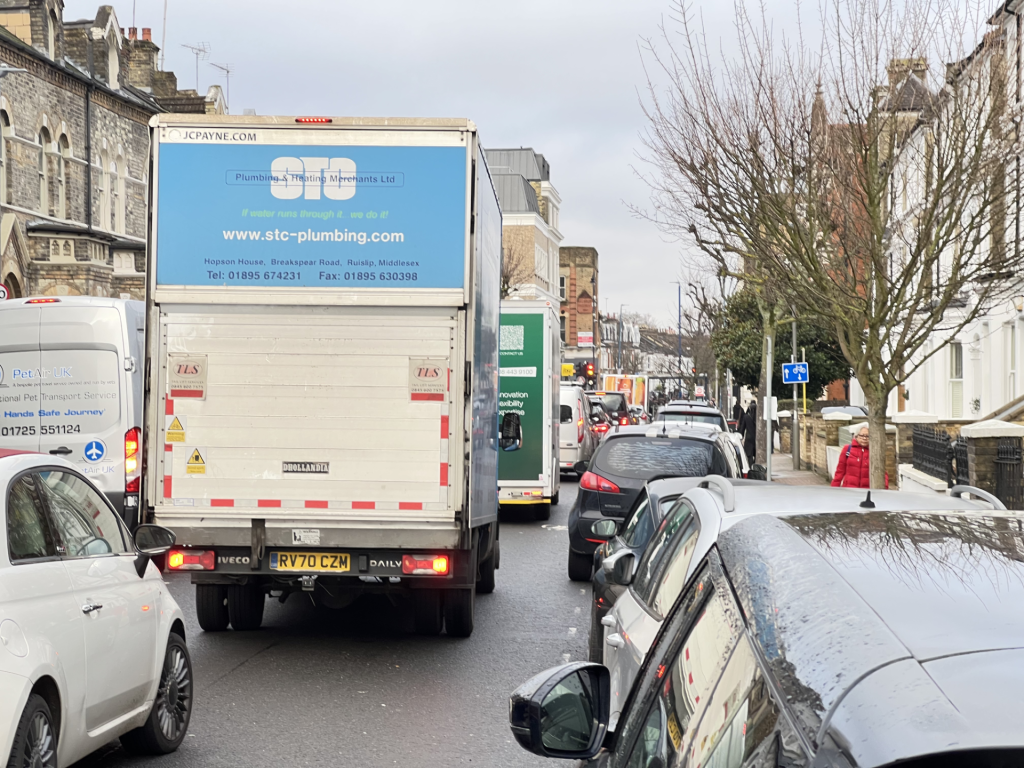
Don wrote that on Monday after watching Putney’s traffic system collapse. His morning wasn’t unusual. Across Putney on Monday, residents documented gridlock spreading far beyond the junction itself – into Charlwood Road, Oxford Road, Fawe Park Road, and residential streets never designed for through traffic.
Emma sent a photo at 8:20am: Charlwood Road backed up all the way to Upper Richmond Road. Standstill.
Fran filmed the junction at 8:36am: “Think we can safely agree that every Putney road right now is gridlocked.”
Keri’s message came at 8:40am: “Our school bus was stuck at the junction not moving for over 5 minutes apparently.”
At 8:51am, Fran sent another video:
“Ambulance still stuck.”
One resident walking through Putney on Monday morning documented what they saw:
“Significant vehicle queues on Putney High Street, Putney Bridge Road, and Lower Richmond Road. Cyclists disregarding the new red-light sequencing – four observed ignoring cycle-specific signals and joining traffic mid-flow onto the bridge, which appeared hazardous. A verbal altercation between a cyclist and a driver on Lower Richmond Road.
“My impression was that all categories of road user were experiencing delay and frustration, which appeared to be contributing to risky and antisocial behaviour.”
Their dentist, driving to Putney via the High Street, was delayed approximately 45 minutes.
Fran’s four-year-old, walking and cycling through the area, commented that he “breathed in horrible smell from all the car fumes.” The child’s observation captures what the data obscures: this isn’t just about journey times. It’s about air quality, safety, and whether the area is becoming less liveable.
On Tuesday morning, the congestion spread further. Upper Richmond Road queues reached The Lodge Hotel – just four roads from the critical West Hill Road intersection that serves Wandsworth Town.
Tonight at 7:30pm, Wandsworth’s Transport Committee meets to consider an update on Putney Bridge junction – fifteen months after the December 2024 redesign that created this crisis.
What the council is telling councillors
The committee specifically requested this update after November’s meeting where over 1,700 residents reported worse journeys. But when the papers arrived last week, the junction update wasn’t presented as a standalone report – it was buried inside a 14-page paper on the council’s Walking and Cycling Strategy.
Putney.news has spent three days extracting and verifying the actual journey time data from the council’s charts.
Monday’s analysis showed that while some routes have improved, Putney Bridge Road drivers still wait nearly seven minutes to reach the bridge in the morning rush hour.
Tuesday’s story revealed the critical gap: the council provided no pre-scheme baseline for general traffic, making it impossible to judge whether things are genuinely better than before the redesign. The bus data – which does include pre-scheme comparisons – shows every corridor through Putney is still running slower than before December 2024.
Tonight’s meeting is an “information item” – no decision is required. But whether councillors treat it as a rubber-stamping exercise or use it to ask hard questions will tell Putney residents how seriously the committee takes its scrutiny role.
The questions residents want asked
Here are the questions officers should be asked:
1. Are these improvements enough?
The paper highlights changes made to signal timings – Putney Bridge Road’s green time increased 56%, for example. But journey times barely improved. Putney Bridge Road drivers still wait nearly seven minutes in the morning rush hour. Buses are still running slower than before the redesign on every corridor. Congestion is spreading to Charlwood Road, Oxford Road, and residential streets.
Officers should be asked: Do you consider the current situation acceptable? What level of congestion would trigger a fundamental reconsideration of the junction design?
2. Are you giving councillors an accurate assessment?
The paper compares June 2025 with November 2025 and presents this as progress. But both dates are after the scheme was installed. The paper provides no comparison with pre-scheme conditions for general traffic – making it impossible to know whether drivers are better or worse off than before December 2024.
The bus data – which does include pre-scheme comparisons – tells a different story: every corridor is still running slower than before the redesign. The paper mentions this in passing but doesn’t highlight it.
Officers should be asked: Why was no pre-scheme baseline provided for general traffic? Why wasn’t the bus data deterioration highlighted as a key finding?
3. What is the paper not telling you?
The paper focuses on routes that have improved. It doesn’t quantify the spreading congestion to side roads. It doesn’t address why, even after fifteen months of adjustments, traffic through the junction is still running at double pre-scheme levels – and it was already congested before.
The congestion is spreading further each day. Monday lunchtime, Sophia reported: “PBR now slow moving traffic up to Dynamo was standstill an hour and a half ago up to Hurlingham School” – that’s approaching Wandsworth Town, over a mile from the junction.
On Tuesday morning, Upper Richmond Road queues reached The Lodge Hotel in Putney – just four roads before the critical West Hill Road intersection. If that junction gridlocks, it could bring the whole of Wandsworth Town to a halt.
Meanwhile, sat-nav apps are diverting traffic through Chelverton Road and other residential streets never designed for through traffic. Werter Road, Bemish Road, and Charlwood Road are clogged with queuing vehicles. Residents report breathing problems from car fumes.
Helen identified a fundamental problem with how the council measures traffic: “The council’s policy is based on volume of traffic on roads, not volume metrics. The stationary traffic blocks the roads so isn’t a volume issue per se.”
When traffic is stationary, it doesn’t register as high-volume even though it’s blocking entire roads.
Officers should be asked: What monitoring are you doing of congestion spreading beyond the immediate junction area? At what point does this stop being a “Putney Bridge junction issue” and become a borough-wide traffic crisis? Do you have contingency plans if the West Hill Road intersection starts to fail?
4. What happens if the remaining changes don’t work?
The paper lists several outstanding changes – lane reassignments, kerb realignments, traffic island removal. These may help. But residents have been told for fifteen months that the next adjustment will fix things, and the situation remains dire.
Officers should be asked: If the outstanding changes are implemented and congestion remains at current levels, what’s the next step? Is a fundamental redesign of the junction on the table? What would need to happen for you to reconsider the underlying approach?
5. Will you commit to regular, transparent updates?
Residents shouldn’t need to submit hundreds of public questions and wait months for committee papers to understand whether their journeys are getting better or worse. The council has AECOM data. Publishing monthly journey time comparisons – with clear pre-scheme baselines – would allow residents to judge progress for themselves.
Officers should be asked: Will you commit to publishing monthly journey time data for all major routes, with pre-scheme baselines, until the junction is demonstrably performing better than before December 2024?
The underlying message:
These aren’t technical questions about signal timings or TfL approvals. They’re scrutiny questions.
Is the paper giving you the full picture? No – it omits pre-scheme baselines and buries the bus data deterioration.
Is the situation acceptable? No – residents are experiencing the worst congestion in 30 years.
Are the planned fixes enough? Unknown – because no success criteria have been defined.
Are officers being held accountable for accuracy and transparency? That’s what tonight’s meeting will reveal.
Make your voice heard before tonight’s meeting
You can still email all 10 committee members before the 7:30pm meeting.
The experiences above are not isolated incidents. If you’ve experienced similar problems, the committee needs to hear from you directly.
Opens your email app. Edit freely before sending.
What the email says (you can edit it)
Subject: Putney Bridge Junction – Tonight’s Committee Meeting
Dear Committee Members, I’m writing about tonight’s Putney Bridge junction update (Paper 26-32).
The past week has seen some of the worst traffic we’ve ever had in Putney…
[Full email opens in your email app when you click the button above]
This button opens your email app with all 10 committee members pre-filled. The message is editable – customize it with your own experience before sending. A copy goes to news@putney.news so we can report on the volume and nature of resident concerns.
Your email matters. Committee members need to understand that Monday’s chaos isn’t an anomaly – it’s the daily reality for thousands of Putney residents. The more voices they hear before tonight’s meeting, the harder it becomes to treat this as a routine information item.

How to follow tonight’s meeting
Time: 7:30pm, Wednesday 11 February
Location: Wandsworth Town Hall
Livestream: Webcast main webpage
Papers: Available here
The junction update appears as Item 5 on the agenda, inside Paper No. 26-32 (Walking and Cycling Strategy Update). Pages 9-11 cover the junction; Appendices 2 and 3 contain the data.
Residents can attend in person or watch the livestream. Putney.news will be monitoring tonight’s meeting and will report tomorrow on what questions were asked and how officers responded.