

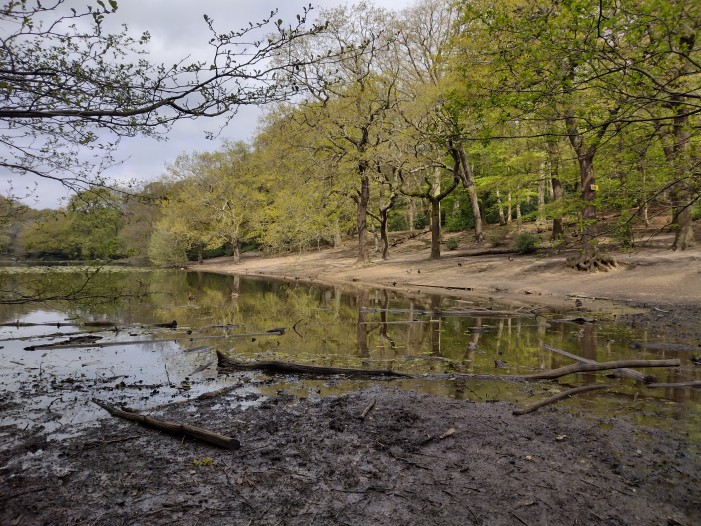
Next time you see a fallen branch on the Common, leave it exactly where it lies. That simple act of restraint may be the best thing you do for wildlife all week. But here’s the twist: if that same branch ends up in Queensmere pond, it could undo months of careful restoration work.
Understanding why requires a small lesson in one of London’s most remarkable ecosystems.
The Wimbledon and Putney Commons Conservators recently asked visitors to stop throwing wood into Queensmere pond, where rotting branches create silt that smothers aquatic life. The request illuminates a fascinating ecological paradox and reveals how this 1,140-acre green space actually works.
What makes a common a common?
Wimbledon Common isn’t owned by the council. It isn’t a royal park. And contrary to popular belief, “common land” was never truly common in the sense of belonging to everyone.
Historically, commons were private land, owned by lords of manors, where certain locals held specific rights to graze animals, cut peat, or collect wood. What makes our common unusual is its 1871 Act of Parliament, born from a remarkable Victorian campaign.
When Earl Spencer proposed enclosing 700 acres for his private park in 1864, local residents fought back. After seven years of political battle, the Wimbledon and Putney Commons Act created a charity governed by eight Conservators: five elected directly by local levy-payers, three appointed by government departments.
Today, approximately 45,000 households within three-quarters of a mile pay an annual levy (around £35) that funds roughly two-thirds of the Commons’ £2 million budget. If you live in parts of Putney, Wimbledon, Roehampton, or Merton, you’re not just a visitor. You’re a stakeholder who can vote for the people who manage this land.
It’s democracy at the hyperlocal level, unchanged for 150 years.
The science behind the wood appeal
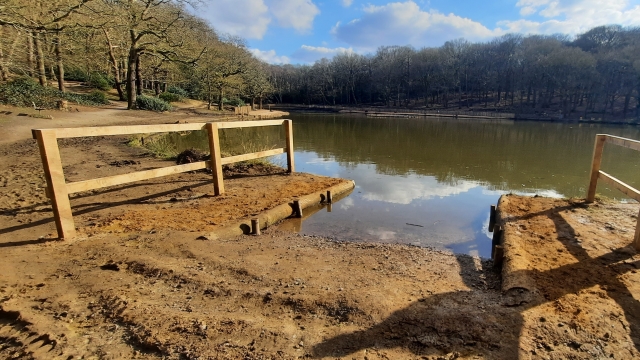
Queensmere pond, created in 1887 for Queen Victoria’s Golden Jubilee, has spent decades collecting what flows downhill: sediment, leaves, and organic matter that accumulated into thick, oxygen-depleting silt.
The current restoration project involves removing decades of silt, planting 120 square metres of reedbed to filter water naturally, and creating silt trap lagoons. Tree thinning now allows sunlight to reach the water, enabling aquatic plants to photosynthesise and produce oxygen.
When wood decomposes in still water, it releases nutrients (particularly nitrogen and phosphorus) that remain trapped rather than being flushed away. Bacteria consuming the wood also consume dissolved oxygen. The result is a vicious cycle: more decomposition, more nutrients, more algae growth, more dead organic matter, less oxygen.
Ecologists call this eutrophication, and it eventually transforms a vibrant pond into stagnant soup.
Why fallen wood on land is different and essential
Here’s where ecology gets wonderfully counterintuitive. That same fallen branch, left in woodland, becomes critical habitat for Wimbledon Common wildlife protection.
Approximately 2,000 British invertebrate species depend on dead and decaying wood, including the magnificent stag beetle, Britain’s largest beetle and the specific reason Wimbledon Common is designated a Special Area of Conservation.
Female stag beetles seek out soft, rotting wood to lay their eggs. Their larvae then spend three to seven years slowly developing inside decaying timber before emerging as adults. The Commons lie at the heart of south London’s stag beetle population, and every piece of deadwood left in place is a potential nursery.
In woodland, decomposing wood releases nutrients into soil, where they’re absorbed by living trees and cycled through the ecosystem. In a still pond, those same nutrients remain suspended in water with nowhere to go.
This is why the Conservators’ guidance seems paradoxical but is ecologically sound: leave branches where they fall on land, but never throw them into ponds.
What lives here and why it matters
This distinction matters because Wimbledon Common supports extraordinary biodiversity. The nine ponds host 20 dragonfly and damselfly species, making it one of London’s finest sites for these ancient insects. Emperor dragonflies, the largest species, patrol Queensmere, while the rare (for Southern England) Black Darter has been recorded at Bluegate Gravel Pit.
More than 148 bird species have been recorded here, including a significant breeding population of Firecrests, tiny birds with blazing orange crests that have colonised the holly understorey. Common buzzards now circle overhead in groups of six or more, and the distinctive call of the Dartford Warbler, a heathland specialist, can occasionally be heard in the gorse.
The Commons contain 50% of Greater London’s remaining heathland, a nationally rare habitat where the purple blaze of ling heather transforms the landscape each August. Six bat species use the area.
How you can actually help
The good news is that helping wildlife here is mostly about restraint rather than action.
Don’t move deadwood. You’re looking at potential stag beetle habitat. Keep dogs on leads near ponds from April to August, when waterfowl are nesting. If your dog has been treated with flea or tick medication, keep them out of the water entirely. These pesticides are lethal to aquatic invertebrates even in tiny concentrations.
Pick up after your dog. Dog waste adds nitrogen and phosphorus that enrich the nutrient-poor soils where rare heathland plants thrive. This enrichment favours common grasses that outcompete the heather and gorse, gradually turning special heathland into ordinary grassland. During bird nesting season on The Plain, stick to the mown paths rather than wandering through the longer grass where ground-nesting skylarks may be raising their young.
For those wanting to do more, the Saturday Scrub Bashers volunteer group meets weekly at the Windmill to clear invasive scrub from the heathland, essential work preventing woodland from swallowing this rare habitat. The Friends of Wimbledon and Putney Commons offers membership from £18 annually, including guided wildlife walks.
The Queensmere restoration represents something larger: a recognition that urban nature reserves need active management rather than benign neglect. The new reedbeds will filter water for decades. The reduced tree canopy means sunlight can now reach the water.
Native plants will establish along newly created natural banks that replaced the old concrete. Dragonfly larvae will have somewhere to emerge. And the silt traps will catch sediment before it reaches the main pond, buying perhaps another century before major intervention is needed again.
The 45,000 households who fund this work through their annual levy are investing in something genuinely special: a Victorian system of local democracy protecting a medieval common for future generations.
All it asks in return is that we leave the branches where they fall.


Great info. Just wanted to point out the annual level is FAR more than that now!