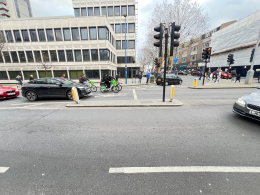
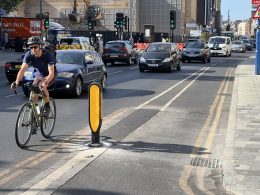
For years now, something hasn’t quite added up on Putney’s bus routes. Buses arrive late. They don’t show up. Or—most frustratingly—they stop early. Again and again, passengers on routes like the 85 or 170 find themselves abruptly dumped at Putney Heath, left to trudge the rest of the way on foot, often with no warning and no explanation.
Residents have complained loudly and consistently. They’ve signed petitions, written letters, and flagged the issue to councillors. And now—after years of noise—the system behind the chaos is finally becoming clear.
At a meeting of the Wandsworth Passenger Transport Liaison Group last night, it was revealed that the 85 bus—long seen as the poster child for curtailments—has somehow emerged as the best-performing bus in Putney, according to official TfL data. In fact, it is now scoring below 1.0 in the critical Excess Waiting Time (EWT) metric.
That’s right. The same 85 that regularly terminates early, leaving passengers stranded at the Heath, is considered a statistical success.
The System Behind the Score
So how does this happen?
The answer lies in a deeply flawed system of incentives—and a clever trick involving timing points, performance targets, and what’s called a Quality of Service Indicator, or QSI.
TfL doesn’t track performance at every stop. Instead, they monitor select points along each route—known as QSI points—where they record how long passengers are waiting compared to how often buses are scheduled to arrive. The key figure is Excess Waiting Time, or EWT. The lower the EWT, the better. If it’s under one minute, the operator can qualify for bonuses. If it rises above, they may face penalties.
A First Bus representative at the meeting explained:
“Every single bus goes through designated timing points. And the buses must pass that point ten minutes apart. That gives you your data.”
But here’s where it gets twisted. If a bus never reaches the QSI point—because it terminates early, for instance at Putney Heath—it doesn’t count against the data. It’s as if that bus never existed. And so, as long as enough buses make it through the right QSI point, the numbers look rosy.
Curtailments, in other words, aren’t just tolerated. They’re rewarded.
The more often buses are pulled off the road early—before reaching congested areas like Putney High Street—the easier it is to hit the targets. Passengers may be left walking or waiting in the cold, but TfL gets to tick the “reliable service” box. Operators avoid penalties. Everyone wins—except the people actually trying to get home.
It’s been happening for years. But only now do some councillors seem to be catching on.
“Hang on—so… if the bus terminates early…?”
During the meeting, councillors repeatedly returned to the same line of questioning. One asked, “are you saying that if curtailments happen, then this would improve the excess wait time data?” Yes.
Another followed up: “So then it would feed through into increased Excess Wait Time?” No. That was the point. It doesn’t feed through.
But the real revelation came when the cabinet member for transport, Jenny Yates—two years into the job—finally began to twig. She asked why buses in Putney with high levels of curtailment were recording low Excess Wait Times. “Presumably,” she said, “that doesn’t reflect what’s really going on.”
Bingo.
It was a glimmer of recognition that what passengers have known for years—that Putney’s bus service is broken—wasn’t being picked up in the glossy TfL charts.
Putney’s Perfect Storm
It’s no coincidence this is happening in Putney. Thanks to poor council planning, endless congestion on Putney High Street, and the continued closure of Hammersmith Bridge to vehicles, buses have no chance of running on time. The traffic is relentless.
Rather than fix the problem—by reopening the bridge, rerouting traffic, or supporting bus priority measures—the system has opted for something easier: end the buses early and protect the stats.
That’s why the 85, which rarely finishes its route, now has an EWT of 0.96. That’s why TfL can claim it’s a top-performing service. Because the system rewards what looks good on paper, not what works for passengers.
Bonuses for Abandoning You
And if you really want to know how it has got so bad, you need only consider this: the private bus operators that run London’s buses – the 85 for example is run by First Bus, which is listed on the London Stock Exchange – get financial bonuses if they can bring EWT under the one-minute target.
“If we operate below one,” the First Bus rep explained, “we get a bonus. If we operate above one, we get a fine.” So if your bus ends early and leaves you a 20-minute walk from your destination, rest assured: somewhere, someone is cashing in.
And that’s the absurdity. The worse the experience for the passenger, the better it looks on the spreadsheet. The more curtailments, the cleaner the data. The more frustrated you are, the happier the dashboard appears.
So the next time your bus flashes “Sorry, Not in Service” and pulls off at the Heath, remember: it’s not a failure. It’s a strategy.
Welcome to the bizarre world of Putney buses—where getting left behind is part of hitting the target.