

Nearly 400 years ago this month, the future of the country was argued out in Putney. Later this month a group of readers will stand in St Mary’s Church, where it began, and speak those arguments aloud again.
You know them as the Putney Debates. They are the most famous thing ever to happen here.
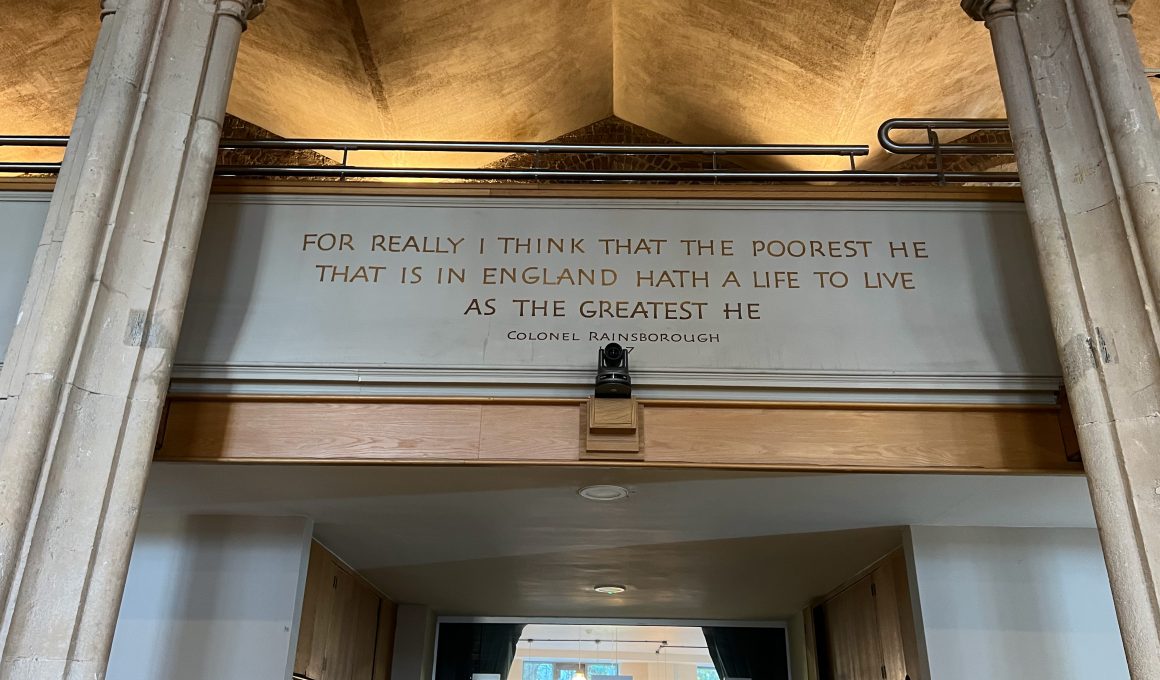
Walk into the church from the café and look back and up. Lettered in gold above the door is a line from Thomas Rainsborough, a colonel who argued that the poorest man in England had as much right to a say in his government as the greatest. At the time that was a radical thing to say. He was killed a year to the day later.
The remarkable thing is that for nearly 250 years the wider world did not know he had said it.
The record sat in a cupboard in Oxford until 1891. Only then did what we now call the Putney Debates come to light.
Why Putney? Because it sat between the King, held at Hampton Court, and the Parliament at Westminster that had beaten him. The Army camped in the middle for 12 weeks. It came wanting to be paid. It ended up arguing about how the country should be run, with ordinary soldiers in the room who, for that moment, had more say over England’s future than men like them had ever had.
In many respects we are there again: a way of running the country that no longer seems to work, the people in charge at odds over what should replace it, and ordinary people who suspect that nobody is listening. Nobody expects an army to set up in Putney, or for each of us to be told to put up a soldier. But in uncertain times it is useful to know this has happened before, and to look again at what happened, including the parts that have had less attention.
An army that had not been paid
The war between King Charles I and Parliament had lasted four years, and by 1646 the King had lost it. The men who beat him were Parliament’s own soldiers: a professional army under Sir Thomas Fairfax, with Oliver Cromwell as his deputy.
Then Parliament decided it wanted rid of them. Most MPs thought the Army cost too much and was full of religious radicals. They moved to send the soldiers home, or ship them to Ireland to fight again, without the wages they were owed. Nor would they promise that a soldier could not be taken to court for what he had done in the war.
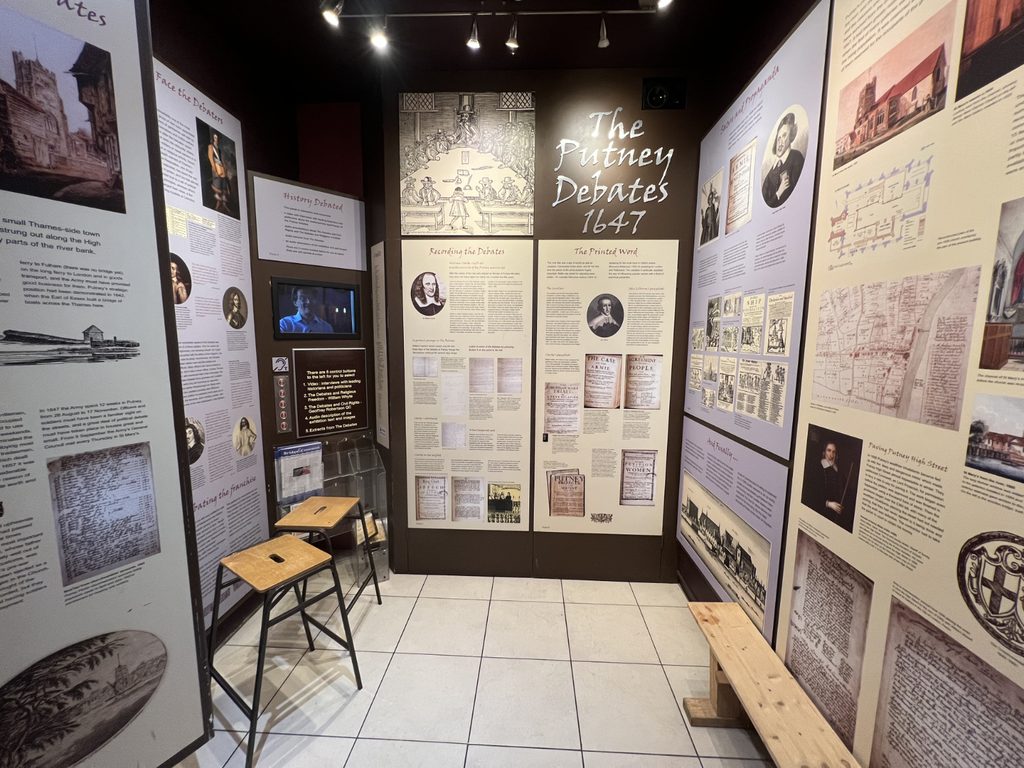
James Pitson was one of the men Parliament owed. His petition to the House of Commons is reproduced on the wall of the exhibition at St Mary’s.
He had served Parliament, he wrote, since the war began. He had been robbed of most of what he owned. He had been captured, laid in irons and held for 11 weeks, “hardly escaping with his life”. He had borrowed money to do the Army’s work and still owed it. And he had not been paid.
By the time he went into print he had been asking for two years, and had “spent as much in waiting as the money is worth”. For 12 months his family had lived on what he could borrow. Now he was about to leave for Ireland, he told MPs, “and have nothing to leave my family in my absence”.
He apologised for his boldness in printing it.
Parliament’s answer to petitions like his was to issue angry orders against the soldiers for sending them. So the soldiers stopped waiting. In regiment after regiment the ordinary men chose their own spokesmen, and when officers agreed to take them to Ireland, they refused to follow.
Fairfax and Cromwell could lose the Army or join it, and they joined it. To hold it together they set up a council in which the soldiers’ elected spokesmen sat alongside the generals. Ordinary soldiers now had a voice at the same table as Oliver Cromwell.
That council is the body that met in Putney.
In June 1647, a junior cavalry officer called George Joyce arrived, with 500 mounted soldiers, at the country house where Parliament was holding the King. He had come to take him away.
On the morning of 4 June the King stood at the top of the steps and asked Joyce, at the foot of them, who had authorised him. He knew no lawful authority in England, the King said, but his own and Parliament’s. Did Joyce have anything in writing? Joyce answered that the soldiers present were his commission.
The King said he had not seen such a commission before. If the soldiers were it, he said, it was “an authority very well written, all handsome young men”. He said he would not go willingly, set his terms, and went with them.
It was a revolution in the truest sense. No law allowed it. The men who had won the war had decided that they had had enough, that the old rules no longer bound them, and that they were taking charge.
That summer the Army marched into London, faced Parliament down, and pulled back a few miles upriver to wait. The old arrangement of King, Lords and Commons had broken, and nobody had agreed what came next. The place the Army chose to wait was Putney.
A town of 900 with an army in the spare room
Putney in 1647 was a riverside town of about 900 people, strung along the High Street. There was no bridge. Four in ten working householders were watermen.
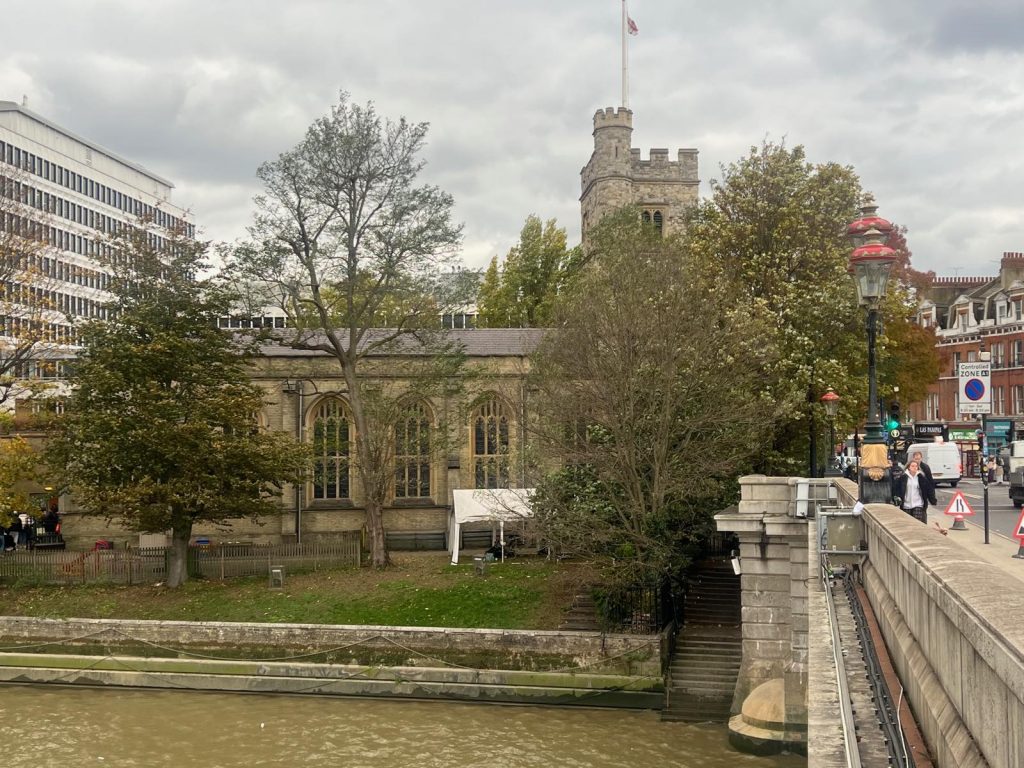
Into this came the headquarters of the most powerful force in the country, and it stayed until the middle of November. The soldiers were not the only ordinary people caught in the middle. Nobody asked the people of Putney, who had soldiers lodged in their houses and were not paid for it.
We know who slept where because a newspaper printed the list. Fairfax took the largest house in Putney, which almost certainly stood where the station is now. Henry Ireton, a trained lawyer and Cromwell’s son-in-law, lodged near the corner of the High Street and Putney Bridge Road. Cromwell was at a “Mr Bonhunt’s”, and nobody has been able to find where that was.
Putney in the autumn of 1647, placed on a modern map. Tap a place in the list to find it.
Certain The exhibition’s best placing
- Oliver Cromwell lodged at a “Mr Bonhunt’s”. Nobody has been able to find it since at least 1792.
- Henry White, a baker, put up the officer in charge of feeding the Army, somewhere on the east side of the High Street.
- Thomas Rainsborough stayed at his brother’s house in Fulham, across the river.
- The soldiers’ spokesmen lodged in Hammersmith.
- The King was held at Hampton Court.
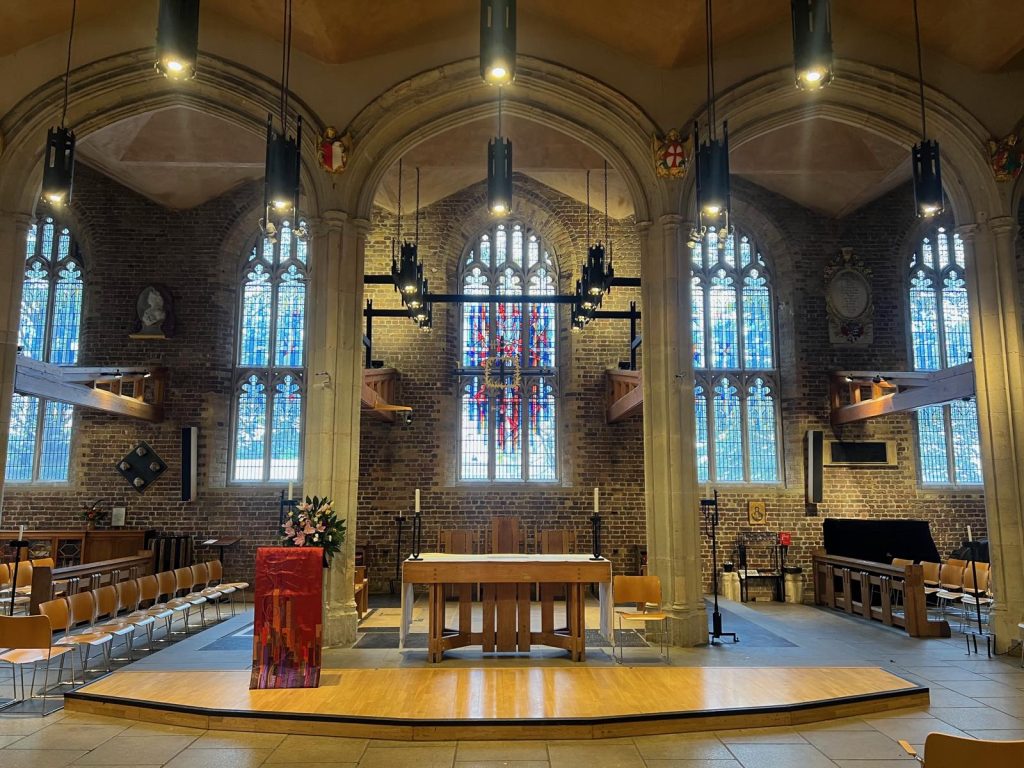
Every Thursday the council met in St Mary’s, around the communion table. Perhaps a hundred or more men, generals and elected soldiers together, crowded into the church by the river.
By October the Army had been in Putney for weeks, and there was still no pay and no settlement. Cromwell and Ireton had been negotiating with the King. The men who had beaten him were watching their own generals bargain with him, and they no longer trusted him or them.
Then a spokesman for five cavalry regiments handed in a paper. It was called An Agreement of the People.
It was short, it was radical, and it had not come from the generals. It wanted a written constitution. It wanted rights that no Parliament could touch, among them freedom of religion and equality before the law. It wanted seats in Parliament shared out by population. And it left the King and the House of Lords out altogether.
The row
The generals had already invited the soldiers’ new spokesmen to explain an earlier pamphlet. They came the next day, to St Mary’s, and brought the Agreement with them. Fairfax was ill, so Cromwell took the chair. Sons of gentlemen, the exhibition notes, sat beside shoemakers and button-sellers.
Edward Sexby, an ordinary soldier, opened. He told Oliver Cromwell to his face what the soldiers made of the generals’ dealings with the King. “We have laboured to please a king,” he said, “and I think, except we go about to cut all our throats, we shall not please him.”
Soldiers did not talk to generals like that. In this council, for these few weeks, they could, and a clerk took it down.
Cromwell replied that the paper would alter the government of England more than anything had since it became a nation. And if one group could put out such a paper, he asked, why not another, and another? Would that not make England like Switzerland, “one canton of the Swiss against another”? Someone proposed prayers. A committee was formed.
The next afternoon produced the line that is now lettered in gold over the café door in St Mary’s. It was probably not spoken in the church. By most accounts the meeting had moved that day to an officer’s lodgings nearby.
The line came from Rainsborough, who was no ordinary soldier but a colonel and an MP. “For really I think that the poorest he that is in England hath a life to live, as the greatest he,” he said, “and therefore truly, sir, I think it’s clear, that every man that is to live under a government ought first by his own consent to put himself under that government.”
In England the vote went with property. A colonel had just told the men who commanded the Army that a government needed the poorest man’s consent.
Ireton answered for property. Nobody, he said, had a right to a share in running the kingdom “that hath not a permanent fixed interest in this kingdom”.
Sexby said what the soldiers felt. They had risked their lives for their rights as Englishmen, and now it seemed a man without an estate had none. “I wonder we were so much deceived,” he said. “If we had not a right to the Kingdom, we were mere mercenary soldiers.”
Only five ordinary soldiers spoke. One was Robert Everard, whom the clerk wrote down as “Buff-Coat”. “Though I have many impediments in my speech, yet I thank you that you will hear me speak,” he said. He called himself “but a poor man”. Then he said his piece to the generals anyway.
Rainsborough spoke about the poor man. Everard was one, speaking for himself.
It was not democracy as we would know it. Even the radicals would have kept the vote from servants and anyone living on charity, and nobody raised votes for women at all. But that autumn in Putney, the question of who gets a say in running England was argued out between generals and the men they commanded.
How it ended
The vote was not what broke the council. The exhibition at St Mary’s records that the council agreed almost unanimously that it should go to “all souldiers and others, if they be not servants or beggars”. What they could not agree on was the King.
Within a fortnight, with the Army dividing, Cromwell ended it. He moved that the soldiers’ spokesmen go back to their regiments, and they went. They never sat in the council again.
They had been given a hearing and not an answer.
A week later, on 15 November, 379 years ago today, part of the Army was mustered in a field near Ware in Hertfordshire. Two regiments turned up uninvited with the Agreement stuck in their hats, worn like a badge. Rainsborough tried to hand Fairfax a copy and was ignored. Cromwell rode in among the soldiers with his sword drawn and ordered the papers pulled out.
Three ringleaders were condemned on the spot and made to draw lots for which of them would die. Private Richard Arnold lost and was shot. The generals had sat down to debate that paper 18 days earlier, and the argument ended with a soldier dead in a field.
Within days the Army had left Putney. What could not be settled by argument was settled by force. The King, who had escaped from Hampton Court, started a second war and lost it. The Army put him on trial and beheaded him in January 1649.
The men who had spoken for the soldiers did not win either. Rainsborough was killed by royalists a year to the day after he spoke. Sexby, the soldier who had faced Cromwell in St Mary’s, turned on him, plotted to kill him and died in the Tower. The new republic put the radicals’ leaders in prison. None of the reforms argued for at Putney became law.
Most of what they asked for came true anyway, long after all of them were dead, and became the foundation of how Britain is run. Every man got the vote in 1918 and women got it on the same terms in 1928. Britain still has no written constitution, but freedom of religion, equality before the law and a House of Commons that outranks both the Lords and the Crown are now so ordinary that nobody thinks of them as demands.
They were demands once, and they were made in Putney.
How an argument over soldiers’ pay became an argument over who runs England, and what happened to the men and to their words.
- 1642War begins between King Charles I and Parliament.
- 1646Parliament wins the war.
- 1647Parliament tries to send its army home unpaid.
- June 1647A junior officer, George Joyce, takes the King out of Parliament’s hands with 500 soldiers.
- Summer 1647The Army marches into London and faces Parliament down.
- 26 AugustThe Army makes Putney its headquarters.
- 9 SeptemberIts council of generals and elected soldiers starts meeting every Thursday in St Mary’s.
- 27 OctoberA spokesman for the soldiers hands in An Agreement of the People.
- 28 OctoberThe debate opens in St Mary’s. Edward Sexby tells Cromwell to his face what the soldiers think.
- 29 OctoberThomas Rainsborough: “the poorest he that is in England hath a life to live, as the greatest he”.
- 8 NovemberCromwell sends the soldiers’ spokesmen back to their regiments.
- 11 NovemberThe King escapes from Hampton Court.
- 15 NovemberAt Ware, soldiers wear the Agreement in their hats. Private Richard Arnold is shot.
- 17 NovemberThe Army leaves Putney.
- 29 October 1648Rainsborough is killed by royalists, a year to the day after he spoke.
- January 1649The King is tried and beheaded.
- 1649The new republic jails the radicals’ leaders. None of the reforms argued for at Putney becomes law.
- 1658Sexby, who turned on Cromwell and plotted to kill him, dies in the Tower.
- 1891A historian publishes the record from a cupboard in Oxford. About four men in ten still cannot vote.
- 1918Every man gets the vote. Women get it on the same terms in 1928.
- 2007The exhibition opens inside St Mary’s.
- 29 November 2026The words are read aloud again in St Mary’s.
The cupboard
For most of the time since, nobody knew what had been said. We can quote any of it only because of William Clarke, an Army secretary aged about 24, who took the debates down in shorthand. They were never published in his lifetime.
His son was a royalist who may have thought his father’s link to the men who killed a king was best forgotten. He kept the papers anyway and left them to an Oxford college. There they sat until a young historian was pointed towards a cupboard of Civil War manuscripts, and published them in 1891. About four men in ten in Britain still could not vote, and had another 27 years to wait.
For 244 years, then, nobody in Putney could have told you what Rainsborough said.
St Mary’s is mostly not the building the soldiers knew. It was rebuilt in the 1830s and gutted by fire in 1973, though the tower they knew still stands. Inside are two memorials: a slate plaque from the Cromwell Association, which names Cromwell and no other man, and the gold lettering over the café door, which names Rainsborough. In a small room inside the church is an exhibition where you can press a button and listen to the arguments for 20 minutes.
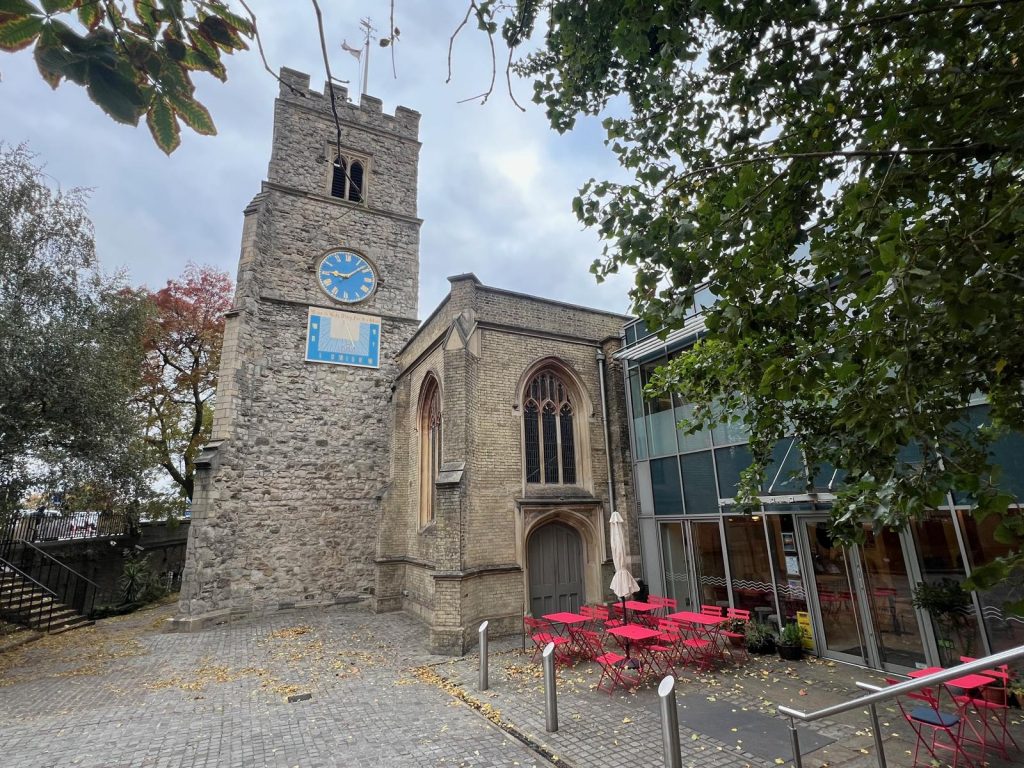
Some of them need no translation. The soldiers thought the way England was governed had failed and that the men in charge could not be trusted. The feeling Sexby put into words is not hard to find now.
A survey carried out in May by the National Centre for Social Research found that 9 per cent of people trust governments to put the country’s interests before their party’s all or most of the time, the lowest figure since it began asking in 1986. More than eight in ten think the way Britain is governed needs a lot of improvement, the highest since 1973.
Nobody has camped an army on the High Street this time. But the mood in those figures is the mood that filled St Mary’s in 1647.
Cromwell’s answer was to send it back to its regiments. The soldiers’ answer, that people should have a say in the rules they live under, is the one that lasted.
What you can do
Go and look. The exhibition is inside St Mary’s Church, beside Putney Bridge.
Hear it. A reading from the transcript, with art and a discussion of what the debates mean in 2026, takes place at St Mary’s on Sunday 29 November at 3pm. It is free, runs for about two hours and is recommended for over-18s. The listing on Welcome to Wandsworth has a booking link.
Walk it. Use the map above to stand where Fairfax slept, where Ireton slept and where the soldiers’ spokesmen met. Then try to work out where Cromwell did. Putney’s plaques make a longer walk, though one of them has spent 13 years claiming a birthplace it cannot prove.
And the next time you go to St Mary’s for a coffee, take time to go inside the church and look up at the gold lettering. The man who said it was dead a year later, and his words were lost for 244 years. The soldiers he spoke for were heard and sent away. Most of what they asked for is now how the country is run. It was asked for here, and this month someone will stand in that church and say it out loud again.



Very interesting and very well researched.
The Putney Debates were revived in 2007 when Giles Fraser was the vicar. A public debate was arranged with a panel including Tony Benn and Geoffrey Robertson. A video of the 2007 debate was on sale in the church for many years.
Local historian Dorian Gerhold should be credited with the work that went into the display and the research behind it.
Since 2007 there have been a number of “Putney Debates” in St Mary’s. I chaired one of them in 2010 or 2011 with Justine Greening MP, Tony Belford and a representative of the charity sector. The topic? David Cameron’s “Big Society”, an idea that came and went all too quickly.
In more recent years the Centre for Dialogue and Global Affairs, an Oxford-based group of academics have staged a series of annual Putney Debates. Many have centred on the contentious issue of constitutional reform, prompted by the 2016 Brexit referendum.