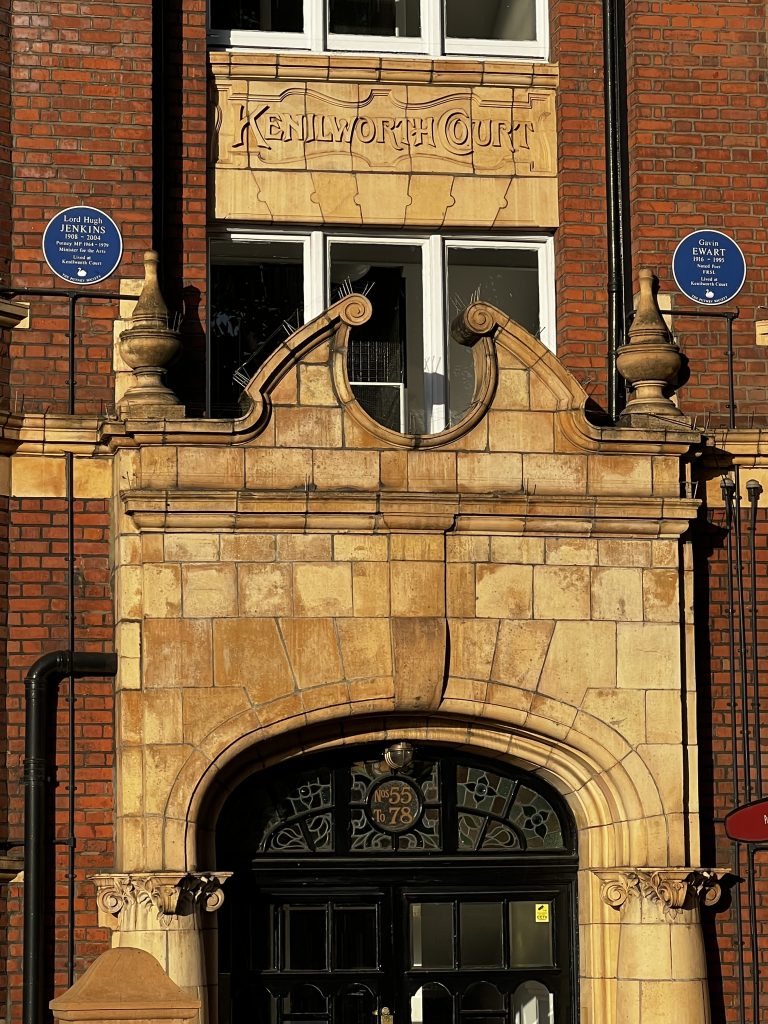
Walk along the Thames embankment in Putney and you’ll discover something remarkable: three plaques from two different schemes mounted on the same building: an English Heritage plaque for Fred Russell alongside two Putney Society plaques for former MP Hugh Jenkins and a third for poet Gavin Ewart – a living testament to the area’s extraordinary historical richness.
With Wandsworth Council now seeking nominations for its Green Plaque scheme, we may soon see a green plaque added. It would be the perfect symbol of Putney – a neighborhood so steeped in history that one recognition scheme can’t capture it all.
The Green Plaque scheme, launched in 2007, specifically celebrates people, places and events of local significance that fall outside the scope of the prestigious English Heritage Blue Plaque scheme.
Green plaques
Currently, there are 17 green plaques around the borough, celebrating subjects as diverse as the first-ever football match and the recording studio used by The Who.
This year, to mark Wandsworth’s time as London Borough of Culture, 12 new Green Plaques funded by the Heritage Lottery Fund will be installed. These include plaques to reggae legend Bob Marley, who played football and trained at Battersea Park, and the Fazl Mosque, which was the first purpose-built mosque in London.
To qualify for a green plaque, nominations must meet specific requirements:
- The person or site marked must relate strongly to the borough of Wandsworth
- For individuals, their work and/or life must have had a positive influence on Wandsworth and/or the UK
- At least five years must have passed since an individual’s death at the time of application
- There must be an existing building or structure to affix the plaque, visible from a public highway
- Building owners must give permission for installation
The council particularly encourages nominations for prominent people from previously under-represented groups, including people of colour, those with disabilities, and LGBTQ+ communities.
Putney’s green plaque heritage
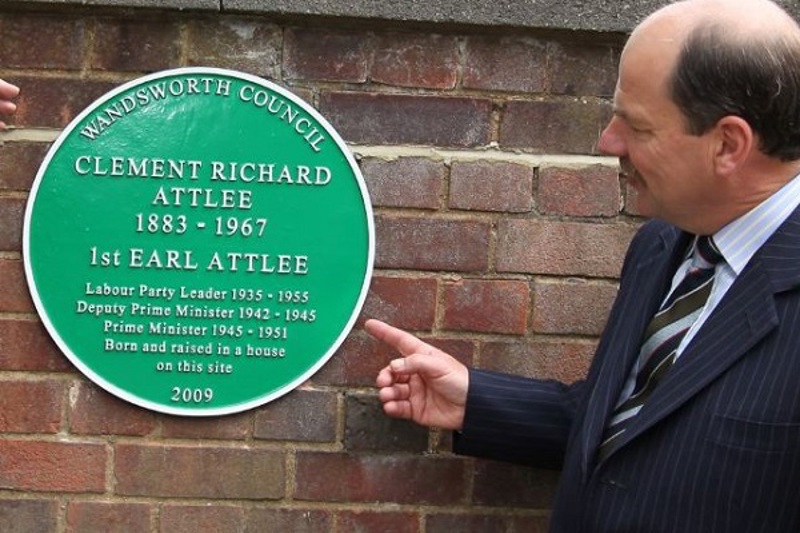
While there are 17 green plaques across the entire borough, Putney has one notable one commemorating Clement Attlee (1883-1967), the former Prime Minister whose government created the NHS.
Born at Westcott, 18 Portinscale Road, Putney, Attlee led the Labour Party from 1935 to 1955 and served as Prime Minister from 1945 to 1951. The house where he was born no longer stands, but the site is marked by the green plaque, which was unveiled by his grandson, The Earl Attlee. English Heritage has a different plaque for Attlee in North East London.
English Heritage Blue Plaques: The National Standard
Running parallel to the local schemes, English Heritage operates London’s famous Blue Plaque programme – the world’s oldest commemorative plaque scheme, dating back to 1866. The London Borough of Wandsworth hosts 30 of these prestigious markers, with at least four in Putney.
English Heritage blue plaques have more stringent requirements:
- Recipients must have died at least 20 years ago
- They must be of national or international historical importance
- There must be a surviving building closely associated with the person
- Only one plaque per person is typically awarded
Putney’s English Heritage blue plaques
Fred Russell (1862-1957) – 71 Kenilworth Court, Lower Richmond Road
Known as “The Father of Modern Ventriloquism,” Russell revolutionised the art form by introducing the knee-sitting figure. He lived in the flat from 1914 to 1926 and was awarded the OBE in 1948. His plaque was erected in 2009.
Abdus Salam (1926-1996) – 8 Campion Road
The theoretical physicist and Nobel Laureate lived in Putney for almost 40 years from 1957 to 1996. He was the first Pakistani to win a Nobel Prize and the first Muslim to win one in the sciences. His plaque was erected in 2020.
Algernon Swinburne & Theodore Watts-Dunton – The Pines, 11 Putney Hill
This unique shared plaque commemorates the Victorian poet Swinburne (1837-1909) and his friend Watts-Dunton (1832-1914), who lived together for nearly 30 years. Swinburne was nominated for the Nobel Prize in Literature multiple times between 1903-1909.
Edvard Beneš – The second President of Czechoslovakia, who lived in exile in Putney during World War II, is also commemorated with a blue plaque in the area.
The Putney Society’s local recognition
Adding another layer to Putney’s commemorative landscape, the Putney Society operates its own blue plaque scheme, focusing on figures of particular local significance. All 11 of these plaques are located within Putney, with the latest commemorating artist Sir Sidney Nolan installed in March 2022.
Notable Putney Society plaques include:
Thomas Cromwell – 3 Brewhouse Lane
Henry VIII’s chief minister, born in Putney around 1485, was commemorated with a Putney Society plaque unveiled by author Hilary Mantel in 2013. This placement has generated some historical debate, as evidence suggests his father’s smithy was likely located nearly a mile away near Putney Heath.
Edward Gibbon – The historian and author of “The Decline and Fall of the Roman Empire,” born in Putney in 1737, is honoured with a Putney Society plaque. Interestingly, when London telephone exchanges had names, Putney’s was “GIBbon” in his honour.
Why three different schemes?
While English Heritage blue plaques commemorate people of national historical importance, Wandsworth developed the Green Plaque concept to mark places of general interest including buildings and sites of local historical importance as well as individuals. The Putney Society scheme fills another gap, recognising figures of particular local significance who may not meet either national or borough-wide criteria.
The key distinction is scope and criteria: English Heritage requires a 20-year waiting period after death and national importance, Green Plaques need only 5 years and local significance, while Putney Society plaques focus on community-level recognition.
What makes Putney particularly special is this triple-layered approach to heritage recognition. The area can simultaneously celebrate figures like Clement Attlee through a green plaque (local significance), Abdus Salam through a blue plaque (national/international importance), and Thomas Cromwell through a Putney Society plaque (local historical connection).
This comprehensive system ensures that Putney’s remarkably rich history – from the Putney Debates of 1647 that helped establish democratic principles, to the birthplace of Prime Ministers and Nobel laureates – receives appropriate recognition at multiple levels.
How to nominate
Residents wishing to nominate someone for a Wandsworth Green Plaque should contact Heritage Wandsworth via Heritage@gll.org to ensure the proposal hasn’t been made in the last ten years, then complete the Green Plaque application form available on the council website.
The selection process involves Heritage Wandsworth considering nominations each December for installation the following year, with decisions made by council officers on advice from the Selection Panel and Heritage Wandsworth – a strategic partnership of local organisations interested in the borough’s history and built environment.
As Putney continues to honour its past while building its future, these three plaque schemes work together to ensure that no significant contribution to the area’s history goes unrecognised – whether of national, local, or community importance.
The deadline for Green Plaque nominations is Friday, October 31, 2025, at midnight.