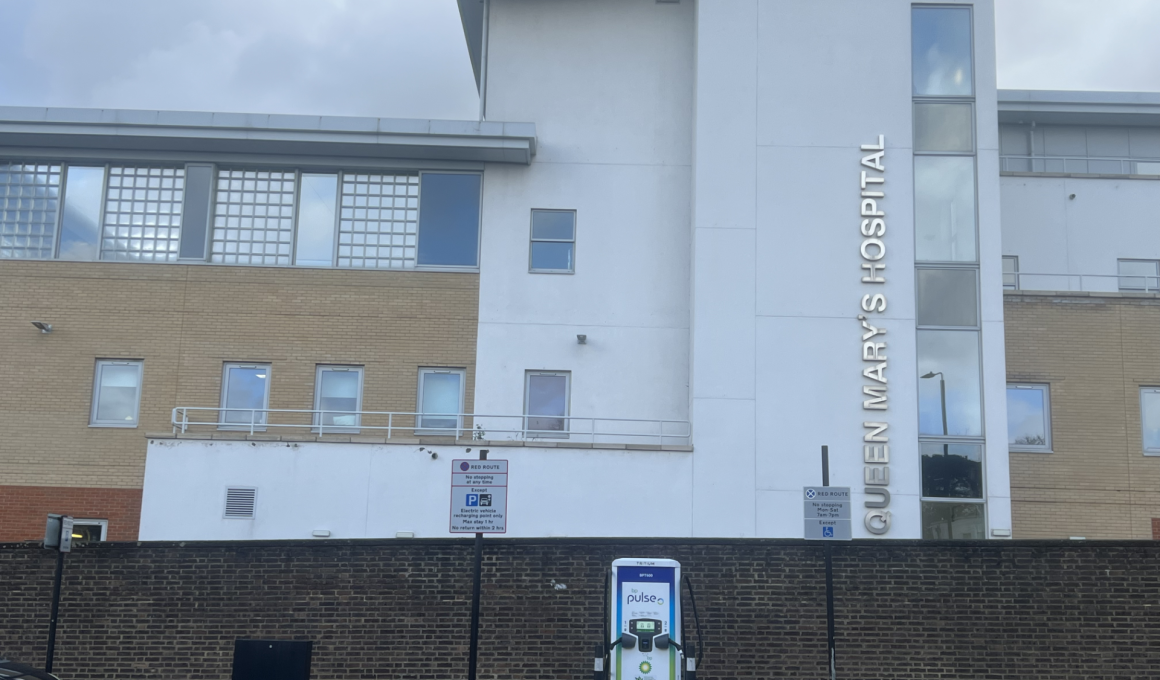
On 9 July, at a public meeting in a room at Queen Mary’s Hospital in Roehampton, the doctor responsible for medical care across St George’s and its partner hospitals told his own board something nobody had asked him. Someone who tried to raise concerns about a doctor harming patients had left the organisation. Protecting staff who speak up, he said, “is harder” than promising to.
St George’s has been told the same thing for more than a year, by a national regulator, by a coroner, by its own staff and by this newspaper. It has a culture in which people are frightened to report unsafe care. When harm comes to light, its first instinct is to manage what gets said about it. What was new on 9 July was the trust saying it out loud, about itself, before anyone made it.
There are other signs its board knows something has to change. The merger with Epsom and St Helier, itself a decision taken behind closed doors and never announced to residents, gives the organisation the moment every merger gives an organisation: a chance to start afresh. A new group chief executive, Matthew Shaw, arrived in April. The 9 July board was the last for three of the trust’s acting or interim executives, including its interim finance director and interim chief nursing officer, with a permanent chief financial officer starting in August.
But the admission went no further than the room. No press release followed. No public statement was issued. It is public in the narrowest sense the word will bear: a single 528-page PDF, published on the day of the meeting rather than the Friday before as the trust’s own website promises, and a video posted a week afterwards which is not listed on the trust’s YouTube channel and so returns nothing to anyone searching for it. Everything is technically available. Almost none of it is findable.
The trust has started to admit to itself that it has a problem. What it will not yet do is admit it to any of the bodies designed to keep it in check: not to the Care Quality Commission, whose finding about frightened staff it moved to minimise; not to the Information Commissioner, who had to serve it with a legal order to get answers; and not to this newspaper, which has spent fifteen months asking what its own internal investigations concluded.
A senior nurse, and years of undetected harm
The first documented episode that we are aware of involved a senior emergency nurse whose dangerous errors went unnoticed for years. Mark Barry was placed under escalating levels of supervision between 2016 and 2021. The pattern in the Nursing and Midwifery Council’s own charge list tells its own story: two charges upheld in 2016, three in 2017, three in 2018, none in 2019, five in 2020, then 34 in a single year, 2021, once he was finally placed under direct observation. The closer the trust looked, the more it found. For years before that, it had not been looking closely enough to find anything at all.
The trust referred Barry to the NMC on 7 January 2022. The outcome, upholding 51 charges and suspending him for 12 months, did not arrive until the week of 24 March 2025, more than three years later. On 25 May 2025, we asked the trust under the Freedom of Information Act for the outcomes of its own internal reviews into how it handled the case. The trust refused, declining even to confirm or deny that it held the information at all. Rather than face up to its failures and outline its solutions, it put up a wall.
We challenged the decision and in an internal review three months later, it was told to release two of the four parts requested, but fell back on a different exemption to avoid outlining what it had done internally before the NMC’s investigation.
The issue then moved to the Information Commissioner. In his decision, published this week, 20 August 2026, the Commissioner reported the same stonewalling: the trust “failed to respond to the Commissioner’s initial inquiries and did not provide its full and final arguments in support of its position within the timescale requested.”
That led to the Commissioner “having to issue a formal Information Notice to the Trust in order to obtain the information he required to come to a decision.” An Information Notice is a legal order and the Trust was warned that failure to comply can be taken to the High Court and dealt with as contempt. Only then did the Trust provide internal details of its response to a senior nurse that other staff have been warning about for five years.
Still the Trust will not tell people the truth. It argued – and the Commissioner agreed – that its response shouldn’t be released because it contains personal data – not of the patients impacted but the personal data of the nurse who was suspended by their own professional body for over 50 breaches.
Putney.news is appealing that finding, and will submit a fresh request using the Information Commissioner’s findings to prise open the St George’s Trust a little further.
A trust spokesperson told us: “When concerns were raised about Mr Barry, we carried out an internal investigation and referred him to the Nursing and Midwifery Council, resulting in him being suspended. We have contacted the affected patients and apologised to them, and have taken steps to prevent this happening again, including strengthening how we monitor staff performance in addition to training and clinical supervision.” What those internal investigations concluded remains unknown, fifteen months after we first asked.
Inspectors found what staff couldn’t say inside
That has been this newspaper’s experience of the St George’s Trust. Others – that have statutory powers of investigation – have found similar.
The CQC’s inspection of St George’s leadership, carried out in February 2025 and published that November, found the trust’s leadership rated “requires improvement” for the second consecutive time.
Inside the finding was a specific and uncomfortable detail: 23 staff had contacted inspectors anonymously, because they did not trust that raising concerns through the trust’s own channels was safe. More than half of the whistleblowing concerns received concerned bullying or harassment, and a further 44 per cent involved inappropriate attitudes and behaviours. The CQC also found that Black and minority ethnic staff, who make up 53.6 per cent of the workforce, held just 8.7 per cent of senior non-clinical roles, with executive-level representation 41 per cent below the national average.
Antoinette Smith, the CQC’s deputy director of operations in London, said at the time: “Some staff didn’t feel safe speaking up when they had concerns, including those which could impact the quality and safety of people’s care.” The trust’s own response, in a statement to this website, first noted that the anonymous contacts represented “a small proportion of the total workforce,” before adding: “Any member of staff not feeling heard or supported is one too many and we fully accept this rating is not where we want to be for our staff and local communities.”
A risk score changed, and a threshold quietly missed
The pattern surfaced again within weeks, in a different part of the hospital. St George’s computer system had been generating incorrect pregnancy risk scores for ten months, with cardiotocograph data saved manually to USB sticks and more than 1,400 patient records stuck between two incompatible systems.
Despite the fault being described in the trust’s own papers as “high risk” when it came to grading its seriousness, the risk score – somewhere along the line – was downgraded from 12 to 8; a move that took it below the threshold at which the fault would have had to be reported to the CQC.
Asked about the discrepancy, the trust characterised the downgraded items as “not faults but risks.” It later emerged – thanks to persistent questions from a member of the public – that multiple technical failings have been kept quiet, with hundreds of thousands of pounds spent on systems that were never introduced.
Three more warnings, the same instinct
In January 2026, a senior coroner concluded that two elderly patients, David Ward, 76, and Dr Debapriya Ghosh, 83, died preventable deaths after being left unsupervised overnight in an overcrowded A&E in February 2024.
Ward’s death was ruled “an accident contributed to by neglect”; Ghosh’s, “an accidental fall contributed to by a failure to provide appropriate nursing supervision.”
Mistakes, even lethal ones, are a terrible but intrinsic part of running a hospital group. There is only so much management can do about it. What it can do and, arguably, must do is learn lessons and work to ensure the same mistakes aren’t made again.
The coroner’s Prevention of Future Deaths report warned that despite changes made after the deaths, staff evidence showed conditions in A&E “still exceptionally busy and feel little different” to how they were at the time of the deaths. Putney.news asked whether the report had been discussed at the board level and whether or when it would formally respond to the Health Secretary, whose department had asked for an explanation. The Trust declined to respond.
The following March, St George’s confirmed it would formally merge with Epsom and St Helier, a plan its own board had approved behind closed doors on 5 March. A week passed with no press release and no public announcement. The trust later said staff, integrated care boards and the constituency MPs had been told privately; residents had not. It was a direct contradiction of the trust’s own public commitment in 2021, when the same organisations first joined forces, that neither hospital would lose its independent status.
In May, the trust’s own staff delivered a verdict of their own: St George’s came 17th of 18 London acute and community trusts in the 2025 NHS Staff Survey, second from the bottom, with an overall performance score of 6.23 against a London average of 6.41.
Then its own board, in its own words
On 9 July 2026, at a public Group Board meeting held at Queen Mary’s in Roehampton, the pattern found its clearest confirmation yet, this time from the trust itself. The board recorded only “partial assurance” on two separate questions: whether the trust could detect a clinician departing from safe practice early enough, and whether its speak-up arrangements were working across the merged Group.
Dr Richard Jennings, the Group Chief Medical Officer, told the board that people stay silent about poor care for two reasons: they fear being punished for speaking, or they do not believe the organisation will act if they do.
He then went further than the question asked of him. A member of staff who had tried to raise concerns about a clinician harming patients no longer worked at the trust.
“There’s one whistleblower who doesn’t work with us anymore and actually didn’t really feel that they could carry on,” he said, “because the whole process of seeing poor care and living through that and trying to blow the whistle on this had been very difficult for them.”
Any board can promise nobody will suffer for making a disclosure, he added, and he could give that commitment himself. Making sure whistleblowers “are genuinely looked after and nurtured and listened to and responded to and not made to feel uncomfortable, that that is harder and that requires more work from us.”
The item under discussion was an independent review by the Royal College of Physicians into a respiratory consultant, referred to throughout as “Dr X” by both the RCP and the trust, whose treatment of patients with interstitial lung disease is under review.
The clinician stopped seeing patients in January 2023, left that April, and has been referred to the General Medical Council, which has restricted their practice. The RCP’s report, published inside the trust’s own board papers, records that several people raised concerns about the clinician between 2019 and 2022, through more than one channel including the trust’s own Freedom to Speak Up route, “but without any subsequent urgent action taken.” Some were told their concerns were being dealt with and then heard nothing further. The RCP also found missed opportunities, between 2018 and 2022, to respond more decisively.
Jennings told the board the trust had asked the RCP to judge how well it had listened when those concerns were first raised. “We were very honest with the RCP that we thought we hadn’t done this as well as we should have done,” he said. The board had already been assured, in November 2024, that every ILD patient needing a correction to their treatment had received one. In July, Jennings reopened that ground: what the trust intended, and in most cases believed it had done, “is not quite the same as giving absolutely firm assurance.”
Remove the overly cautious and bureaucratic language and that statement is dangerously close to admitting the staff misled its own Board rather than admit the full depth of its failures.
Jennings also raised the possibility that some families do not yet know the truth about a relative’s care. “A significant proportion of those patients were already deceased by 2024,” he told the board. “And so it is possible that there are families who haven’t yet heard that the care that we gave to their loved one who’s since passed away was poor and may have shortened their life.”
The turn: real candour, incomplete disclosure
There are signs that this series of reports – all pointing to the same problematic culture of concealment – is finally having an impact.
At the most recent Board meeting, Jennings raised the detection question himself, before it was put to him. The board apologised repeatedly and accepted all 19 of the RCP’s recommendations without qualification. We put a right of reply request to the trust on 9 August, and the Group’s head of media, replied in detail three days later.
On detection, the trust’s board papers state plainly that existing safeguards “prevent and address departures from good care in many instances, but they were not sufficient to prevent this instance of significant harm arising from poor care provided by one individual.”
In response, the trust points to a new Insights Dashboard, used by executive and site leadership to triangulate intelligence from multiple sources and already credited with prompting deeper reviews of specific services.
On speak-up arrangements, the trust’s board papers describe bringing its Freedom to Speak Up Guardian service together on a single, Group-wide basis in 2024, a new national-standard policy approved by the board in January 2025, and a shared case-management system, adopted from April 2026, that lets staff raise concerns to the Guardian anonymously.
On the delay in publishing the RCP’s findings, Mills said the trust wrote directly to every affected patient and family before publication, wanting them to hear the news “from us” first, and made improvements ahead of the final report rather than waiting for it.
Each of those answers is genuine. But on three specific points, all put to the trust in writing, the candour in the boardroom has not yet been matched by what the trust will confirm outside it.
Asked directly, on 9 August, whether it would now disclose the outcomes of its own internal reviews into the Barry case under FOI/5683, the trust did not answer. It answered a different question, explaining instead why anonymising the ILD clinician as “Dr X” was appropriate. Asked whether a three-year interval between referring a member of staff to their regulator and receiving the outcome was acceptable, the trust repeated its standard statement about the Barry case without addressing the interval itself. And the gap between what two different audiences were told about the same review remains unexplained: families in the ILD cohort were written to with an estimate of one to two years, while Jennings told the board and its papers gave a working estimate of six months to a year.
The Commissioner’s decision surfaced one further detail about how the trust handles disclosure. Among the material it withheld were its own emails about how to handle press enquiries, redacted under an exemption that can only be used once a designated senior figure has formally given their opinion that it applies. The trust could not produce that opinion.
It “was unable to provide a copy of the qualified person’s opinion,” the Commissioner records, “as no copy had been retained.” The exemption was claimed; the document that authorises claiming it does not exist.
What happens next
The trust’s own board expects the wider review of more than 200 ILD patients to report within six to twelve months of July 2026. St George’s next public board meets on 3 September. Epsom and St Helier’s own well-led inspection has yet to be published.
There are examples that St George’s can follow. East Midlands Ambulance Service was rated the worst-performing trust in England’s 2018 Freedom to Speak Up Index; by 2019, after recruiting a dedicated guardian and opening informal channels for staff to raise concerns directly with its chief executive, its own case study for the National Guardian’s Office recorded real improvement, while candidly noting it remained second from bottom. Culture change of that kind is measured in small movements, honestly reported, not single announcements.
For now, families whose relative’s care is part of the ILD review, and who have not yet heard from the trust, can contact St George’s directly on 020 8296 3245 or by emailing esth.enquiriesforILD@nhs.net. Some of them, on the trust’s own admission to its own board, do not yet know what that call might tell them.