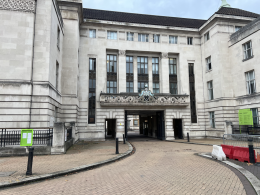
The Mayor of Wandsworth is, in theory, above politics: a ceremonial figure, elected annually, rotated through the council’s ranks. On 27 May, for the first time in the council’s modern history, the choice of mayor will be an overtly political act. And not only because of who gets the chains.
Wandsworth’s first hung council in decades holds its Annual Meeting on Wednesday. Everything begins there: the mayor is chosen first, before the council leader is confirmed, before the cabinet is named, before a single committee is formed. Every vote is live. And for every vote, the arithmetic is the same.
The arithmetic
Conservatives hold 29 seats. Labour holds 28. Malcolm Grimston, independent councillor for West Hill, holds one. Neither party can pass a motion without him.
Grimston has agreed to support the Conservatives on a confidence-and-supply basis: not joining their cabinet, not taking a formal role, but providing enough support for them to govern, conditional on specific commitments. Simon Hogg, Labour’s council leader, visited Grimston’s house the day after election day to make the alternative case. Grimston declined.
The mayoral election is the first formal test of that arrangement.
How a vote in this council actually works
A motion passes if more councillors vote for it than against, of those present and voting. Abstentions do nothing; absent councillors do nothing. Only the for and against votes count.
Which means: if Grimston votes with the Conservatives, a Conservative motion passes. If he votes against, it depends on numbers. And if he abstains, a Conservative motion still passes. Because 29 beats 28.
But Labour motions are different. If Grimston abstains on a Labour motion, 28 Labour votes face 29 Conservative votes. It fails. If he votes with Labour, it is 29 against 29. Tied.
On a tie, under the Local Government Act 1972, the mayor casts a deciding second vote.
A Conservative mayor breaks the tie for the Conservatives. A Labour mayor breaks it for Labour.
That is why the mayoralty matters. At full attendance, Grimston’s vote settles most things. But whenever there is a tie (and in a council this finely balanced, ties will happen) the mayor decides. Ties are most likely on the most contested votes, the ones where every councillor turns up and the parties go to the wire. The moments of maximum political stakes are precisely the moments when the mayor’s casting vote becomes the government’s margin.
What the council’s own records show
This is not a theoretical risk. Across 21 Full Council meetings between 2022 and 2026, an average of six councillors were absent from each meeting. Some councillors missed more than a third of meetings. The attendance pattern was uneven: at some meetings, Labour absences outnumbered Conservative absences; at others, the reverse. Each of those imbalances would have changed outcomes had the council been hung.
With the parties this close, even one absence from the winning side can turn a majority into a tie and hand the decision to the mayor.
How the vote at the Annual Meeting works
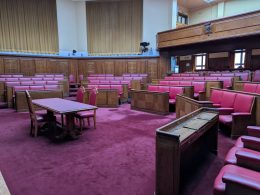
Under the Wandsworth Council Constitution, the mayor is elected by show of hands. If six members call for a recorded division, a bell rings, the chamber closes, and each councillor states their vote aloud as their name is called. Names and votes go into the minutes.
The order of business matters. The constitution requires the mayor to be elected first. Only after that does the council elect its leader, receive cabinet nominations, and fill committee places. The mayor presides over all of it, including, from that point forward, any vote that ends in a tie.
What happened last year
The 2025 Annual Meeting is the closest comparison. Jeremy Ambache was re-elected mayor that day. The ceremony was also the venue for a sharp political division: Labour pushed through five new Deputy Cabinet Member roles at £9,314 each in a 29–17 vote. Every Conservative and one independent voted against. The Conservatives forced a recorded division and condemned the posts as poor value for money.
Labour held a majority that day. That is no longer true.
Ambache did make one cross-party gesture: he appointed Conservative Councillor Rosemary Birchall as his deputy mayor. Whether a Conservative mayor makes the equivalent gesture, or declines to, will itself signal something about how the new administration intends to govern.
The full account of last year’s meeting shows how contentious an Annual Meeting can become even when one party commands an outright majority.
What to watch
The mayoral vote is the first moment at which Grimston’s support becomes publicly visible, not merely stated in principle. If the Conservative nominee passes cleanly, the confidence-and-supply arrangement is working. If it does not, the hung council faces its first difficulty within minutes of formally convening.
The Conservative nominee has not yet been announced.
For background on how Wandsworth ended up here, see our coverage of how Labour lost and what the result would look like if votes actually decided it.