

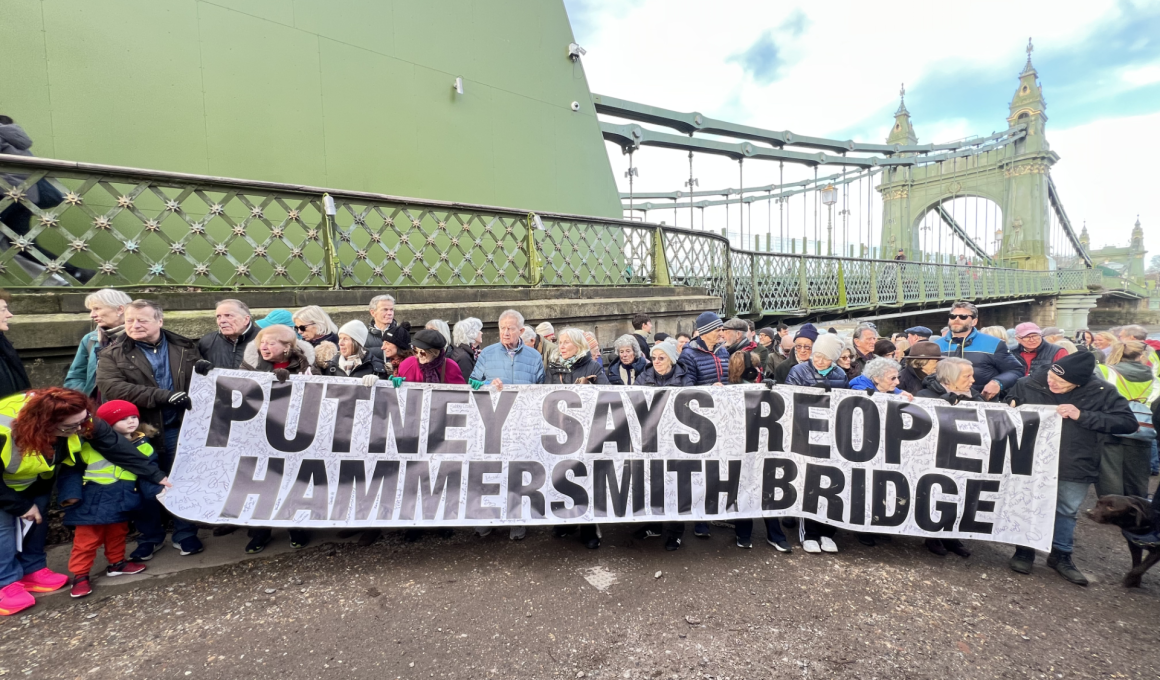
UPDATED Today, Parliament debates Hammersmith Bridge for the fourth time in five years. Putney MP Fleur Anderson has asked constituents for input. We have made it easy for you to do exactly that.
CORRECTION At 4.30pm today, Parliament holds its fourth Commons debate on Hammersmith Bridge in five years. Fleur Anderson MP, the Labour member for Putney, will open. The first three debates produced no new funding commitments on the floor of the House.
The bridge has been closed to motor traffic for seven years. A Labour minister, likely Simon Lightwood MP, the Minister for Roads and Buses, will respond. The debate runs for up to one hour in Westminster Hall. No vote is taken.
Anderson has asked her constituents for input. This matters. Debates without votes cannot compel funding, but they do produce ministerial answers on the record, and ministerial answers can be held to later. If residents supply the same targeted questions, they become a constituency mandate Anderson can use on the floor of the House.
We have read the primary documents. We have identified seven specific, time-bound asks a minister can credibly be made to answer. The form below lets you tick the ones you want raised and send them directly to Anderson’s office. It takes about a minute. Putney.news is copied in so we can report back on what readers selected.
UPDATE 8.30am: An earlier version of the email system below didn’t work for some users. We have since replaced and fixed and it should now work. Please email: news@putney.news if you are still having problems.
What a Westminster Hall debate is, and isn’t
Westminster Hall is the Commons’ second debating chamber. Slots are allocated by the Backbench Business Committee, a cross-party body of eight backbench MPs. The government cannot block a debate the committee has granted. Securing one is competitive. Hundreds of bids are made each session.
But debates without votes cannot compel funding, bind ministers, or change policy. What they can do is produce ministerial answers on the record. They register political pressure. They give cover for follow-up. The value is procedural, not legislative, and procedural answers are what the debate can usefully deliver.
Why these seven asks
Seven leverage points, one per ask. Each can credibly be answered by a minister inside a one-hour debate. None requires new legislation. None traps Anderson in partisan territory.
One: a named civil servant accountable for delivery, is the cheapest commitment a minister can make and one of the most powerful. Projects without named owners drift. Bernadette Kelly, the DfT’s Permanent Secretary, told the Public Accounts Committee in October 2020 that governance of the bridge was “slightly confused”. Five and a half years later, still no named owner.
Two: asks for a date on the strengthening business case. LBHF submitted it on 24 April 2023. DfT’s own background briefing, released to us under Freedom of Information in March 2026, confirms the date. Three years in review. Without approval, no building.
Three: publication of all Taskforce minutes, fixes a transparency problem caused by FOI. Only summary notes exist on gov.uk for meetings up to November 2021. The January 2025 minutes reached the public only because Putney.news submitted a Freedom of Information request, and came partly redacted. Meeting notes of a body deciding the fate of a major public asset should be published as standard.
Four: a statutory basis for the Taskforce, addresses a structural flaw. The Taskforce is administrative, not statutory. It has no legal personality, no budget, and no executive powers. Between November 2021 and January 2025 it did not meet at all. A body that can be silently paused for over three years is not a governance mechanism. It is an option ministers exercise when convenient.
Five: is a fiscal commitment: yes or no on a named line in the Spring 2026 event. Minister Lightwood told Anderson in February that Hammersmith Bridge would be “a good candidate” for the £1 billion Structures Fund. “Candidate” is not a commitment.
Six: invites other benefitting boroughs, including Wandsworth, to contribute. Albert Bridge’s 2010-11 repair was split roughly 75 per cent Transport for London and 25 per cent Kensington and Chelsea. Hammersmith has been offered a one-third council share, the largest of any recent Thames bridge refurbishment. Wandsworth’s Cabinet Member for Transport, Cllr Jenny Yates, told a public hustings in Roehampton on 15 April that Wandsworth “has never been formally asked to contribute financially and we’re not position to do so”. The FOI’d Taskforce minutes record Wandsworth’s position differently. More on that below.
Seven: is the question no minister has answered in six years: will the bridge reopen to motor traffic, yes or no? LBHF’s own planning language now refers to pedestrians, cyclists and a 1.5-tonne weight limit. Residents are entitled to a clear answer.

Why this crazy situation is still going
Documentary evidence answers the question. On 30 January 2025, the Hammersmith Bridge Taskforce met for the first time since November 2021. It had met 19 times in the 14 months to November 2021, then stood still for over three years. The 20th meeting was chaired by Simon Lightwood. Wandsworth Council was at the table for the first time. So were Historic England and the Environment Agency.
The meeting minutes were released on 27 February 2026 after a Putney.news Freedom of Information request. The Department for Transport redacted some sections under the exemptions protecting policy formulation and commercial interests. The parts that remained tell the story plainly.
Cllr Stephen Cowan, the Labour Leader of Hammersmith and Fulham, made the case that boroughs receiving the benefit of a working bridge should contribute to its cost.
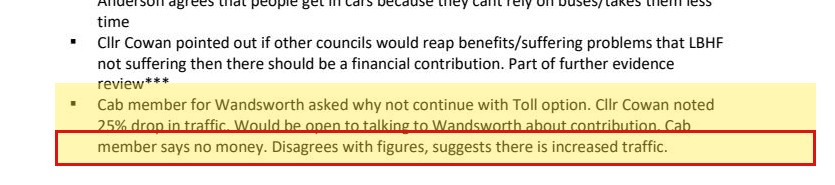
The minutes record: “if other councils would reap benefits/suffering problems that LBHF not suffering then there should be a financial contribution. Part of further evidence review.”
Cowan then raised the precedent of Hammersmith Bridge’s historic toll and said he would be “open to talking to Wandsworth about contribution”.
The minutes record Wandsworth’s response: “Cab member says no money. Disagrees with figures, suggests there is increased traffic.”
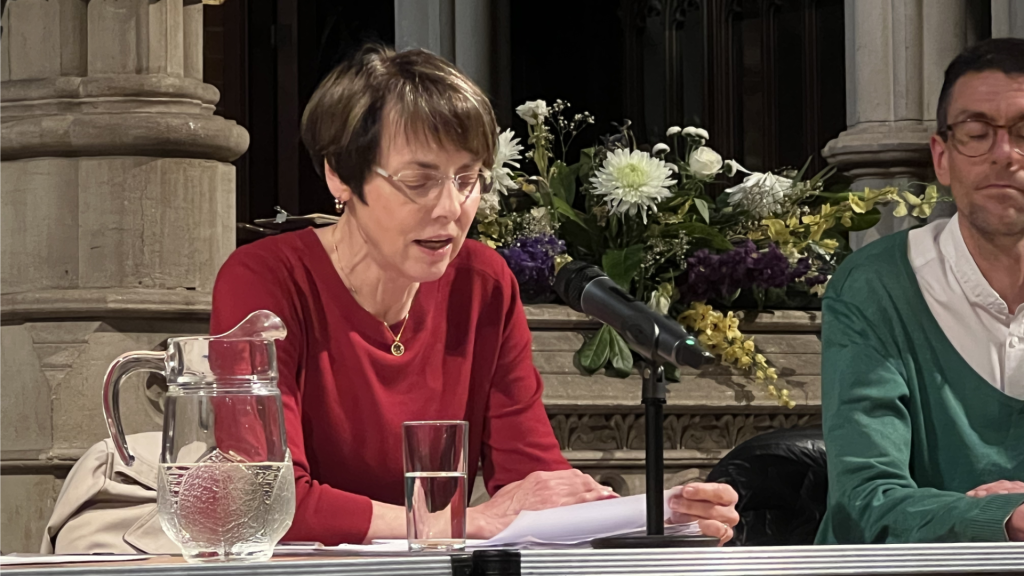
Wandsworth’s Cabinet Member for Transport is Cllr Jenny Yates, who represents Roehampton. At a public hustings in Roehampton on 15 April 2026, Cllr Yates set out Wandsworth’s position on Hammersmith Bridge: “Wandsworth Council has never been formally asked to contribute financially and we’re not position to do so. We need our capital money to keep our own bridges safe.”
The 30 January 2025 Taskforce meeting was convened by the Department for Transport. Wandsworth’s cabinet member for transport attended. Cllr Cowan asked the meeting directly whether Wandsworth would contribute. The minutes record the response from Wandsworth’s cabinet member as “no money”.
Three days before the Taskforce meeting, on 27 January 2025, Wandsworth Council Leader Simon Hogg had stood alongside Anderson and Wandsworth’s Cabinet Member for Transport at a rally on Putney Common, calling for urgent action to fund and deliver the repairs. Putney.news reported the contradiction between the rally and the Taskforce position on 28 March 2026.
The published Taskforce notes also record five options considered for the bridge. Option 1 (closure), Option 4 (online replacement) and Option 5 (offline replacement) were ruled out. Options 0 (status quo), 2 (no vehicles or buses) and 3 (active travel only) remain. Even in the best case being considered in government, the bridge does not return to its 2018 use. For the systemic picture behind this, see how London’s bridges keep cracking and nobody has fixed the system that let it happen.
The repair bill has risen in almost every year of closure. An informal early-2019 estimate put the cost at £30 million to £40 million. By September 2019 it was £120 million. By April 2021 it was £141 million. By January 2024 it was at least £250 million. In October 2025, Anderson told residents the figure was “coming in far too expensive at 240 million pounds” and was being “reworked with Historic England” because heritage standards were driving the bill up. Nobody has a current, approved, costed plan.
The Department for Transport has paid Hammersmith and Fulham Council approximately £13 million across five tranches since 2020. LBHF says it has spent £48 million. The gap comes from a three-way split agreed in principle on 1 June 2021, one third each from the council, Transport for London and the Department. The agreement has never been formally signed. In February 2025, LBHF publicly demanded £20.7 million in owed contributions.
The £1 billion Structures Fund announced in June 2025 opened for bids on 15 April 2026, just days before the debate. Of that £1 billion, £590 million is ring-fenced for the Lower Thames Crossing. That leaves £410 million for approximately 3,000 other structures. Minister Lightwood wrote to Anderson on 27 February 2026 calling Hammersmith Bridge “a good candidate” for the fund. “Candidate” is not a commitment. LBHF has not yet publicly submitted a bid.
Three previous debates, zero new funding from the floor of the House:
| Debate | Key government response | Funding committed | Did it materialise? |
|---|---|---|---|
| 14 April 2021 (Commons adjournment) |
Rachel Maclean MP, Parliamentary Under-Secretary, repeated the line that the government had “no statutory responsibilities” for the bridge. Cited £4m already provided. | £0 new. | The business case review announced that night is still not concluded five years later. |
| 28 June 2022 (Commons adjournment) |
Trudy Harrison MP, then Parliamentary Under-Secretary, described the scheme as progressing. | £0 new. | The one-third funding principle was never formalised in a signed Memorandum of Understanding. The gap in dispute is now £20.7m. |
| 14 November 2023 (Commons adjournment) |
Guy Opperman MP, then Parliamentary Under-Secretary, said he had to “choose my words relatively carefully”. Confirmed an outline business case had been submitted. | £0 new announced on the floor of the House. | The business case remains unapproved as of April 2026. The Taskforce did not meet again until January 2025. |
Cumulative new funding committed on the floor of the House across all three debates: zero. The government has provided money through Transport for London agreements and administrative tranches, roughly £13 million, but none came as floor-of-the-House commitments from the debates themselves.
Anderson is not the only MP who has tried
Sarah Olney MP, the Liberal Democrat for Richmond Park, submitted the February 2022 Freedom of Information request that first established the Taskforce had stopped meeting. Andy Slaughter MP, Labour for Hammersmith, held the first Hammersmith Bridge Westminster Hall debate on 3 March 2020. Paul Kohler MP, Liberal Democrat for Wimbledon, sponsored Early Day Motion 62318 on the bridge’s restoration. A cluster of peers has kept the issue in front of ministers in the Lords across five years.
Anderson herself says she has raised the bridge in Parliament more than twenty-six times. Between July 2024 and September 2025, a 14-month spell, she was Parliamentary Under-Secretary at the Northern Ireland Office. As a minister she was bound by the Ministerial Code to step back from chamber advocacy on constituency issues. She could write to the Transport Secretary. She could not table questions, sign Early Day Motions, or secure debates. Her silence on the bridge in those months is explained by her role.
February 2026 is harder to explain. Anderson told constituents in a newsletter that funding decisions on Hammersmith Bridge were expected “in the coming weeks”. Two months later, no funding announcement has been made. The same “coming weeks” phrasing had appeared in a January 2025 letter from Simon Lightwood, the same minister who will likely respond. It is the phrase, not the timeline, that is on its second cycle.
Where this goes
Four things worth watching.
- Which minister replies: Lightwood is most likely. A more senior minister would signal the debate matters. A junior stand-in would signal the reverse.
- Who turns up: Ruth Cadbury MP, Chair of the Transport Committee, has the most leverage in the room. She could order a review of the bridge if she was so minded.
- Whether Albert Bridge is raised: the systemic link between the two closures matters. A wider comment about the state of London’s bridges might push this debate further up the priority list.
- And whether the Secretary of State, Heidi Alexander, makes a statement afterwards. She sat on this Taskforce as Deputy Mayor for Transport between 2018 and 2021. Her silence since has been notable.
We’ll report back
After the debate and the minister’s reply, we will publish what was said, what was committed, what was ducked, and what the seven asks above produced in ministerial answers. If you used the form, we will tell you what your email, along with everyone else’s, achieved.
Sources
This piece was prepared using primary parliamentary sources (Hansard), Taskforce documents released under the Freedom of Information Act (reference FOI-00060732, Department for Transport, 27 February 2026), London Borough of Hammersmith and Fulham publications, and a transcript of the Roehampton hustings on 15 April 2026. Quotes are verbatim. Attributions have been checked against primary documents.
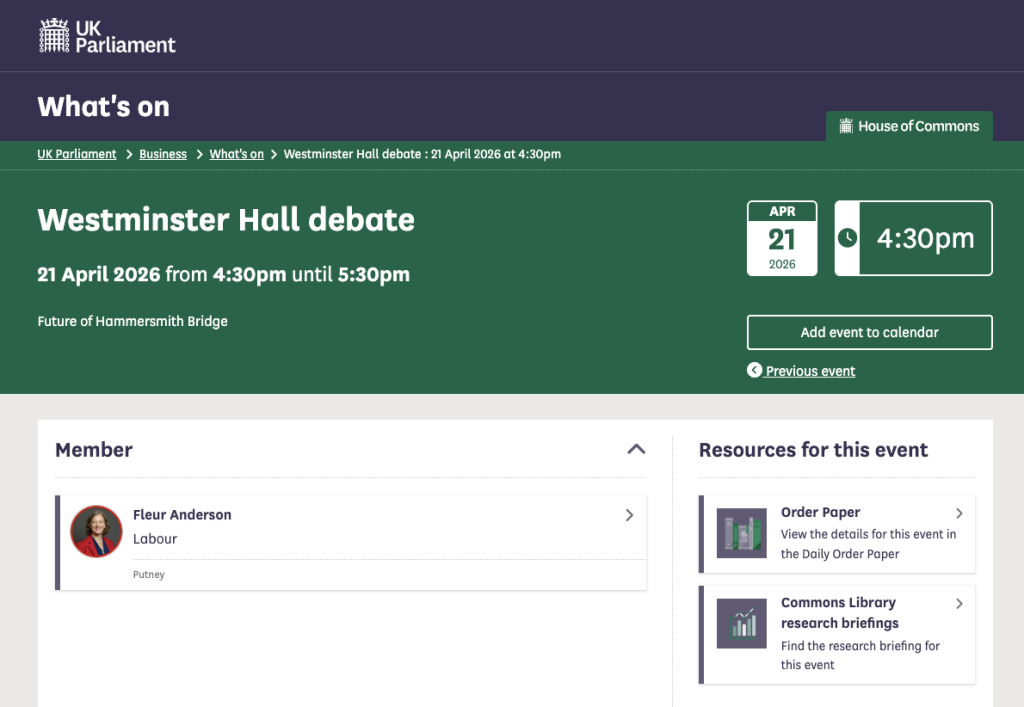
CORRECTION, Tue 21 Apr, 12pm: We initially reported that this debate would happen on Thursday 23 April. In fact, it is taking place on Tuesday 21 April at 4.30pm. The story has been changed to reflect this.
We made the error because we assumed, optimistically but wrongly, that there was broader interest in the topic of Hammersmith Bridge and so it would be a “Thursday debate” whose topic is chosen by a committee of MPs. The Tuesday debate slots are organised by ballot.


When you have a London mayor who isn’t in favour of the motor car you will have a problem.
The bridge is a major connection to the M4
it’s ridiculous that the funding can’t be split between
everyone concerned
TFL, Hammersmith and Fulham council, Wandsworth Council and of course central government.
Paul Beer