


The squatters are back.
At around 7am this morning, they forced their way into 67 Putney High Street (the former Pet Shop and Grooming salon and Candy Man unit), three weeks after High Court enforcement agents had formally taken the building back on behalf of the landlord. The security hasp on the front door had been forced open. A sign reading “1312”* appeared in the first-floor window.
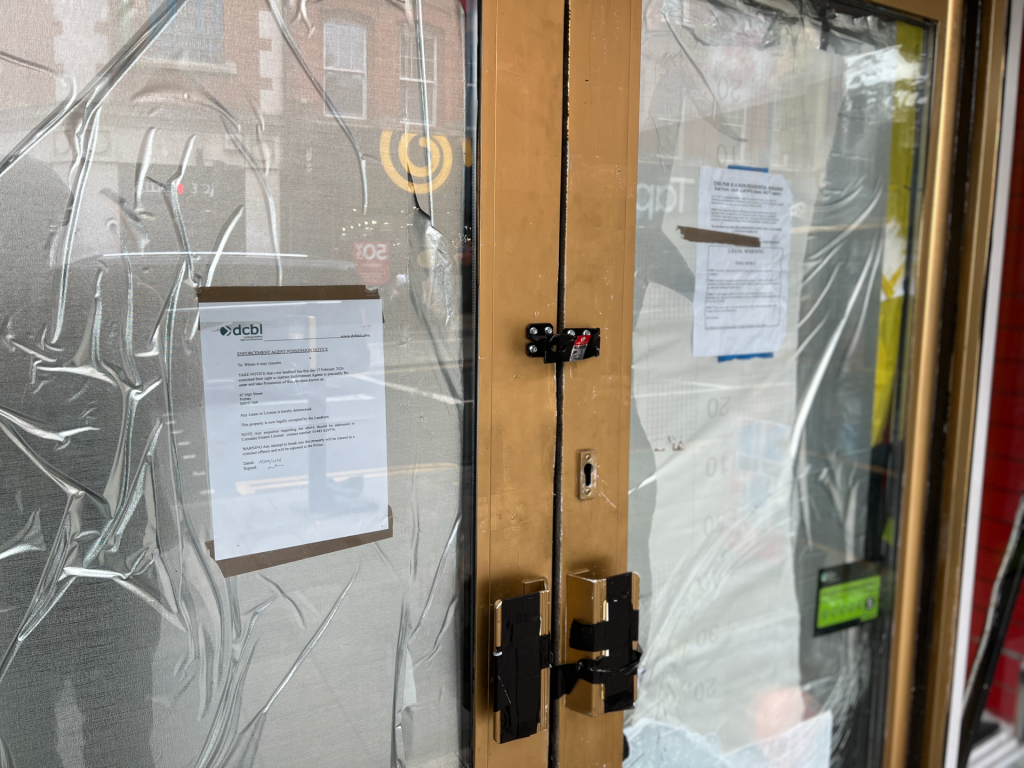
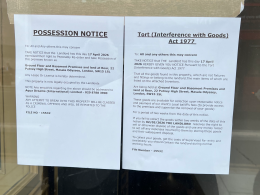
The bailiffs’ possession notice is still taped to the door. Signed on 17 February 2026 by DCBL enforcement agents acting for landlord Corndale Estates Limited, it states plainly: “Any attempt to break into this property will be classed as a criminal offence and will be reported to the Police.”

The squatters broke back in anyway. They have taped their own legal counter-notice to the other panel of the same door, asserting their right to remain under Section 144 of the Legal Aid, Sentencing and Punishment of Offenders Act. It is a standard pre-printed template, the kind experienced squatters carry, and it states that at least one person is inside at all times and that anyone wanting them out must go back to court.

Two notices on the same door, saying opposite things. Whether breaking back in after a formal High Court possession constitutes a criminal offence is a legal question we cannot resolve here. It is, however, squarely a question for police.

Police were called by the newsagent next door who spotted the break-in. Officers came roughly two hours later, saw the broken lock on the front door, told the shopkeeper there was nothing they could do, and left. A local resident photographed the scene independently at 09:31, confirming the visit. The break-in was witnessed. The broken lock was visible. The possession notice was on the door. And still: nothing they could do.
Either, as Dickens observed of London almost 200 years ago, the law is an ass. Or the officers who attended this morning were not thinking clearly enough about what the law actually permits them to do.
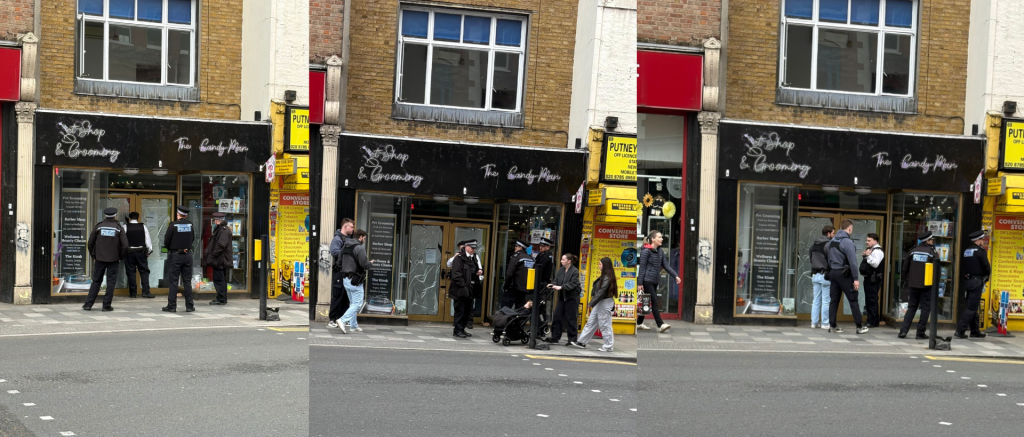
The landlord was travelling from Kent at the time of publication and intends to seek possession.
We have covered this story since May 2025, when squatters first moved into empty shops along the high street. Last November we reported what looked like a turning point: squatters gone, scaffolding up, the street beginning to recover. Today that picture looks different.

The only arrest in nine months of occupations came in September 2025, when a man was caught stripping materials from a roof. A High Court possession order, it turns out, is not the end of the story.
We will update this as events develop.
*1312 is the numerical code for “All Cops Are Bastards” (ACAB), derived from the position of those letters in the alphabet.


There cannot be many countries in the world that afford the right to break into other people’s property, and so this situation in Putney is extraordinary.
A little research reveals that breaking into a commercial building after a formal High Court possession (eviction) is generally considered a criminal offence.
Once a High Court Enforcement Officer has executed a writ of possession and returned control of the property to the landlord, the former tenant no longer has a legal right to occupy it.
Key legal, criminal, and practical implications:
Criminal Damage: If the former tenant forces entry (e.g., breaking locks, smashing windows), they can be charged with criminal damage.
Aggravated Trespass: If a tenant breaks in and causes disruption to the business or refuses to leave, they may be arrested for aggravated trespass.
Police enforcement: While some police forces may initially treat this as a civil dispute, it is generally accepted as a criminal matter (breaking and entering or criminal damage).
Organisations like landlordsdefence.co.uk can help with this situation
Squatting is not a crime so why this is under the crime part of this website is beyond me
Squatting in commercial premises isn’t a criminal offence – but breaking back into a building after a High Court writ of possession has been executed, with a broken lock and witnesses, is a different legal question. That’s what this story is about, and that’s why it’s in Crime.