


Walk down Putney High Street this week and you’ll see two different kinds of scaffolding telling the same story.
At one end, the metal framework has come down from the restored Marks & Spencer building. The Art Deco facade gleams in cream and red brick, the lettering sharp against blue sky. After months wrapped in construction, it’s back. Scaffolding as ending.
Twenty seconds’ walk away at the corner of Putney Bridge Road, new scaffolding climbs the old hotel building. Workers in high-vis orange move across platforms, the metal still bright and new. Preto restaurant sits at street level, soon to be wrapped in the same transformation that’s just finished up the road. Scaffolding as beginning.
Between them sits the gap that explains why both matter.
The middle that still needs fixing
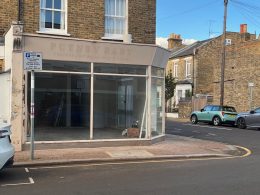
The old Robert Dyas building stands empty between the two construction sites. Not just closed – it’s been occupied by Guardians, professional property protectors living upstairs to prevent what happened in September: squatters taking over a building that had sat vacant so long it became a target.
That was the low point. We covered the squatter eviction two months ago, documenting how a closed shop had become a symbol of Putney High Street’s decline. Now those squatters are gone, replaced by Guardians as a temporary measure until something permanent happens. It’s not a solution. It’s a holding pattern.
Next door, Boots soldiers on, but the shop looks as tired as the stretch itself. Not abandoned, just exhausted. Waiting.
This three-building sequence – M&S, Robert Dyas/Boots, hotel corner – tells the whole arc in one 30-second walk: renewal, abandonment, renewal. The question is whether fixing the bookends creates the momentum to sort the middle.

What the scaffolding means
The timing isn’t coincidental. M&S has been years in the making – we covered the announcement of their return in April, tracked demolition starting in September, watched the rebuild through the autumn. The scaffolding came down this month revealing what was always promised: a restored Art Deco facade, the kind of landmark building that anchors a high street rather than just occupying space on it.
The hotel development, approved back in July after years of delay, broke ground as M&S neared completion. The planning application calls for alterations to the existing building at 31-43 Putney High Street. The hotel will expand from 197 to 200 rooms – and may replace or at least bookend the tired-looking but always-busy Premier Inn on the other side of the bridge in Fulham.
There are minor changes to ground-floor retail and restaurant space, modifications to the public courtyard which is an historically important site but has been a sad concrete no man’s land for decades. The scaffolding going up signals that after years of planning documents and delays, actual construction has started.
Both are substantial investments in a stretch of high street that, as we documented in May, had fallen from hope to hollow. Empty shops, declining footfall, business closures creating gaps that stayed gaps. The kind of decline that invites squatters because nobody’s watching anymore.
The scaffolding reverses that visual signal. People are watching. Money is being spent. Things are being built rather than abandoned.

The complications nobody’s ignoring
This isn’t simple optimism. The construction at the hotel corner will bring months of disruption – lorries, noise, cordoned pavement. Putney Bridge Road traffic, already difficult, will likely get worse. The businesses that have survived the lean years now face construction chaos on their doorstep.
And there’s still that middle gap. Robert Dyas empty with Guardians living upstairs. Boots looking like it needs the same investment the buildings on either side are getting. Until those are sorted, the transformation is incomplete – visible on the edges, hollow in the center.
The scaffolding can’t fix that. It can only mark where change is happening and where it still needs to happen.

What comes next
M&S is scheduled to open around Easter, bringing a major anchor store back to a high street that’s missed it. The hotel construction timeline isn’t publicly confirmed, but projects of this scale typically take 12-18 months. That means 2026 before this corner is finished.
In between: construction, disruption, waiting. The scaffolding at the hotel corner has just gone up. It’ll be there a while.
But here’s what’s different from six months ago when we wrote about Putney High Street’s painful decline: now there are visible signs that decline isn’t permanent. Buildings are being finished and started. Investments are being made. The scaffolding, temporary by definition, marks something more lasting – the possibility that this stretch of high street might actually recover.
Two months ago we covered squatters being evicted. This week we’re covering scaffolding going up and coming down. That’s not nothing.




These encouraging signs beautifully expressed! Great article.