

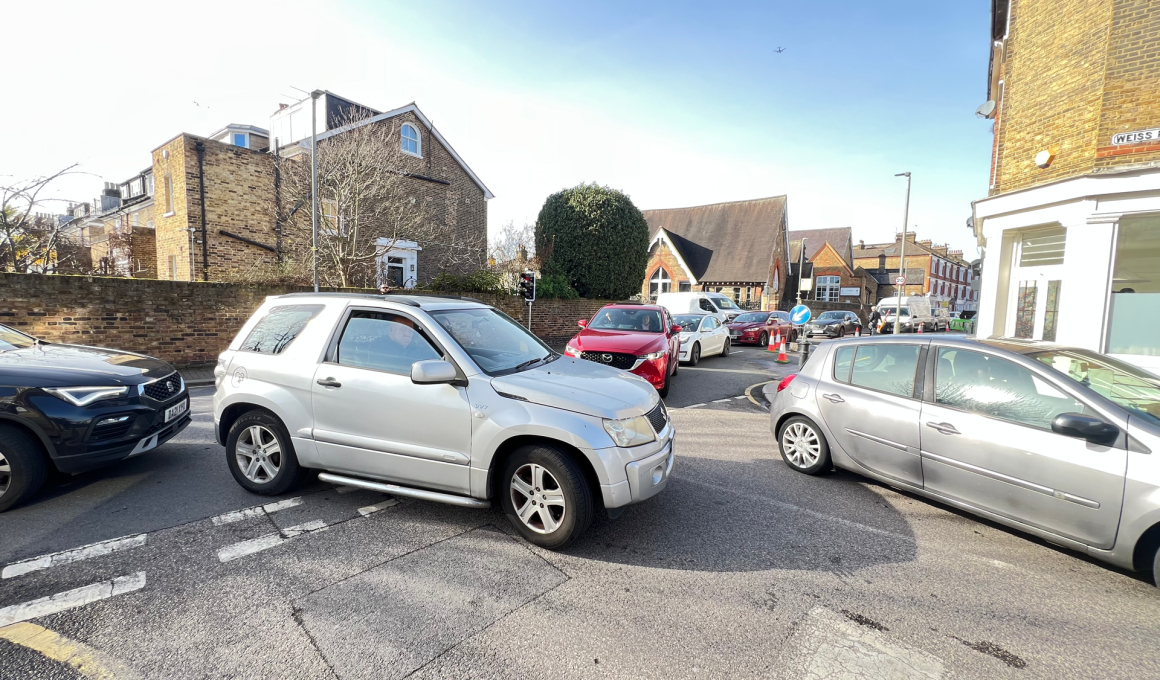
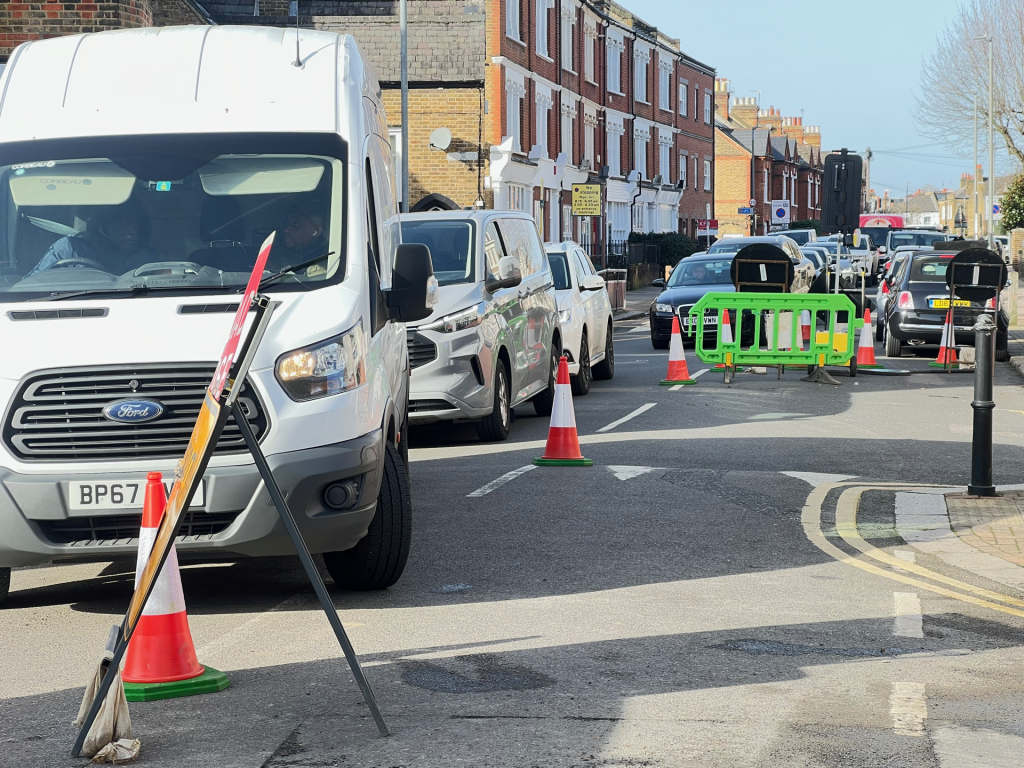
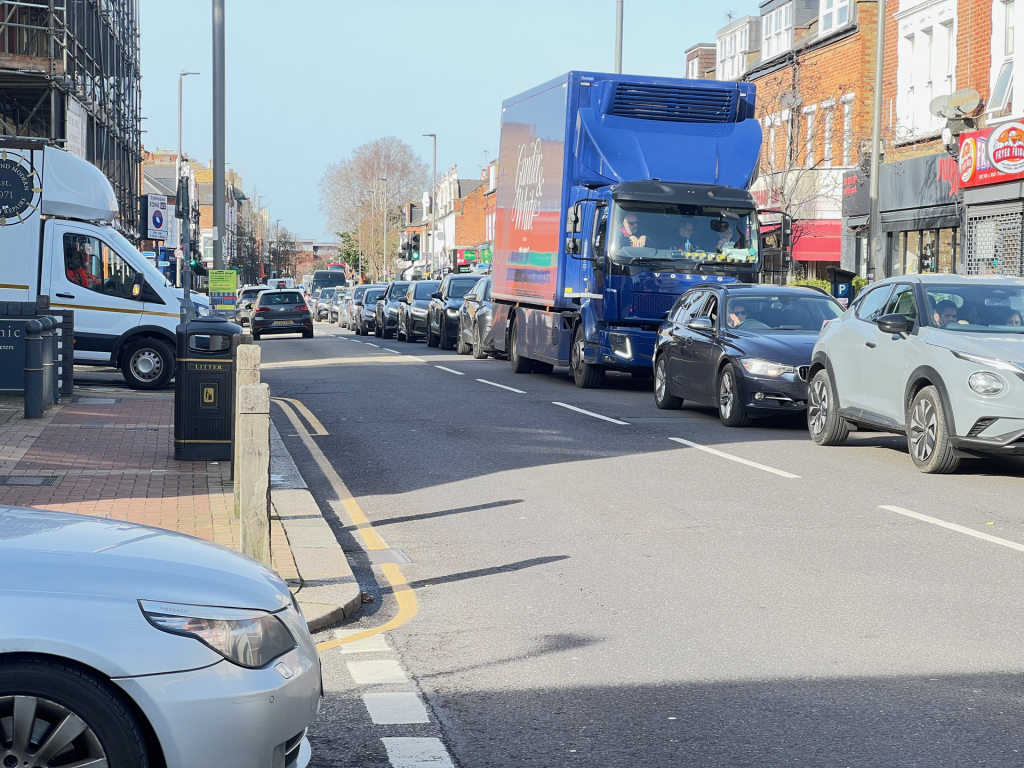
Two sets of temporary traffic lights on Tuesday morning, each reducing traffic to a single lane, caused gridlock across lower Putney that backed up residential streets that have never experienced full standstill traffic before. By early afternoon, one set of lights had been removed, possibly in direct response to the chaos.
The story is not the roadworks. The story is what they proved: Putney’s redesigned junction operates at absolute maximum capacity under normal conditions, with zero margin for any additional friction.
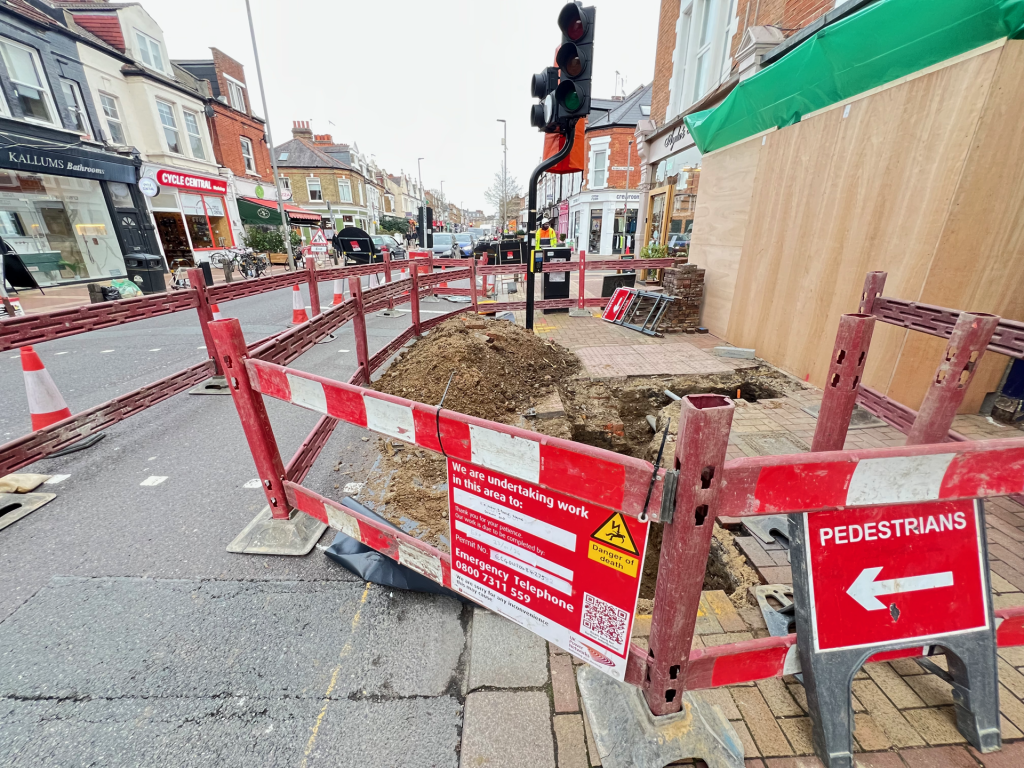
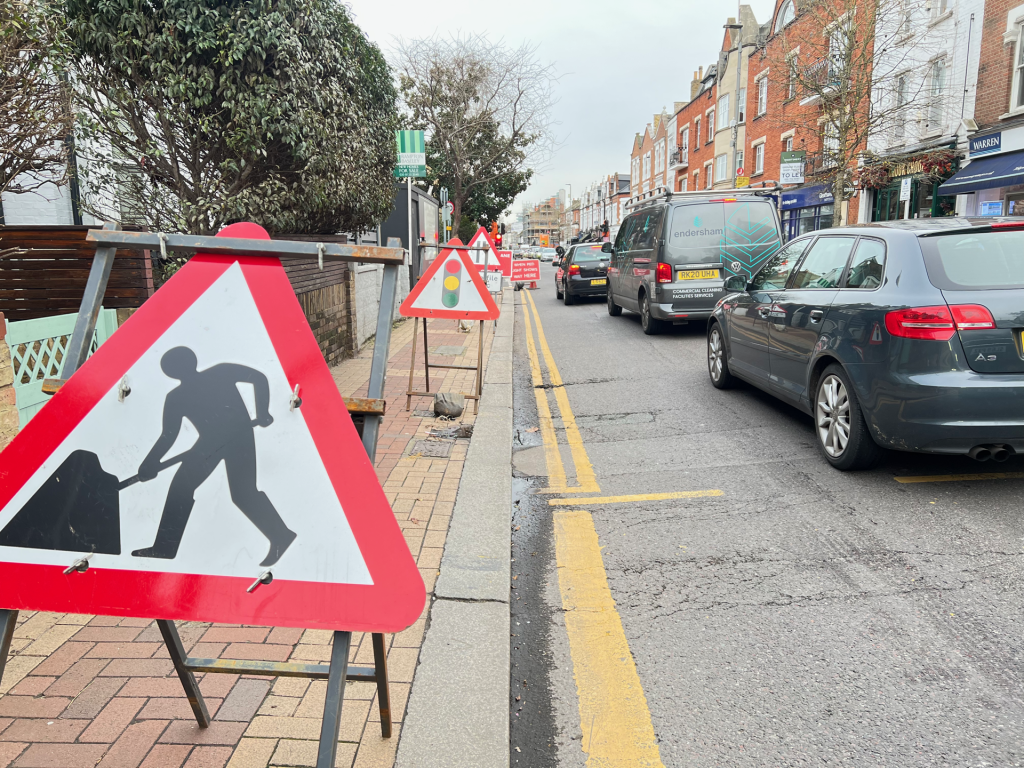
Tuesday morning saw two simultaneous infrastructure works, each routine. UK Power Networks installing electrical equipment on Lower Richmond Road. The council installing a zebra crossing on Felsham Road opposite St Mary’s school, as we reported on Saturday. Both required temporary traffic lights reducing roads to single lane.
The combination caused system-wide failure.
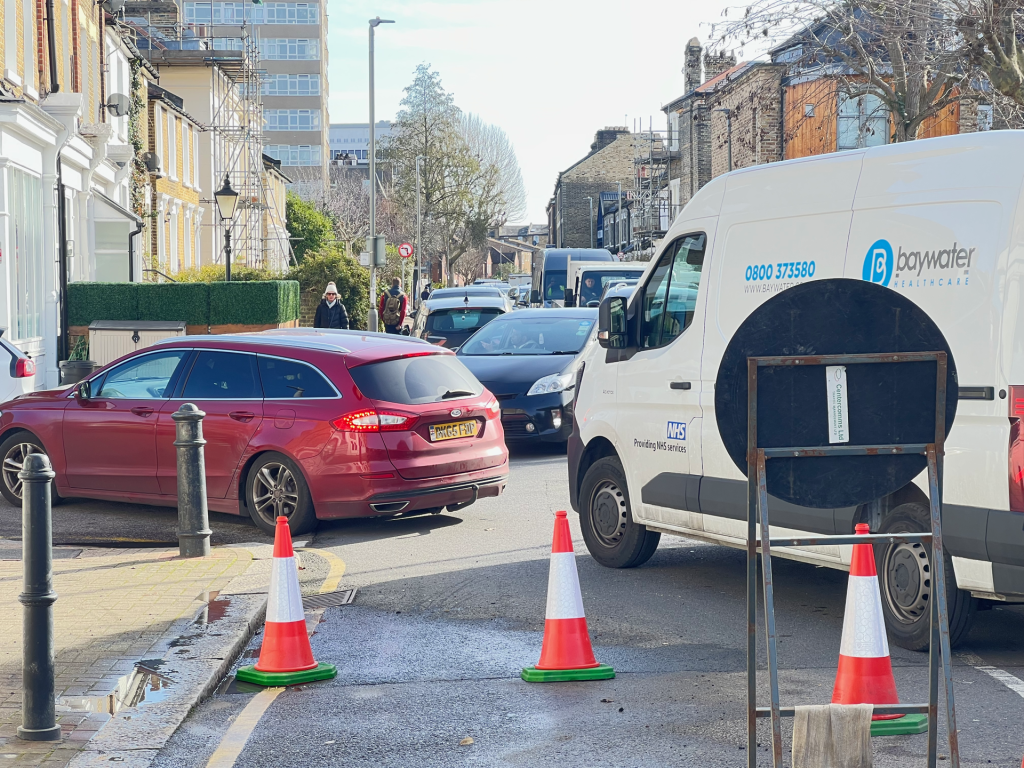
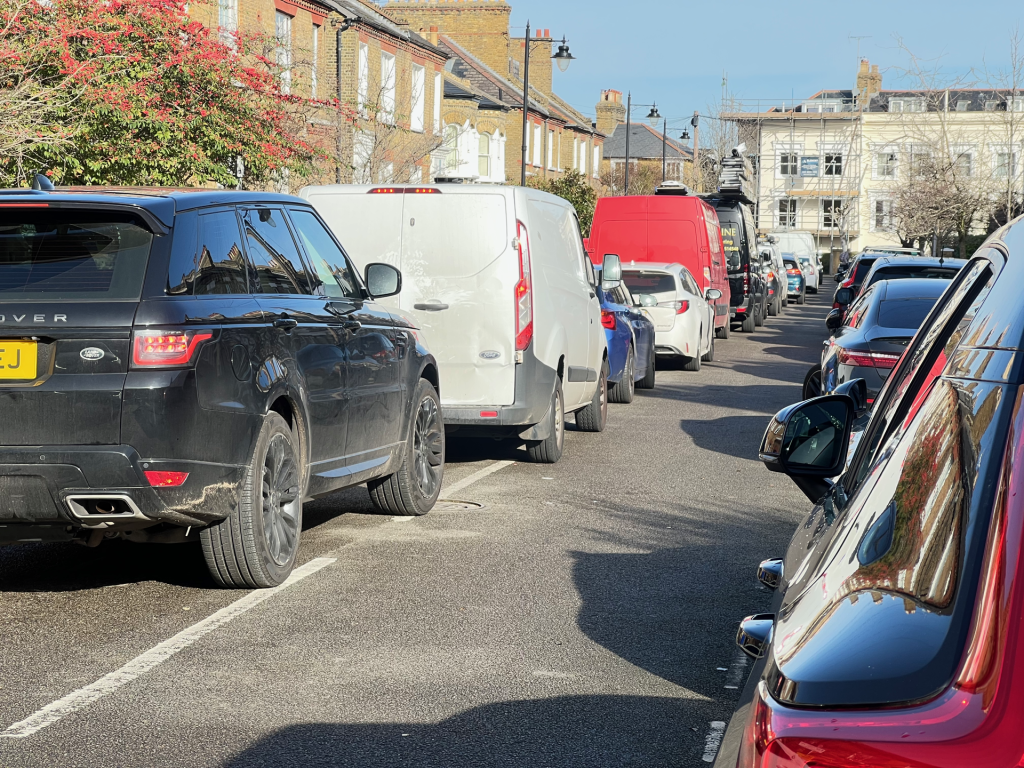
Traffic backed up not just on Lower Richmond Road, the established problem road, but two streets deep into residential areas. Redgrave Road has never previously experienced full gridlock but was packed with stationary cars. Some got out of their vehicles to ask what had happened. Weiss Road was similarly affected.
This is the purest demonstration yet of the multiplicative failure effect identified in our November investigation: each friction point does not just add to congestion, it multiplies it. Two minor, routine infrastructure works, the kind that happen constantly across London, caused cascading collapse. It’s worth noting too that this occurred during school half-term, when traffic is much lighter.
By early afternoon Tuesday, the Felsham Road temporary traffic lights had been removed. The crossing was planned for installation during school half-term week to minimise disruption while children are not walking to St Mary’s. With the lights now cleared and it already being Tuesday, the timeline looks tight. The crossing may not be completed during half-term, defeating the purpose of the scheduling.
If the UK Power Networks works on Lower Richmond Road forced the council to pull its own Felsham works, that is uncoordinated utility works actively disrupting planned council infrastructure.
The UK Power Networks notice board at the Lower Richmond Road site shows permit EC4007048427582 with an expected completion date of 23 January 2026. The works only appeared on 17 February. The three-week gap suggests either the sign shows pre-printed original scheduling or the works were delayed significantly from the January target.
What it proves about the junction
Wandsworth Council and Transport for London have spent over £1 million across 15 months trying to fix the Putney Bridge junction redesign. Officers have made 14 interventions, conducted walkabouts, adjusted signal timings twice. The effort is real.
But Tuesday proves the junction still has no safety margin. The council’s incremental fixes have not created any buffer. The system remains one minor friction event away from gridlock at any time.
A similar pattern emerged in October when temporary traffic lights malfunctioned on Putney High Street. That gridlock backed traffic all the way into Fulham. Tuesday’s pattern extended deeper into residential streets on the Putney side. It happened again in December when one set of lights in Fulham and an uptick in Christmas shopper brought the roads to a standstill.
When 90.5% of residents report worse journeys through the junction in comprehensive surveys conducted last year, incidents like Tuesday demonstrate why. The junction was designed to work under ideal conditions. Real-world conditions are never ideal.
Roadworks coordination is a solved problem in many UK contexts. Transport for London operates lane rental schemes charging utilities up to £2,500 per day for works on the busiest roads at peak times, incentivising faster completion and off-peak scheduling. The New Roads and Street Works Act 1991 requires highway authorities to coordinate street works, and councils can use Section 58 notices to restrict works after major projects.
Whether these powers apply to Lower Richmond Road and Felsham Road, or whether Wandsworth has used available coordination mechanisms around the junction, is unclear.
What is clear is that two routine works on Tuesday morning caused unprecedented gridlock in residential streets. And by early afternoon, one set of works had stopped, potentially because the combination was unsustainable.
What residents can do
Report roadworks coordination problems: Wandsworth Council roads reporting
Contact ward councillors for Thamesfield (covers Felsham Road and Lower Richmond Road area):
- Cllr Ethan Brooks (Conservative): cllr.e.brooks@wandsworth.gov.uk — also Transport Committee member
- Cllr John Locker (Conservative): cllr.j.locker@wandsworth.gov.uk — also Transport Committee member, the only committee member representing a directly affected Putney ward
- Cllr James Jeffreys (Conservative): cllr.j.jeffreys@wandsworth.gov.uk
- Cllr Nick Austin (Conservative, represents West Putney but lives in Thamesfield): cllr.n.austin@wandsworth.gov.uk
Check planned roadworks: One.network shows planned roadworks so residents can identify potential conflicts
UK Power Networks: 0800 7311 559 (emergency line) or ukpowernetworks.co.uk for works information

I would love to see the debate widened beyond simply flow of private cars – important as that is. We all need to take individual action and lobby our representatives as you suggest in the article to truly enable safe walking and cycling alongside motor and public transport measures. Start with small changes – maybe use the car one journey less per week, think about school streets and safe routes on foot and wheels to school, shops, green spaces and similar.