This week, Transport for London announced it will conduct a feasibility study to make East Putney station step-free, and Putney MP Fleur Anderson celebrated the news, telling constituents “work will finally begin.”
If this feels familiar, it should. It’s happened before.
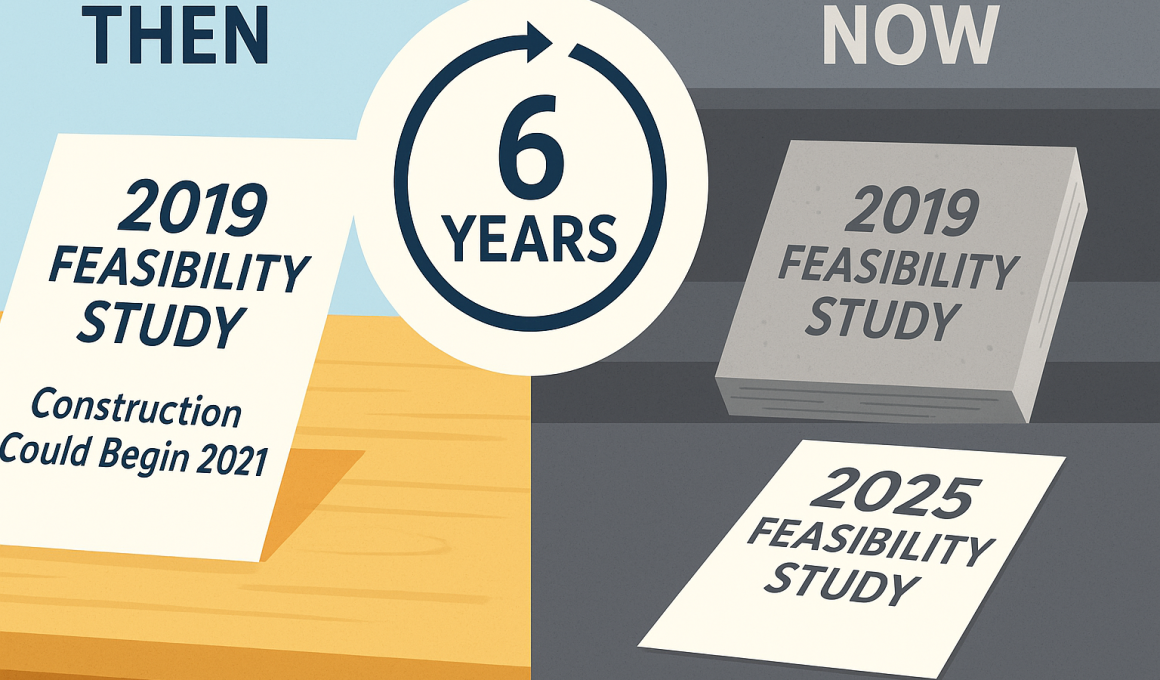
In November 2019, a comprehensive feasibility study for East Putney was completed by professional engineering firms. The 44-page report concluded the station could be made step-free, with construction beginning in mid-2021.
That was six years ago. No construction began. No funding was allocated. The study appears to have been ignored.
Now, in 2025, TfL announces it will… conduct a feasibility study.
Today, we’re publishing that 2019 study in full. It’s never been made public before but its existence and contents are known by the people that claimed this week that a feasibility study marks a step forward.
It’s time to stop the cycle of announcements and actually advance this issue.
What we’re publishing
The November 2019 feasibility study was commissioned by Wandsworth Borough Council with London Underground support. It was produced by professional firms: Tony Meadows Limited, Trisha Chauhan Architects, and London Bridge Associates.
This is not a preliminary sketch. The report spans 44 pages of detailed engineering analysis, including two fully designed step-free access options with complete costings of £15-16 million in 2019 prices – approximately £20-22 million in today’s money. It provides a month-by-month construction timeline spanning 17 months, complete engineering specifications, risk assessments, and environmental impact analysis.
The study examined everything from crane logistics to track possession requirements, from heritage considerations to coordination with other station infrastructure work. It identified potential lift locations, assessed construction methodology, and provided detailed cost breakdowns covering contractor works, design and project management, possession costs, and contingency allowances.
The conclusion was unambiguous: feasible and deliverable. Ready for concept design stage. Construction could begin mid-2021.
What happened next: nothing.
The pattern of announcements
Let’s be clear about what’s happened since that 2019 study was completed.
In March 2020, MP Fleur Anderson held a Westminster Hall debate about East Putney step-free access. She mentioned the feasibility study Wandsworth Council was producing. Then the pattern of inaction began.
Between 2020 and 2025, no concept design was commissioned. No construction funding was allocated. East Putney did not appear in any TfL or Wandsworth Council capital budget as a funded project. The professionally produced study, which cost tens of thousands of pounds to produce, simply gathered dust.
Then came the announcements. In April 2025, East Putney was added to TfL’s longlist of 30 stations being considered for step-free access work. In May 2025, Anderson announced East Putney had been placed on TfL’s “consideration list” – which we revealed has no funding attached, no published membership, and little substantive meaning beyond acknowledging that a campaign exists.
In September 2025, East Putney made the shortlist of 17 stations selected for… feasibility studies. And now, in October 2025, TfL has confirmed that feasibility study work will begin, with Anderson announcing “work will finally begin.”
This is the third announcement about East Putney in six months. Each was presented as progress. None included construction funding.
What ‘Work will finally begin’ actually means
In a Facebook video posted this week, Anderson stood outside East Putney station and told constituents: “After years of campaigning, work will finally begin to make East Putney step-free. This means everyone – including parents with buggies and disabled passengers – will be able to use the station easily.”
The language suggests construction is about to start. The reality is different.
TfL’s announcement includes a critical caveat: “TfL will fund these additional studies, [however] the subsequent development and delivery of schemes will be dependent on TfL’s future funding position, with deliverable schemes prioritised where there is significant third-party funding available.”
In plain English: TfL will study the station, but has committed no money to actually build anything. Construction will only happen if funding becomes available later, and even then, only if someone else contributes significant money toward the cost.
No construction work will begin. Study work might begin – repeating work that was professionally completed six years ago.
The cost of this cycle
This pattern serves everyone except the people who actually need step-free access.
TfL gets to announce “progress” without committing construction funding. Politicians get to celebrate and claim they’re “fighting for” their constituents. Media outlets report forward movement. Photo opportunities happen. Petitions are handed in. Everyone looks responsive and engaged.
Meanwhile, East Putney remains inaccessible. The station serves 6.18 million passenger journeys annually – every one of them made via two steep staircases between street level and platforms. Disabled passengers, parents with pushchairs, elderly residents, and anyone with heavy luggage remain shut out.
Six years. That’s how long it’s been since a professional study concluded this was deliverable, with construction ready to begin in 2021. That represents roughly 37 million journeys made without accessibility while the study sat unused.
On the District Line’s Wimbledon branch, which serves a densely populated area of southwest London, only three stations lack step-free access: Parsons Green, Putney Bridge, and East Putney. The inaccessibility affects thousands of people daily.
What the 2019 study actually contains
Since we have the study, let’s examine what it contains.
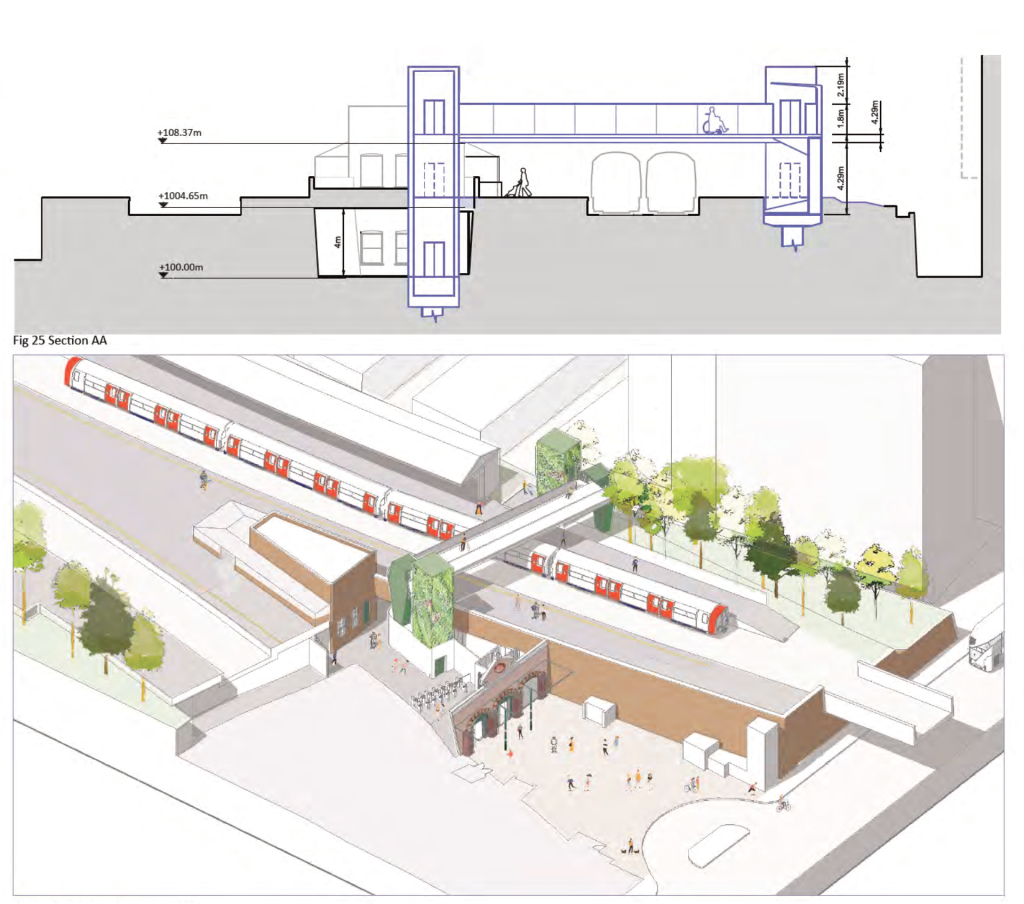
The report provides two fully costed options, known as Blue Option 1 and Blue Option 2, each involving vertical lift shafts and a footbridge connecting platforms. Blue Option 1 was estimated at £15.0 million, while Blue Option 2 came in at £15.9 million – both at 2019 prices, before inflation.
The costings break down into contractor direct and indirect costs of £7.3-7.7 million, client indirect costs including design at 12.5% of contractor costs, project management and client costs at 20%, track possession cost allowances at 15%, and risk and contingency at 40% of the subtotal. These are standard industry practices for projects at this stage, with the high contingency reflecting the conceptual nature of the design.
The construction methodology is detailed and specific. The study explains how lift and bridge structures would be prefabricated and pre-clad before being lifted into position. It identifies five construction sites or compounds, describes the excavation process for lift pits, specifies the need for a 100-tonne mobile crane accessing from the station forecourt, and maps out exactly how materials would be delivered and removed.
The environmental considerations are thorough, addressing everything from visual impact on neighboring properties to the proposal for green wall cladding on lift shafts, similar to installations at Edgware Road, Elephant & Castle, and Embankment stations. The study even specifies using LED lighting focused within the bridge walkway and designing the structure to minimize overlooking of nearby residential properties.
This is comprehensive professional work. It represents exactly what a feasibility study should deliver—enough detail to progress confidently to concept design, with clear costings and construction methodology to inform decision-making.
The report’s conclusion states that with approval of project costs and agreement on funding distribution between Wandsworth and London Underground, “the project can then be progressed to the next, agreements and approvals stages.”
That progression never happened.
Stop playing games
The cycle needs to be named for what it is: a performance that creates the appearance of progress while delivering nothing.
When Anderson says “work will finally begin,” constituents reasonably understand that to mean construction. When TfL announces feasibility studies, people assume this leads to building. When media reports that stations “could get lifts after years of campaigning,” the public believes accessibility is coming.
But feasibility studies don’t build lifts. Announcements don’t create access. Being added to lists – longlists, consideration lists, shortlists – doesn’t help anyone climb stairs.
This pattern erodes trust. Every empty announcement insults the intelligence of the electorate. Every study that goes nowhere wastes time that people with mobility issues don’t have. Every “fantastic news” celebration that turns out to be just another study makes future promises hollow.
What should happen now
The study is comprehensive. The work has been done. What’s missing is accountability and action. TfL needs to explain why no concept design work followed a completed feasibility study. Wandsworth Council needs to demand answers about why the report they commissioned was ignored. MP Anderson needs to stop celebrating study announcements and start demanding funded delivery.
TfL’s new feasibility study should build on the 2019 work, not duplicate it. More importantly, it should assess newer, cheaper options that have become available since 2019 – specifically, inclined lift technology that has been proven at Greenford station and multiple Elizabeth Line stations, potentially cutting costs by more than two-thirds. Today, we also publish a detailed analysis of this option.
What’s needed is straightforward: acknowledgment that the 2019 study exists and was ignored, explanation from TfL about why no concept design followed, assessment of innovative options now available, funding commitment with specific amounts and timelines, and accountability with named officials responsible for delivery.
The games need to stop. East Putney needs actual construction funding and a timeline, not another feasibility study.
The work has already been done. Now someone needs to act on it.
Download the 2019 East Putney Feasibility Study – Full Report
What You Can Do:
Contact your Wandsworth councillors and demand they commission assessment of inclined lift options that could cut costs by two-thirds. Contact MP Fleur Anderson and ask her to champion funded delivery, not study announcements. Download and share the 2019 study so others can see what’s been ignored. Demand accountability, not another round of lists and announcements.
The electorate deserves better than Groundhog Day.