A Polish asylum seeker with schizophrenia died at Britain’s most notorious prison after a shocking catalogue of mental health failures that saw him wait six months for a cursory 20-minute assessment conducted in English — despite prison records clearly showing he had limited English and needed an interpreter.
Most shocking of all: from the day 27-year-old Patryk Gladysz entered HMP Wandsworth until the day he died, he never once saw a psychiatrist — despite having a serious diagnosis of schizophrenia and a history of trying to hang himself before coming to prison.
Gladysz was found with a ligature around his neck in his cell on 5 January 2024 and died two weeks later in hospital from catastrophic brain damage. An inquest jury concluded he had hanged himself, though his intentions remain unknown.
In a damning Prevention of Future Deaths report [pdf] published last week, Assistant Coroner Priya Malhotra laid bare the “complete failure” of mental health provision that “likely contributed, in a more than minimal way” to his death.
Twenty Minutes in English — For a Man Who Barely Spoke the Language
The scale of the failure is breathtaking. Gladysz arrived at HMP Wandsworth on 17 April 2023, with his Prison Escort Record and the prison’s own NOMIS system clearly noting he “required an interpreter and had limited English.” Yet when he was finally assessed by the mental health team six months later — a process that should have happened within five days — no official interpreter was provided.
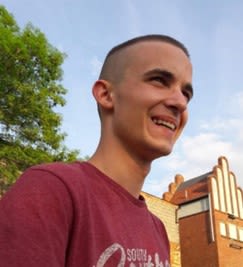
The assessment that could have saved his life lasted just 15-20 minutes and was conducted entirely in English with a man who could barely understand what was being asked of him.
This wasn’t just bureaucratic incompetence — it had deadly consequences. Gladysz had been receiving fortnightly anti-psychotic depot injections to manage his schizophrenia. But prison staff missed his crucial injection on 23 November 2023. He didn’t receive his next dose until 14 December — five weeks later.
It was on that exact same day he first told staff he was hearing voices.
“Until the time of his death, Patryk had not been seen by a psychiatrist,” the coroner’s report states in stark terms that lay bare the complete absence of proper psychiatric care.
Lack of Communication and Support
The inquest revealed significant gaps in communication between prison and healthcare staff. Prison officers who administered Gladysz’s medication were unaware he had previously tried to hang himself before coming to prison – critical information for assessing his suicide risk.
He was not allocated a key worker under the prison’s “qualified key worker scheme,” and records show no meaningful interaction with him between 22 May 2023 and 5 January 2024 – the day he was found injured.
Healthcare staff faced additional barriers to proper care, with 21 healthcare accounts being deactivated from the prison’s NOMIS system due to lack of use, despite an increase in available terminals. This created confusion about who had access to vital prisoner information.
Warning of Future Deaths
Coroner Malhotra identified six major areas of concern that could lead to future deaths without urgent action:
- Staffing shortages in mental health teams affecting the quality of assessments
- Inadequate key worker provision due to staff shortages at Wandsworth
- Poor knowledge of the heightened suicide risk among foreign nationals, despite Wandsworth holding a high proportion of such prisoners
- Communication failures between prison and healthcare staff about serious mental illness
- Inadequate prison officer checks during roll calls and suicide prevention observations
- Outdated first aid training for healthcare staff
The report was sent to multiple government departments and agencies, including HMPPS, the Ministry of Justice, and the Secretary of State for Health and Social Care, who have 56 days to respond with action plans.
Wandsworth’s Mounting Death Toll
Gladysz’s death adds to a disturbing pattern at HMP Wandsworth, one of Britain’s most overcrowded and troubled prisons. The Prisons and Probation Ombudsman has told MPs the jail is running at “three or four times the national average in terms of self-inflicted deaths.”
Putney.news has documented at least 18 deaths at HMP Wandsworth since 2019 that are either confirmed or still under investigation, including:
- David Wise (December 2021): Died of hyperthermia after being housed in a cell with excessive heat from faulty systems
- Damian Bugno-Swierz (November 2023): Died by suicide after drinking illicitly brewed alcohol, with significant delays in staff response
- Peter Tauroza (March 2020): Took his own life the day after sentencing, despite multiple missed opportunities for intervention
Nine more cases remain under investigation by the PPO, highlighting the scale of the crisis at the south London prison.
Prison watchdogs have repeatedly criticised conditions at Wandsworth, including severe overcrowding with prisoners spending up to 22 hours a day in shared cells, chronic staff shortages, and inadequate mental health provision.
National Crisis in Prison Deaths
Gladysz’s death reflects a broader crisis across England and Wales, where prison deaths have reached alarming levels. Official statistics show 399 people died in prison custody in the 12 months to March 2025 – a 37% increase from 291 deaths in the previous year.
The campaign group Inquest, which monitors deaths in state custody, describes the situation as a “national scandal.” Their research shows that every four days, someone takes their own life in prison, with many deaths linked to serious failures in healthcare provision.
Self-inflicted deaths remain consistently high, with 87 recorded in 2024 alone. Particularly vulnerable are foreign nationals like Gladysz, who face additional barriers including language difficulties and separation from family support networks.
The rise in deaths comes amid severe overcrowding across the prison system, with the population reaching record levels despite early release schemes. Prisons are operating well beyond capacity, limiting access to education, mental health services, and meaningful activity that could prevent suicides.
Systemic Failures Persist
Despite repeated recommendations from coroners, ombudsmen, and inspectors, the fundamental problems persist. The failures that led to Gladysz’s death – delayed assessments, communication breakdowns, and inadequate staffing – mirror findings from inquests across the country.
“Sadly, in 2025, 100 people killing themselves every year in our prisons is too many,” Adrian Usher, the Prisons and Probation Ombudsman, told MPs earlier this year.
The government faces mounting pressure to address what critics describe as a systemic crisis in prison safety. Without urgent reform of conditions, staffing, and mental health provision, more preventable deaths like that of Patryk Gladysz appear inevitable.
As his case demonstrates, the failure to provide adequate care for vulnerable prisoners doesn’t just represent a breach of duty – it can be a matter of life and death.
The authorities named in the coroner’s report have until 15 September to respond with detailed action plans to prevent future deaths.
HMP Wandsworth deaths still under investigation
| Name | Date of death | Status |
| Waleed Ali | 22/10/2022 | Pending inquest outcome |
| Warren Arter | 12/07/2024 | Pending inquest outcome |
| Thanweer Asharaf | 23/06/2024 | CASE MISSING |
| Alex Boy | 13/04/2025 | In progress |
| Sidique Govinden | 13/01/2025 | In progress |
| Peter Honnor | 27/06/2024 | Pending inquest outcome |
| Rana Khan | 05/04/2024 | Pending inquest outcome |
| Aleksandras Maslennikovas | 17/07/2023 | Pending inquest outcome |
| Gurshinder Singh | 27/11/2024 | In progress |
| Morgan Sullivan | 13/11/2022 | Pending inquest outcome |