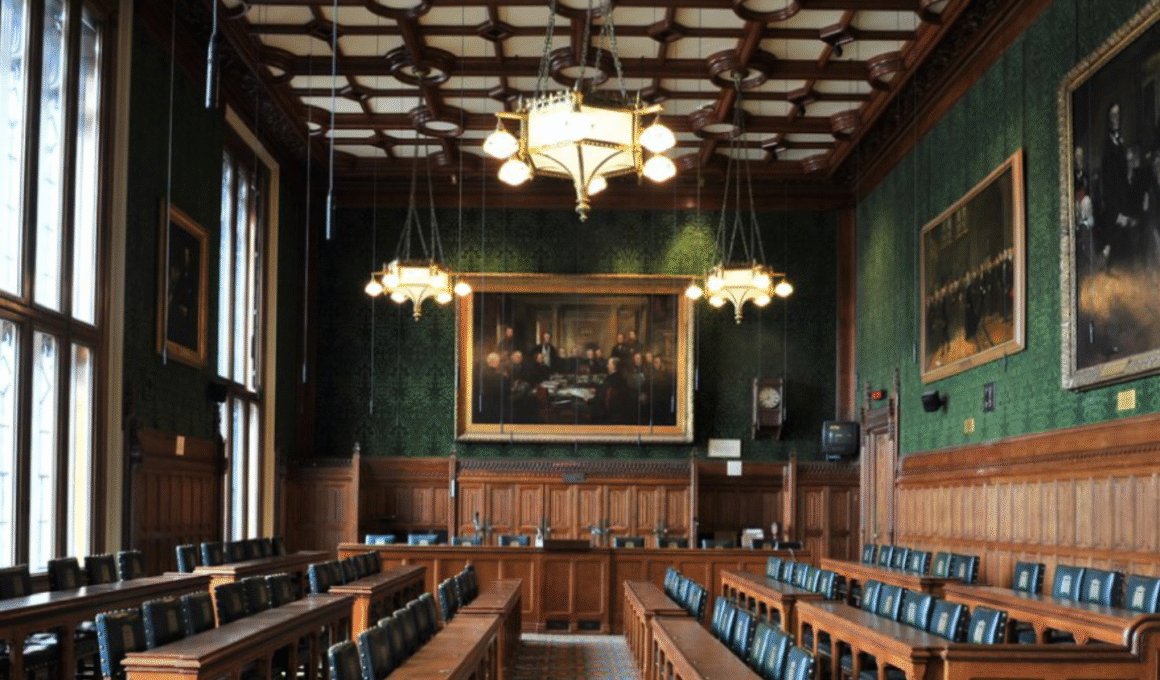
A man took his own life after being transferred to Wandsworth Prison — a move he feared — according to shocking testimony delivered by the Prisons and Probation Ombudsman to the House of Commons Justice Committee.
Speaking to MPs during an evidence session [pdf] on rehabilitation and resettlement earlier this month, Adrian Usher said:
“Very sadly… in one of those cases I was forced to say that the reason this man died was because he went to Wandsworth. It has not yet reached inquest, so I will not name it.”
Usher’s remarks offer a rare and deeply troubling insight into the psychological toll of conditions at HMP Wandsworth, one of the UK’s most overcrowded and criticised prisons. He warned that the south London jail is running at “three or four times the national average in terms of self-inflicted deaths”, with his office investigating multiple fatalities from the last year alone.
As we reported last month, there have been a worrying number of deaths at Wandsworth in recent years, and the PPO is still investigating several of them. The cases that remain open are:
- Thanweer Asharaf
- Peter Honnor
- Warren Arter
- Patrick Gladysz
- Rana Khan
- Gurshinder Singh
- Sidique Govinden
- Aleksandras Maslennikovas
- Morgan Sullivan
A ninth person, Waleed Ali, was recently added to the list.
‘A burden to carry’
Conditions inside Wandsworth — including up to 22 hours a day in cramped, shared cells — were described as fundamentally damaging by all three prison watchdogs at the session. Charlie Taylor, HM Chief Inspector of Prisons, testified that:
“There were a lot of prisoners who were locked up in very overcrowded conditions… Wandsworth has a very small education facility that would not be big enough for a primary school.”
These conditions are linked not just to mental distress and suicide, but also to the inability of officers to provide support. As Usher noted:
“In the interviews we do, sadly after deaths, I am increasingly seeing members of staff… openly saying, ‘I did not know what I was doing and I’ve been complaining that I didn’t know what I was doing and I haven’t had any help.’”
Family separation and fatal outcomes
In another case discussed by Usher, a man was transferred to the Isle of Wight despite begging for a prison nearer to his sister in Scotland — his only remaining family contact.
“He made repeated applications to be moved to the north of England… [Instead] the Prison Service… moved him to the Isle of Wight, and he took his life within six hours,” Usher told MPs.
The connection between sudden, inappropriate transfers and suicide was a recurring theme throughout the session, as was the broader mental health impact of overcrowded prisons and limited access to rehabilitation.
Wandsworth under scrutiny
HMP Wandsworth, which suffered a high-profile escape scandal in 2023, remains a major concern. While Taylor acknowledged some progress under the new governor, he said serious overcrowding still prevents basic rehabilitation: “There simply isn’t enough for people to do in Wandsworth compared with the capacity that they have in the jail.”
Usher and Davies both underscored how staff shortages, unrelenting pressure, and poor mental health make rehabilitation nearly impossible in high-stress jails like Wandsworth — a finding echoed by MPs who visited the facility days before the hearing.
Committee response
The Justice Committee chair, Andy Slaughter MP, described the testimony as “startling,” especially in light of recent data showing that only two out of 32 closed prisons inspected in the past year were rated good or reasonably good for purposeful activity.
The hearing has reignited calls for systemic reform, with watchdogs urging the government to invest in prison staff training, rethink transfer policies, and ensure that release support — proven to reduce suicide — becomes standard across the board.
As Usher concluded:
“Sadly, in 2025, 100 people killing themselves every year in our prisons is too many.”