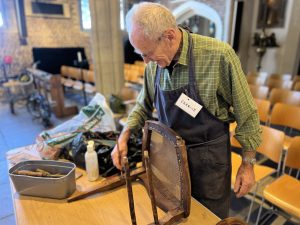




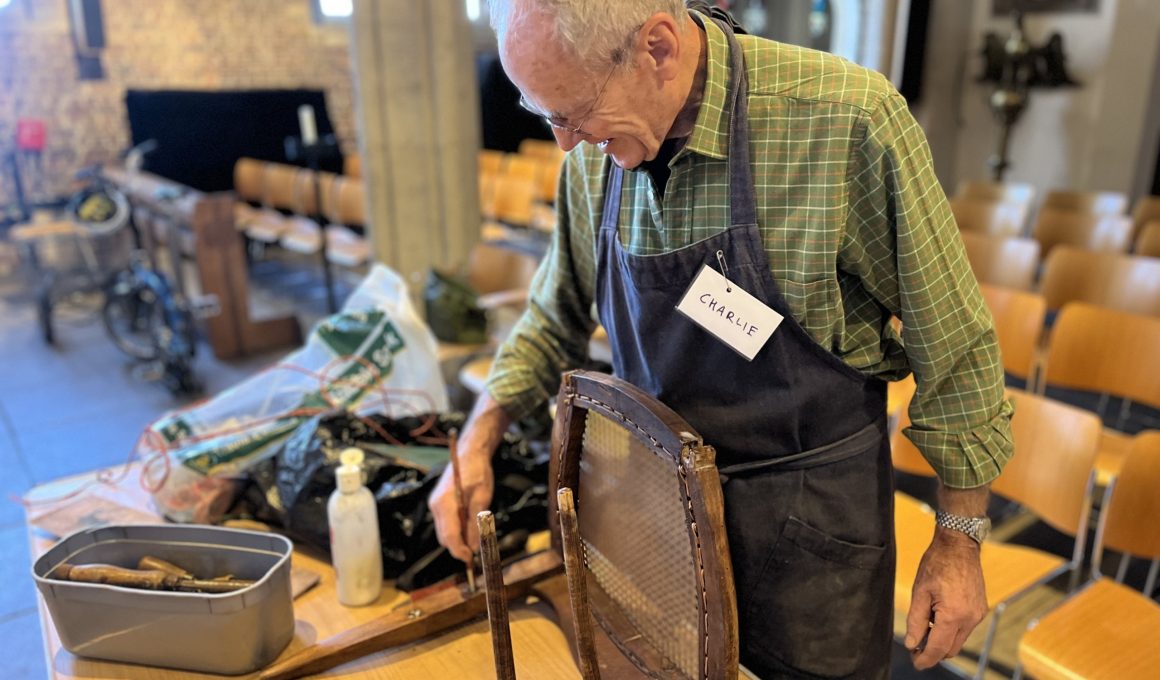
The French chair had come from a vintage market in Barnes, and it lasted until a friend sat on it.
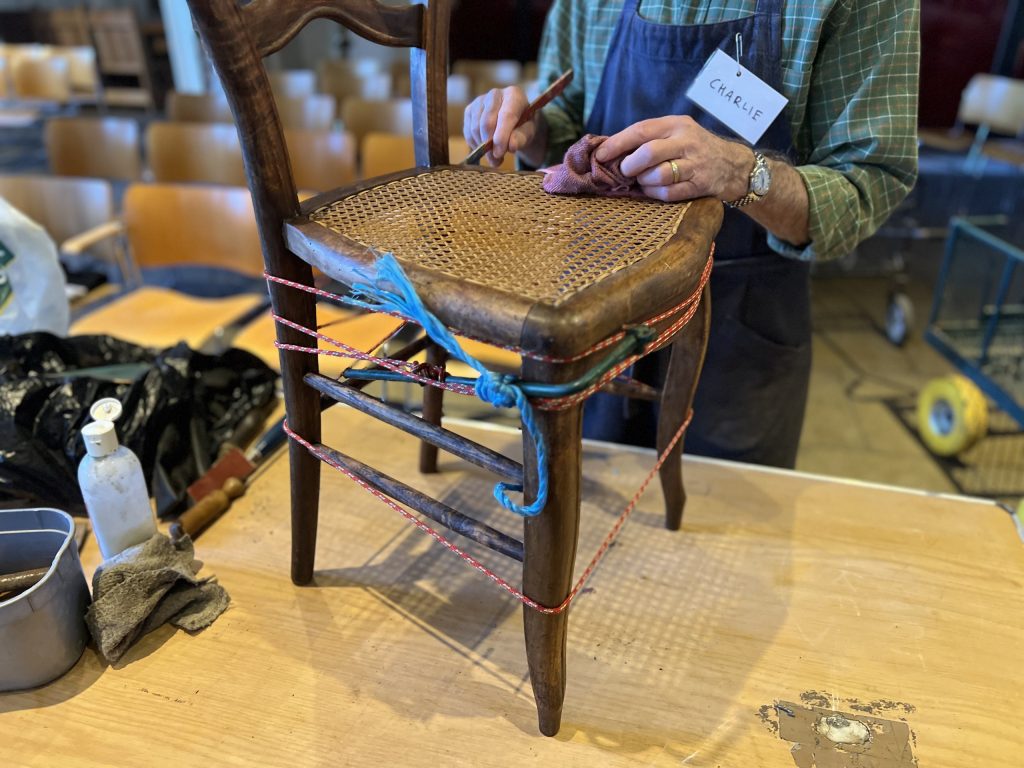
“Suddenly, the chair decided that was enough,” its owner said. Her friend didn’t fall. But the joints had let go, and by mid-November the chair was lying upside down on a trestle table in the nave of St Mary’s Church, Putney, while a man in a green check shirt and a canvas apron worked old glue out of its sockets.
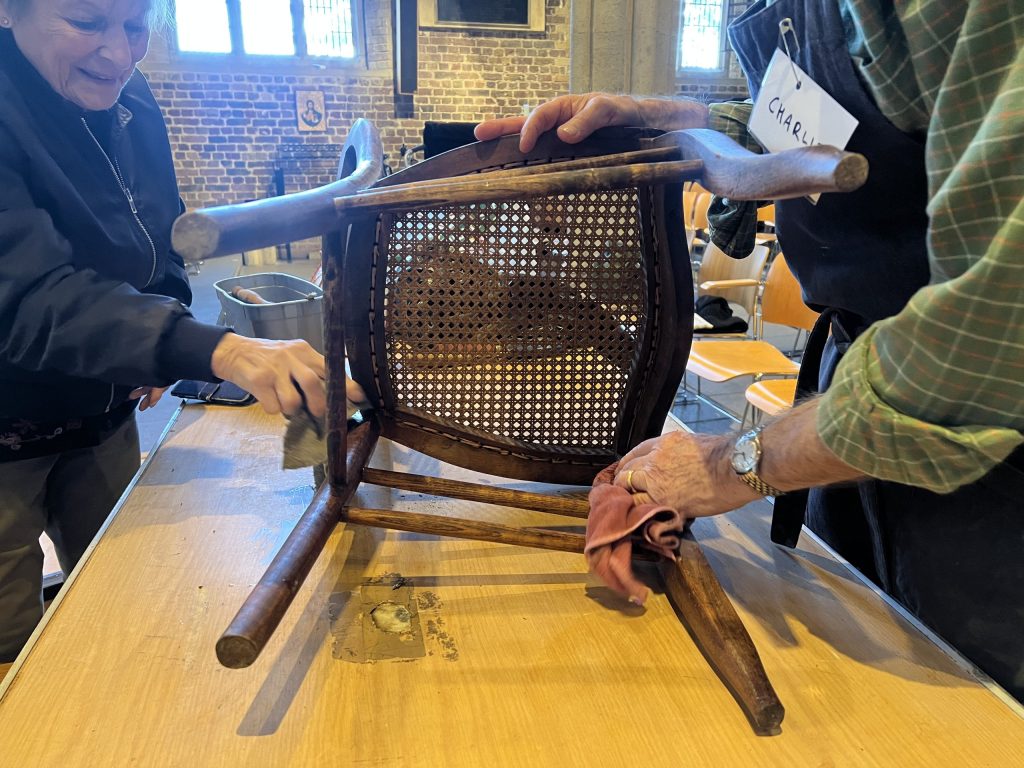
The badge on his apron said Charlie. Charlie Lindsell is a retired director of a computer company, and he talks about wood the way some people talk about wine. This one was fruitwood, cherry or apple, he said, a timber the French kept using long after the English gave it up. “It’s going to make a lovely sort of bedroom chair.”
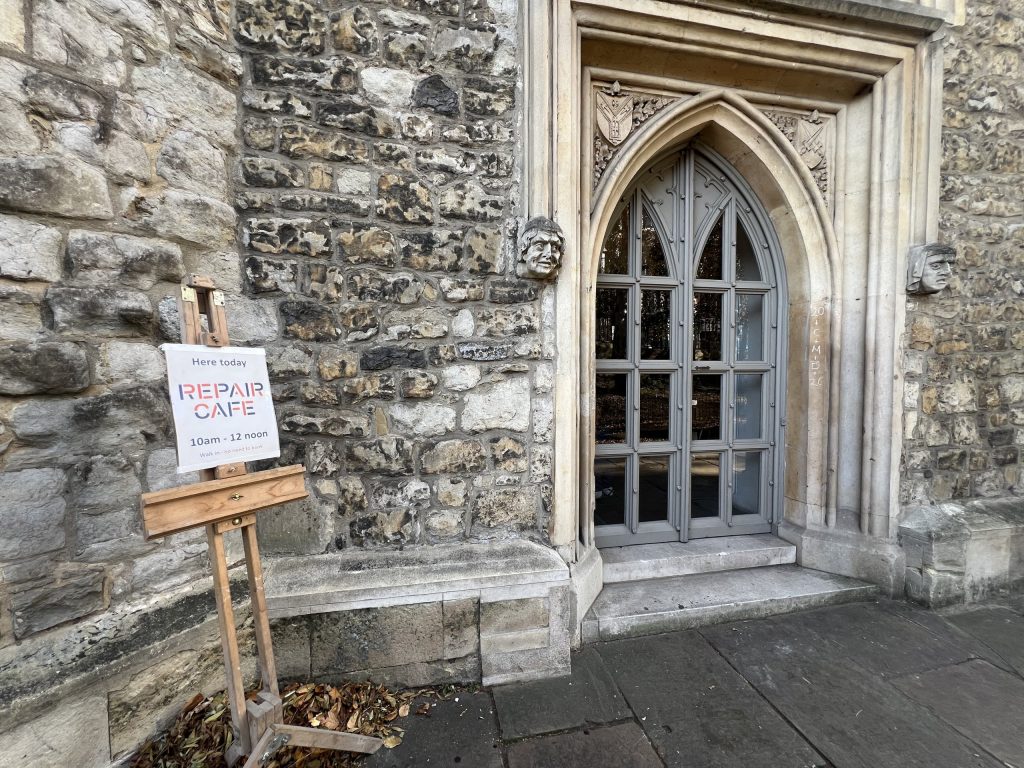
The owner had walked past the answer many times. She lives close by and had seen the poster for the Repair Cafe on the church fence every time she went by. When the chair gave way, she knew where to take it.
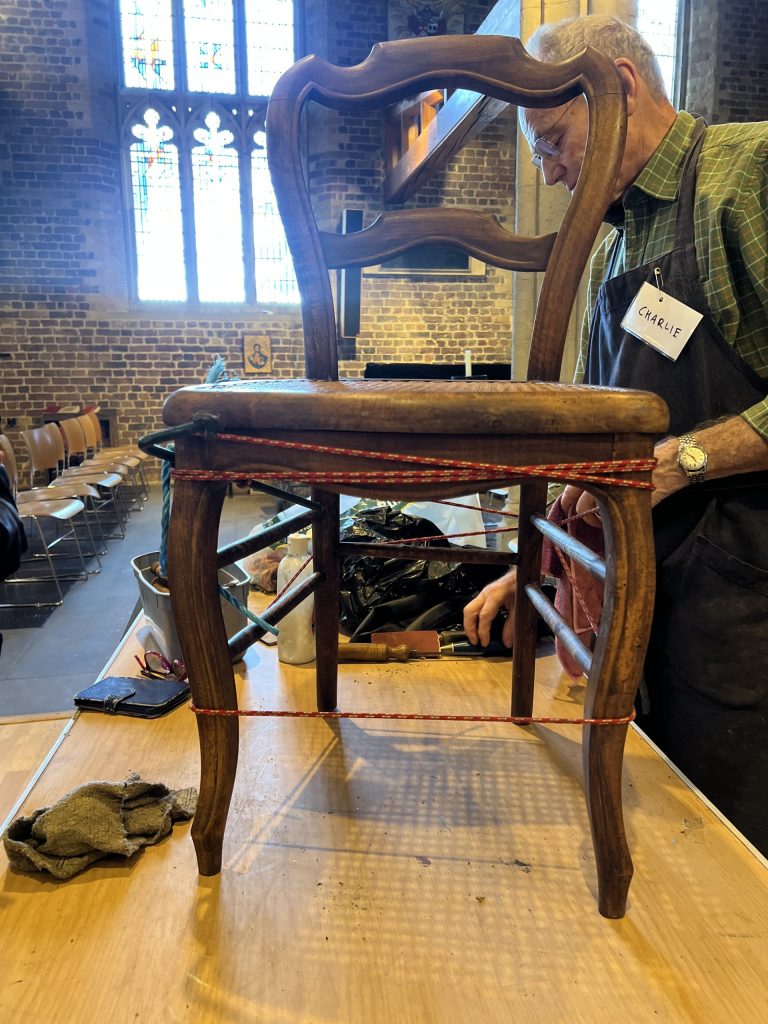
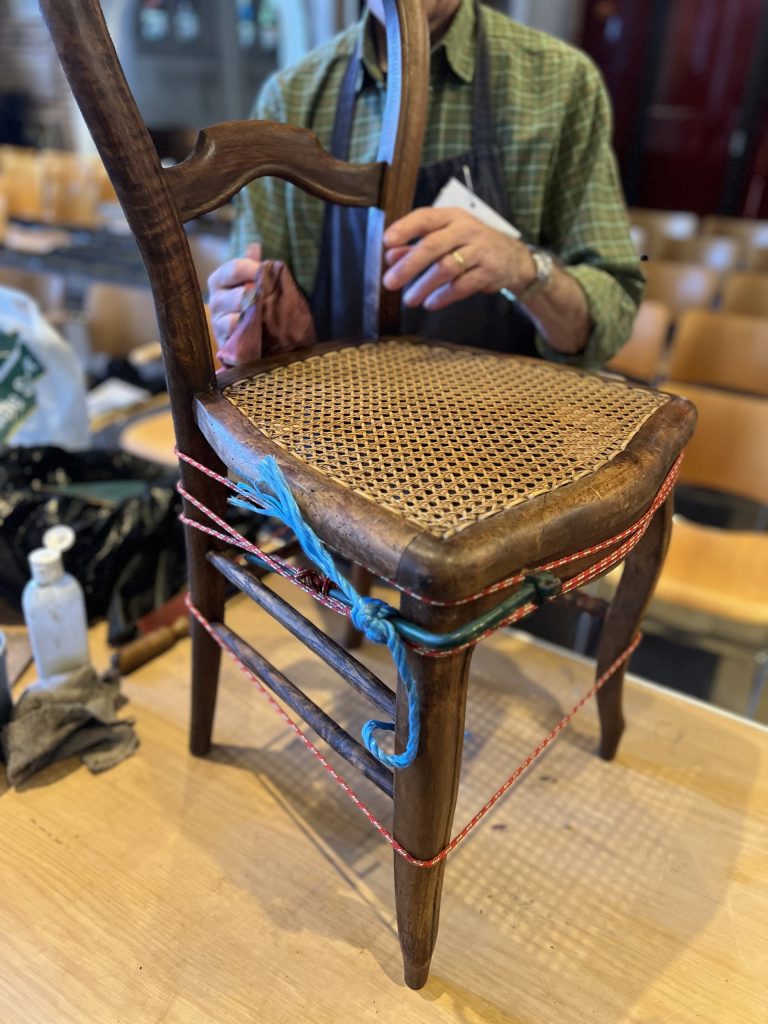
Glue was the easy part. The hard part with a chair like this is holding the joints tight while the glue sets, and she needed to take it home. Charlie reached for a length of red cord and a blue rope.
“This is my almost unique invention for repairs that need to be taken away,” he said.
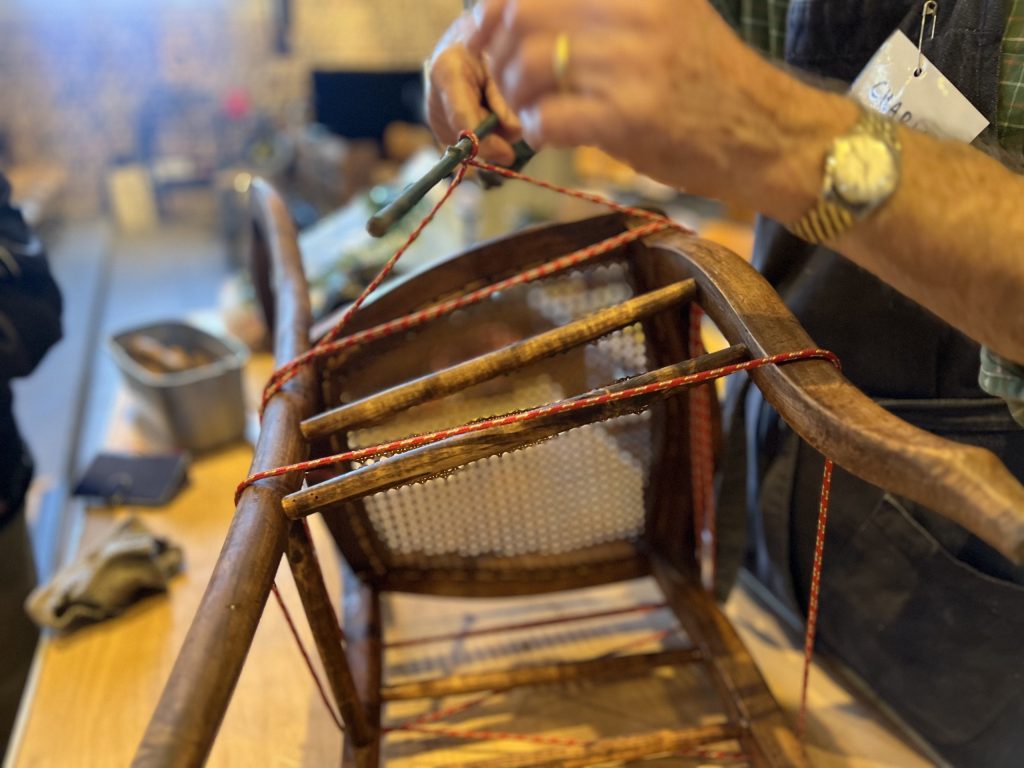
He looped the cord round the legs and the seat rails, slid a short bar through it and twisted, the way you would tighten a tourniquet, until every joint was pulled hard together. Then he did it again on the other side, until the chair stood on its own, trussed like a parcel, ready to go home and set overnight.
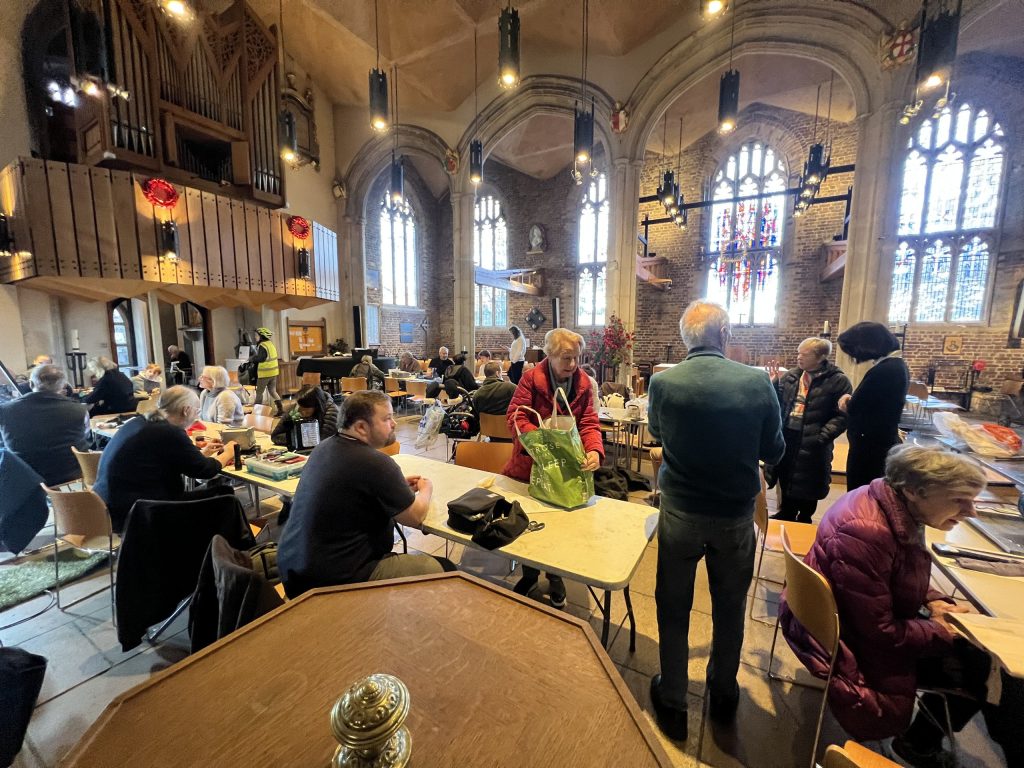
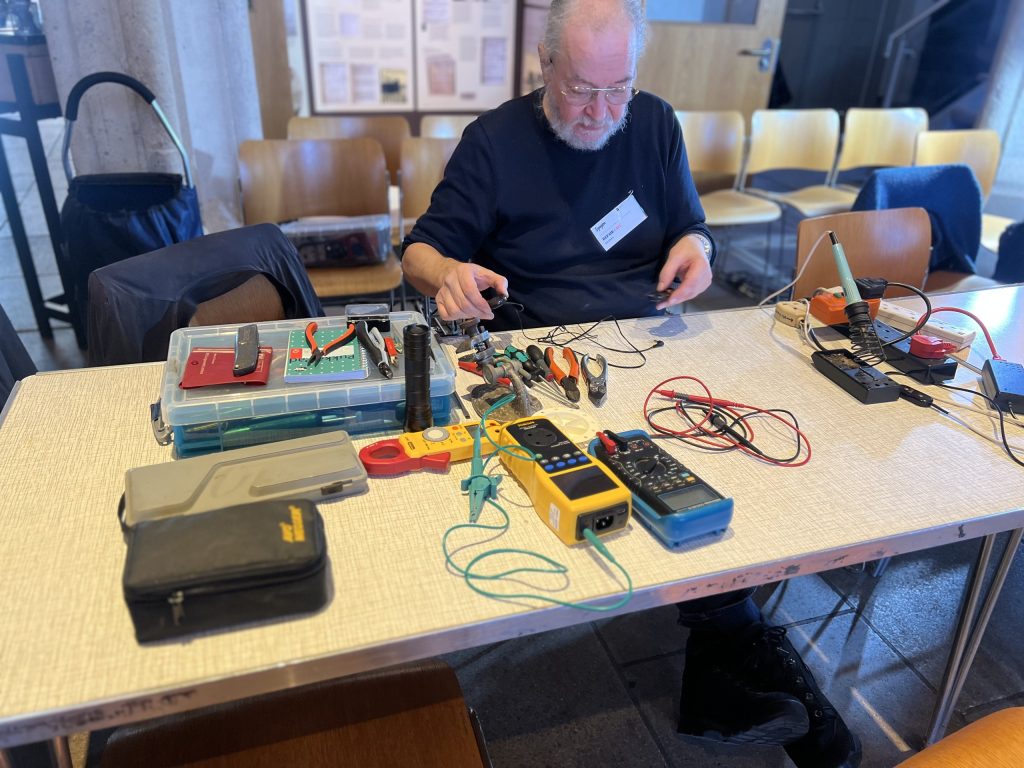
The rest of the room was busy in the same unhurried way. On the second Saturday of every month except April, from 10am until noon, the nave fills with rows of tables, and anyone in Putney can walk in with something broken. Nobody books. On a typical morning up to 18 volunteers get through 20 to 30 jobs, and on the morning I was there the tables held sewing machines, soldering irons, electrical testers and a heap of things people had given up on.
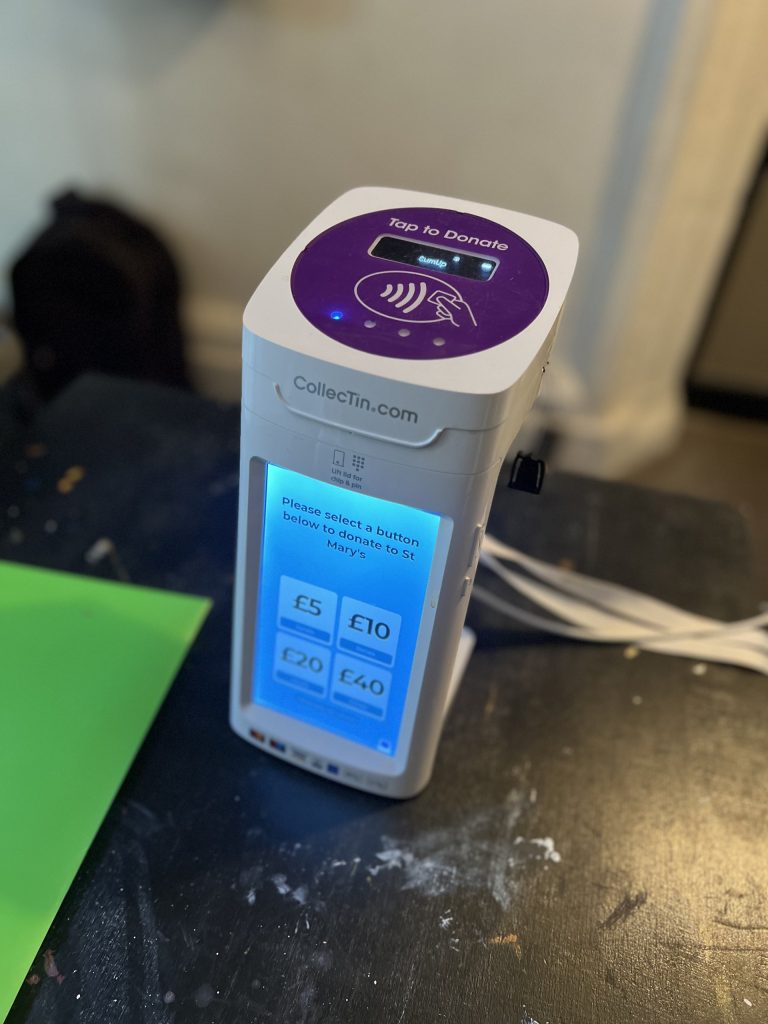
There is no charge. St Mary’s does not charge the volunteers for the space, and they in turn ask for a donation to the church’s upkeep. A contactless box on a table by the door asks for £5, £10, £20 or £40 with a tap.
The volunteers come and go. One of the organisers, who had shown me round, explained how new ones are taken on. “I sit them down, I give them a few jobs, see if they can handle it. If they love it, they come back. If they don’t, they move on.” A new recruit called Tiger had started that morning.
The man who came for the laptops
Alex came to fix computers. He grew up with them: his father worked from a home office 35 years ago, and Alex spent his childhood taking the machines apart and, eventually, learning to put them back together. He studied computer science and now works in marketing. His house, he says, is full of spare parts, because he fixes the computers of everyone he knows.
The trouble is that hardly anyone brings him one. “Probably about one a session, maybe two,” he said. So Alex fixes whatever turns up. “I did a picture frame and a stool today.”
When a laptop does arrive, it is rarely a soldering job. It is slow, or the files have gone, or the owner wants everything copied to a new one and has no idea how. “More often than not, it’s advice,” he said.
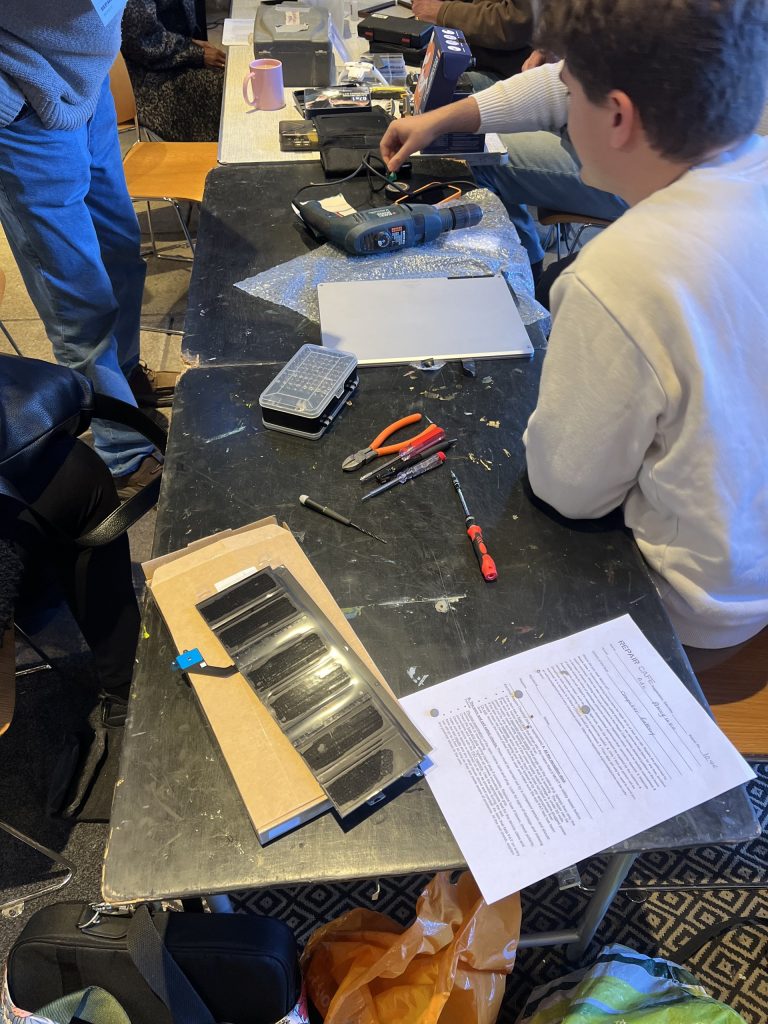
I had a question of my own. My MacBook screen died some months ago, and I have been running it through an iPad ever since. Alex’s answer was straight. Screens need specialist tools and the right replacement part, and a sitting lasts two hours, so a screen job usually means a shop. His advice was to ask the shop for the price of the part and the price of the labour separately, check the part price online yourself, and only then agree. On a laptop three years old, a new screen is probably worth it. On one more than six years old, the repair will often cost more than the machine is worth, and the better move is to recycle it properly.
He sees people bring in laptops ten and twelve years old and ask whether anything can be done. “You just have to be brutally honest,” he said. They can be made a little faster. They will never be fast.
Asked what he gets out of it, he laughed. A reason to get up on a Saturday, “not lie in bed all day”.
A word about this story
Found this useful? Members keep stories like it coming
The Repair Cafe runs on people chipping in. So does Putney.news
Help us keep covering what goes on in Putney
This story began with a Saturday morning at St Mary’s: three chats, a phone, a French chair and a dozen volunteers.
If you learned something useful or interesting here, or you want us to keep covering what goes on in Putney and telling people about it, the best way to support this work is to become a member.
Find out more: What we cover • Why we exist
Or join for £7 a month, cancel any time. Already a member? Log in
Across the room was another Alex, this one a customer. The same organiser introduced him as a squash partner from the Hurlingham Club (“he’s a bit better than me”) and “now a regular customer”. He had brought a pair of jeans that had split at the pocket. The sewing team were patching it from behind with a piece of denim.
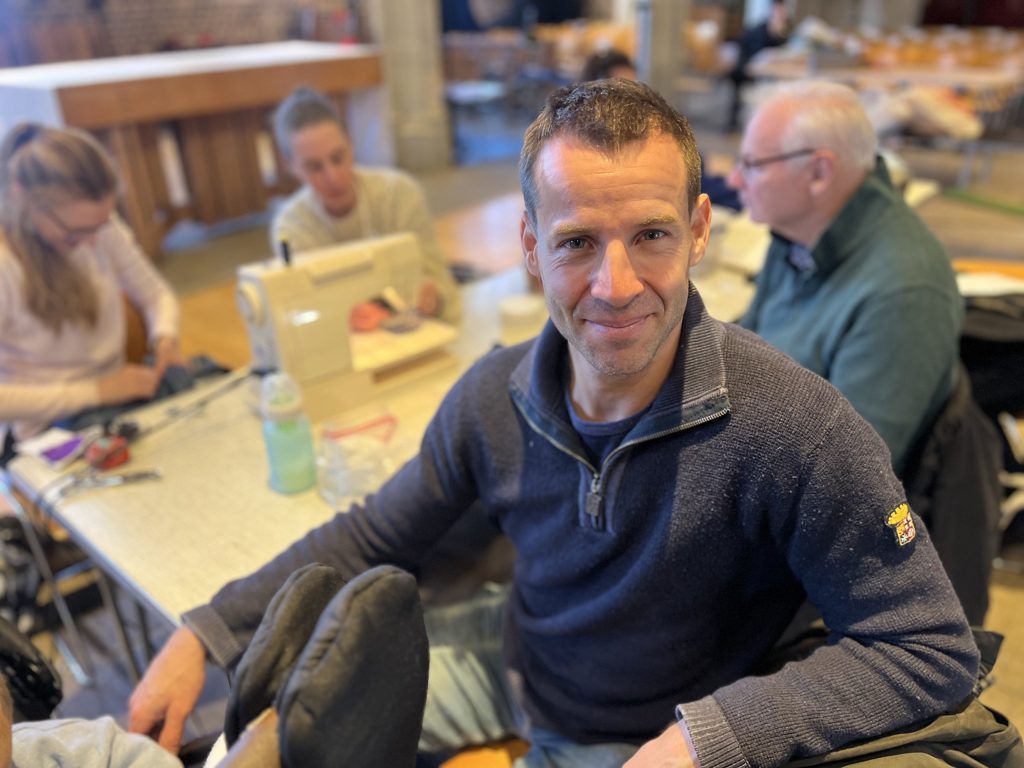
He could plainly afford a new pair, and the organiser asked him to say why he bothers. “I like to support this sort of community where people come together and repair things,” he said. A professional mender would charge him something like four times what he leaves in the donation box. “Instead of throwing things in the bin, it gives you a chance to keep things going a little bit longer.”
I know the jeans problem. Mine have gone in the same place, worn through by a phone. They are in a drawer at home, waiting for a decision.
Under the arch
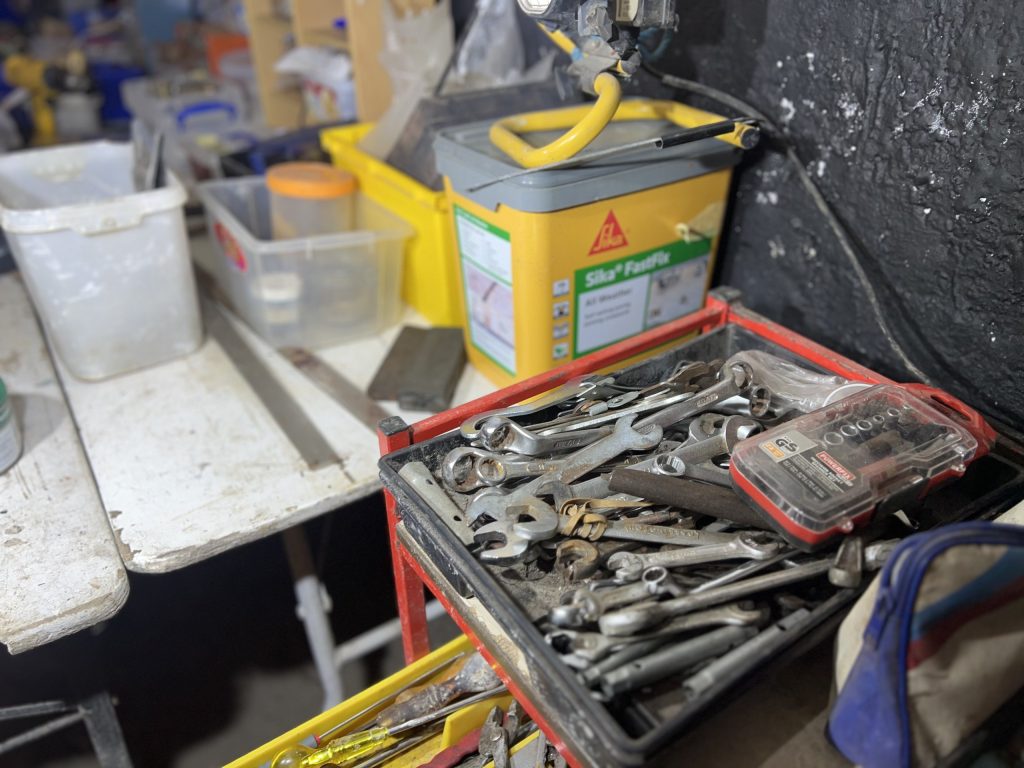
Twenty yards from the church door, down an alleyway, is the part of the operation most visitors never see. Under one of the arches beneath the approach to Putney Bridge is a workshop: a long bench, tubs of screws and clips, a tray of spanners, buckets of filler. Every Tuesday morning, from 10 until 12, the volunteers go there to do their own repairs and to learn from each other.
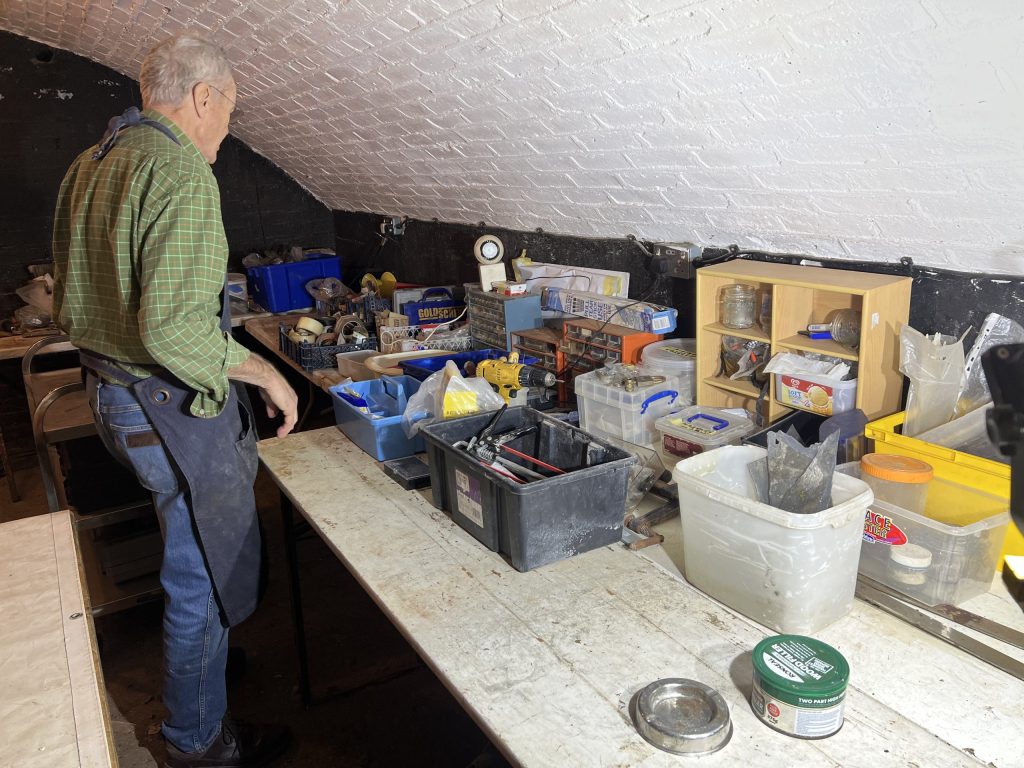
Nothing in it is wasted if Charlie can help it. Even the offcuts on his bench, he said, came off last year’s Christmas trees. “Our philosophy,” he said, “is to save anything that’s being thrown out.”
The Repair Cafe has run at St Mary’s for more than three years. Charlie gives most of the credit for it to the Revd John Whittaker, who was Team Rector of the parish from 2018 until this summer, when he left to become Archdeacon of Gloucester. One of the organisers put it simply: “Without his encouragement, I think that might not have happened. Such a positive force.”
Somewhere in the morning, the chair’s owner told a story against herself. A few years ago she moved from a house to a flat and called in an auctioneer to take the furniture she no longer had room for. She expected him to be pleased with it. He looked at her brown furniture and was not.
Plenty of people have had that conversation. Solid wooden furniture from the last century fetches very little now, and a lot of what replaced it is not built to be repaired at all. Charlie looked at the French chair, which was probably made in a factory, and drew the distinction that mattered to him. “It probably is factory made, but it was factory made with humans operating the machines.”
That was the line that sent me home thinking about the attic.
What’s in your attic
My grandfather was a carpenter. Some of the chairs he made are still with us. My parents used them as children, I used them as a child, and they have followed me round the world. A couple of them need work, the kind I have always meant to get round to and never have. In a box nearby is a pair of brass lamps, the style you see all over Gujarat. My wife’s mother was given them as part of her wedding trousseau in 1973, and she brought them from Mumbai to New York. They have not been lit in years.
Every house in Putney has its version of that box. The chair with the loose leg, the lamp that stopped working, the coat with the torn lining, kept because it was too good to throw away and never quite worth the trip to a shop. In one morning at St Mary’s I had answers on two of mine.
St Mary’s is one of hundreds. Repair Cafe International, the movement that began in Amsterdam, counts at least 438 in the UK. Nearer home, the Southfields Mend, Fix and Repair Cafe meets at St Barnabas Church on Lavenham Road, and Restarters Tooting runs repair sessions at St Mary’s on Balham High Road. In Roehampton, the Community Shed on the Alton Estate turned ten in October. It has more than 30 members and a waiting list.
What you can do
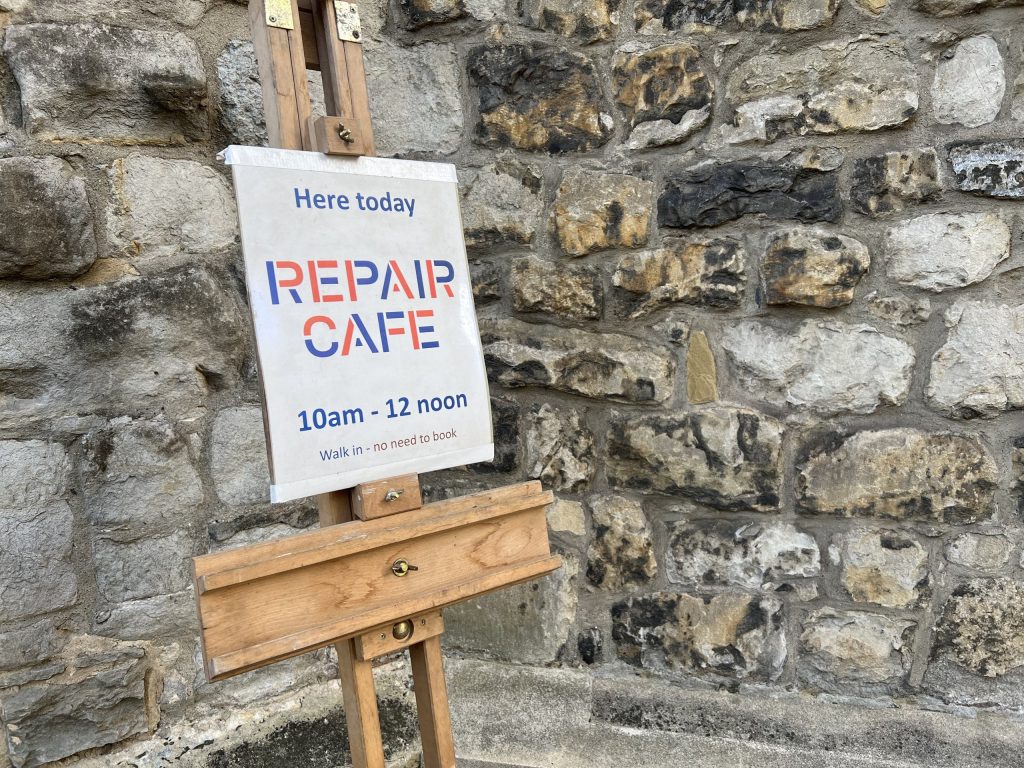
The next Repair Cafe at St Mary’s is on Saturday 12 December, from 10am to noon, at the church by Putney Bridge. Walk in; there is no need to book. A donation to St Mary’s is welcome.
The French chair went home in its ropes, to set overnight. Charlie wanted to know how it turned out, and asked for one thing in return. “This string is quite useful,” he said. If she could, she might bring it back next time. If not, he said, never mind.
What to bring, and what to leave at home
- Bring: clothes and fabrics, small electrical and electronic items, laptops, small furniture, bric-a-brac, bicycles, scissors and blades. Clocks on request.
- Leave at home: large TVs, lawnmowers and soiled clothing.
- Some jobs take longer than the two hours. Data recovery and screen replacements usually need a second visit or a shop.
- Donate online to the upkeep of St Mary’s: theparishofputney.churchsuite.com/donate/fund/vzjyyrcz
- Volunteers with a skill to offer can sign up on the day, or call the parish office on 020 3903 4732.