

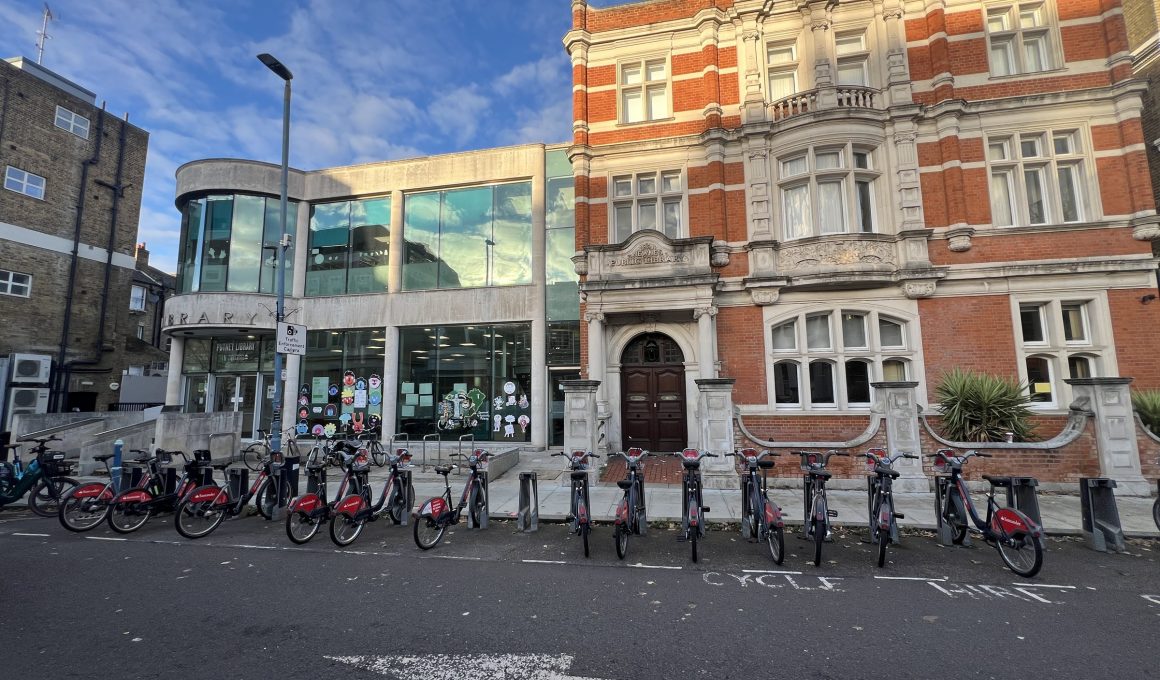
From Samuel Pepys’s diary to a novel published last year, twelve books put Putney on the page, and most of the places in them are still there to visit. They run in the same four eras as our long read on what Putney has meant to its writers, and each one comes with somewhere to stand, from our walk round the places. Eight of them are in Putney Library.
Take a book off the shelf.
From a village to a suburb
Samuel Pepys, the Diary (the entry for Sunday 28 April 1667). Pepys takes a boat upriver to Putney church, dozes through the sermon and loses his hat down a hole under the pulpit. The diary was not printed until 1825. Stand outside St Mary’s, whose 15th-century tower he sat beneath.
Charles Dickens, David Copperfield (1850). Dora’s aunts live at Putney, and David wonders how he ever found time to haunt the place while he courted her. The novel never names the church for the wedding, but a few boatmen wander in to watch. Dickens came to dinner at his friend Douglas Jerrold’s house on the edge of the Lower Common. Stand on the Lower Common, where Jerrold’s house stood.
H. G. Wells, The War of the Worlds (1898). Wells wrecks the new suburb with Martians while its paint is still wet. One chapter is called “The Man on Putney Hill”: the narrator spends a night in the inn at the top, then meets an artilleryman with a plan to save the human race underground. Stand at the top of Putney Hill and look down towards the river.
Arnold Bennett, Buried Alive (1908). The funniest book on the list, and Edwardian Putney in close detail: the High Street, the bridge, the trains, a tobacconist on the Upper Richmond Road. A world-famous painter swaps places with his dead valet and hides as a nobody at 29 Werter Road. Stand at the corner of Werter Road and the High Street.
Laurie Lee, As I Walked Out One Midsummer Morning (1969). Lee was nineteen in 1934 when he walked to London and found work as a labourer on Manor Fields, the new flats at the top of Putney Hill. He started writing in a room over a cafe beside the railway, which shook with every train. Stand by East Putney station, or outside Manor Fields.
J. R. Ackerley, My Dog Tulip (1956). Ackerley lived for twenty-six years in Star and Garter Mansions by the river, and this is the book of his Alsatian, chasing rabbits on Putney Heath. It is very frank about the dog’s love life, which appalled some of his admirers. Stand outside Star and Garter Mansions.
Tony Judt, The Memory Chalet (2010). The historian grew up in a flat at 92 Putney High Street in the 1950s, backing on to Jones Mews, where the rag-and-bone man kept his horse. He dictated these short memories during his final illness, and his High Street is one of independent shops. Stand at 92 Putney High Street.
From the 1960s to now
David McKee, Mr Benn: Red Knight (1967). Mr Benn lives at 52 Festive Road. McKee lived next door, at 54 Festing Road, and drew himself looking out of the window in the first book. A stone in the pavement where Festing Road meets the Lower Richmond Road marks it, and a path at the river end is now Festive Walk.
Jilly Cooper, The Common Years (1984). Ten years of walking her setter, Fortnum, on Putney Common, kept as a diary. She lived on Egliston Road, just by the Common, from 1972 to 1982. Stand on the Lower Common.
A. S. Byatt, Possession (1990). The Booker Prize winner, by a novelist who lived and died in Putney. Its young scholar lives in a Putney flat whose garden is bounded by the old wall of Fairfax House, one of the big houses that went. Stand in Putney Bridge Road, by the almshouses.
Sofka Zinovieff, Putney (2018). A novel about the sexual abuse of a nine-year-old girl by a composer who visits her family’s riverside house in the 1970s, told from three points of view and decades apart. It draws on the house on Deodar Road where Zinovieff grew up. Several papers named it a book of the year. Stand at the river end of Deodar Road.
John Francis O’Neill, In His Day (2025). A man of 52 collapses on the Putney council estate where he grew up and wakes in March 1976, face to face with his eleven-year-old self. Our review called its period detail extraordinary and the book invaluable social history for anyone who lives here. It is full of Putney landmarks, some still here and some long gone.
Read them in order and you watch a village become a suburb, and the suburb become the place that kept its past.
Where to find them
Putney Library in Disraeli Road holds eight of the twelve. David Copperfield, Buried Alive, Laurie Lee’s book, Mr Benn: Red Knight and Putney are in its lending stock. My Dog Tulip, The Memory Chalet and Possession are in its store, so ask at the desk or reserve them online. Other Wandsworth libraries hold The War of the Worlds, The Common Years and an abridged Pepys, and the whole diary is free to read online. In His Day is not in the borough’s catalogue.
The Local Studies collection at Putney has the two books this list owes most to: Sue Rolfe’s Literary Putney and its Environs (823.009) and Scott MacRobert’s Putney and Roehampton: A Brief History (942.166 PUTN).

The whole of Warlight by Michael Ondaatje was set in Ruvigny Gardens and is excellent. And it was long listed for the 2018 Booker prize.