

With Putney dark before 5pm, Wandsworth Council is asking residents where they want better lighting, but the wildlife living in its parks gets no say.
Five species of bat roost in Wandsworth Park alone, according to the Friends of Wandsworth Park. Bats avoid places lit to as little as 3.6 lux, says Jo Ferguson of the Bat Conservation Trust. A main road is lit at 5 to 20 lux.
To a bat, a lit path through a park is like the glare of a vape shop on the High Street. Wildlife has no curtains to draw. And park paths often cut straight across the grass, so any light on them falls in the middle of the habitat.

For people walking home, the dark now comes early. Since the clocks went back on 25 October, the sun has set in Putney before 4.30pm, and it is dark before 5pm.
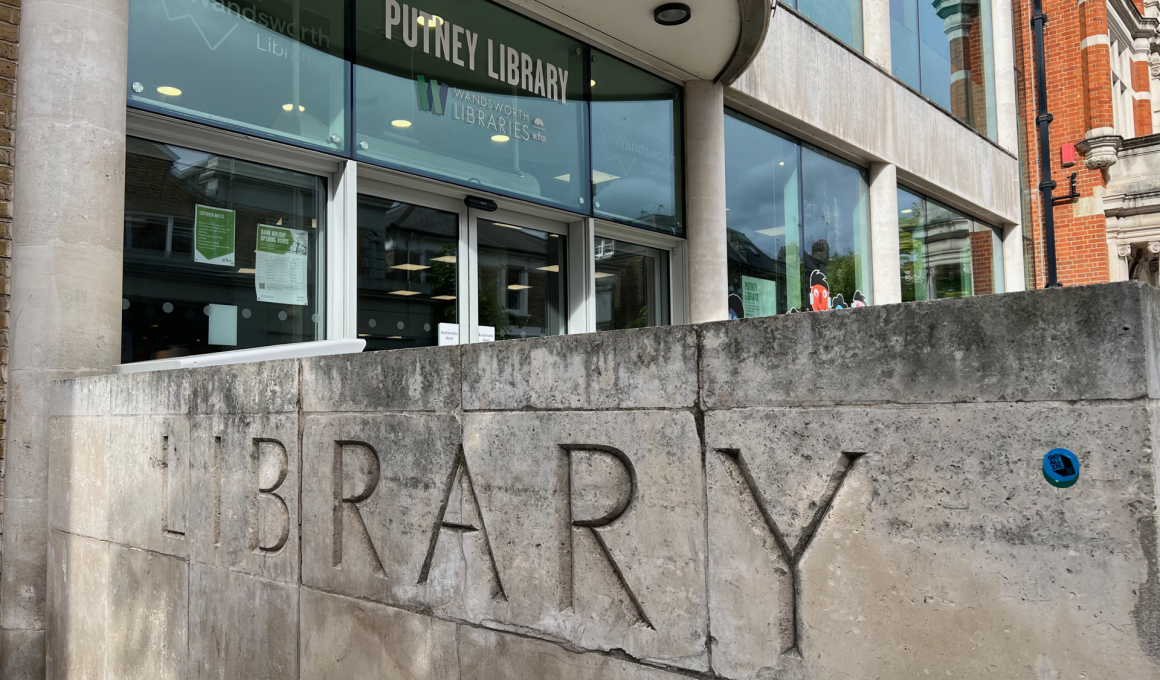
The council is holding workshops across the borough on a new lighting strategy. Putney’s is on Monday 16 November at Putney Library on Disraeli Road, from 7pm, and places are booked through the council’s sign-up form.

Announcing the workshops, Lynsey Hedges, the council’s Cabinet Member for Opportunity, said: “Making sure women and girls feel safe at night is particularly important.”
Caroline de la Soujeole, Cabinet Member for Enforcement, said the council would “take action where enforcement is needed to help keep people safe”. Neither the council’s announcement nor its video about the sessions mentions wildlife.
The council’s own night-time strategy does. Published in 2023, it called for a lighting strategy “informed by appropriate guidance on the impacts of lighting on biodiversity”.
And in August, the council’s Biodiversity Team asked local groups which existing lights should be reviewed for their effect on wildlife. The team said it was being consulted because of the impact artificial light can have on biodiversity.
Lit for people, dark for wildlife
When the council consulted on that strategy in 2023, Putney respondents split over Wandsworth Park. Some wanted it better lit for safety. Others opposed that, citing the “importance of dark spaces for wildlife”.
Others again said the park “feels unsafe at night, especially for women”, and needed more lighting or its gates locked. Lynsey Hedges, then a backbench councillor, asked that year whether the lighting plans would cover Wandsworth, Tooting and Clapham commons. She cited how many residents cross them.
Lighting routes like those has a cost for bats: the Bat Conservation Trust says they steer clear of routes where artificial light spills onto them. The species most sensitive to light include all of the UK’s rarest bats.
Insects suffer too: the charity Buglife says a third of insects drawn to streetlights and other fixed lights die as a result.
Research published in 2021 found that the newer LED streetlights, sold as the eco-friendly option, harm insects more than the sodium lamps they replaced. In hedgerows under LED lamps, there were 52 per cent fewer moth caterpillars than in nearby unlit stretches. Under sodium lamps, there were 41 per cent fewer.
The old sodium lamps glow yellow-orange. White LEDs give off light across the whole spectrum, including the blue light that insects are most sensitive to. Fewer insects means less food for the birds and bats that eat them.
The same researchers say there are easy fixes: LEDs can be dimmed, and fitted with filters that block the blue light most harmful to insects.
Buglife’s work has already come before the council. Its review of light’s harm to insects was part of the evidence at a 2022 public inquiry. The council wanted fenced, floodlit football pitches on the Triangle at Tooting Bec Common. A planning inspector refused the plan, calling it “an alien feature in the landscape” that would take away space people used freely.
Giving wildlife space from us
The council’s own record pulls both ways: it has said many of its parks are “deliberately left as ‘dark sky spaces’ or ‘dark corridors'”. Those are strips kept unlit so animals can move along them, and it gives its duty to protect wildlife as the reason.
Its 2023 strategy promised to “strive to minimise any disruption to biodiversity”, judging each change case by case after a wildlife survey. But the same strategy set out to encourage walking and cycling through parks at night, to “help with perception of safety”. And its funding statement for 2023/24 lists £63,000 for lighting the paths in Shillington Park.
Nothing the council has published about the workshops says how the new strategy will treat paths through parks. Putney.news asked the council on 9 November whether wildlife falls within the strategy, and whether it will cover paths through parks.
Asked for the group’s position, Pat Gross, chair of the Friends of Wandsworth Park, said: “No light in the park. Ever.”
The group, which runs summer bat walks, says on its website that artificial light disrupts how night creatures find their way. Its annual meeting on 4 November heard a talk on dark skies, which Gross said was very well attended. “People want the dark to remain dark,” she said, “and it will.” She says she will be at Putney Library on Monday.
When advertising displays were proposed for the park’s entrances in September, light was the single biggest theme of objections. Of the 77 letters read by Putney.news, 52 raised it.
Elsewhere, volunteer bat surveys on Wandsworth Common had found seven species by 2024, and the council is putting up bat boxes there this autumn. Richard Fox, co-chair of the Friends of Wandsworth Common, went to the council’s Wandsworth Common session and led its night walk.
On Tooting Common, a 2021 petition called for lights on every path. A year later, the Friends of Tooting Common asked for the effect of floodlighting on wildlife to be reviewed regularly.
So if you cross Wandsworth Park after dark, or go on its bat walks, Monday’s session is where both views can be put.
What happens next
The council says all the feedback will be reviewed and used to shape future lighting spending across the borough.
In September, the Biodiversity Team said consultants would turn the workshops into draft proposals, with drawings. The drafts are to go back to the people who attended, for comment, before the strategy is finalised.
The council’s announcement does not name the lighting specialists leading the sessions. Putney’s workshop was first set for 21 October and was moved because it clashed with a full council meeting.
The Putney sign-up form promises to show “how light & Darkness affects the way people see and use public spaces”.
How to have your say
- Putney: Monday 16 November, from 7pm, Putney Library, Disraeli Road. Sign up here.
- Wandsworth Town: Tuesday 17 November, 5.30pm to 7.30pm, Wandsworth Library. Sign up here.
Should the paths through Putney’s parks be lit at night, or kept dark for wildlife? Tell us in the comments.


I’m with the bats. I have a choice as to whether or not to walk through Wandsworth Park after dark. The wildlife does not. And I like dark skies,