Lieutenant Colonel (Retd) James Dove-Dixon JP gave the address at Putney’s Remembrance Sunday service yesterday, reflecting on the millions of lives lost and focusing on just one: a soldier called John.
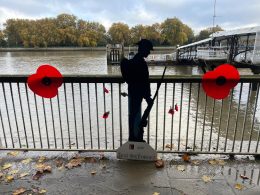
The day began with a remembrance service outside at the war memorial, and continued with a church service inside St Mary’s Church, where Putney’s MP and the Mayor of Wandsworth gave readings.
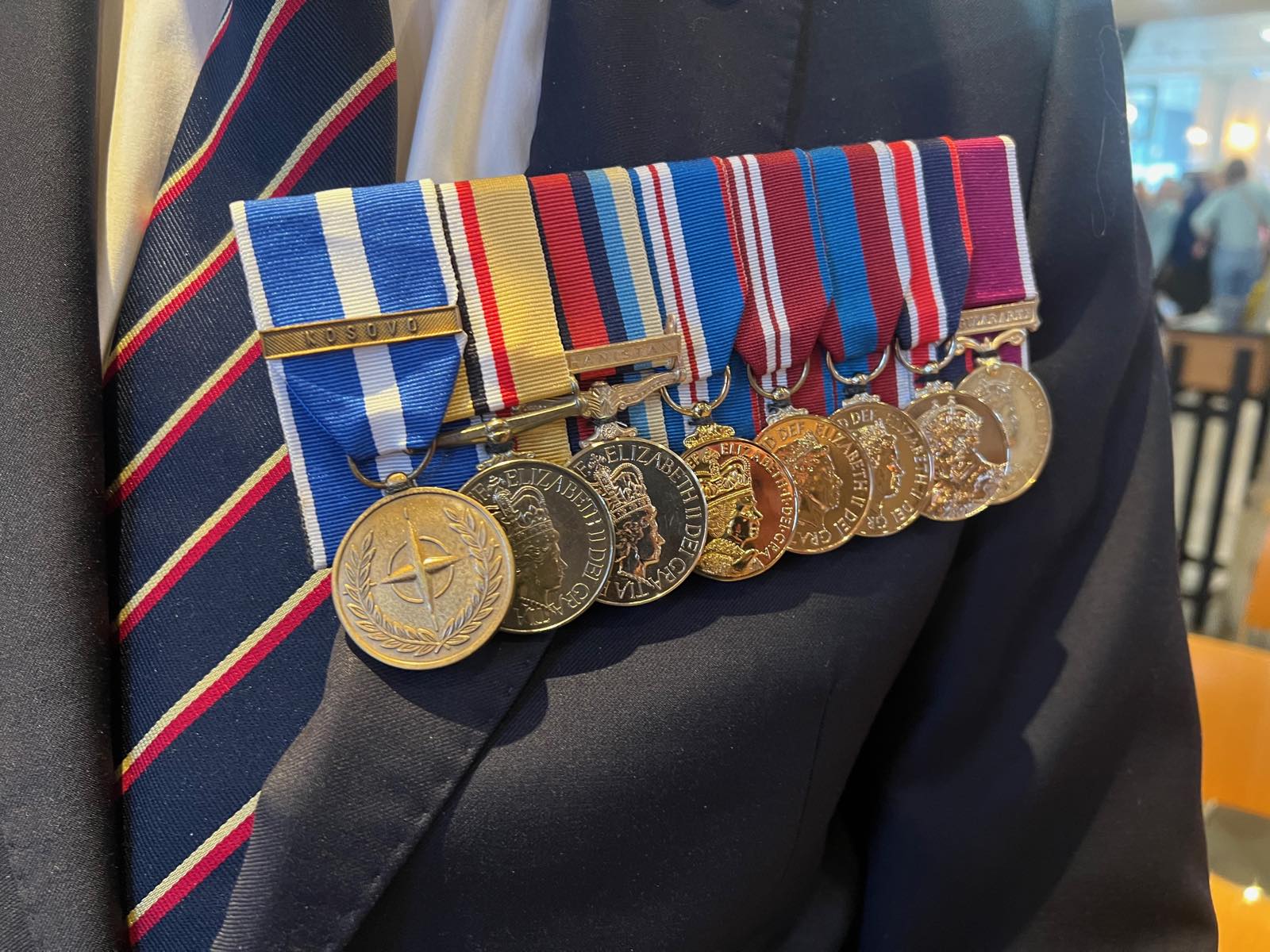
The order of service listed Lt Col Dove-Dixon simply for “The Address”, but he brought a soldier’s record to it. A retired army officer, he served in Kosovo, Iraq and Afghanistan, and wore a row of his own medals. When his turn came, he stood holding a different set: Second World War medals that, as far as he can tell, have never been worn.
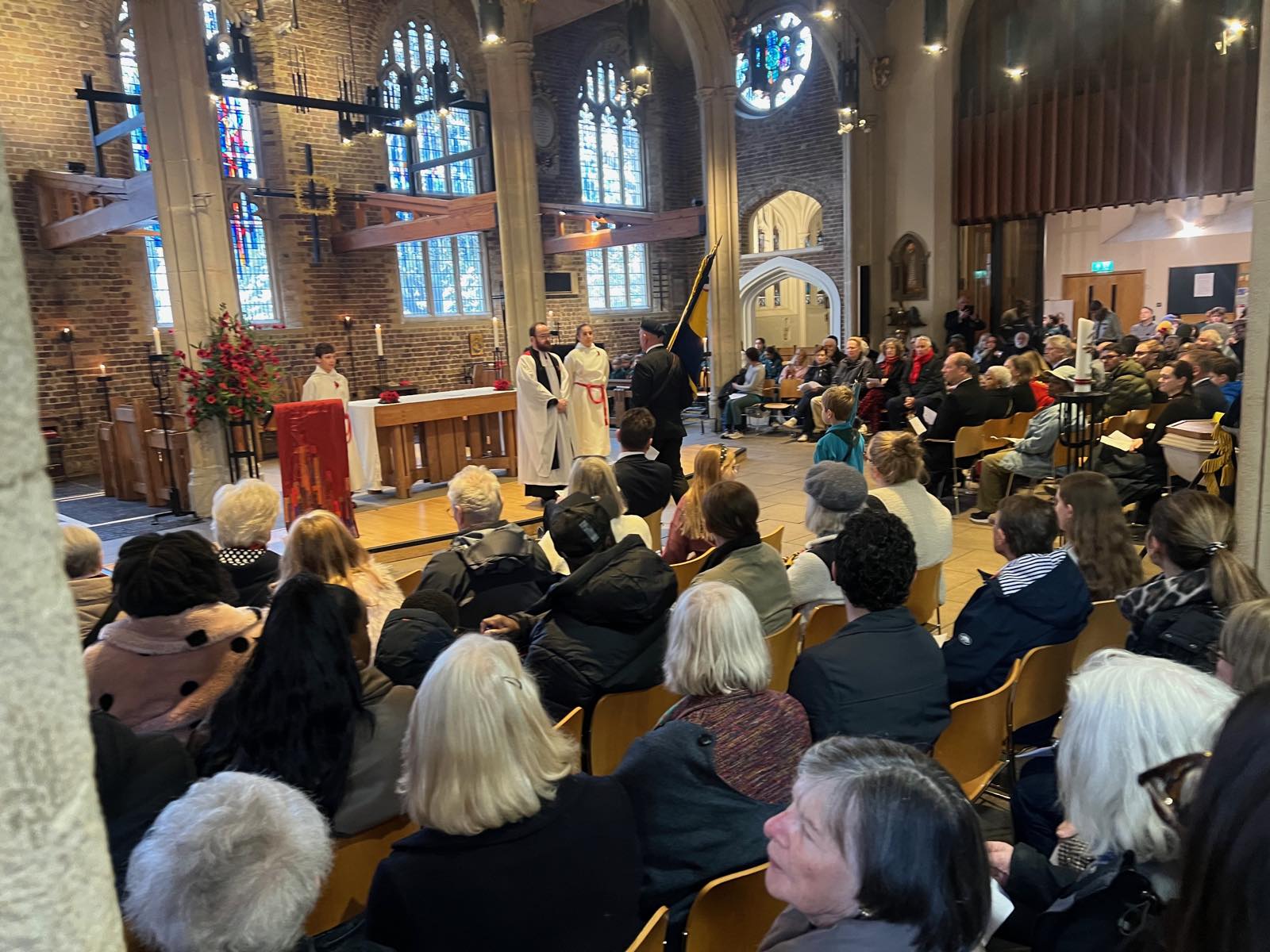
It was the first time he had spoken there since leaving regular service, so he spoke as a veteran. Remembrance, he said, brings people together to remember millions, “a number so unfathomable that it can seem almost abstract”, but for soldiers of his generation it is more personal. The services they held in the deserts of Iraq and Afghanistan, in the days after losing friends, were “very much about the individuals”.
“When we think about millions who have lost their lives, we are thinking about millions of individuals,” he said. “And each of those individuals has a story.”
The idea for the address came at last year’s service, the 80th anniversary of the end of the Second World War, when he was struck by how many medals were being worn. Medals on the left belong to the person wearing them; medals on the right were awarded to “someone close to that person. A loved one, a relative.” Standing at the memorial with his eldest daughter that day, he suggested she might one day wear his.
“But this is John’s story,” he said, “and these are his medals.”
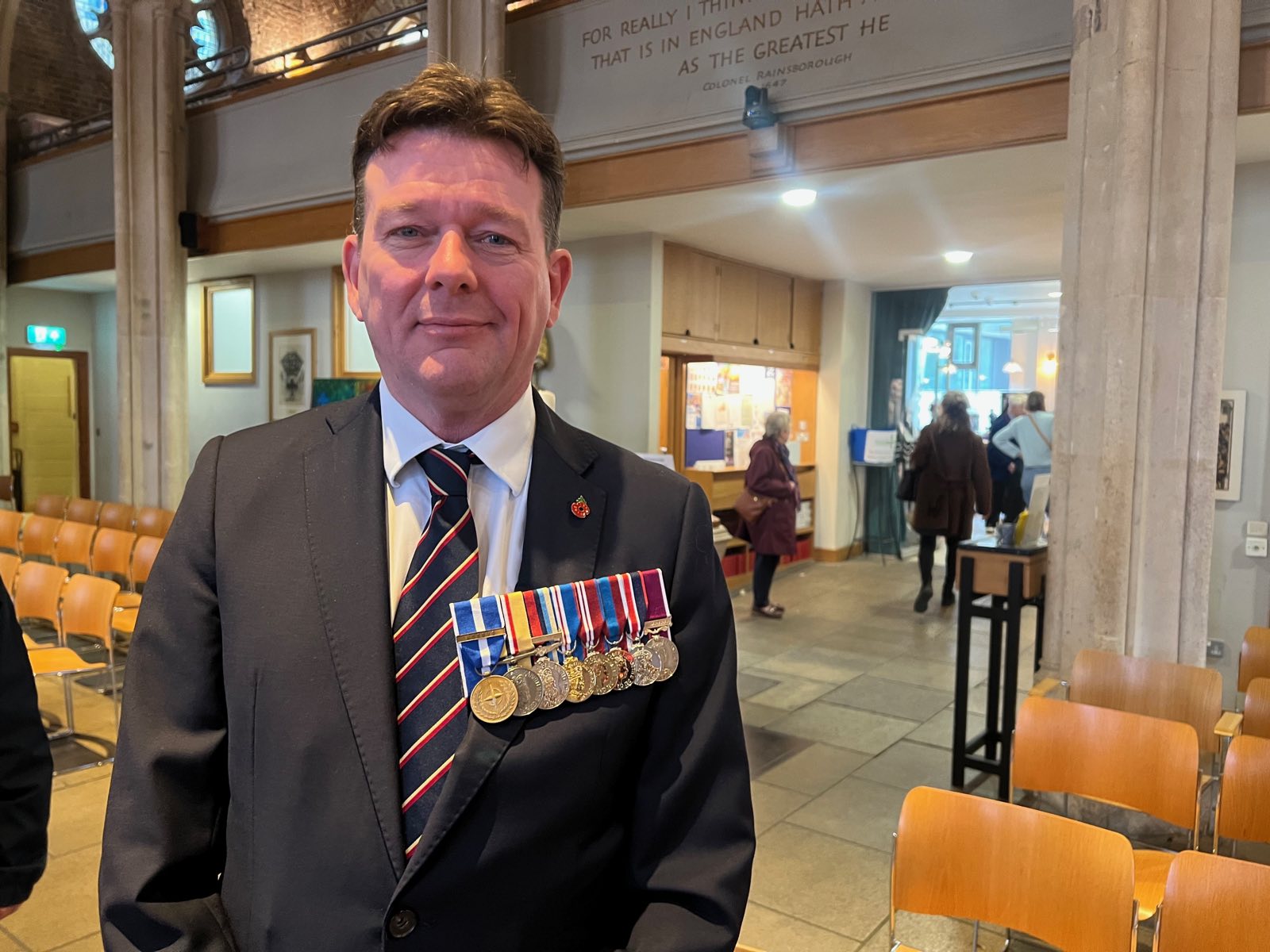
They had come to him last year with no name on them, but with a certificate giving John’s name, his army number and his unit, the Pioneer Corps. From there, with help from the corps’ regimental association, a copy of the unit’s war diary and civil records, he had pieced together John’s war. One of the medals, on a red, white and green ribbon, is the Italy Star, given for service in Italy.
John was born in 1920, part of the rush of births after the First World War: nearly 960,000 babies were born in England and Wales that year. His parents could not have known, he said, that it put their son at exactly the right age to be among the first called up for the next war.
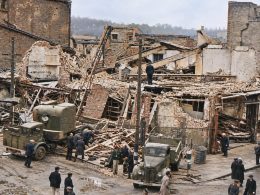
John began basic training on 4 June 1940, aged 20, as the British army was being forced off the continent at Dunkirk, and joined 188 Pioneer Company, one of many new units formed in a hurry. The Pioneers did demolition and rescue work. That took the company to Southampton in late 1940, to keep the port open through the Southampton Blitz, and later to Salisbury Plain to build training camps that, he said, are still in use.
In June 1941, still only 21, John married his sweetheart, Doris, known as Dolly.
Then, in November 1942, the company moved to Scotland to train alongside the commandos for landings from the sea. The men knew they would be needed, but not where or when, and by the time they found out they had lived and worked together for nearly three years.
They sailed for Sicily in June 1943, and on 10 July John’s unit went ashore in the very first landings, in seas so rough the Italian and German defenders believed no one could land that day. The Pioneers’ job was to clear the beach of obstacles and lay temporary track for the tanks to drive ashore on. They suffered no casualties.
“That is a combination of two things,” he said. “Hard training and sheer luck.”
Within weeks the unit was pulled back to Tripoli to train for the next landing, and on 4 September it sailed for Salerno, south of Naples. Once more it went in with the first wave, landing under heavy artillery fire at four in the morning on 9 September 1943, and once more it set to work clearing the beach.
He spared the congregation the detail of what followed, saying only that anyone who pictured the opening scenes of the film Saving Private Ryan would not be far wrong. For three weeks the Germans counter-attacked. The unit had already lost men to the constant shelling and to German aircraft strafing the beaches when, on 18 September 1943, as he put it, “his own luck runs out, and he is killed.”
At home, Dolly was heavily pregnant. John had been on leave before he sailed for Sicily, and their son was born in October. He could not be sure, he said, but he expected she already knew of John’s death by then: the saddest part of the story, “a heartbroken young widow left with a child who will never know his father”.
John’s death was not unusual: it was one of thousands at Salerno and millions in the war, and for many of those lost, he said, “there is no one to tell their story.” He dedicated John’s story to them.
Then he gave John’s full name: Private John William Henry Dove-Dixon, of the Pioneer Corps.
“My grandfather.”
Three of John’s great-grandchildren were in the church, he said, “hearing his story for the first time”.
No photograph of John came with the medals, only one of the temporary marker on his grave at Salerno: a simple wooden cross, probably put there, his grandson said, by the men he served with.
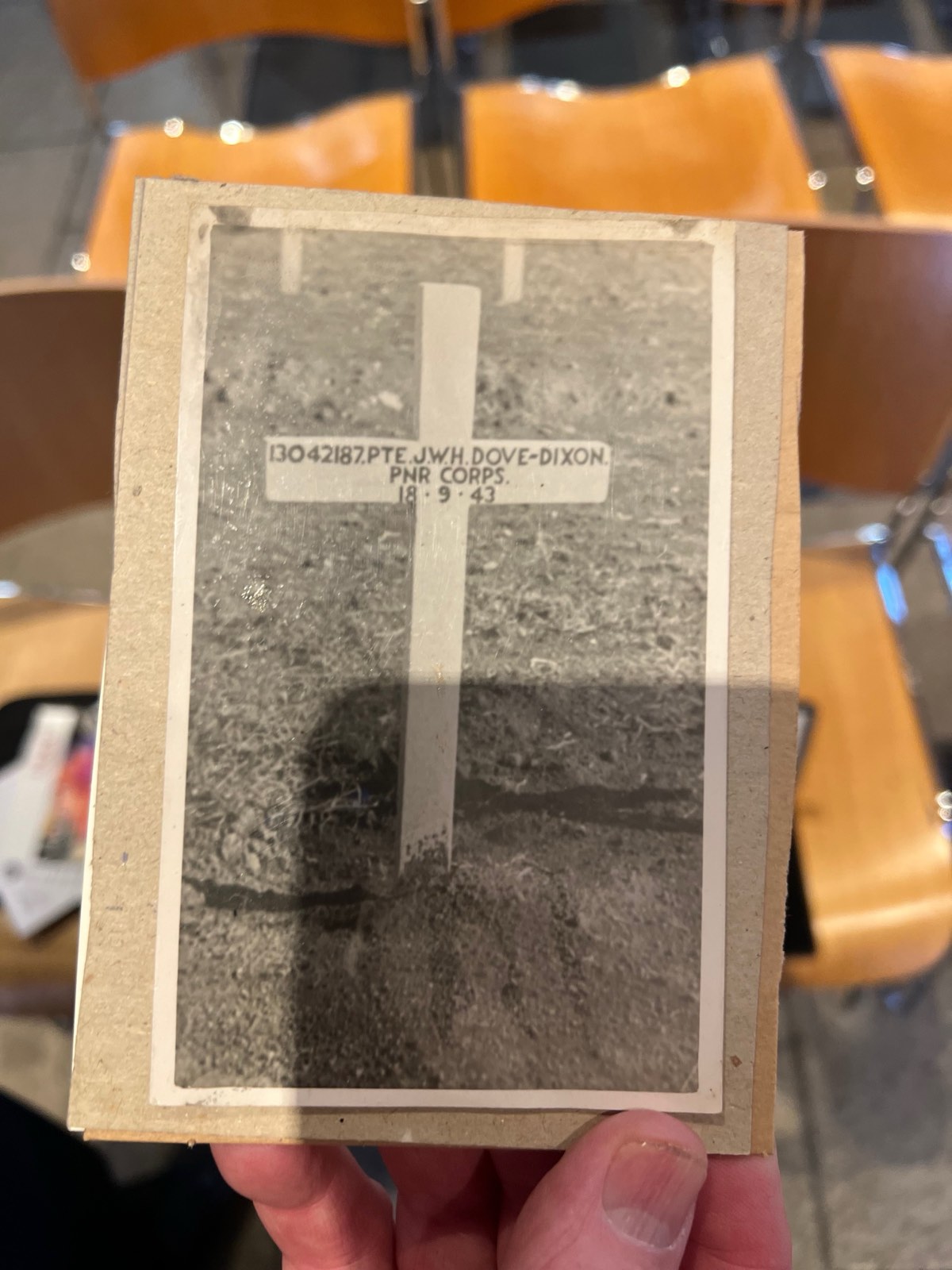
A carved headstone stands there now, in Salerno War Cemetery. John was 23. After the war, families were asked to choose an inscription for each headstone, and Dolly chose: “His life a beautiful memory, his death a silent grief.”
A few paces along, his grandson told the congregation, lies the sixth Duke of Wellington, a descendant of the general who won at Waterloo: a commando from the force John had trained alongside in Scotland, killed in the same fighting. It was, he said, “a remarkable degree of equality in commemoration that they would not have enjoyed in life”.
At the war memorial that morning a member of the Royal British Legion had read the Kohima Epitaph: “When you go home, tell them of us and say: For your tomorrow, we gave our today.” His closing words echoed it: thinking about one of those who gave their lives, he said, “perhaps it helps us to recognise all those who gave their tomorrows for our today.”
There is no applause in a church. Had there been, he would have had it. Instead, a group stayed behind afterwards to talk to Lieutenant Colonel James Dove-Dixon.