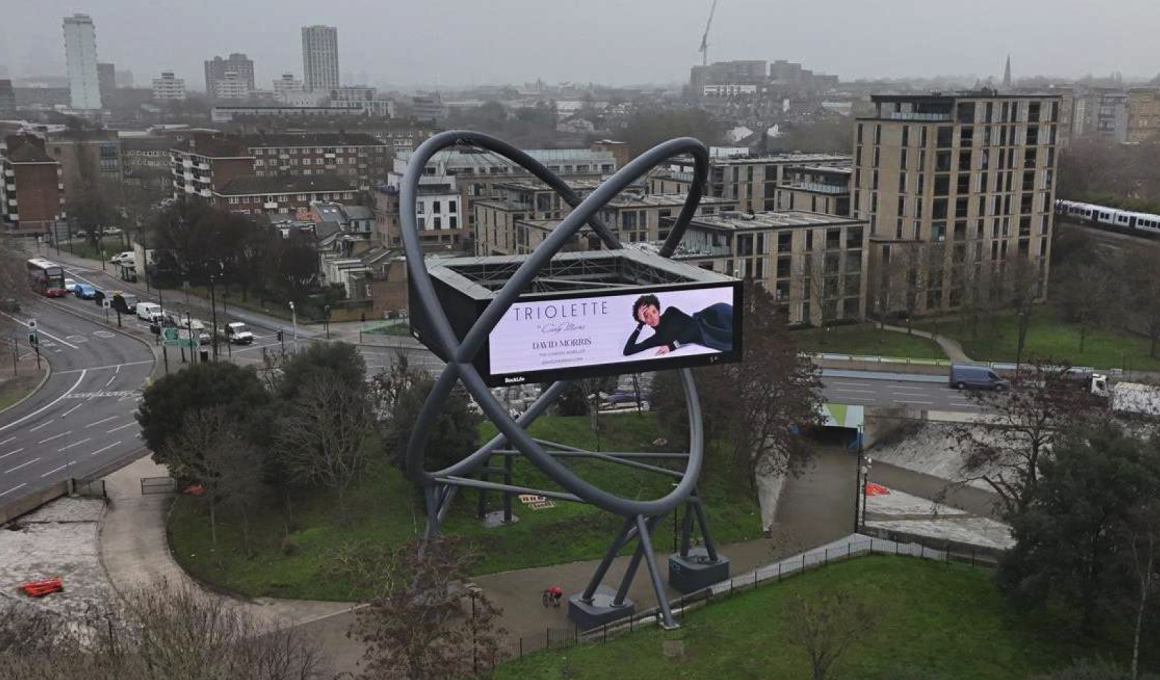
The Wandsworth Pretzel is staying up.
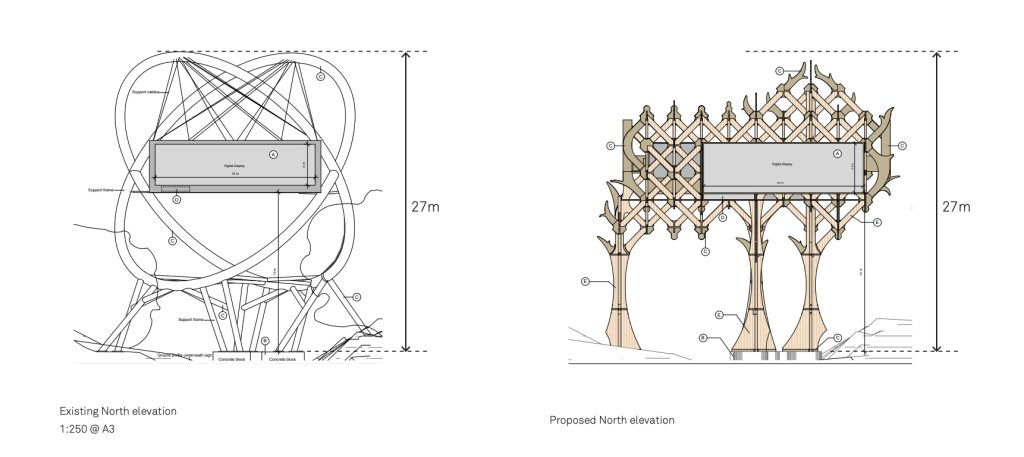
Councillors refused permission to demolish it on Thursday night, by six votes to three, overturning their own planning officers’ recommended approval of the landmark’s removal. The rings will not come down, the proposed timber tower will not go up, and the 153 people who wrote in to object, none of whom was allowed to say a word at the meeting, got what they asked for.
The application collapsed on a question nobody at the council had answered.
Cllr Matthew Tiller, representing Roehampton, asked whether the ageing Pretzel would last longer without the advertising screens bolted to it. Ellen Richards, the officer presenting the case, noted that the structure is around 30 years old, and could carry on, but it would need a good deal of maintenance. Then she volunteered something she had not been asked.
“If for example the existing pretzel was to remain in location, whether or not they would upgrade the advertisement panels on the existing structure, that’s not really been discussed or considered by officers,” she said. “It’s a potentially realistic thing though.”
Councillors had been asked to approve knocking down a local landmark, and the obvious alternative to knocking it down had never been put in front of them.
“It wasn’t very popular when it first came”
Nobody in the room argued that the Pretzel is beautiful.
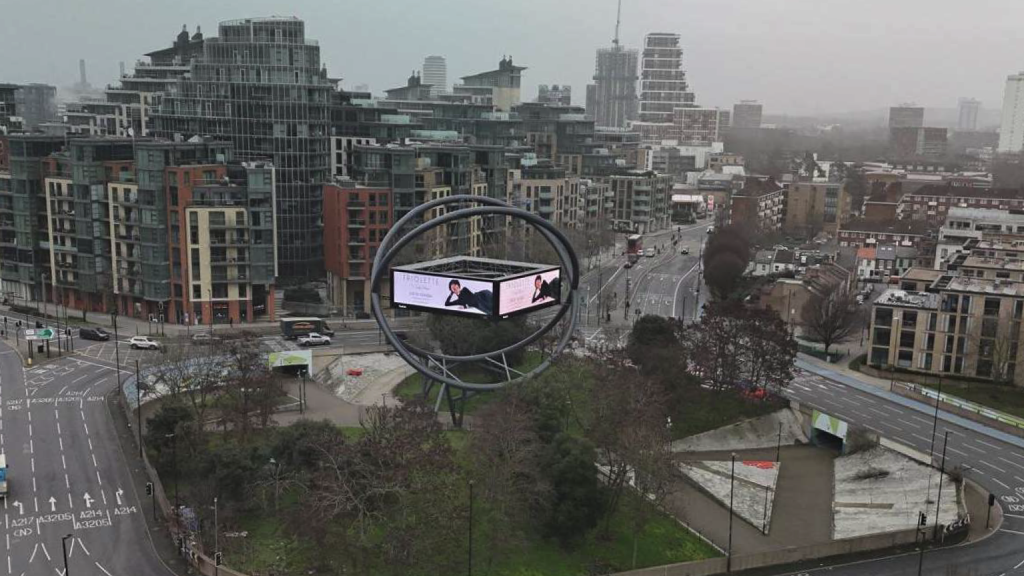
Cllr Tony Belton, who was on the committee when the rings went up in 1998, told his colleagues they were remembering it wrong. “It wasn’t very popular when it first came. Indeed it was extremely unpopular and everyone was campaigning against it quite vociferously. So perhaps it’s just its age gives us a certain nostalgia.” He thinks he voted against it then. He voted against its replacement now.
On a key point of contention, David Tidley, the council’s head of transport strategy, said they could find no evidence the screens caused crashes on the roundabout or its approaches. Cllr Belton took that and turned it over: “If they don’t distract drivers, then by voting it down I think we’re doing the advertisers a favour, because they’re just wasting their money. And if it does distract drivers, which is presumably the point, then that’s unfortunate too.”
Cllr Leonie Cooper read Transport for London’s objection to the proposal, including its warning about the collision record on the approach roads and its point that the clutter would be harder on neurodivergent people. Her verdict: “I’m not finding very much in this paper that is helping recommend this replacement structure to me.”
Two councillors spoke for approving it, and both made the same case: this is taste, and taste is not a planning reason. Cllr Will Sweet said the screens were roughly the same size and roughly the same brightness as the ones up there now, and the safety concerns had been dealt with by conditions. On brightness he was being generous to the scheme, which would have run a third brighter at night than the existing screens, though still well inside industry limits. Cllr Chris Baron went against his own taste. “I don’t particularly like the look of it, but I struggle to see why me not liking how it looks is particularly relevant.”
The officer report agreed with them. It says twice that criticism of the design is “subjective” and finds no substantive reason to object to it. The committee refused on precisely that ground.
The reasons were written in the room, by a man who voted the other way
No reasons for refusal had been prepared, because officers had recommended approval. So the chairman turned to Cllr James Craig, who had just voted in favour, and asked him for a form of words.
Craig produced them on the spot: the structure’s scale, design and cluttered nature is visually intrusive, and the proposal is contrary to local plan policies LP1, LP2 and LP9 and London Plan policies D3 and D4. Cooper proposed them. They were agreed.
Belton asked whether road safety could go in as well. Cllr Ravi Govindia, who chairs the committee, said no, because TfL’s concern “was not quite a slam dunk comment”, and put it instead into an informative: a note attached to the decision that carries no legal weight.
That may matter more than the vote. Only the applicant can appeal a refusal, and Wildstone Estates, the outdoor advertising firm that bought the site last year, now can. If it does, Wandsworth will be defending a decision that rests entirely on how the tower would look, drafted in the room by a councillor who wanted it approved, with the objective argument moved into a note.
Losing an appeal costs a council nothing by itself. Refusing against officer advice is not unreasonable behaviour, and government guidance says so plainly. What can cost money is reasons that fail to stand up on the planning merits, which is the test an inspector would apply here. Wandsworth closed 11 appeals in August and lost none of them, with no costs awarded against it.
The council’s strongest card is not in Craig’s wording at all. Three weeks before the meeting, an inspector dismissed an appeal over two digital advertising screens on the footpath by 85 Upper Richmond Road, on the ground that they would harm the visual character of the area. And the council’s own Principal Conservation and Urban Design Officer had already told Wandsworth’s heritage panel that a need to replace the Pretzel “had not been identified specifically”.

What changes at the end of October
The Pretzel reached a committee at all because Govindia asked for it, “in the interest of transparency given that the land is partly owned by the Council”. Under the council’s current rules that request then needed the agreement of the committee chairman, which is Govindia himself, and the acceptance of the head of service. Without it, an officer would have signed the application off alone, as officers did with 640 of the 653 planning decisions Wandsworth made between June and August.
From 31 October, new national regulations take the first step away. A councillor’s request will count for nothing, and neither will a postbag of objections. Advertising applications can still reach a committee, but only where two people the council has yet to name, a nominated member and a nominated officer, agree to send them there. Wandsworth’s head of development management, Nick Calder, told the meeting the council had changed its internal sorting so applications of this kind can still come to committee in future. Govindia told the public gallery what he made of the reform: “I feel that it’s not a good move by the government. I have not been in support of it, but we are where we are.”
How to keep track of planning applications near you
Wandsworth publishes every application it receives in a weekly list on its website, and the planning register lets you search by street. Anyone can comment on an application, whether or not the council writes to them, and advertising applications carry no duty to consult neighbours.
From 31 October, whether an application is decided by an officer or by a committee will no longer depend on how many people object to it.