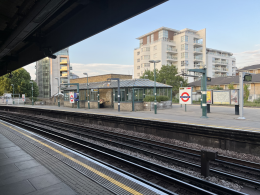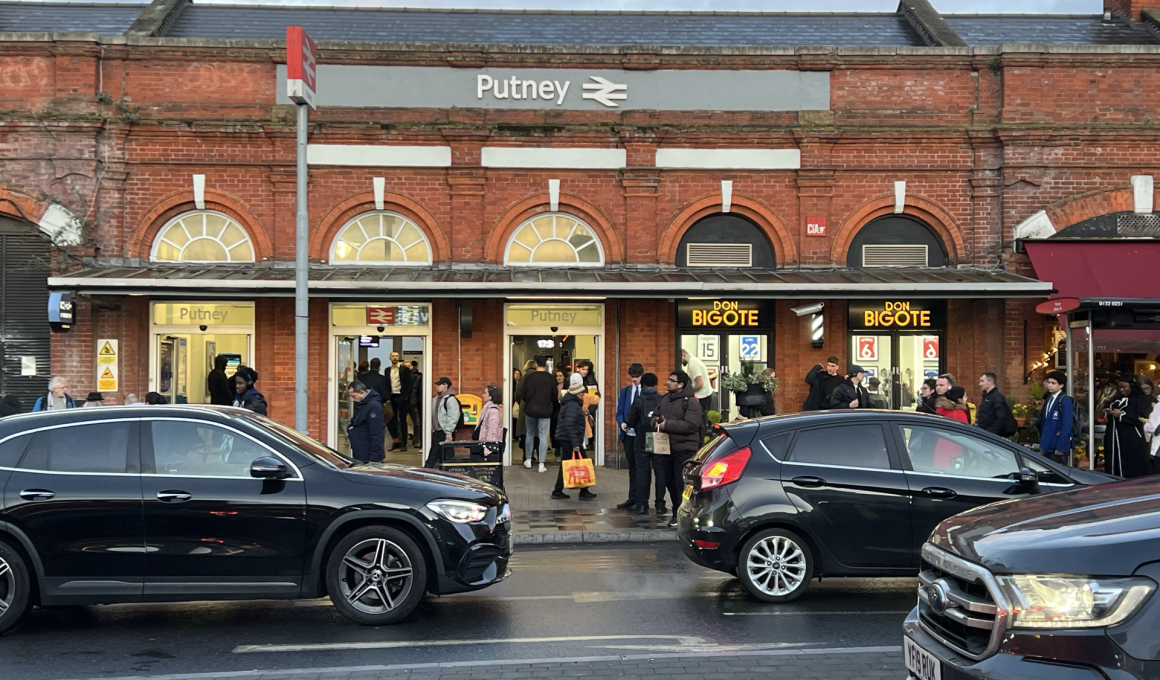
Trains from Putney – and across Wandsworth – are being cancelled more frequently the latest stats show. Cancellations are up three years running at all nine Wandsworth stations.
About 11 trains a day are now cancelled at Putney station, up from seven three years ago. That is nearly 4,000 cancelled trains a year at Putney alone, against about 2,500 in 2023-24. Roughly 28 more services a week vanish from the boards than did three years ago, and the rise has been unbroken: worse last year than the year before, worse again this year.
It’s the same pattern across Wandsworth: at Earlsfield, 22 trains a day are now cancelled. At Clapham Junction the figure is around 80. Wandsworth Town loses eight a day, Queenstown Road and Balham seven or eight each, Barnes seven, Battersea Park six, Wandsworth Common four.
Public ownership made no difference to the trend
Both companies serving the borough have been nationalised in the past fifteen months. South Western Railway transferred to public ownership on 25 May 2025, and the operator running Southern, Thameslink, Great Northern and Gatwick Express followed on 31 May this year.
Cancellations were climbing before both transfers and have carried on climbing since. At Putney the jump was bigger in the final year of private operation than in the first year of public ownership. At Balham, still privately run until May, the daily cancellation count more than doubled across the three years, the sharpest proportional rise anywhere in the borough.
Whatever is driving it, it is happening on both sides of the public-private line, and it started before either handover.
Punctuality moves the other way
Late arrivals tell a different story. Putney, Wandsworth Town, Queenstown Road and Barnes have all improved over the three years, with more trains arriving within three minutes of schedule. Balham, Wandsworth Common and Battersea Park have all got worse.
South Western Railway’s stations remain the less reliable overall. Of every six trains scheduled to call at them, one is now either cancelled or arrives more than three minutes late. On the Southern stations it is closer to one in twelve.
Two caveats sit under the figures. The earliest year, 2023-24, included national rail strikes, which makes any three-year comparison look steeper than a normal run of years. And the regulator counts every train that did not run, whatever the cause, so the figures measure what passengers experienced rather than which company was at fault.
The council’s rail forum has met twice in a year
Wandsworth Council runs a Passenger Transport Liaison Group, the borough’s public forum for putting residents’ concerns to the train operators directly. It has met twice in the past twelve months, once so far in 2026, and two of its last four scheduled meetings were cancelled.
A South Western Railway representative attended in November 2024 and March 2025. None has attended since. At the group’s most recent meeting, in March, a question about South Western Railway’s trains was answered by Network Rail instead, while a representative from the operator running Southern services was there in person.
Earlsfield is failing on both counts
Earlsfield is the one station in the borough getting worse on both measures at once. Its cancellations have doubled to 22 a day, and of the trains that do run, one in five now arrives late, against one in eight three years ago. No other station in Wandsworth is failing on both fronts together.
Readers at East Putney have the District Line’s own problems on top, on a different network with its own set of grievances.
If your train keeps letting you down
If you’ve been delayed 15 minutes or more, both operators owe you money under the Delay Repay scheme: 25 per cent of your fare for a 15 to 29 minute delay, 50 per cent for 30 to 59 minutes, and the full fare back for anything longer.
You have 28 days to claim. If you tap in and out with a Touch smartcard on South Western Railway, a claim can be raised for you automatically.
If a complaint to the operator gets you nowhere, London TravelWatch is the statutory watchdog for rail passengers in the capital, and will review your case once you have been through the operator’s own complaints process.